Newsletters




The Turkish government is set to roll out the new minimum wage for 2026, with the first meeting with labor union representatives scheduled for this week to initiate the process amid ongoing disinflation efforts, as the minimum wage is seen as a key driver of labor costs across the broader economy.
The minimum wage is the lowest legal salary that employers can pay workers and is seen as a benchmark wage, as it is estimated to directly affect around 9.5 million paid workers, according to a recent study by the Confederation of Progressive Trade Unions of Türkiye Research Center (DISK-AR).
The new amount for 2026 will be determined amid the dilemma of balancing inflationary pressures with the need to provide relief to Turkish households, as the continued rise in consumer prices remains a heavy burden on household budgets.
Although November inflation dropped to a 2.5-year low on a monthly basis at 0.87%, and annual inflation fell to 31.07%, with December figures expected to follow a similar trend, the slowing pace of disinflation is still likely to pose risks stemming from earlier price shocks and sticky categories, further complicating the decision-making process around setting the new base pay.
The minimum wage in Türkiye, last set in late December 2024 with a 30% increase, below the 44.38% inflation rate at the time, stands at ₺26,005.50 gross per month for a single worker, translating to a net pay of ₺22,104.67 ($519.26) after deductions. The total cost to employers per worker amounts to ₺30,621.48, including social security contributions and other obligations.
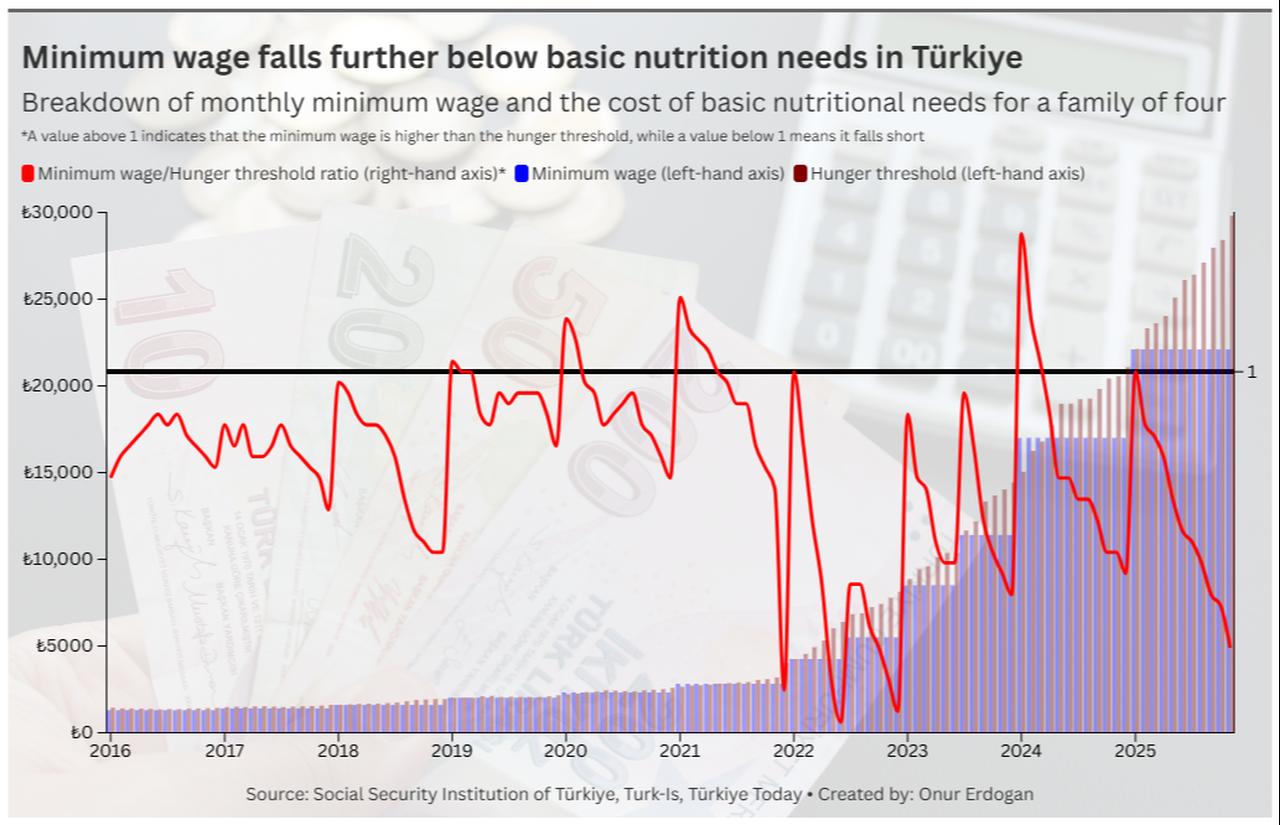
Although data from the past decade shows that the minimum wage has often fallen short of meeting the basic nutritional needs of a family of four—commonly referred to as the poverty threshold—the gap has widened significantly in recent years due to a nationwide surge in prices. The disparity grew especially sharp after 2021, as prices soared while wage adjustments failed to keep pace with inflation.
While inflation has recently begun to slow, the hunger threshold continues to rise steadily, demonstrating the persistent erosion of real wages and the ongoing difficulty of maintaining minimum pay at levels that ensure basic nutritional needs.
In November, the cost of meeting basic nutritional needs in Türkiye reached ₺29,828 ($700.69), leaving families with an income gap of nearly 26% just to afford essential food items.

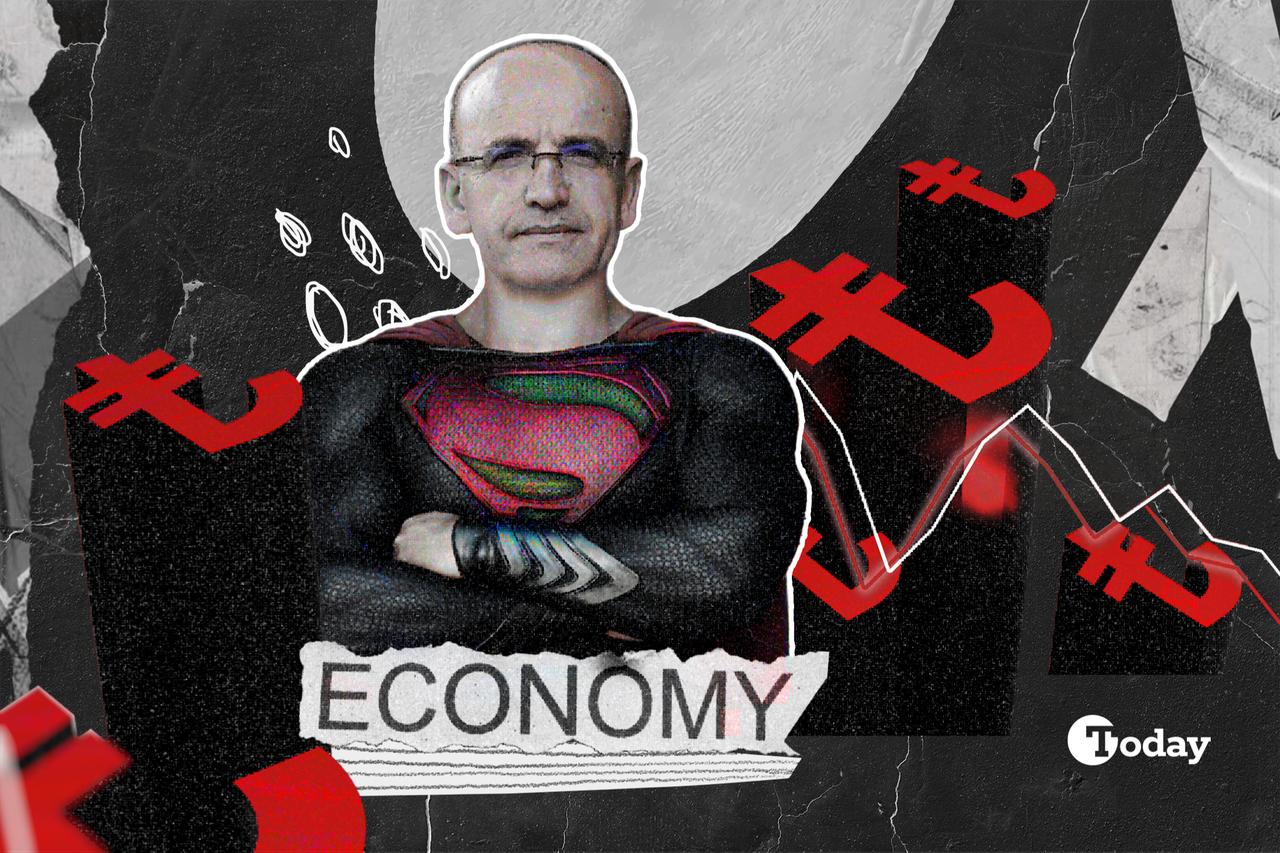
Following the 2025 minimum wage adjustment, Treasury and Finance Minister Mehmet Simsek came under criticism for a wage increase that fell well short of the annual price growth. In response, he emphasized that "price stability is a prerequisite for a lasting improvement in our workers’ purchasing power and welfare." Referring to previous years when wage hikes outpaced inflation, Simsek suggested that future decisions should be guided by 12-month inflation expectations rather than current figures.
Since the last adjustment, no further increases have been made despite inflation remaining above 30% and price growth reaching 29.74% since last December, as Simsek dismissed suggestions to reinstate the biannual update mechanism that was implemented during 2022 and 2023 but abandoned in 2024.
Simsek, who has overseen the tight monetary policy since mid-2023, frequently reaffirms his commitment to prioritizing price stability, thus favoring a cautious stance on wage hikes to sustain the gradual decline in inflation. "We could make such increases too, but unless deep-rooted problems are solved, they would quickly erode," Simsek was reported to have told ruling AK Party officials during a closed-door meeting earlier this year.
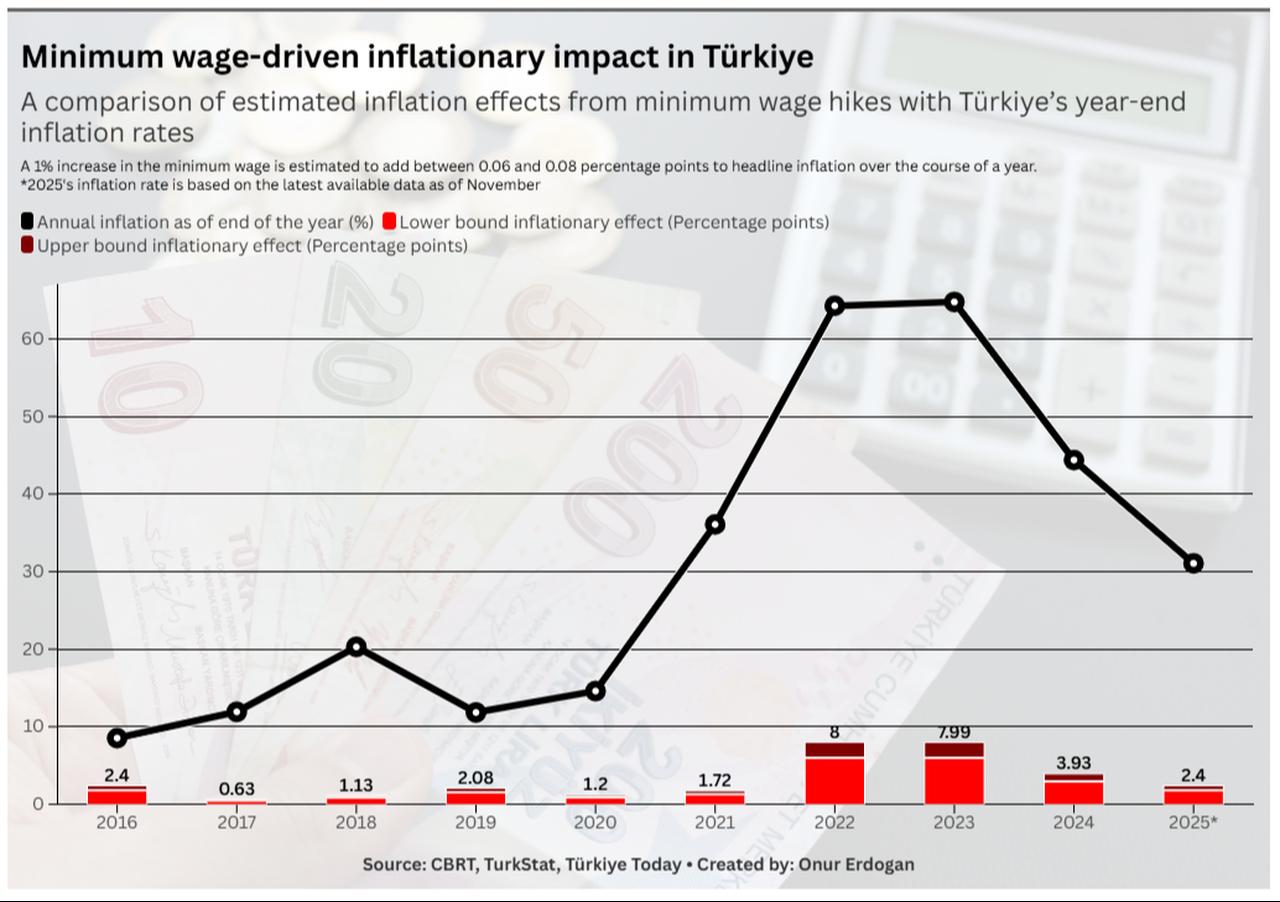
According to estimations in the Central Bank of the Republic of Türkiye’s (CBRT) third Inflation Report of 2023, the average impact of a 1% hike in the minimum wage on headline inflation was calculated at 0.06 to 0.08 percentage points within a year, with most of the effect occurring in the first two quarters. Based on this, the minimum wage hike for 2025 is expected to contribute approximately 1.8 to 2.4 percentage points to headline inflation.
During the presentation of the latest inflation report in early November, CBRT Governor Fatih Karahan, when asked about the minimum wage, said that the central bank is neither authorized to determine nor recommend wage levels, noting that a separate committee is responsible for the process and will make an announcement once its work is complete.
Türkiye’s Labor and Social Security Ministry has formally launched the process of determining the 2026 minimum wage by inviting representatives of labor and employer unions to a first meeting scheduled for Dec. 12.
The commission includes members from the Confederation of Turkish Trade Unions (Turk-Is), representing workers, and the Turkish Confederation of Employer Associations (TISK), representing employers. It is expected to hold three to four rounds of talks, in line with previous years. Decisions are made by majority vote, and the final figure is slated to be announced by Dec. 31, taking effect on Jan. 1, 2026.
Currently, the 15-member commission is composed of five representatives each from the government, labor, and employer sides. Meetings require the participation of at least 10 members, and the chair—appointed by the ministry—casts the deciding vote in case of a tie.
Following last year’s backlash from Turk-Is, the Labor Ministry proposed reducing government representation on the 15-member Minimum Wage Determination Commission from five to one in response to criticism over its structure. Turk-Is has signaled it may not participate in the upcoming meetings if the proposed changes are not implemented.
Ahead of the talks, expectations are centered around a 20% to 25% increase, in line with market forecasts for 12-month forward inflation. In its latest client note published in early November, U.S.-based investment bank J.P. Morgan projected a 23% hike, which would bring the minimum wage to ₺27,187.92 and, based on the Turkish central bank’s model, add approximately 1.38 to 1.84 percentage points to headline inflation within a year.


 Set as preferred source
 Set as preferred source


 1 min read

 1 min read