

 Newsletters


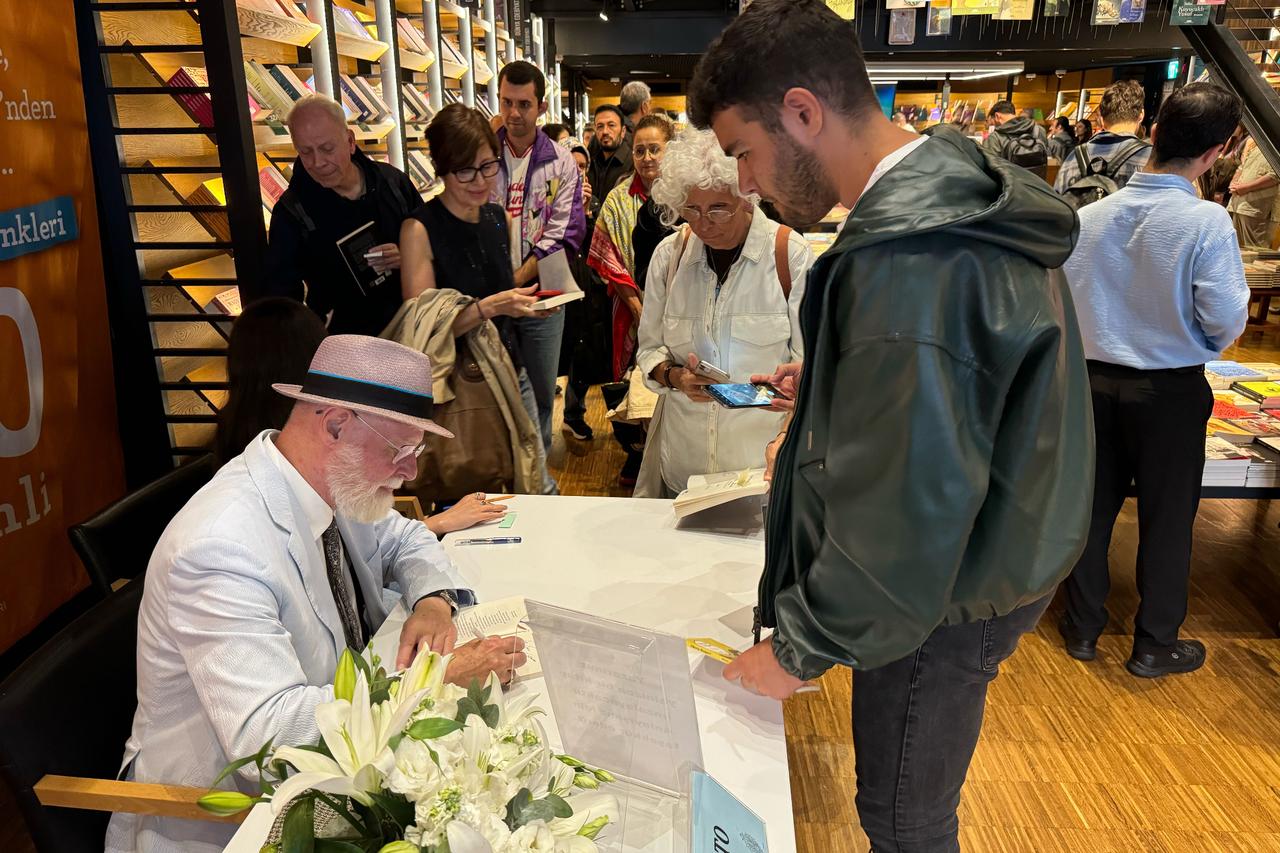


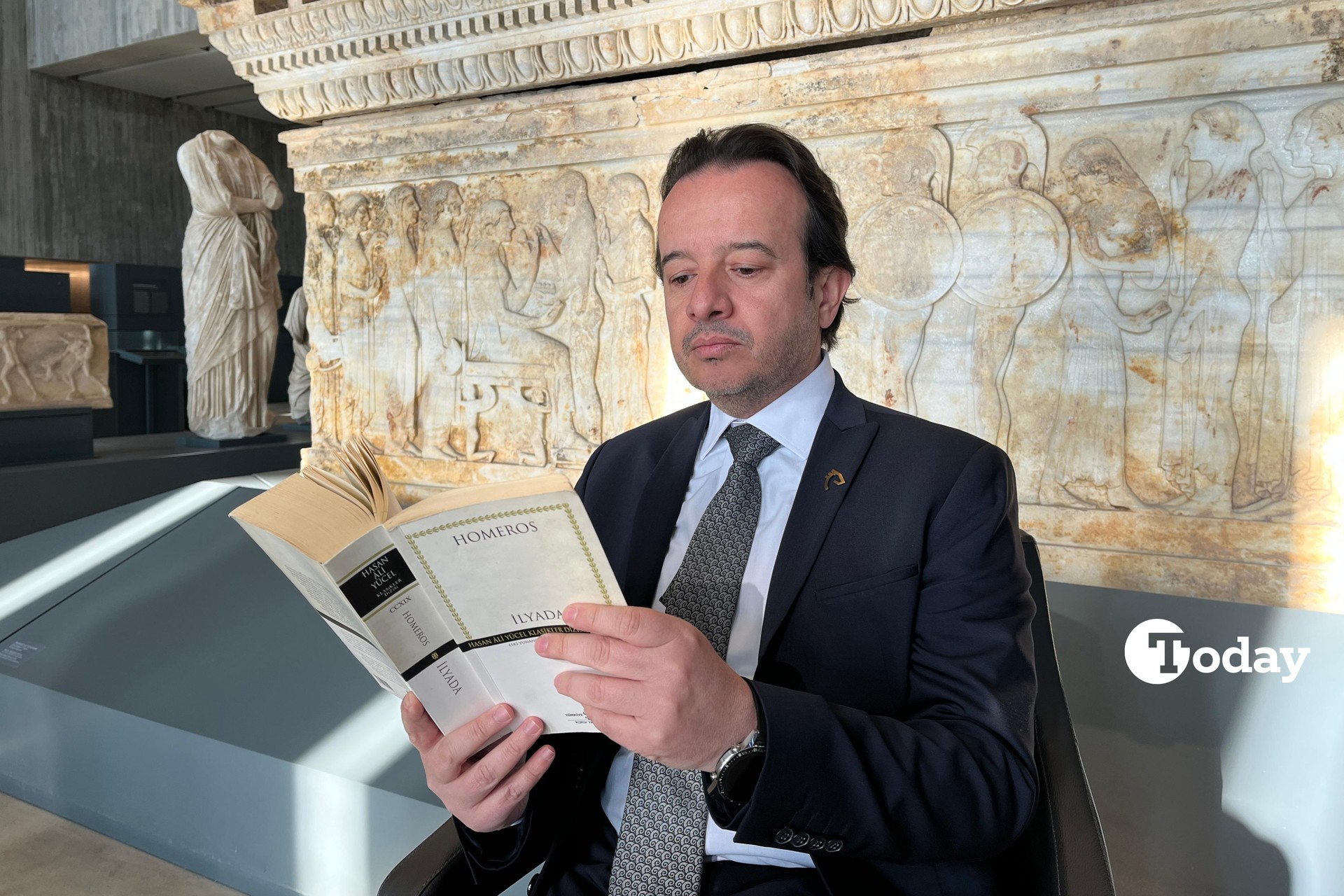
Writer, translator, and literary scholar Alberto Manguel met readers in Istanbul, arguing that Homer's Iliad and Odyssey continue to speak to modern experiences of war, displacement, and the search for home while reminding readers of what he described as humanity's shared values.
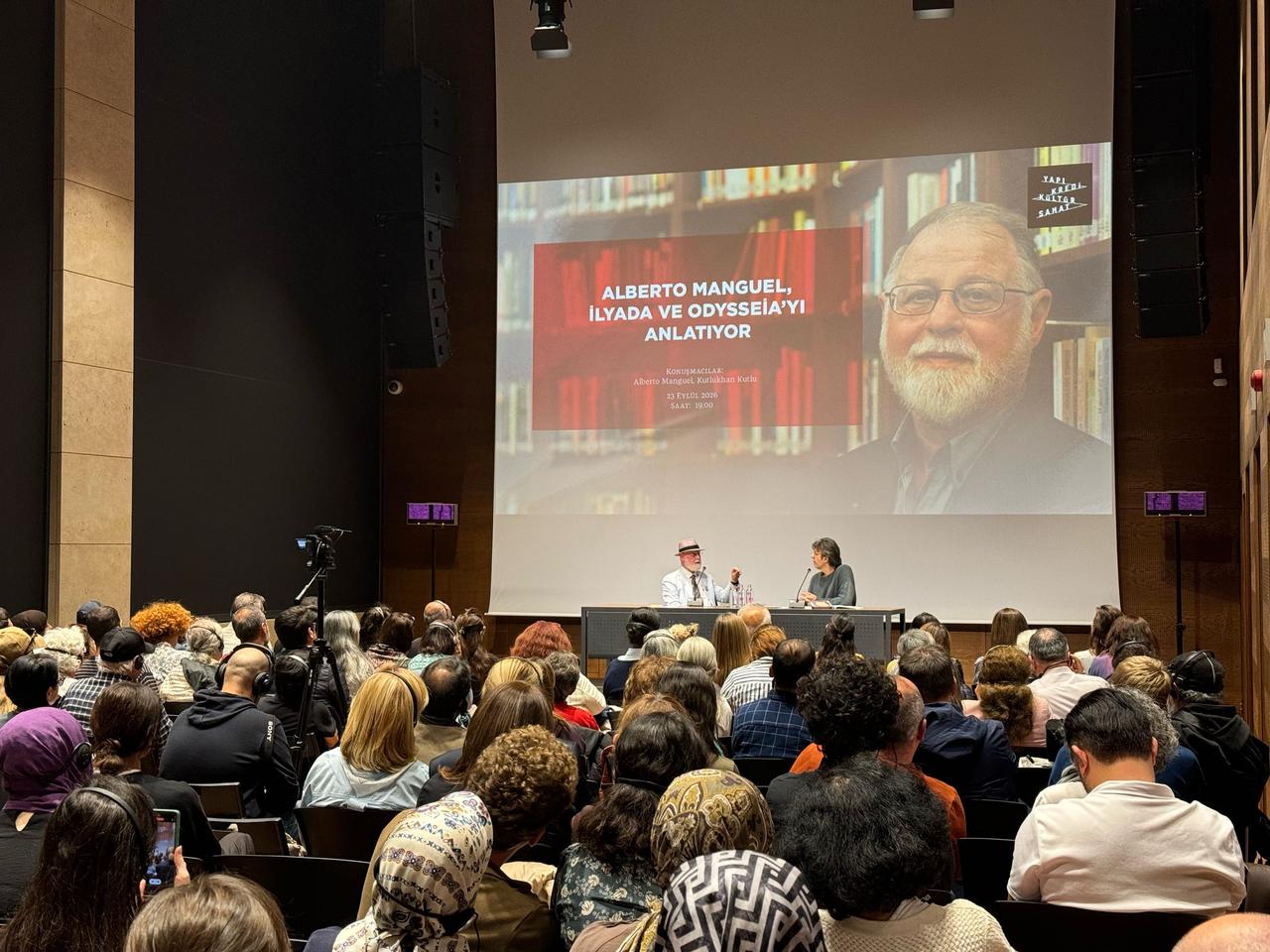
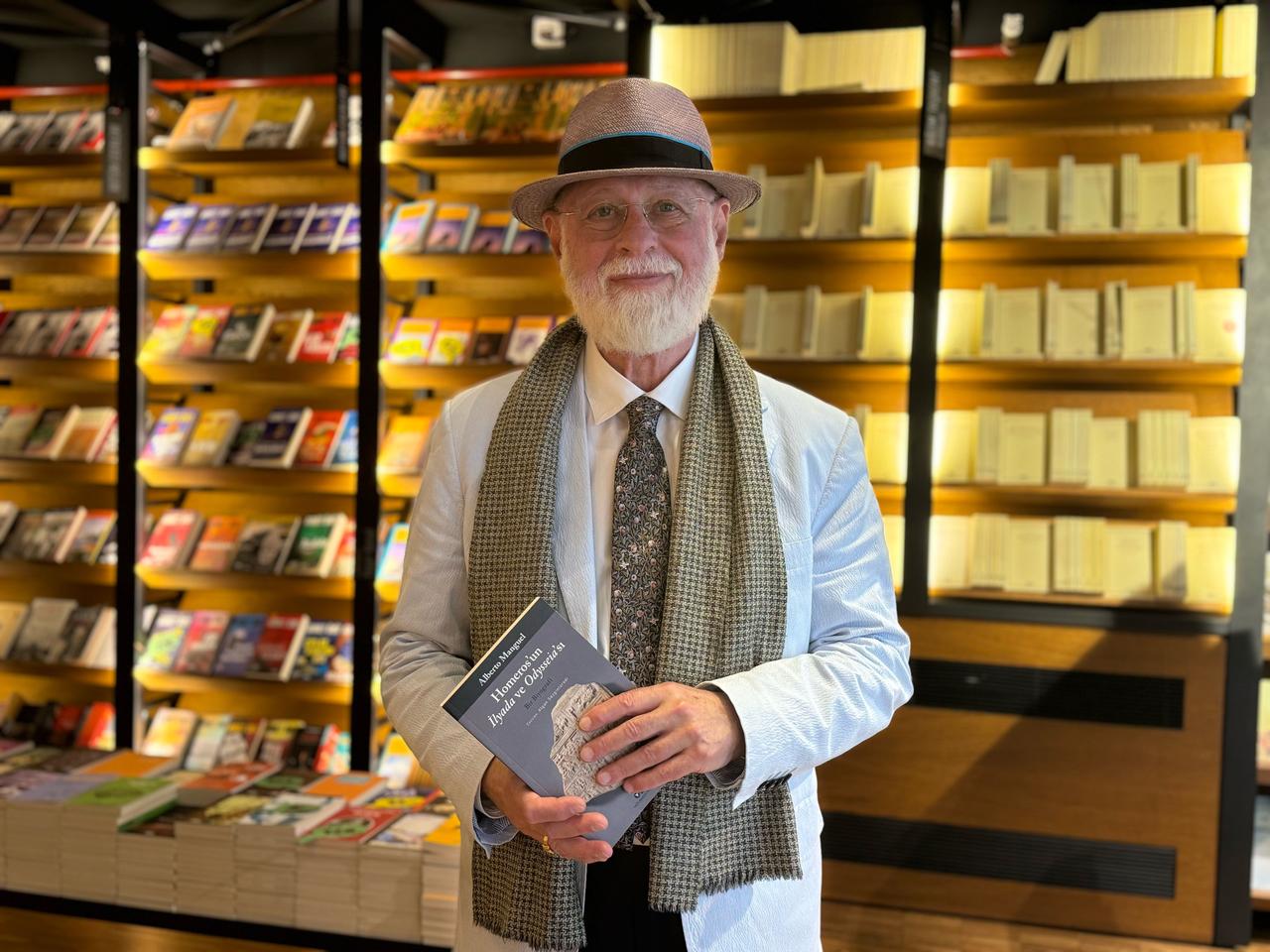
Manguel was in Istanbul for a signing of his book "Homer's Iliad and Odyssey: A Biography," a Turkish version published in Türkiye by Yapi Kredi Publications, before taking part in a talk titled "Alberto Manguel Talks About the Iliad and Odyssey" at Yapi Kredi Kultur Sanat Loca. The discussion was moderated by translator and film writer Kutlukhan Kutlu.
Speaking before the event, Manguel recalled having visited Türkiye several times and said his first trip to Istanbul had been with his son when he was around 14 or 15.
He also pointed to a family connection with the country, noting that his nephew had married a Turkish woman and that he had relatives in Ankara.

Manguel said the idea of writing biographies of books had come out of a publisher's proposal and that he chose the Iliad and the Odyssey when asked to focus on two major works.
He argued that classics become richer as they pass from one generation to another because every new group of readers adds another layer of interpretation, effectively keeping the works alive.
Referring to French writer Raymond Queneau's observation that every book is either an Odyssey or an Iliad, Manguel said the two epics capture fundamental patterns of human experience.
"Books are about human life, and every life consists of a journey and a battle. Therefore, everything we write in literature reflects the great metaphors of the Odyssey, which represents life as a journey, and the Iliad, which represents it as a battle," he said.
Manguel added that readers tend to choose books in which they recognize themselves and that a book capable of deeply affecting a reader can, in a sense, become part of that person's autobiography.
Manguel said the Iliad and the Odyssey had been read differently across history, adding that it is impossible to know exactly how Homer's contemporaries understood or listened to the poems.
In Rome, he noted, the Iliad later became tied to the idea that Romans descended not from the victorious Greeks but from the defeated Trojans, with Aeneas escaping Troy with his father and son and becoming part of Rome's founding story.
He also pointed to echoes of Homeric themes in the Arab world, even though Homer was not translated completely into Arabic, drawing parallels between Sinbad's journeys in One Thousand and One Nights and the obstacles faced by Odysseus, as well as between accounts of warfare and themes found in the Iliad.
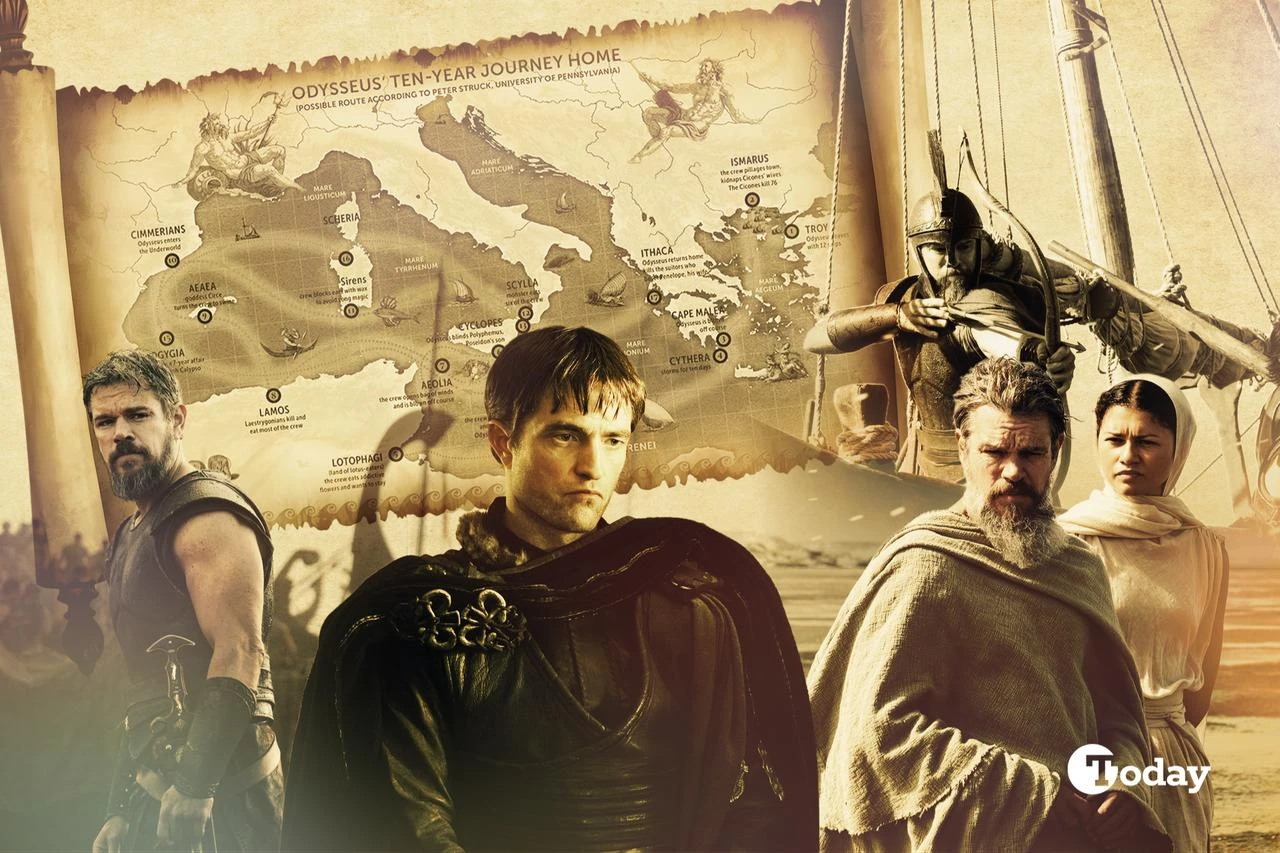
Manguel said contemporary audiences are once again turning to the epics for reasons connected with the concerns of the present day, pointing to Christopher Nolan's production based on the Odyssey as an example.
He connected the story of Odysseus with people forced to leave their homes and travel through unfamiliar places, saying refugees can find themselves confronted not with hospitality but with hostility.
Manguel also referred to refugees from Ukraine and Gaza, saying they were being met through the violation, rather than the observance, of traditions of hospitality.
Turning to the Iliad, he said the epic may be told through the language of the victors, but its tragic focus repeatedly falls on victims, including Hecuba, Andromache and the women of Troy.
"Today, in our world surrounded by fake news, greed and political ambition, the Iliad and the Odyssey tell us things about our common humanity that we must not forget," Manguel said.
Manguel also underlined the historical importance of Troy, which lies within modern Türkiye, saying the site holds a place in world history comparable to landmarks such as the Colosseum and the Acropolis.
He said Türkiye should take pride in being home to that heritage.
Manguel added that meeting Turkish readers was particularly meaningful to him, saying that listening to readers' responses gives writers a valuable opportunity to understand what audiences find in their books and to build a dialogue with them.


 Set as preferred source
 Set as preferred source


 1 min read
 1 min read


