Newsletters




The gift shop sells replica flags. It is the last ordinary thing you pass.
Take the stairs down, two flights below street level. The light thins with every step, the air turns cold, and a faint, antique smell settles in, the kind that clings to old paper and older metal.
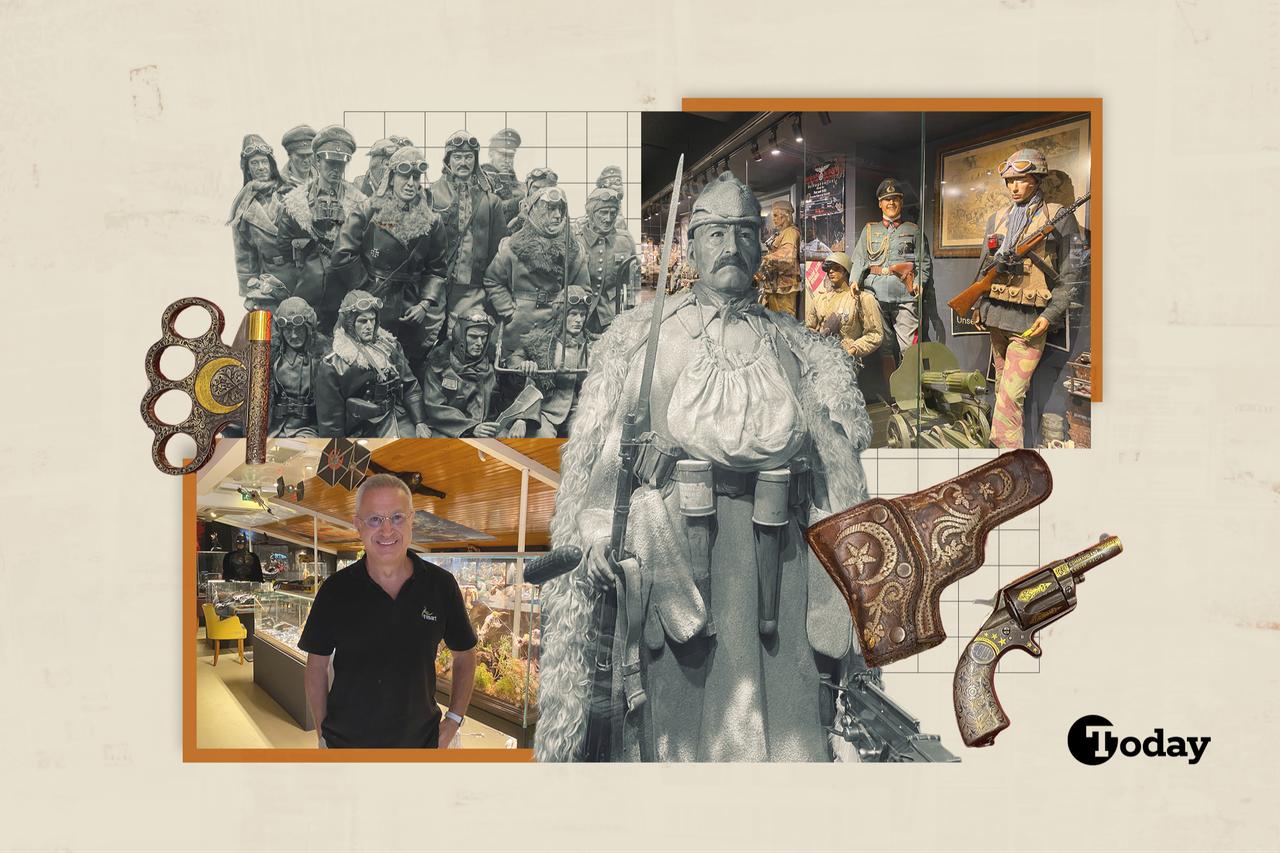
Then the floor opens onto a Messerschmitt Bf 109 G6, a Luftwaffe single-seat fighter and the workhorse of Nazi Germany's air force. Its nickname is "Gustav." One of only three left in the world, it is credited with downing more than 300 Allied aircraft in World War II.
Machines like this normally live behind reinforced glass in national collections, guarded and insured for a small fortune. Here, there is no glass. The Gustav is one exhibit among several hundred, kept on what used to be the museum building's parking lot, a floor built almost entirely by hand.
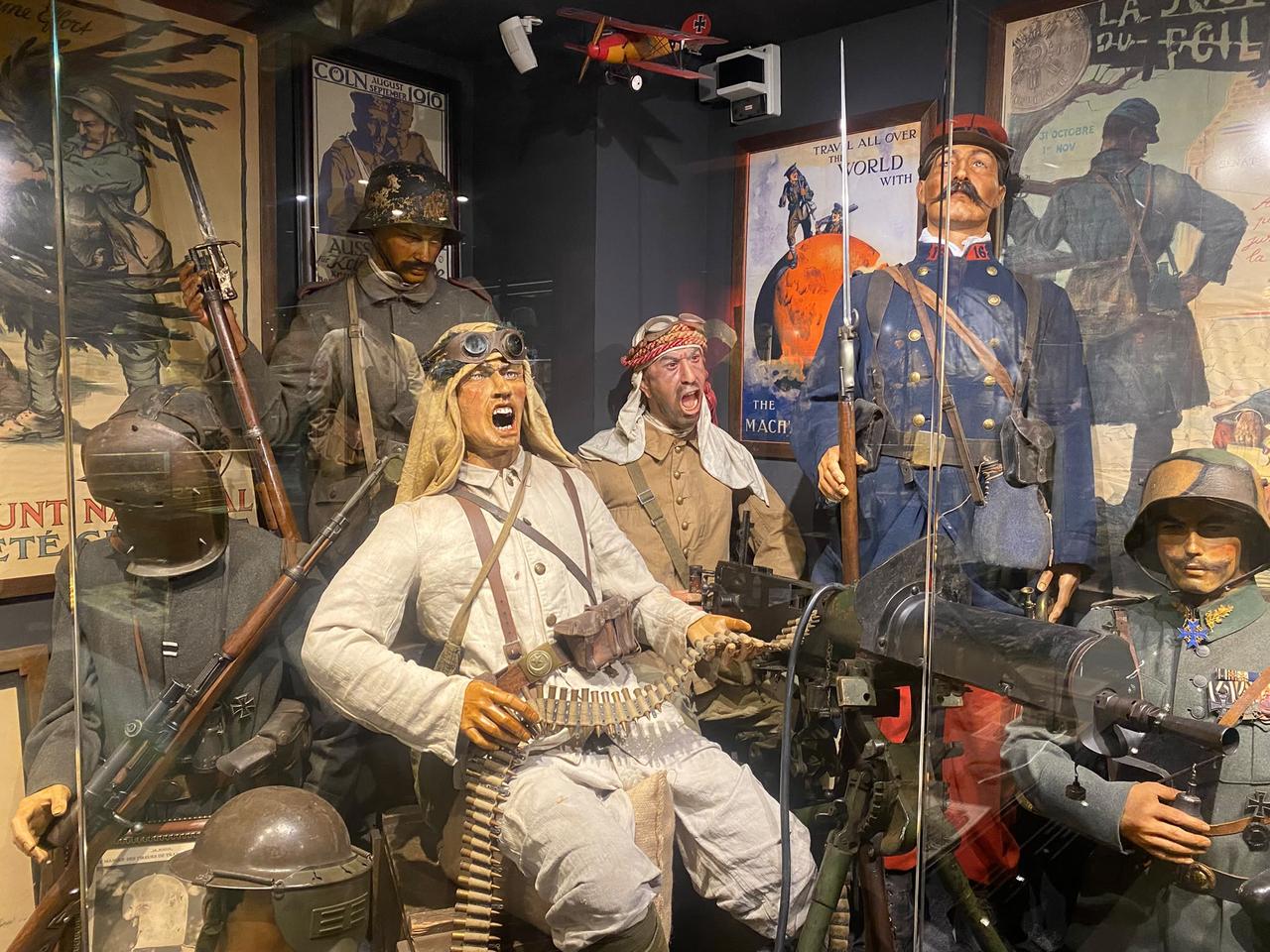
The museum has almost no natural light, but the soundtrack changes with every floor, and that shift does more than the lighting to pull you into each era. This is Hisart Living History Museum, in Istanbul's Kagithane district: seven floors of life-size dioramas, mostly about war, built around real artifacts.
The man behind all of it is Nejat Cuhadaroglu. He founded Hisart in 2014, after decades of building models and collecting antiques as a private pursuit. He is also vice chairman of the board of the Cuhadaroglu Group, the industrial conglomerate his family built.
He spoke with us about the almost 50 years it took to put this collection together, why it leans so heavily on war, and what he believes it still lacks.
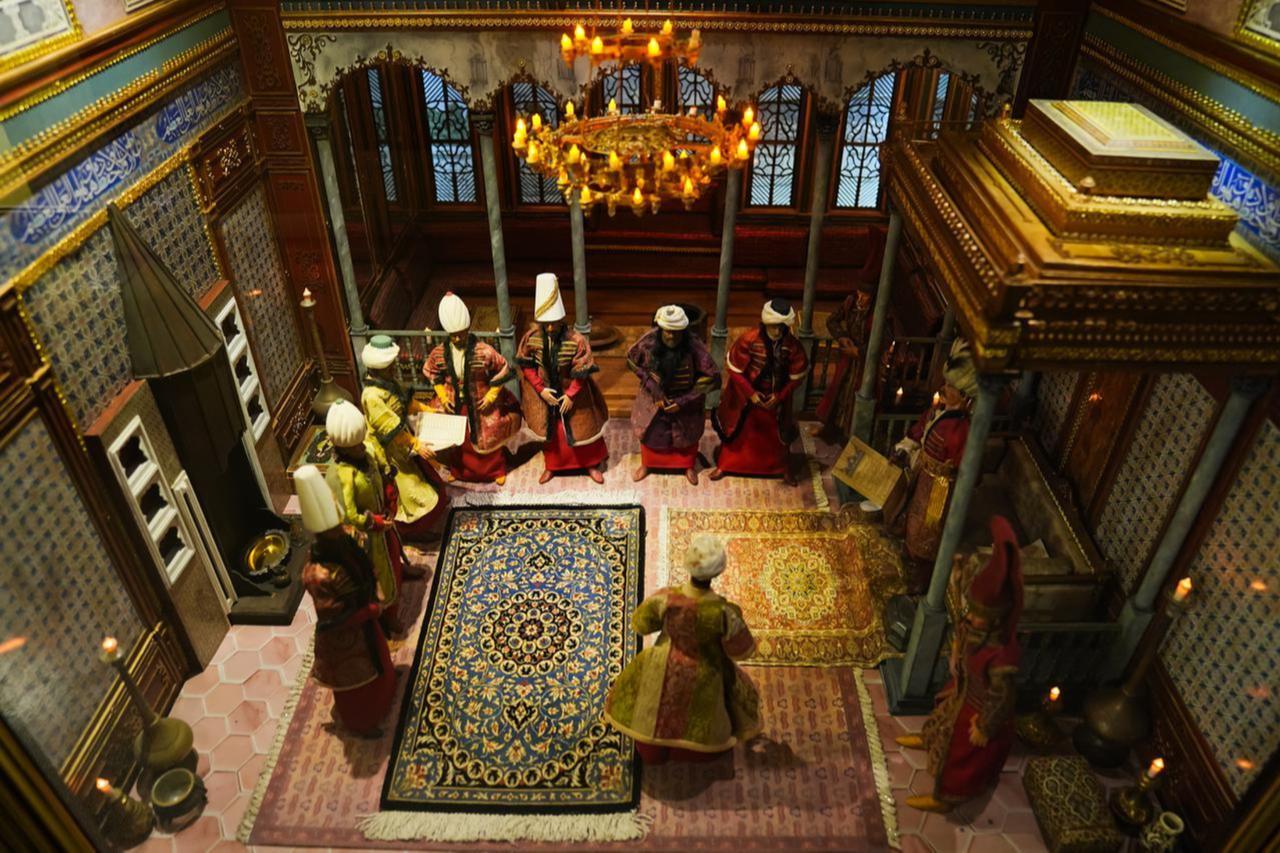
What sets the museum apart is its method as much as its scale. Hisart replaces the traditional glass display case with three-dimensional dioramas: real artifacts set into life-size, walk-through scenes rather than isolated behind glass. You do not look at the past here so much as step into it.
All of it is a one-man operation, from the concept to the material hunt to the financial management to the curation.
Asked why he chose history, Cuhadaroglu answers with a line from the historian Fernand Braudel: "To understand today, we have to mobilize the whole of history." It is close enough to a mission statement that it is painted on a wall downstairs.
Without that history, he argues, "no human being can be truly intellectual or intelligent." A nation without a past, in his view, has no memory, no evidence and no accumulated vision to draw on.
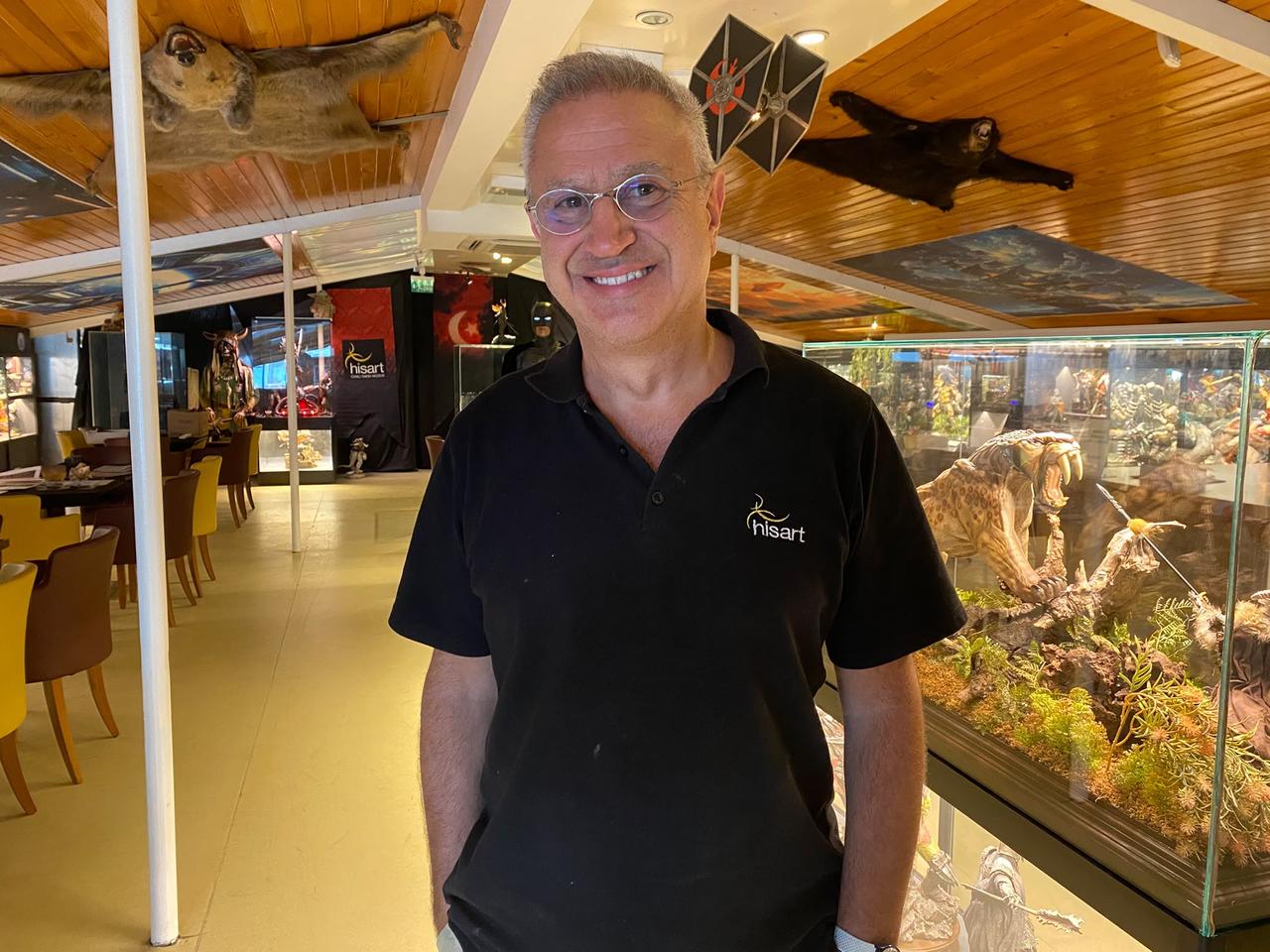

The museum also holds science fiction and art, but war is what fills the floors, and Cuhadaroglu insists that wasn't the plan.
War, he points out, is not a detour in the human story but a constant. By his count, it accounts for 9% of recorded history, and he sums it up in one plain, unsparing line: "we fought yesterday, we fight today, and unfortunately, we will fight tomorrow."
He doesn't talk about it the way a historian would, ticking off battles and body counts. He talks like a biologist watching an animal, treating conflict as an instinct wired in for survival.
In his telling, humanity is caught in a permanent negotiation between two impulses, the urge to fight and the urge to make peace, and the museum is what's left on the table after each round.
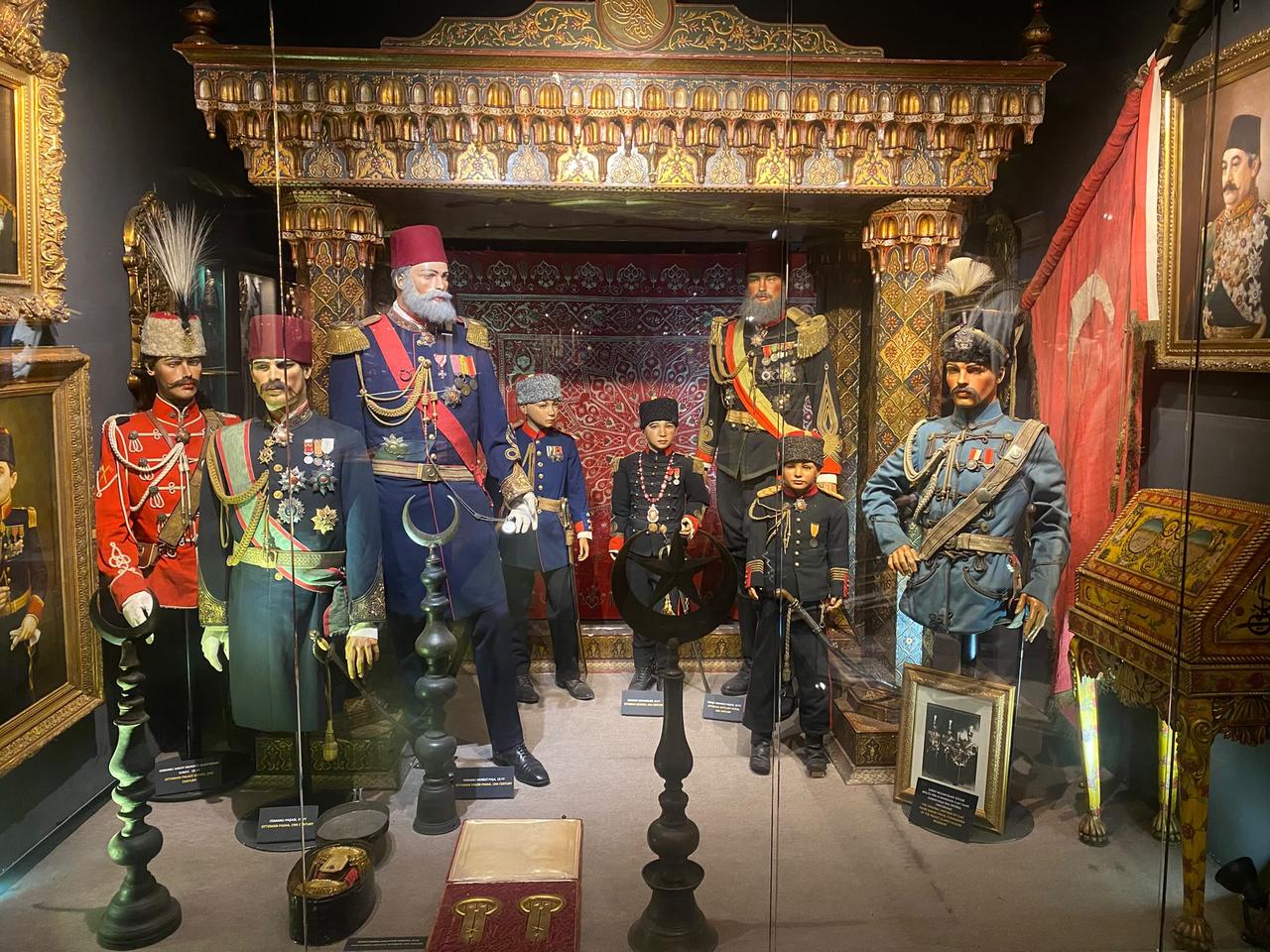
Across seven floors, that theme runs from Byzantium and the Ottoman conquests through World War I, the National Struggle, World War II, Korea and Vietnam.
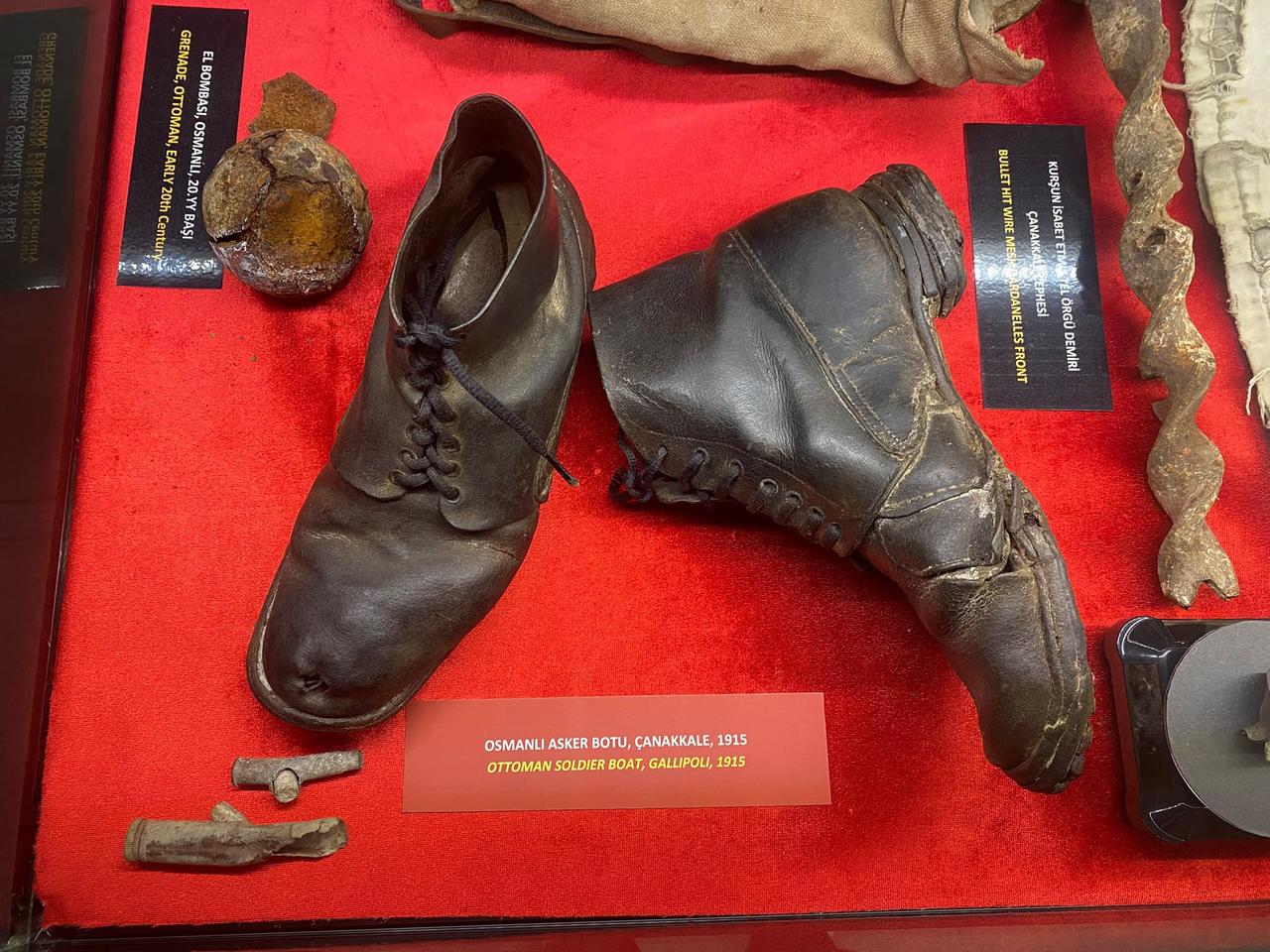
It doesn't unfold as a tidy timeline, and no era gets equal space. Cuhadaroglu builds around turning points instead. Take the Conquest of Istanbul. Before a single figure is placed, he spends months, sometimes a full year, hunting down antique material that belongs to that one moment: the real objects, not stand-ins. Only when the pieces are in hand does the scene begin to take shape.
Cuhadaroglu is rarely working on just one piece. Four or five dioramas run in parallel at any given time, some finished in a few weeks, others taking the better part of a year.
"It's the only way," he says, "that 50 years adds up to this much: work on one piece at a time, and a life isn't long enough."
The Ottoman floors are still his favorite, partly because that era is the least explored globally, and partly because of what's in the cases.
Among the originals are a sword attributed to Sultan Mehmed II, known after the conquest as Mehmed the Conqueror; a lightning-bladed sword said to have belonged to Sultan Bayezid II; a pala (a curved, single-edged Ottoman sword) carried by Sultan Selim I; and a yatagan (another type of Ottoman sword) attributed to Sultan Suleiman I, Suleiman the Magnificent.
This collection underpins his boldest claim: that for original Ottoman artifacts, Hisart ranks second only to Topkapi Palace, ahead, he says, of the Met, the British Museum, the Louvre and the Hermitage.
Cuhadaroglu also conceptualizes, curates, designs and details every piece himself, down to the smallest object in a case.
"There is no other museum owner in the world who builds and curates their own museum down to this level of detail," he says. In his telling, this is less a boast than an explanation of scale: the project took 50 years because it went through one pair of hands the entire time.
Building the museum took more than craftsmanship, he says.
Türkiye, he says, has a real shortage of the specialists a project like this depends on: art historians, object experts and people who know one narrow period thoroughly. Standard references barely exist for some of the eras he covers, so the research fell to him alone.
He also has a more personal complaint: that money and culture rarely find each other. People with capital, in his experience, tend to lack the eye for it, while people with the eye rarely have the capital. He says he had both, having inherited talent from his artist and architect parents and taught himself the rest.
His ambitions for the museum outstrip its current footprint. He believes Hisart needs a much larger home, at least 7,000 square meters, in a historical and touristic location such as Sultanahmet Square, where it could get "the traffic and visual space it merits."
Asked at the end whether he regrets any of it, the 50 years, the single pair of hands, a museum most of the world doesn't know exists, he answers as though the question doesn't quite apply to him.
Sometimes, he says, he feels he is in the wrong place at the wrong time, and that his ambitions have simply outpaced his surroundings. Had he built this abroad, he says, he would have been given a medal or a title, perhaps that of a Lord.
He built it here instead, entirely by himself and without outside help. He also points out that the museum's mannequin collection, more than 350 pieces, surpasses that of Madame Tussauds.
He doesn't call any of it a regret. He calls it a hope. For now, that hope sits two flights below street level, past the last ordinary thing, waiting for the visitors he believes it deserves.


 Set as preferred source
 Set as preferred source


 2 min read
 1 min read