Newsletters


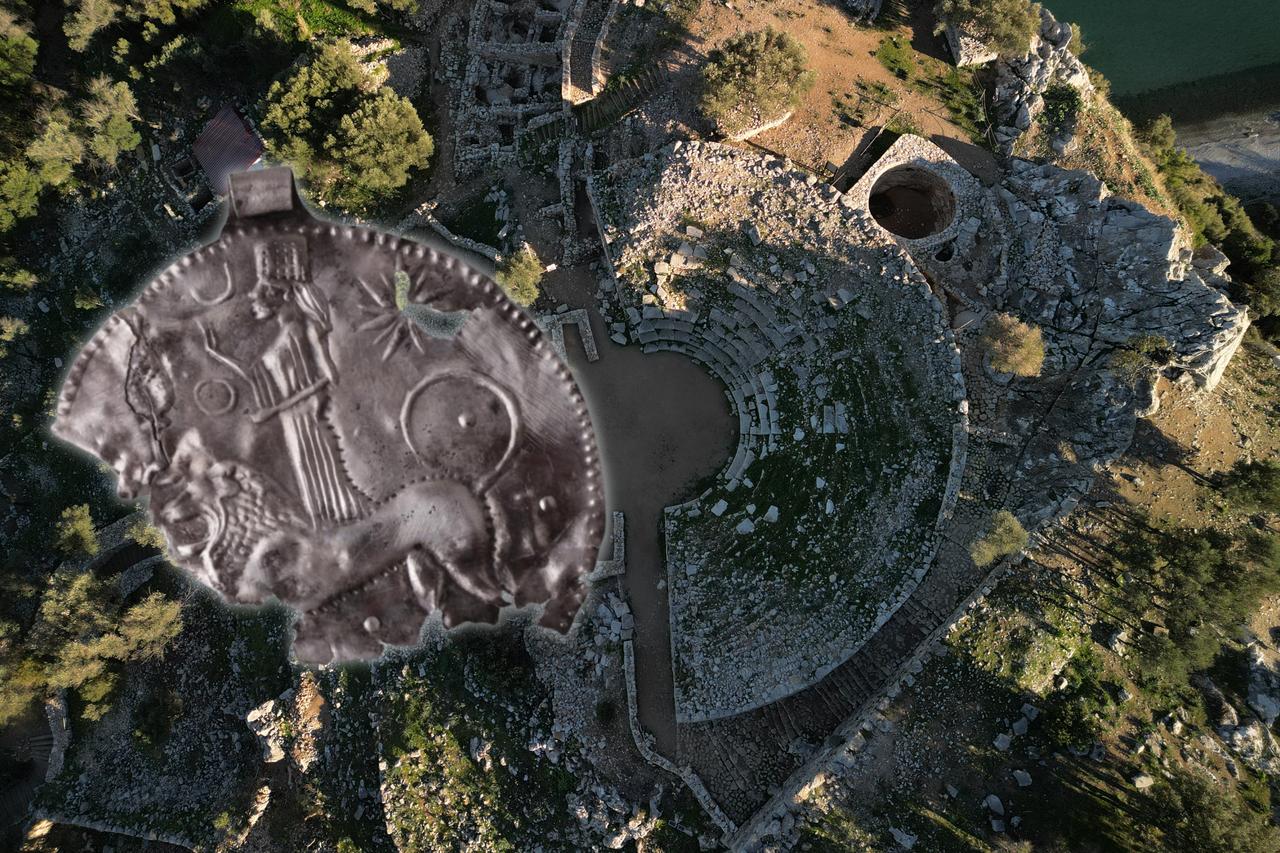


Archaeologists working at the ancient city of Amos in southwestern Türkiye have brought to light a rare silver necklace believed to depict the Assyrian goddess Ishtar, a discovery that sheds new light on the site’s cultural and commercial connections with the wider ancient world.
The find, uncovered during ongoing excavations near the resort town of Marmaris, stands out for its symbolic imagery and its implications for the city’s historical role in regional exchange networks.


The newly discovered necklace features an eight-pointed star and a lion figure, both widely recognized symbols associated with Ishtar, a major deity of love, fertility, and war in ancient Mesopotamia.
In earlier Sumerian tradition, the same goddess was known as Inanna, a detail that highlights the long and layered religious history behind the object.
According to the excavation team, the combination of these motifs strongly suggests that the necklace carried not only decorative value but also symbolic and possibly ritual meaning.
Assoc. Prof. Mehmet Gurbuzer, head of the excavation and a faculty member at Mugla Sitki Kocman University’s Department of Archaeology, explained in remarks conveyed to the media that the necklace points to Amos having had notable cultural, economic, and commercial strength.
He noted that during the seventh century B.C., advanced cultural elements from the Near East began to spread into the Mediterranean through trade and military contacts. Within this context, Amos appears to have stood out as a port city that was well plugged into the political and economic currents of its time.
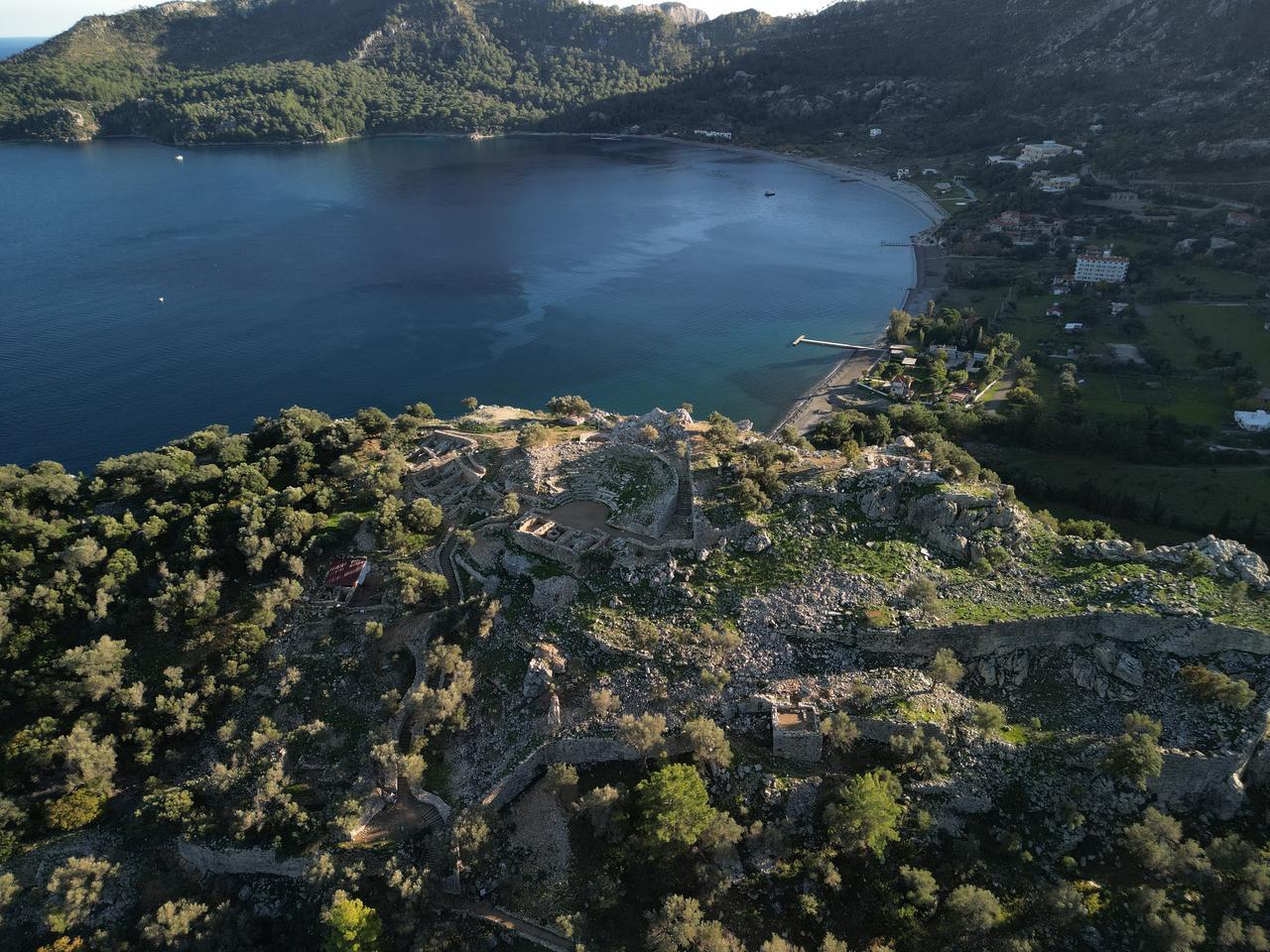
Located on Asarcik Hill overlooking the coast, Amos is understood to have been a strategic harbor settlement known to multiple civilizations of the ancient world.
Archaeologists emphasize that early-period finds like this necklace help fill in crucial gaps about the city’s past, particularly its role as a point where goods, ideas, and beliefs were traded and passed along.
The site officially gained excavation status by presidential decree in 2022, and current work is being carried out under the Ministry of Culture and Tourism’s "Heritage for the Future" project.
The excavations are supported by local institutions, including the Marmaris Chamber of Commerce and the Marmaris Municipality, along with private-sector sponsorship. Fieldwork has continued year-round since being restarted in 2021.
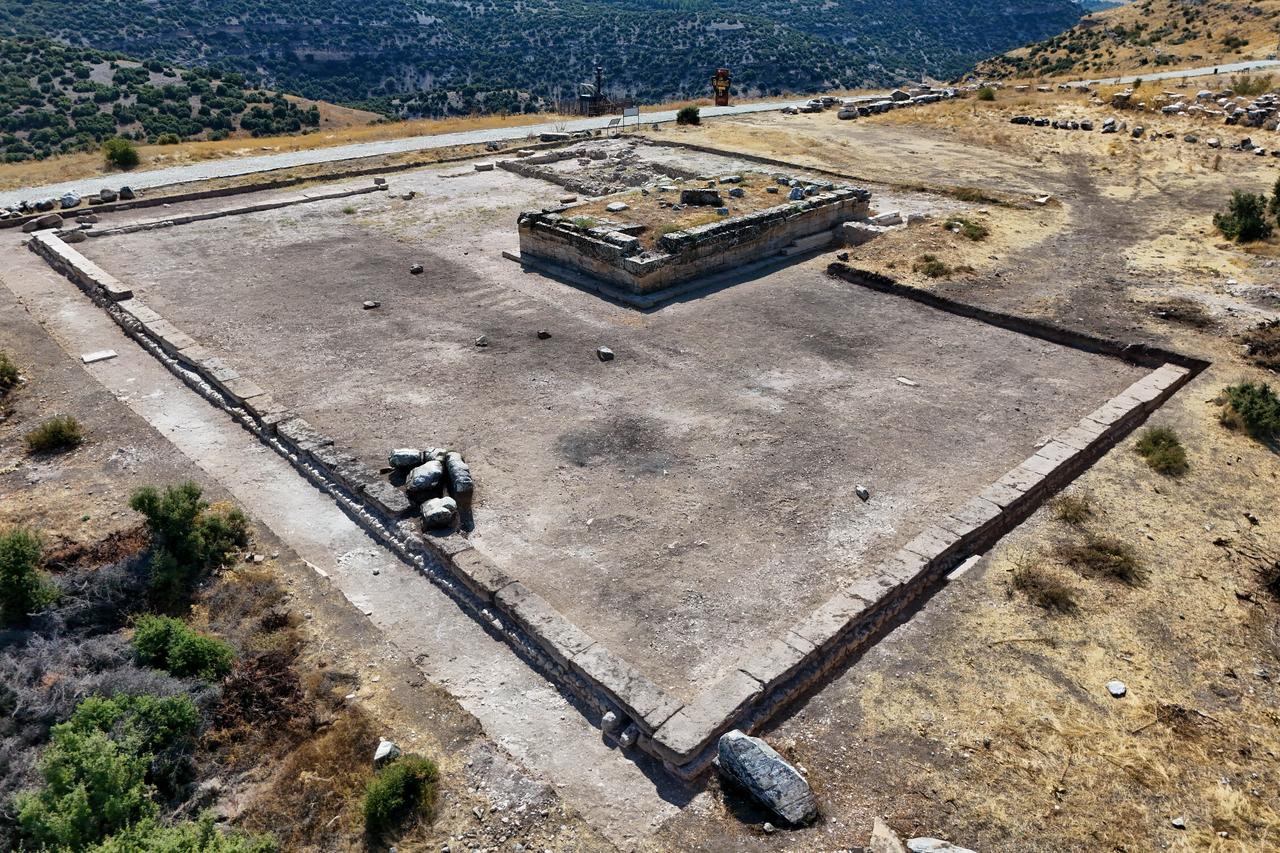
During the 2025 season, teams have been carrying out landscaping work in the orchestra area of the ancient theater while also digging in residential zones and clearing vegetation and debris around the Temple of Apollon Samnaios.
The excavation leadership has indicated that work in residential areas and at the temple is set to carry on into the 2026 season.

Amos first entered academic literature following excavations conducted in 1948 by archaeologist G. E. Bean.
At that time, researchers uncovered ancient land lease contracts, documents that helped identify the city as an economically organized settlement.
Dating back roughly two millennia, those contracts offered early evidence of Amos’ structured economy, an image that the newly found necklace now reinforces from a cultural perspective.


 Set as preferred source
 Set as preferred source


 2 min read