Newsletters


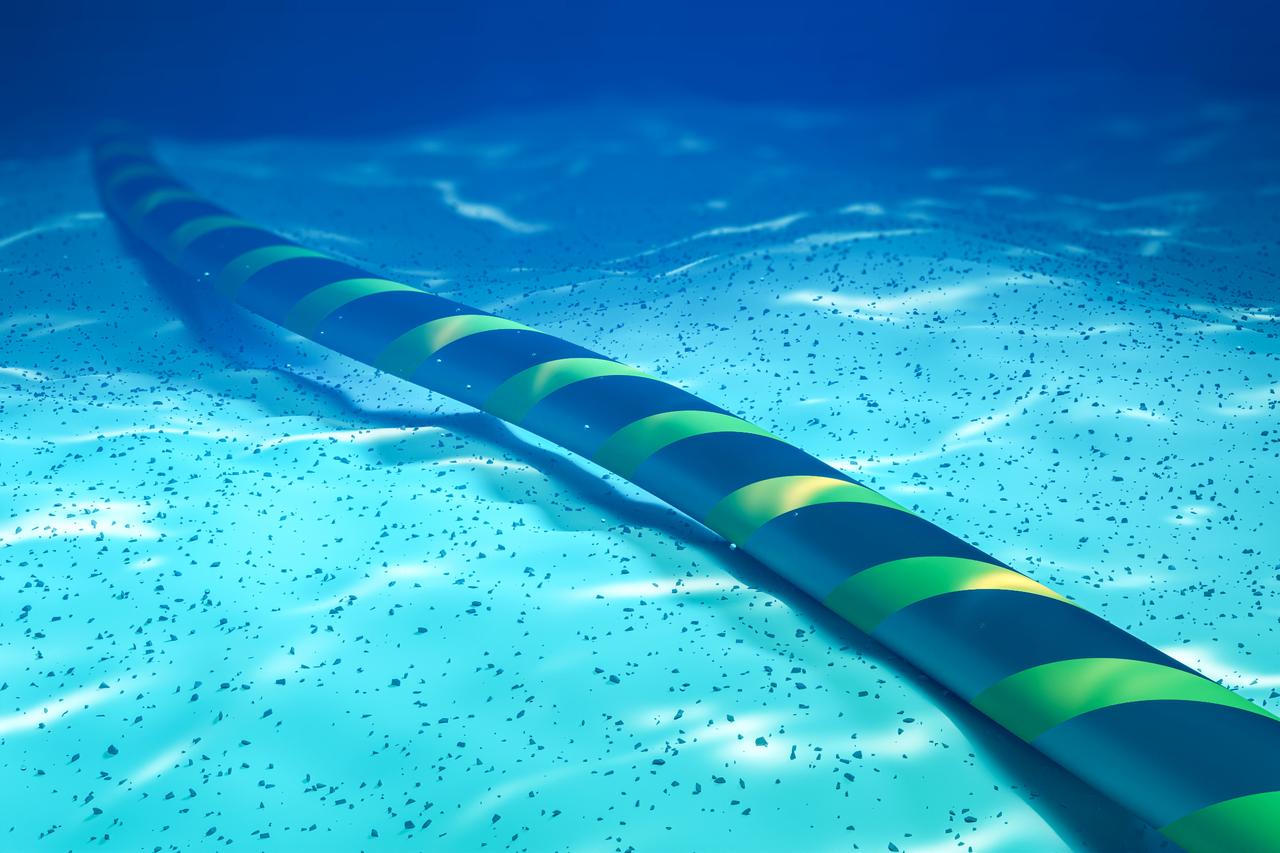


Meta plans to build an undersea fiber cable between the United States and France that stretches 7,000 kilometers (4,300 miles) and is designed to carry up to 1 million gigabits per second (Gbps) of data.
The cable, named Petal, will be funded and operated by Meta, the parent company of Facebook and Instagram. It is scheduled to come online in 2029.
According to a Meta statement, Petal will be the first cable to deliver petabit capacity across transoceanic distances. Meta said this is double the capacity of existing subsea cables of similar length.
The 1 million Gbps figure equals about 125 terabytes of data per second, or roughly 25,000 HD movies of 5 gigabytes each. Meta said the capacity is enough for 75% of the world’s population to stream music at the same time.

Petal will be the first commercial subsea cable system to use multi-core fiber technology, the statement said. Conventional fiber strands typically contain one core.
Each Petal strand will contain two cores that carry optical signals in opposite directions, allowing one strand to provide the capacity that normally requires a pair of single-core fibers.
Each strand measures about 125 micrometers in diameter, roughly the thickness of a human hair. The cable will contain 24 pairs of dual-core fibers, or 96 individual cores.
Meta engineers said this can carry as much data as 48 conventional fiber pairs.
Data travels through subsea cables as pulses of infrared light, which need amplification over long distances. This is done with repeaters, amplifiers installed at regular intervals along the cable that use lasers to boost the optical signals. Meta said a cable of this length typically needs about 100 repeaters.
Petal will use what Meta calls “fan-in/fan-out” technology. As a two-core strand enters a repeater, an optical interface routes the signal from each core into a separate single-core fiber so each can be amplified independently.
The signals are then routed back into the two cores before continuing along the cable. Meta said this design allows Petal to double its capacity without a proportional increase in power.
Japanese technology company NEC will handle the overall design and construction of Petal. Sumitomo Electric will supply the fiber.
Eduardo Mateo, chief strategy officer of the Submarine Networks Division at NEC, described petabit capacity across a transoceanic submarine system as a major milestone in the history of global telecommunications, according to the statement.
Petal is one of several subsea cable investments by Meta in recent years. The company previously backed Marea in 2018, Amitie in 2023, and Anjana in 2025. Marea, Meta’s first transatlantic fiber installation, supports 192 terabits per second (Tbps).
Petal will offer more than five times that capacity.
Subsea cables carry about 99% of global internet traffic, according to the International Telecommunication Union, the United Nations agency for digital technologies.


 Set as preferred source
 Set as preferred source



 3 min read