Newsletters


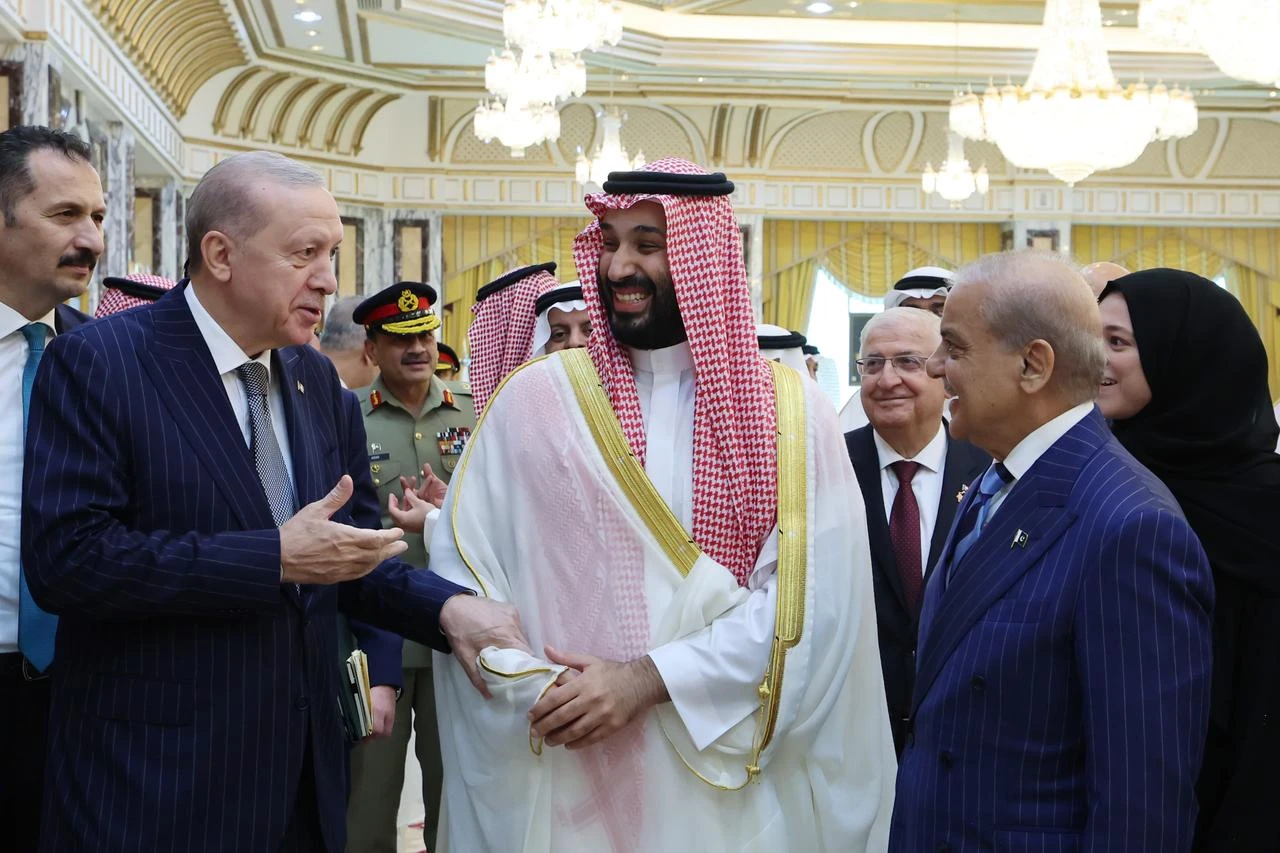


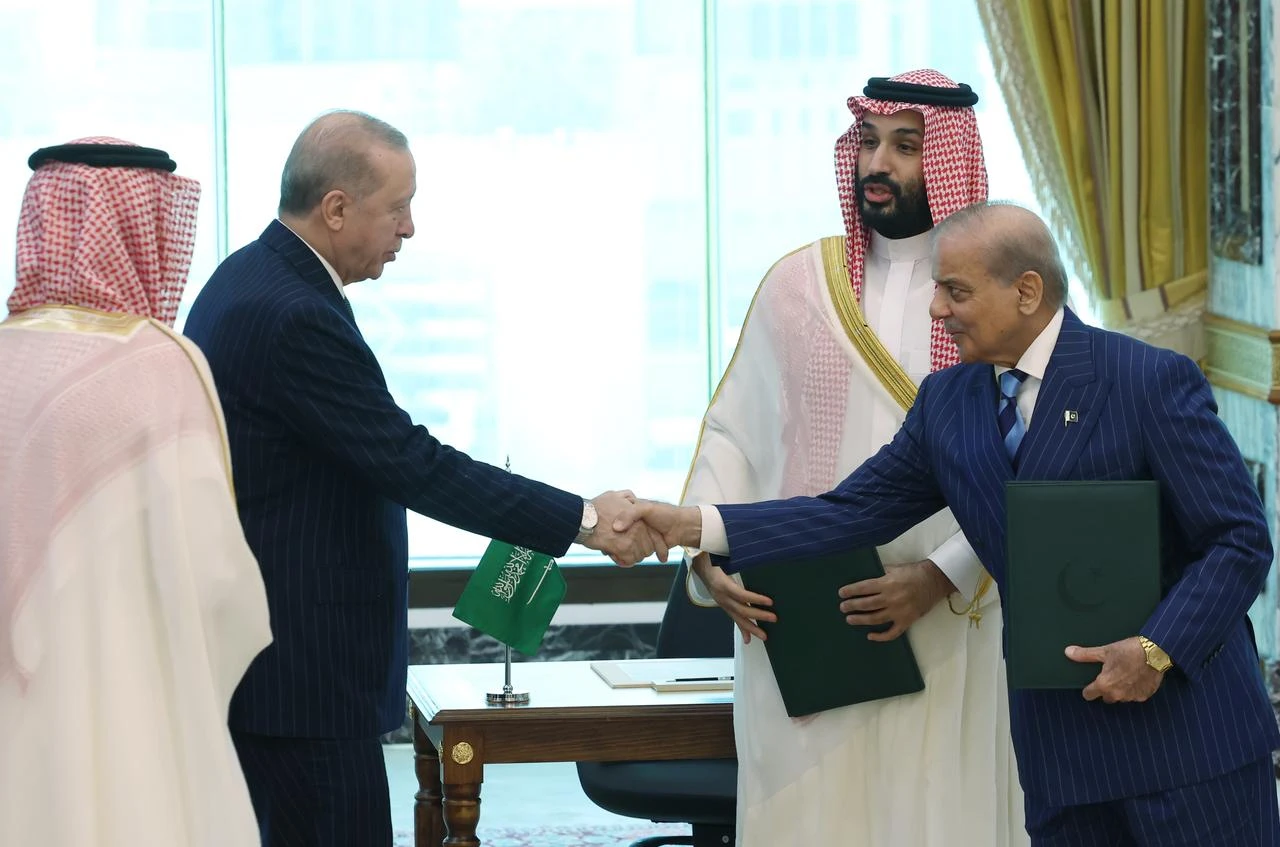
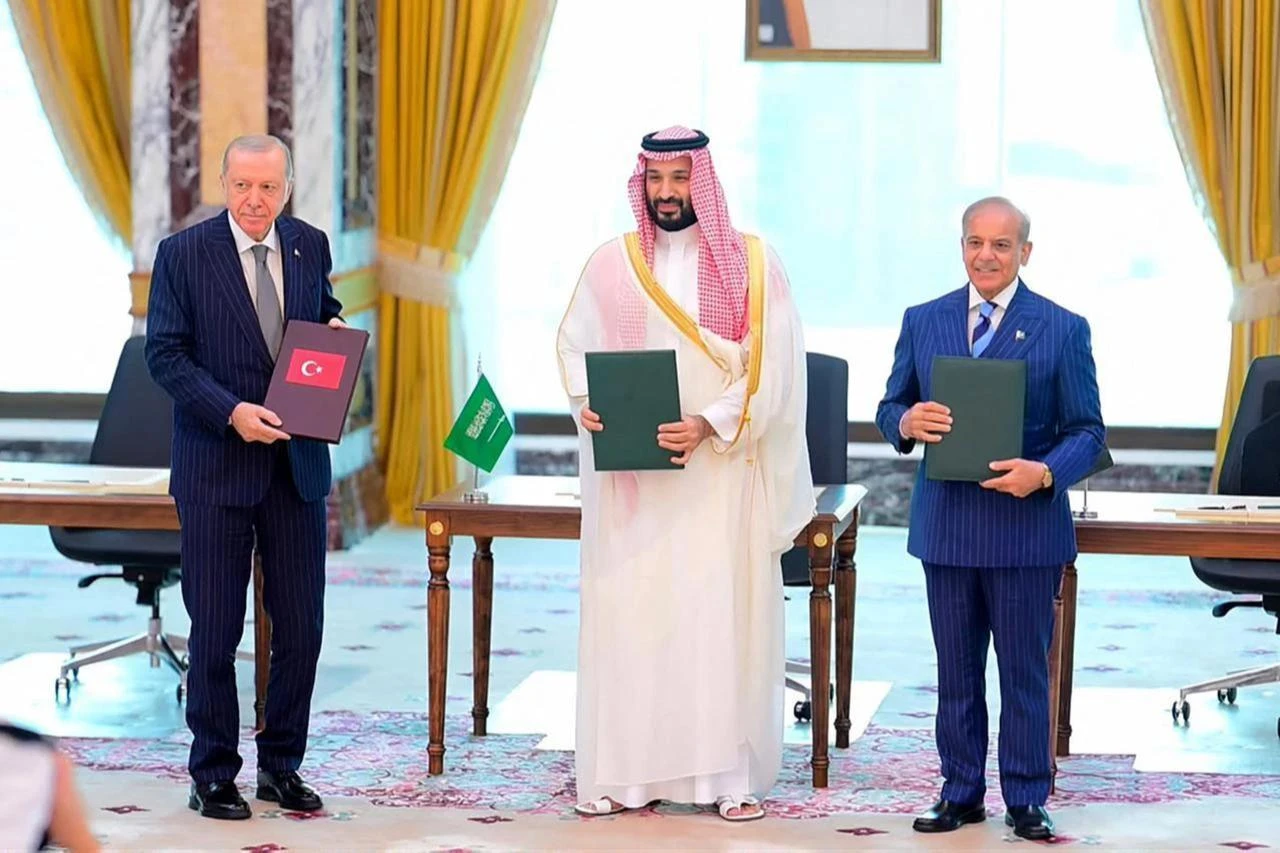
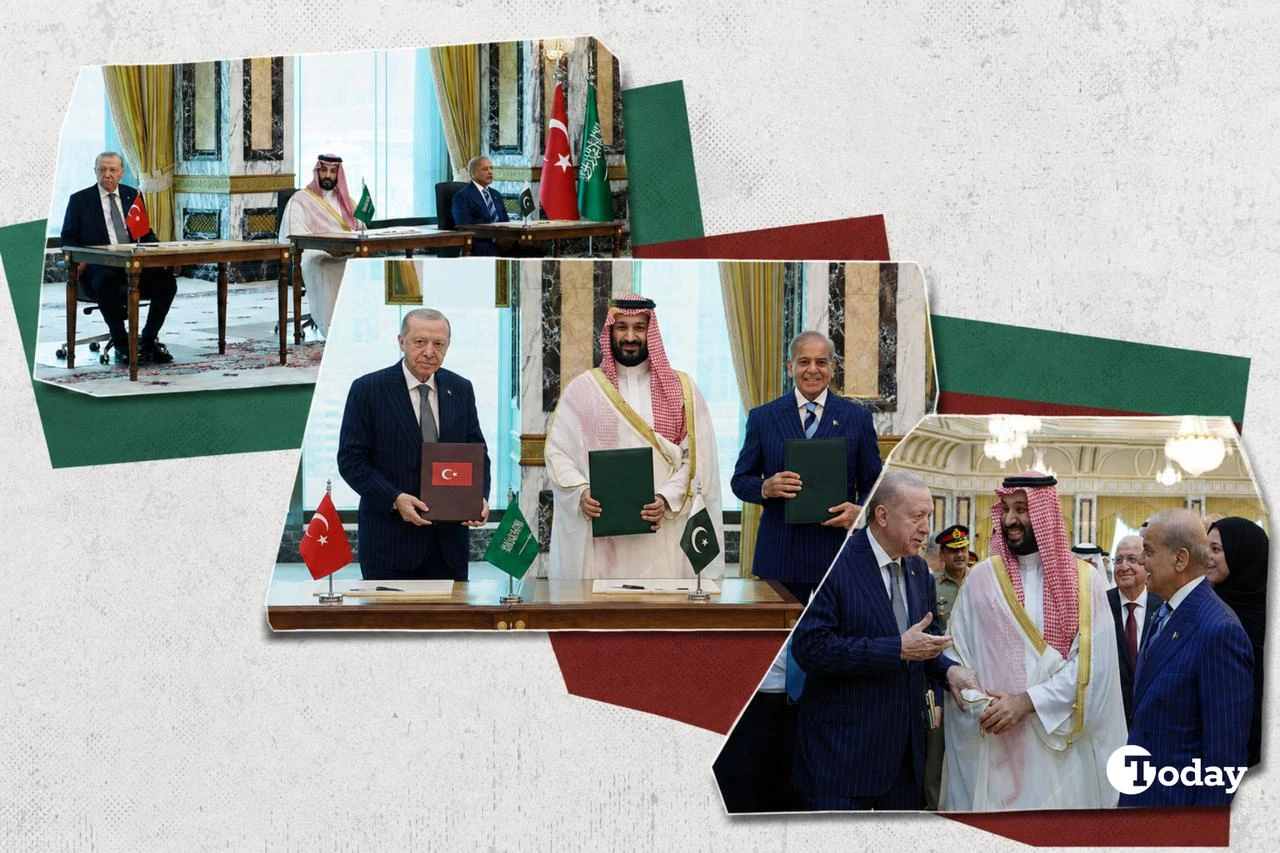
Turkish Foreign Minister Hakan Fidan said Saturday that the Mecca Joint Defense Agreement is technically similar to NATO's Article 5 on collective defense, saying the pact signed by Türkiye, Saudi Arabia and Pakistan aims to contribute to lasting regional stability.
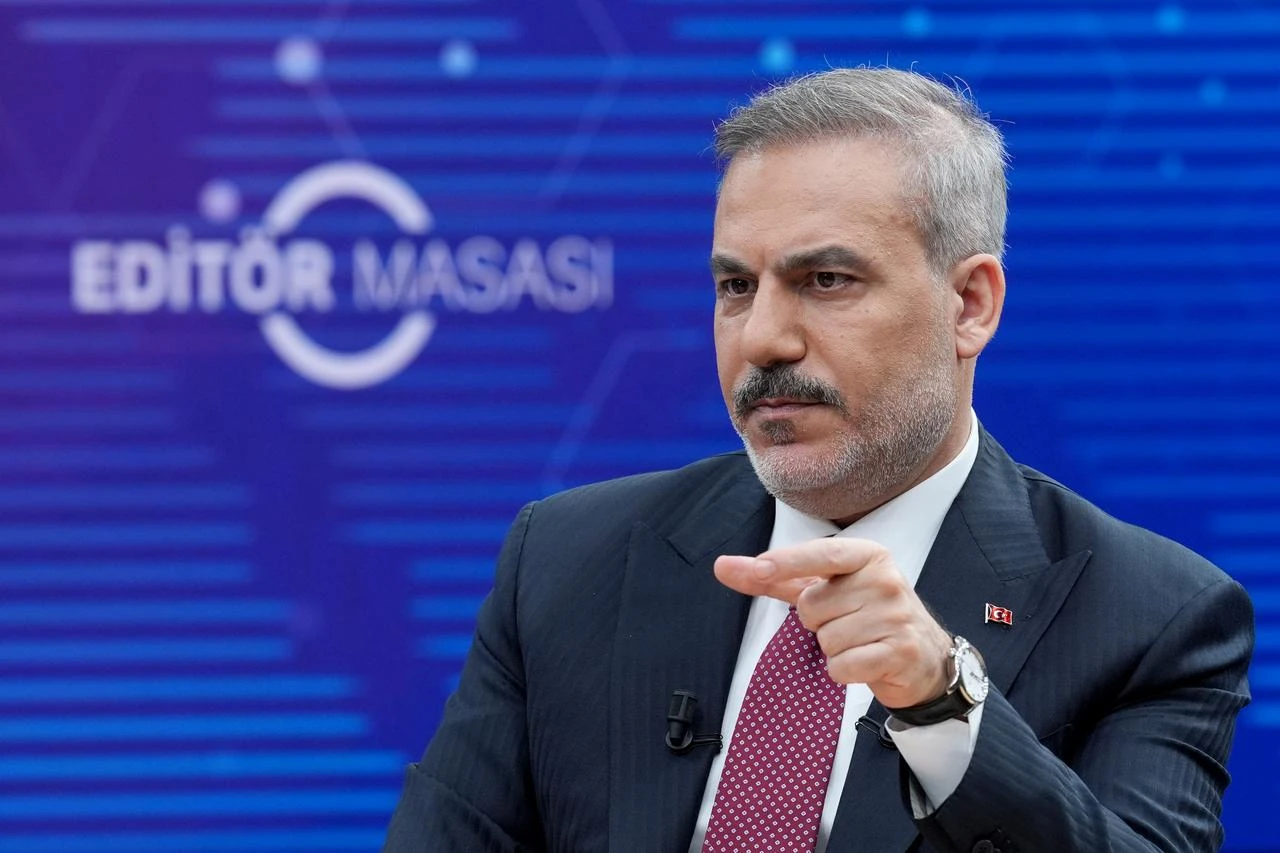
Speaking at Turkish news agency Anadolu's Editor's Desk program, Fidan said the agreement does not target any country.
"There is no common threat that we have put in writing," Fidan said, adding that the agreement does not target any country that does not attack its signatories.
Fidan said discussions on the initiative began before the current war environment, when there was no Iran-U.S.-Israel war, but Türkiye had anticipated that U.S. security concerns in the region would change, other developments would emerge and its fight against terrorism would remain on the agenda.
He stressed that Türkiye, Saudi Arabia and Pakistan are not expansionist countries.
"Saudi Arabia, Pakistan and Türkiye, when you look at their foreign policy positions, are not countries that have expansionist policies," Fidan said. "They are countries concerned with their own borders, their own problems and their development, and, if possible, they want to contribute positively to their environment through good relations and good neighborliness."
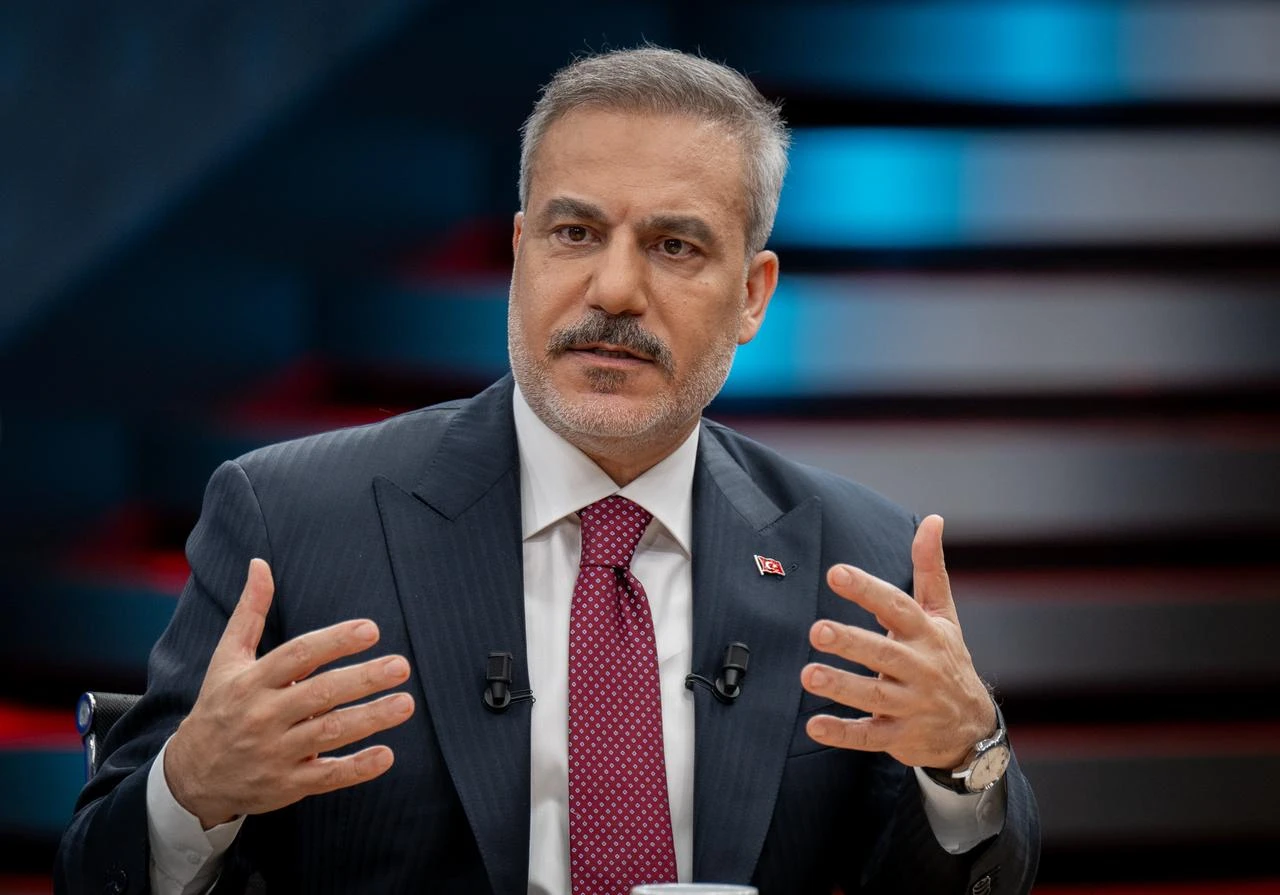

Fidan said the three countries have different styles and capacities but naturally form a defense-oriented structure when brought together.
"Now, when we come together with these countries, naturally we are becoming a defense-oriented organization," he said.
"It is not an approach of going on the offensive and saying, 'Let's do this or that together.' Therefore, unless it is attacked by a country, whether from inside or outside the region, this alliance cannot have any dispute with any country," he added.
Fidan said the power composition created by the agreement would make a constructive contribution to regional stability.
He stressed that Iran was not the target of the agreement and said countries that do not attack the signatories are not considered targets.
Fidan said the alliance had been examined closely from legal, political and strategic perspectives and that Türkiye saw no problem with the framework.
He also noted that NATO countries had previously concluded similar agreements.
"Under our president's vision, we should not remain limited to three countries. We should grow and, if necessary, bring all countries under this umbrella," Fidan said.
"The Mecca Agreement is the most important step toward bringing lasting stability to this region," he added.
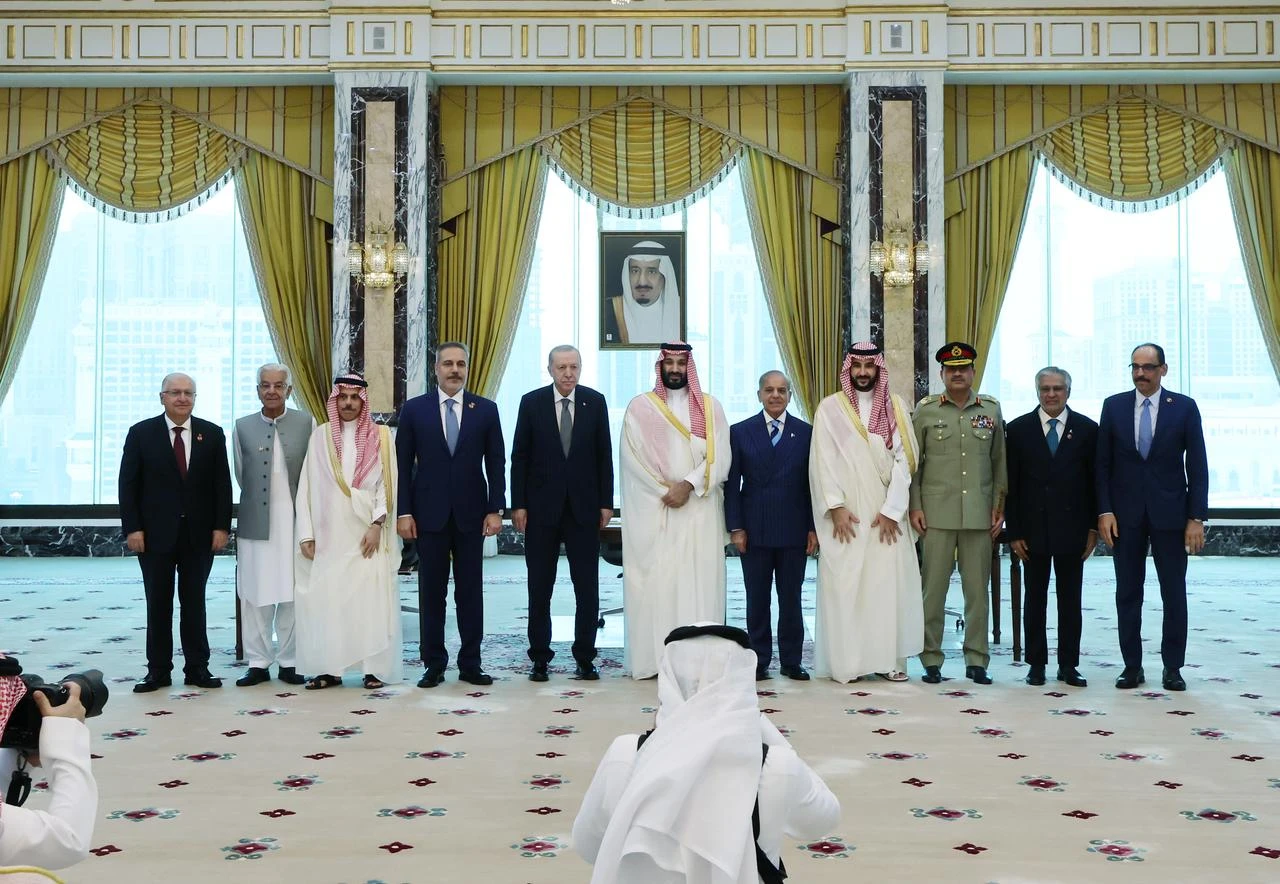
Fidan described the signing of the agreement as a "historic day," saying it represented one of the milestones Türkiye had been pursuing for years under President Recep Tayyip Erdogan's leadership.
Fidan said increasing regional ownership of security issues is central to Türkiye's approach.
"External hegemons coming into the region do not solve the problems; they make them more acute, and the cost becomes very high," he said.
He argued that regional countries should develop more institutional mechanisms through which they can ensure their own security, economic stability, development and prosperity.
Fidan said Türkiye has strong relations with almost all countries in the region, but added that many of those ties had been shaped by prevailing circumstances, political perceptions and temporary understandings.
He said Ankara wants to make its regional ties more lasting and structured in order to promote stability.
Lasting economic integration requires security and mutual trust, Fidan said.
Citing the European Union (EU) as an example, Fidan said the European Economic Community took shape in the environment provided by the U.S. security umbrella.
He said Türkiye's regional vision similarly seeks to reduce instability and eventually foster greater economic and social integration, improving the prosperity of regional populations.
Fidan acknowledged that the initiative is still at an early stage and would not be easy to establish, but said Türkiye had completed the conceptual and institutional preparations.
He said preparations for the Mecca Joint Defense Agreement had been underway for nearly three years, with talks involving signatories and other regional countries.
The process evolved from an initial idea into a concept and ultimately into an agreement, while Erdogan repeatedly raised the issue with regional leaders, Fidan said.
Fidan said the Mecca initiative is not a new phenomenon within NATO and stressed that Türkiye is aware of its responsibilities.
"Türkiye is also a country that is aware of its responsibilities. We are in no position to keep these different geographies and different priorities in conflict with one another," he said.
He said this was an area that needed to be managed and noted that he had raised the issue during a meeting with his German counterpart.
Fidan said Türkiye's objective was based on regional ownership and that Ankara has weight in several strategic locations.
He said there had also been serious discussions about what could be done in terms of a security architecture with Europe.
"Türkiye, by virtue of its geography, has a strategic orientation toward Europe, the broader European geography through the Caucasus, Middle East, Black Sea, Mediterranean and the Balkans," Fidan said.
"You need to develop a perspective for each strategic basin and harmonize these perspectives even if areas of tension emerge," he added.
Fidan said Türkiye's experience within NATO had shown that Ankara has different geographic conditions from other members, particularly regarding the Middle East and the Caucasus.
He said Türkiye's strategic sphere is broad and that each strategic basin has different conditions requiring separate approaches.
Fidan said Türkiye is seeking to develop security and economic architectures for those areas together with regional countries rather than through a hegemonic approach.
"We are not going with a hegemonic understanding, so we need to do this together with the countries of the region," he said.
Fidan said the agreement imposes obligations on the signatory countries.
He noted that Türkiye has been a member of NATO since 1952 and has participated in NATO meetings for many years.
Fidan said the Mecca Joint Defense Agreement is technically similar to NATO's Article 5 on collective defense, allowing members to benefit from one another's protective support.
He said NATO's core deterrence is defensive and built around the message: "If you attack me, I have the military power of this large alliance."
Fidan said this prevents conflict and enables countries to resolve political and economic problems.
NATO has taken collective military action in a limited number of cases, including Afghanistan and Kosovo, he added.
Fidan said the alliance's core purpose is to ensure that potential adversaries understand the consequences of attacking a member, thereby creating an environment in which countries can address political and economic problems and pursue development without being disrupted by conflict.
He stressed that violence, war and bloodshed are among the main factors preventing regional development.
"We are now in solidarity with each other," Fidan said, explaining the principle behind the alliance.
"You increase your deterrence capability. Secondly, rather than sending a message to an outside party, countries signing such alliances demonstrate and commit that they will not pose a threat to each other's security but instead guarantee each other's security," he said.
Fidan said this is the starting point of a security alliance, adding that members would then need to work according to existing threats.
Asked whether an attack would immediately trigger an obligation under the agreement and how that obligation would become operational, Fidan said the text contains general commitments whose practical implementation would depend on discussions and decisions by relevant bodies.
He said a country would need to request assistance and determine what type of support it needs.
Fidan added that a country could request different forms of support, ranging from intelligence and logistics to ammunition or, if necessary, military units, depending on the scale of the threat.
Fidan said the alliance would have a political and military committee comprising foreign ministers, defense ministers and chiefs of general staff, similar to NATO structures.
The committee would translate the vision set by the leaders into decisions within the alliance and carry out related work, while a secretariat would be established to implement those decisions, he said.
"The issue discussed most among the leaders yesterday was cooperation in the defense industry and countries benefiting from each other's technologies," Fidan said.
He added that the alliance would go beyond the signing of the agreement, with a secretariat overseeing defense-related issues and monitoring implementation.
"As the signatures have only just been put on the agreement, we have not started this work yet," Fidan said.
He said that after the first committee meeting, ministers would likely present proposals to the leaders on the establishment, structure and functioning of the secretariat, as well as its initial tasks.
Fidan said the alliance would cover a broad range of military issues, including interoperability, or the ability of countries with different military structures to operate together.
Other areas would include joint training, mutual support, logistics, threat assessments, intelligence sharing and defense industry cooperation.
He described the alliance as a serious institutional undertaking requiring continuity, saying its work would eventually become routine.
"Countries will not find themselves in a situation where, when they are under pressure, they ask, 'What were we going to do together?'" he said.
Fidan stressed the importance of institutionalizing foreign policy and security cooperation rather than leaving success to chance.
"We should not leave success in foreign policy or any other area to chance. We need to institutionalize it and make it continuous," he said.
Fidan said countries should build alliances around shared interests, describing Türkiye, Saudi Arabia and Pakistan as the "core countries" of the initiative.
He said a single strategic political and military committee had been established, bringing together the foreign ministers, defense ministers and chiefs of general staff.
The committee will meet at certain intervals during the year, and a permanent secretariat will be established in Saudi Arabia, Fidan said.
The structure, functioning and additional units of the secretariat will be determined in discussions among the members.
Fidan said joint exercises and training would be needed to allow the countries to operate together.
"Because after a while you will see that when you find yourselves in a common combat scenario, how your weapons systems and communications systems will communicate with one another and how they will be compatible are important issues," he said.
"These are the things that will be done after the secretariat is established," he added.
He said standards would need to be developed and that analyses and assessments would also be carried out, noting that the alliance has a substantial amount of work ahead.
Fidan compared the planned structure with NATO's much larger secretariat and military headquarters in Brussels, describing NATO as a very large military alliance.
 2 min read
Asked whether Türkiye's participation in a defense alliance could affect its role as a mediator, Fidan said being a NATO member had not prevented Türkiye from mediating between Russia and Ukraine.
"Russia has an allergy to NATO. It is also at war with Ukraine. Türkiye is a NATO member country. Many NATO countries support Ukraine, but there is no problem with acting as a mediator," Fidan said.
"This is somewhat about where you stand as a country and how you work," he added.
He said confidence in Erdogan's political leadership was also important and that he saw no obstacle to Türkiye serving as a mediator when the parties believed it was the appropriate intermediary.


 Set as preferred source
 Set as preferred source


 1 min read