Newsletters


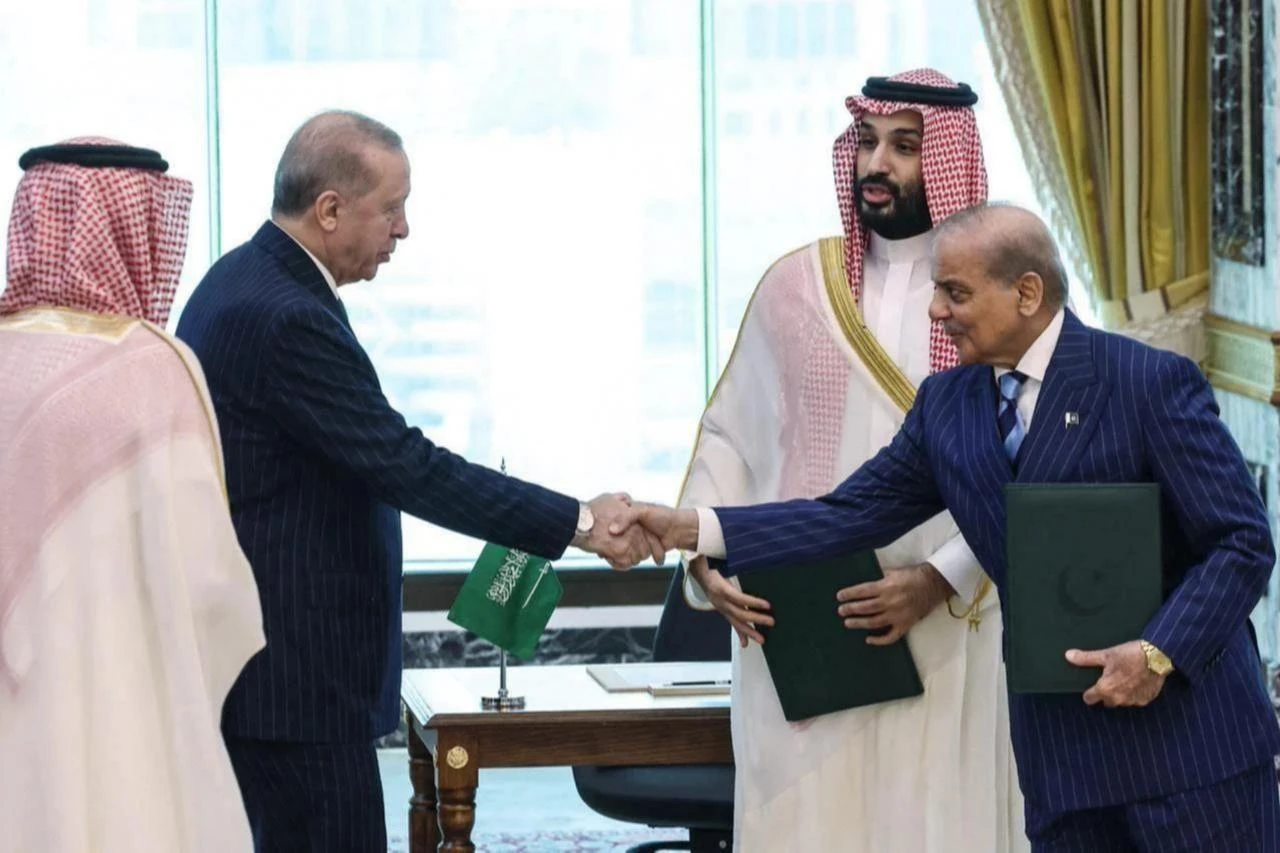


For decades, Saudi Arabia, Türkiye and Pakistan have been linked by shared religious identity, historical ties and political solidarity. Yet the three countries have rarely acted as a coordinated strategic bloc. Recent developments suggest this pattern may be shifting.
In recent years, a dramatic shift has taken place across West Asia and the surrounding regions, as states that once relied heavily on external security guarantees from countries such as the United States now seek greater regional self-reliance and strategic autonomy by aligning with minilateral agreements.
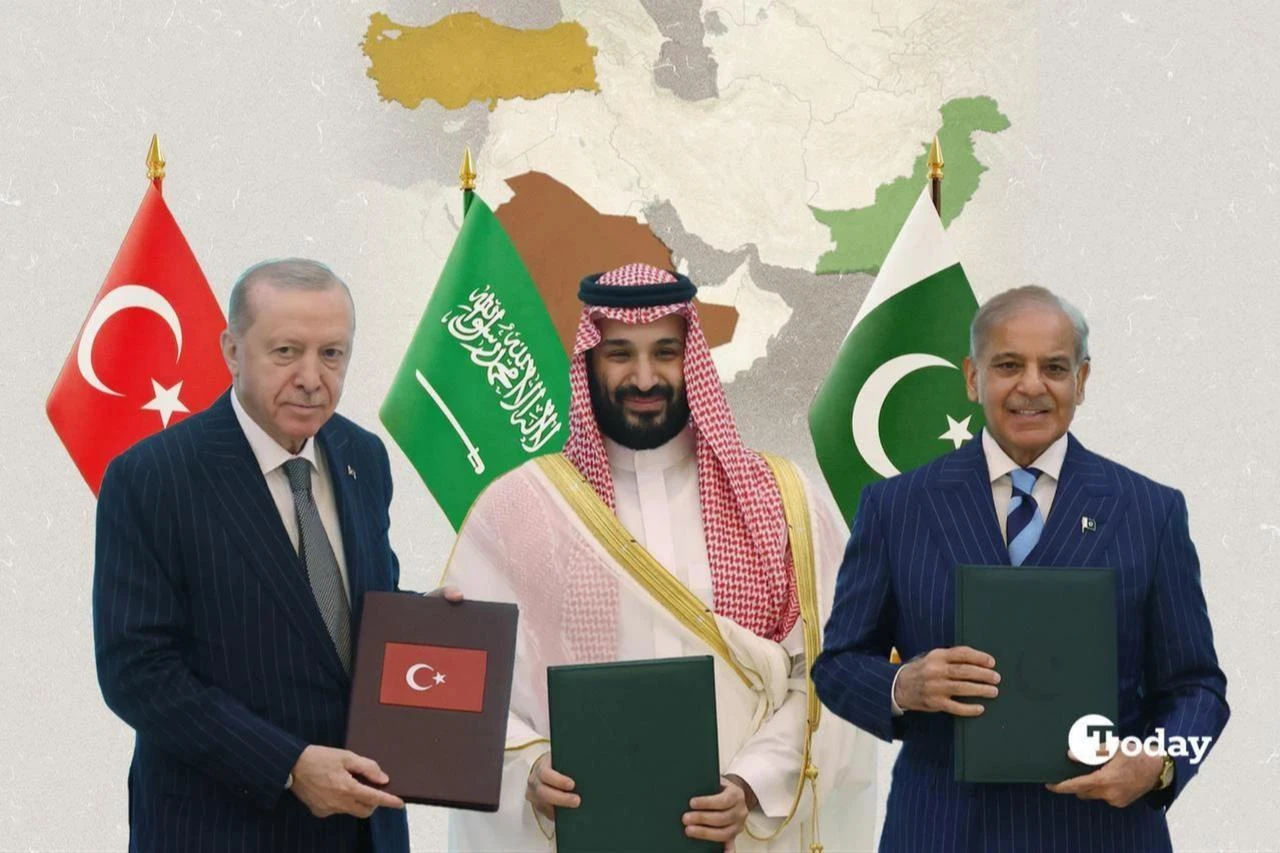
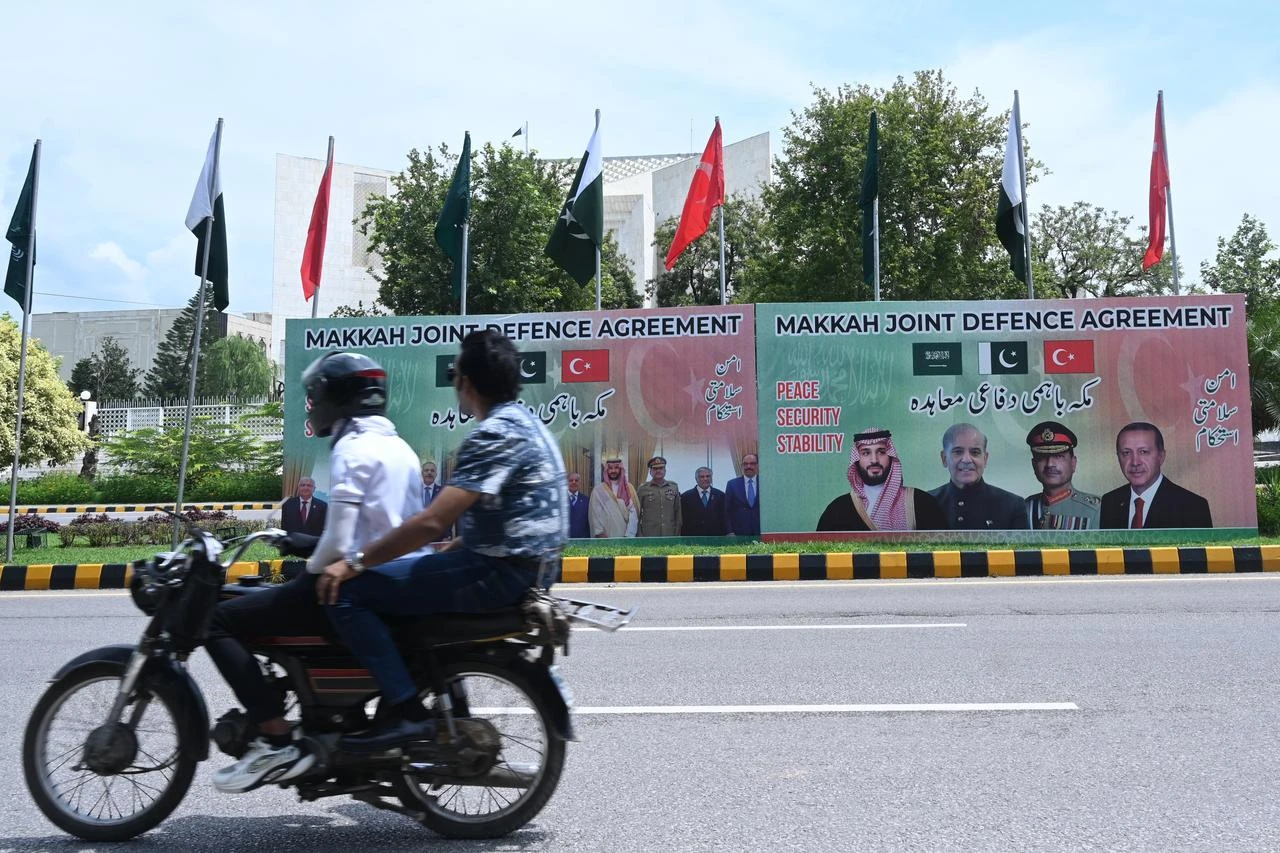
In this context, Saudi Arabia, Türkiye and Pakistan formalized the Mecca Joint Defense Agreement on Aug. 7. Reportedly, the accord includes a NATO-style Article Five commitment, under which aggression against one member would be treated as aggression against all three. It aims to strengthen collective defence, deepen political alignment and promote a stronger partnership in defense industry and technology.
Riyadh and Islamabad share a long history of strategic and military partnership. In September 2025, the two countries signed a Strategic Mutual Defense Agreement, laying the foundation for future collaboration. Meanwhile, as part of its border strategy to renew relations with the Gulf and expand economic, diplomatic and defence-industrial partnerships, Ankara also amended its relations with Riyadh.
In 2026, these bilateral relationships are becoming increasingly interconnected. The result is a triangle in which each country offers something the other two lack. The triangle forms a complementary partnership in which Riyadh provides substantial financial resources, exerts geopolitical influence across Arab and Muslim regions and plays a vital role in Gulf security.
Ankara offers a large, evolving defense industry, robust military capabilities, and strategic geographical links to Europe, the Black Sea, West Asia and the Mediterranean. Pakistan, a nuclear-armed state with a strong military and a strategic geographical location, provides a sense of resilience and influence.
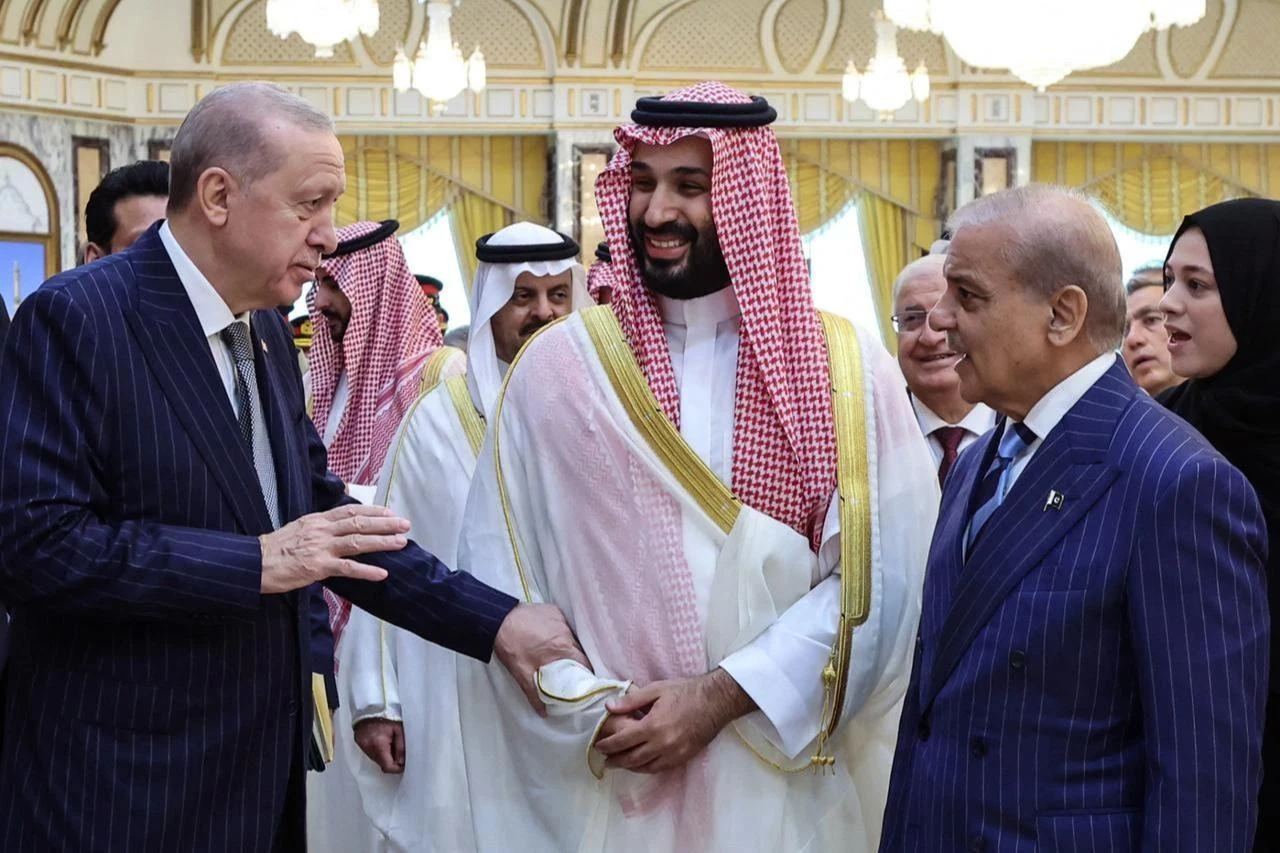

For the agreement to remain vital, the timing is crucial. The U.S./Iran conflict has created mounting challenges in the Gulf region by exposing vulnerabilities in energy infrastructure, maritime routes, and external security assurances, prompting regional governments to reassess their reliance on external powers for security.
In Riyadh, diversifying security is central to Vision 2030, with a focus on investment, infrastructure, and energy to safeguard against economic instability. However, Ankara aims to position itself as a rule-maker within the regional system, moving beyond merely managing instability along its borders.
It has significant defense-industrial capabilities, including drones, naval platforms, and other domestically produced technologies. Partnering with Pakistan enables joint development and manufacturing, while cooperation with Saudi Arabia provides access to capital, markets, and strategic Gulf networks.
Türkiye's geographical location also offers an added advantage. Positioned at the intersection of Europe, West Asia, the Caucasus, and the Black Sea, Ankara sits at a geopolitical nexus. Combined with a growing defence industry and more proactive diplomacy, this geography enables Türkiye to connect security issues often viewed as isolated.
For Pakistan, the agreement goes beyond military cooperation. Islamabad has long navigated a complex geopolitical landscape at the crossroads of South Asia, China, the Gulf, and the broader Muslim world. This new deal could enable Pakistan to expand its influence in West Asian diplomacy and better leverage its defence strengths and deep-rooted ties with Saudi Arabia.
In 2026, Pakistan's diplomatic role in the U.S.–Iran negotiations has already heightened its visibility. The Regional-4 (R-4) ministers specifically commended Pakistan's efforts to facilitate the U.S.–Iran memorandum.
This has resulted in a unique convergence: Pakistan is simultaneously a South Asian power, a nuclear-armed state, a close ally of China, a longstanding security partner of Saudi Arabia, and an increasingly active diplomatic player in West Asia. This combination gives Islamabad a rare ability to link South Asian, Gulf and broader Muslim diplomatic initiatives.
This development is best understood through the lens of minilateralism. Minilateral arrangements involve a small number of states focused on specific strategic interests, unlike large multilateral organisations.
Their main advantage is flexibility, enabling quicker responses to crises and avoiding the bureaucratic complexity typical of larger international institutions.
Türkiye-Pakistan–Saudi framework represents a form of regional minilateralism, with three countries in distinct geographic locations and with different capabilities collaborating on shared interests. Minilateralism is effective because states collaborate where their interests align while preserving independence in other areas.
This trend extends beyond the defense pact. Saudi Arabia, Türkiye, Pakistan and Egypt have formed the R4 consultation mechanism and held their fourth foreign ministers meeting in Cairo in June 2026.
The discussion centered on regional security, de-escalation and the wider impacts of conflict on energy markets, maritime routes and international trade. They also acknowledged the U.S./Iran memorandum of understanding and appreciated Pakistan's diplomatic efforts in supporting the process.
The R-4 meeting indicates that the relationship is developing within a broader regional consultation network, rather than the three countries quickly forming a standalone military triangle. The official statement notes that the four states regard R-4 as a platform for discussing and coordinating efforts on regional peace, security, and stability.
Strategic partnerships go beyond symbolism, as the three countries have differing perceptions of threats, economic priorities, and alliances with other major powers.
While Türkiye, Pakistan, and Saudi Arabia may agree on defense cooperation and regional stability, they do not always share a common stance on Iran. The durability of their security alliance will hinge not on complete consensus on every regional matter, but on their ability to manage disagreements while pursuing shared interests. Ultimately, this will determine whether it evolves into a lasting regional institution or remains largely a symbolic political gesture.
The durability of this security framework will depend not on complete agreement on every regional crisis, but on managing disagreements effectively and collaborating when interests align.
The rising triangle also attracts interest beyond its three signatories. For Israel, the deal matters because a more aligned Türkiye-Pakistan-Saudi security partnership could reshape the strategic landscape in which Israel operates.
Türkiye's growing opposition to Israeli policies, Saudi Arabia's key role in Arab diplomacy, and Pakistan's long-standing non-recognition of Israel give this emerging alliance a political tone distinct from Israel's current regional ties.
However, it is too early to view the pact as outright anti-Israeli. Ankara has emphasised that the agreement is primarily defensive and not aimed at any specific country.


 Set as preferred source
 Set as preferred source


 2 min read
 1 min read