Newsletters


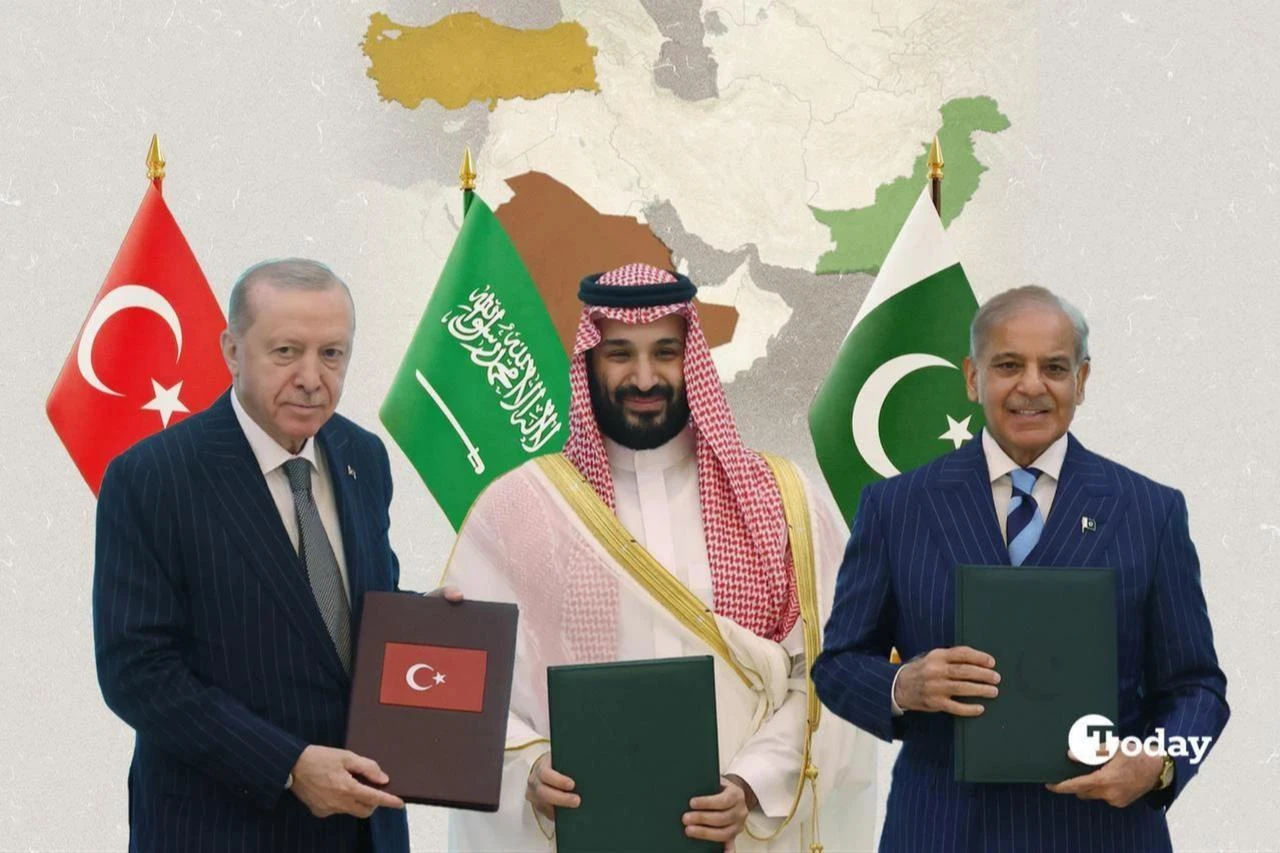


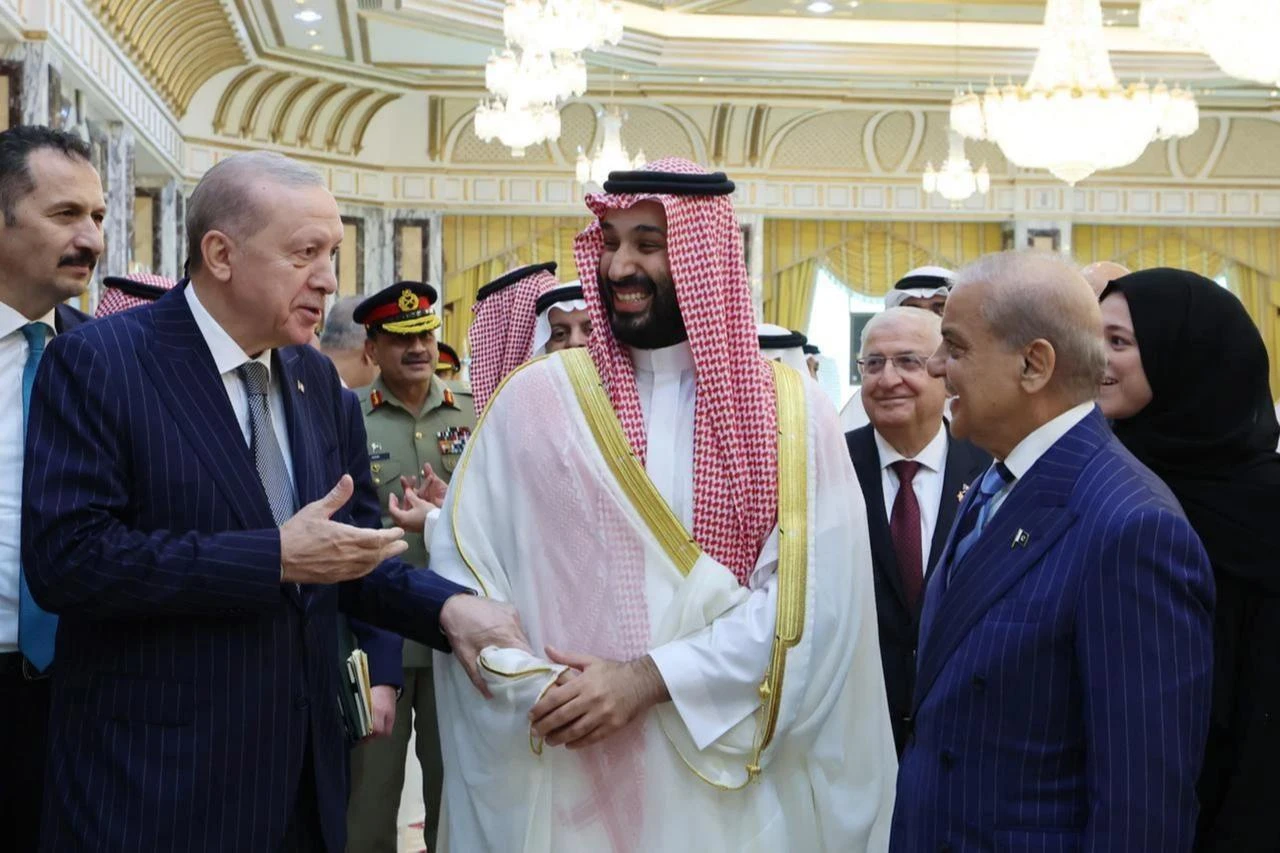
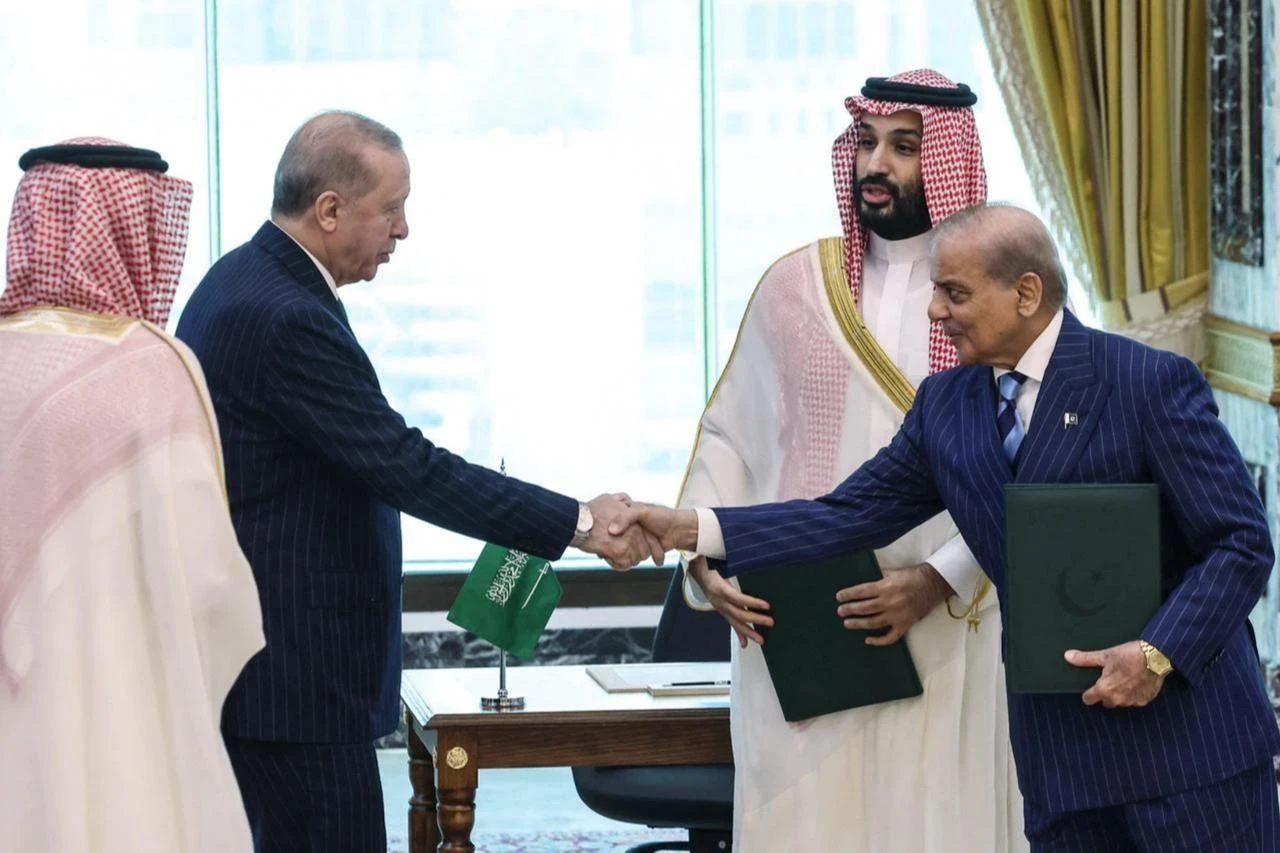
The Mecca Joint Defense Agreement signed by Türkiye, Saudi Arabia and Pakistan on Aug. 7 is tempting to describe in familiar terms. Its collective-defense provision, under which an armed attack against one party is regarded as an attack against all three, inevitably invites comparisons with NATO.
Yet labels such as “Muslim NATO” or “Sunni NATO” obscure more than they explain. The significance of Mecca lies less in the creation of another formal military alliance than in what it reveals about the emergence of a new regional security architecture.
That architecture is being constructed in a strategic environment increasingly shaped by regional actors themselves. The agreement envisages political and military consultation mechanisms, joint exercises across multiple domains and deeper defence-industrial cooperation, including joint development, production and technology transfer. At the same time, Ankara has stressed that the pact neither replaces Türkiye’s NATO commitments nor targets a particular state.
This distinction is important. Mecca should not primarily be understood as preparation for Türkiye and Pakistan to enter Saudi Arabia’s wars, whether against Iran or the Houthis. Its purpose is more plausibly to strengthen deterrence without necessarily widening existing conflicts.
All three countries have reasons to avoid an uncontrolled confrontation with Iran even as all three also have serious security disagreements with Tehran.
The more interesting question, therefore, concerns the political geography developing around the agreement.
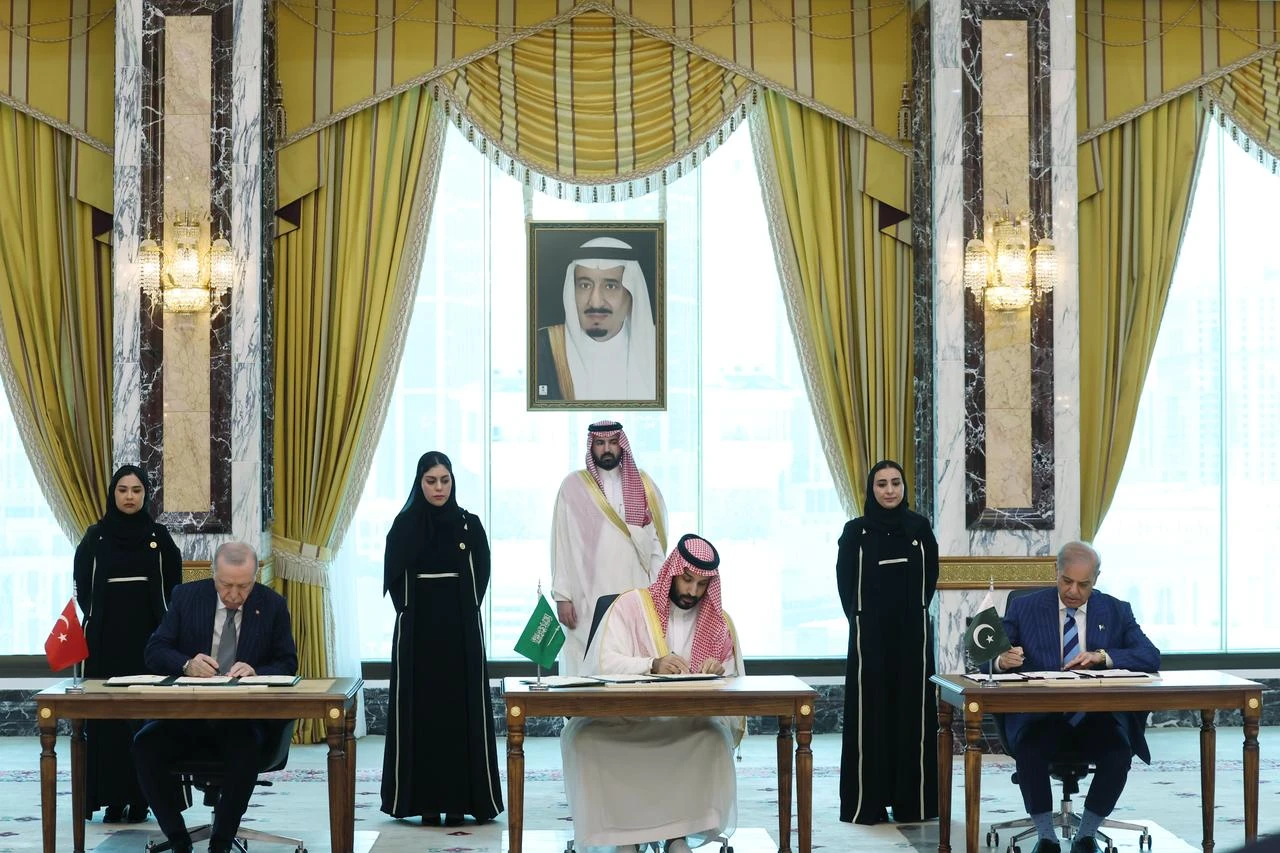

Each Mecca partner faces a different constellation of rivals and competitors. Türkiye increasingly confronts Israel strategically across Syria and the Eastern Mediterranean while simultaneously managing a complex relationship of competition and cooperation with Iran.
Saudi Arabia must balance Iran and the Houthis while its increasingly visible rivalry with the UAE extends into questions of regional leadership and theatres such as Yemen, Sudan and the Red Sea.
Pakistan’s overriding security concern remains India, while it too must manage an uneasy relationship with Iran.
Meanwhile, several of these competitors have been developing increasingly dense relationships with one another or with states around the geographical periphery of the three Mecca partners.
Israel and the UAE have moved far beyond the diplomatic normalization established by the Abraham Accords. During the 2026 conflict with Iran, their relationship acquired an unusually tangible military dimension, with Israel reportedly providing the UAE with air-defense systems, personnel and real-time intelligence against Iranian attacks.
India and the UAE likewise agreed in May on a strategic defense partnership covering defense industry, exercises, maritime security, cyber defense and information exchange.
India and Israel already possess a mature defense and security relationship. Israel, Greece and the Greek Cypriot Administration have similarly institutionalized their cooperation, including a trilateral military work plan for 2026 and commitments to deepen cooperation in security, defense and maritime protection. Greece has also approved a multibillion-euro Israeli air-defense acquisition under the “Achilles Shield” project.
Further east, India has become one of Armenia’s important new defense suppliers and the two countries have just moved to broaden defence-industrial cooperation, equipping the Armenian army after its defeat in 2020 against Azerbaijan. Armenia, meanwhile, remains strategically connected to Iran.
On the other side of the South Caucasus equation, Azerbaijan’s close relationship with Türkiye and Pakistan coexists with its longstanding security relationship with Israel, with the latter being Baku’s primary defence equipment supplier.
This last example demonstrates why the emerging order cannot be reduced to two rigid camps. What is taking shape is not a Middle Eastern version of the Cold War, with two neatly separated alliance systems. It is a competitive network of overlapping partnerships. Nevertheless, a broad pattern is becoming visible.
The Abraham Accords increasingly provide one institutional and political center of gravity. Around the Israel-UAE relationship is developing a wider network extending toward India, Greece, the Greek Cypriot Administration and other partners.
Mecca potentially provides another center of gravity, built around Türkiye, Saudi Arabia and Pakistan and possibly open eventually to countries such as Egypt and other Arab states. The signatories themselves have described the framework as potentially expandable.
Rather than viewing Mecca in isolation, therefore, it may be more useful to assess it alongside the Abraham Accords as part of an emerging competition between regional security architectures.
The geography of that competition matters. The Red Sea and Horn of Africa connect Saudi security concerns with Türkiye’s growing strategic presence in Somalia and the wider African theatre. Sudan sits at the intersection of Saudi, Emirati, Turkish and Egyptian interests.
The Levant connects Türkiye’s concerns about Syria and Israel with Gulf calculations. The Eastern Mediterranean links Türkiye directly to the Israel-Greece- Greek Cypriot Administration relationship.
The Gulf remains the principal arena in which Saudi Arabia, the UAE and Iran interact and compete. These are not separate geopolitical theaters anymore; they increasingly form a continuous zone of friction stretching from the Eastern Mediterranean to the Indian Ocean.
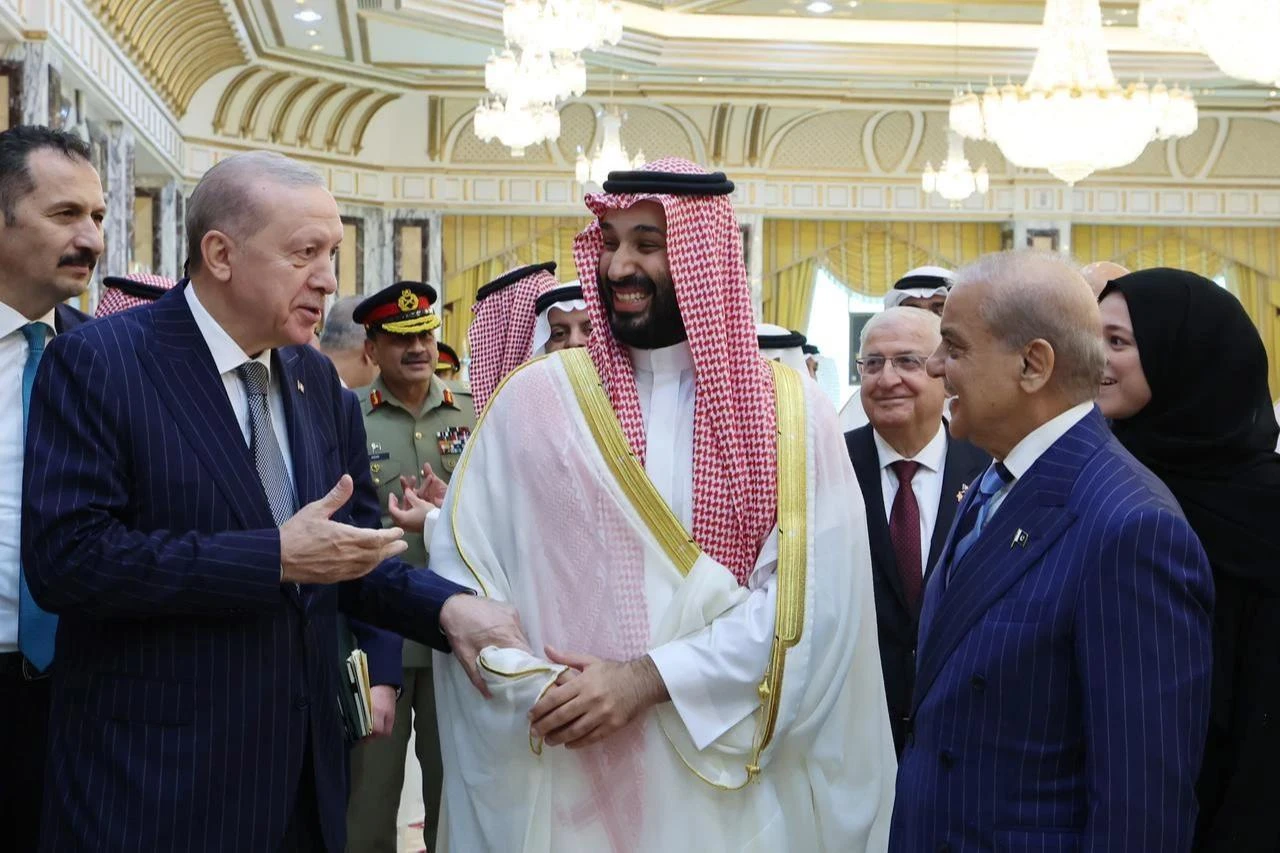
This is where the complementarity of the Mecca partners becomes particularly important. Türkiye contributes the most diversified conventional military capability: a large and operationally experienced NATO-standard armed force, substantial command-and-control experience and a defense industry capable of supplying platforms ranging from UAVs and precision weapons to warships, electronic warfare systems and increasingly sophisticated aerospace products.
Saudi Arabia contributes financial resources, energy weight and strategic geography. Pakistan brings a large and experienced military establishment, an expanding defense industry and, above all, the political weight associated with being a nuclear-armed state. The agreement itself does not establish a publicly defined Pakistani nuclear umbrella, but Pakistan’s nuclear status inevitably strengthens the pact’s overall deterrent image.
The defense industry may consequently prove more important than collective military intervention. Türkiye and Saudi Arabia were already moving from simple arms sales toward localization and industrial partnership, most visibly through the Bayraktar Akinci program, while Türkiye and Pakistan have longstanding naval and aerospace cooperation.
Mecca creates an umbrella under which procurement, joint production, technology sharing and interoperability can accelerate substantially.
Above both architectures still sits the United States, not as a party, but as a broker. Washington does not oppose the Mecca Agreement; it broadly welcomes burden-sharing among allies who remain, to varying degrees, inside a US-centred order.
Yet America now finds itself refereeing two competing constellations of its own partners, a role harder to sustain than the old arrangement in which U.S. primacy quietly contained regional rivalries.
Riyadh’s motive is instructive: despite a strategic defense agreement with Washington in late 2025 and designation as a major non-NATO ally, Saudi Arabia never secured the treaty-level guarantee it had long sought. Mecca is, in part, a hedge against that uncertainty.
Two variables will shape what comes next. The first is China and Russia, whose positions remain to be seen. Saudi and especially Pakistani ties to Beijing are strong, while Türkiye’s relationship with China is lukewarm, a divergence that could pull the bloc’s external alignment in different directions.
The second is the diplomatic heavy lifting required to institutionalize the pact. Its founders speak of a broader regional framework, potentially drawing in Egypt, Qatar, Jordan and Iraq; whether they can build the joint planning, intelligence-sharing and command mechanisms to make that real remains an open question.
The Mecca agreement is consequently neither an Islamic NATO nor simply another diplomatic declaration. Its real importance may be that it establishes a second organizing pole within an increasingly networked regional order.
Whether that pole becomes a durable security architecture will depend on what happens next: military interoperability, intelligence sharing, defence-industrial integration, maritime deployments and the willingness of the three states to incur costs on behalf of one another. The first tests may come not from a conventional attack on one of the signatories but from crises in the Red Sea, Sudan, Syria or the Gulf.
The Middle East may therefore be moving not toward the disappearance of American primacy, but toward something more complicated: a U.S.-managed environment containing increasingly autonomous and increasingly competitive regional security networks.
The Abraham Accords were one important step in that transformation. The Mecca Agreement may be another—and potentially the beginning of a counterweight.


 Set as preferred source
 Set as preferred source


 2 min read
 1 min read