Newsletters


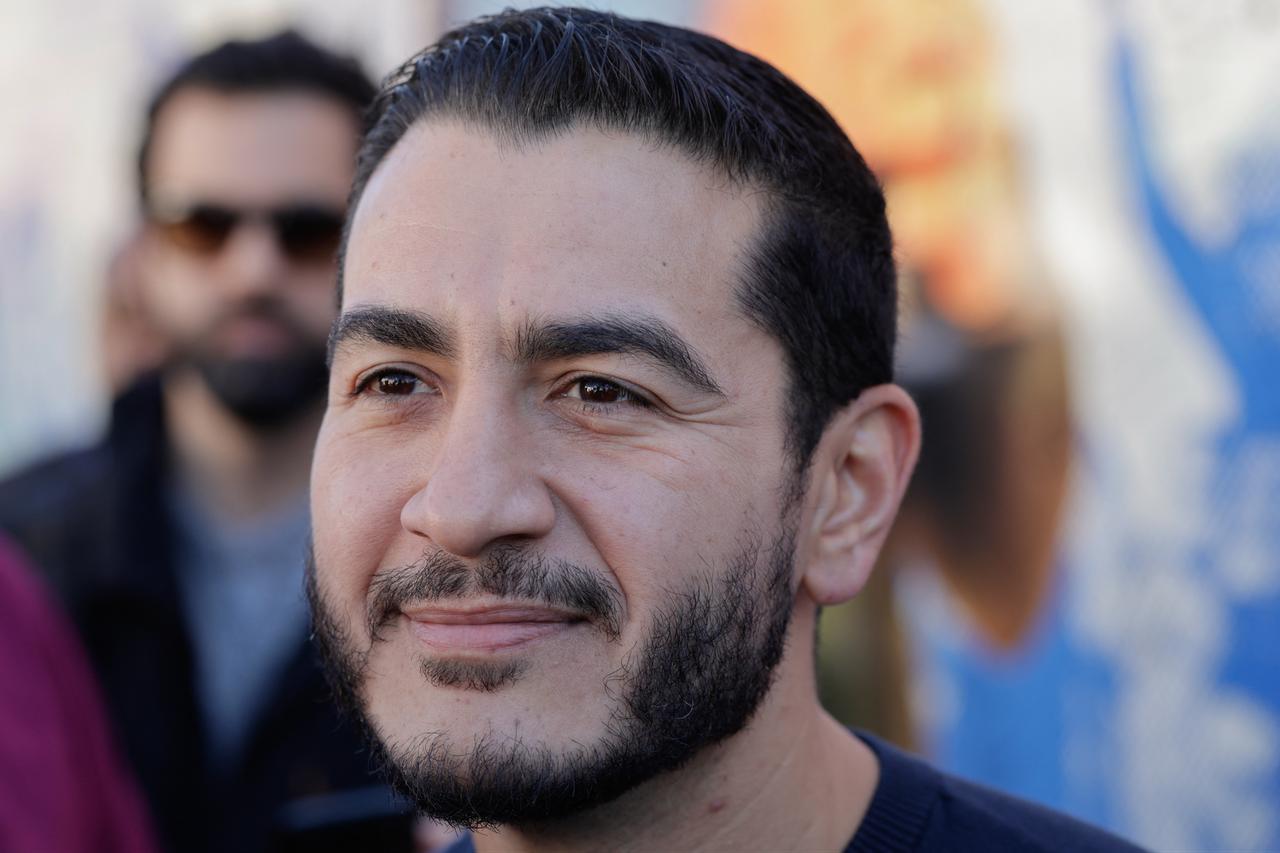


On Nov. 4 of this year, the morning after Election Day, voters in Michigan and across the United States could wake up to a historic midterm election outcome: progressive Democrat Abdul El-Sayed is favored to be elected as the first Muslim member of the U.S. Senate.
Amid a nationwide rise in both Islamophobia and antisemitism, the race for Michigan’s open Senate seat has become one of the most expensive and closely watched political contests in the country.
In total, Republican candidate Mike Rogers and major conservative national groups have raised over $90 million for the Republican side.
Overall spending for the contest—including candidate funds, party committees, and outside Super PACs—has topped $243 million, making it the most expensive Senate race in Michigan history. New York congresswoman Alexandria Ocasio-Cortez has notably donated $1 million to El-Sayed.
While he is popular on the left and with many Michigan voters, there have been rumblings from the Republican right wing, stoking fears of a Muslim being elected to the Senate. Currently, there are five Muslim members sitting in the U.S. Congress out of a total of 535 elected representatives. All five are Democrats serving in the lower House of Representatives.
No Muslim American has ever held a seat in the Senate. El-Sayed's candidacy represents a potential watershed moment in American political history, even as his campaign is being run against a troubling backdrop: the sharp rise in both Islamophobia and antisemitism across the country.
El-Sayed’s background and education—he holds a doctorate in public health from Oxford, which he attended as a Rhodes Scholar, and a medical degree from Columbia—reflect the credentials of a serious and thoughtful public servant.
A physician and former public health director, El-Sayed has a record that shows a commitment to systemic healthcare reform and evidence-based governance. His views on expanding medical access and lowering costs speak directly to voters' everyday lives, positioning his policy experience at the center of his appeal.
Yet predictable attacks have plagued his campaign, most notably concerning suggestions of a potential connection to the Muslim Brotherhood. The allegation is the definition of fake news: an unfounded yet repeated accusation with no real connection to any facts.
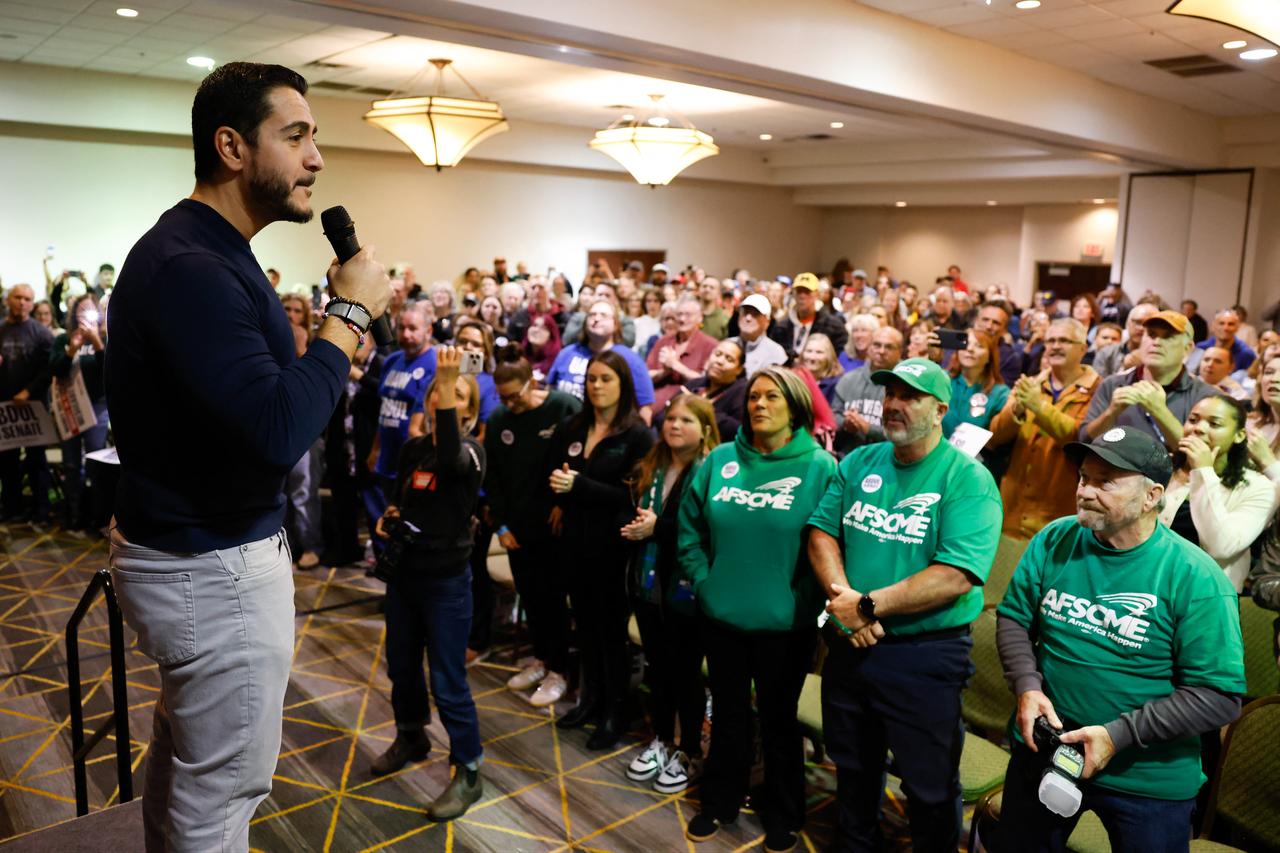
This dynamic was captured vividly during a recent town hall meeting in Michigan involving a member of the audience who identified himself simply as "Tommy."
During the event, Tommy asked El-Sayed to disavow any connections to the Muslim Brotherhood. El-Sayed agreed, but then turned the question back on his critic, asking whether Tommy had assumed he had some hidden agenda simply because of his religion.
El-Sayed pointed to how the question implied that his faith raised concerns about “dual loyalty,” comparing it directly to the historical doubts once raised about John F. Kennedy’s Catholicism, and reminded the voters that he was running for Senate as a candidate who simply "happens to be Muslim."
Video of their exchange rapidly went viral online, and news outlets subsequently identified "Tommy" as Thomas Teepell, who once served as operations director for right-wing Republican Sen. Josh Hawley. He is the son of Tim Teepell, a longtime Republican political strategist who previously served as chief of staff to the former Republican governor of Louisiana and has worked as a consultant on several major political campaigns.
Tommy’s question seemed like a classic attempt at a political smear, as both viewers in the room and online could clearly interpret the actual meaning behind it. But if anything, the exchange has made El-Sayed look even better as a candidate, demonstrating confidence, a sophisticated understanding of the U.S. Constitution, and an ability to effectively debate personal attacks under pressure.

Some of El-Sayed’s foreign policy positions, particularly regarding the Middle East, have also drawn scrutiny from the right-wing and pro-Israel factions of both parties.
El-Sayed has been openly critical of Israeli policy in Gaza and the wider region, but so have significant numbers of both Democratic and Republican voters. His views are by no means radical in this regard.
And while he has proposed ending military aid to Israel, his position is consistent across the region; he also opposes military sales to Saudi Arabia and Egypt, among others, demonstrating a coherent position on human rights and foreign spending rather than a targeted agenda.
The wider context of this race is being shaped by the current political and economic situation and the inevitable "Trump factor."
Facing the fallouts from the president’s unprecedented unpopularity across the nation, many Republican candidates have tried to quietly distance themselves from the White House on key issues, such as the deeply unpopular Iran conflict and the ongoing trade war with Canada (Michigan’s friendly neighbor to the north).
Michigan and Canada traded approximately $95 billion in total in 2025, and one would expect voters there to be rightly concerned about current U.S. trade policy harming local manufacturing and business interests.
Despite the gravitational pull of identity politics and ideological tribalism, this race cannot escape the economic facts on the ground. As El-Sayed has repeatedly pointed out, issues of the economy, the cost of living, and access to affordable healthcare (among other tangible concerns) will likely be what determines most Michigan voters' choice rather than his religion or Egyptian origins.
The numbers reflect an electorate focused on these practical concerns. Most recent polls have El-Sayed ahead of his Republican opponent with an aggregated lead of around 3%, according to MSN Now’s Oct. 20 polling update.
Polling breakdowns also show El-Sayed leading strongly among younger voters under 45, black voters, and in major urban areas such as Detroit. Now, 3% is not a huge margin, and much can change before Nov. 3, but it's clear that El-Sayed currently holds the momentum.
While smears aimed at his identity and faith are meant to divide and distract, Michigan voters appear increasingly focused on policy substance.
If current trends hold through to election day, El-Sayed’s win won't just bring a historic victory for the progressive Democrat; it will signal that economic realities matter more to voters than the shallow politics of division.


 Set as preferred source
 Set as preferred source


 3 min read
 1 min read