Newsletters


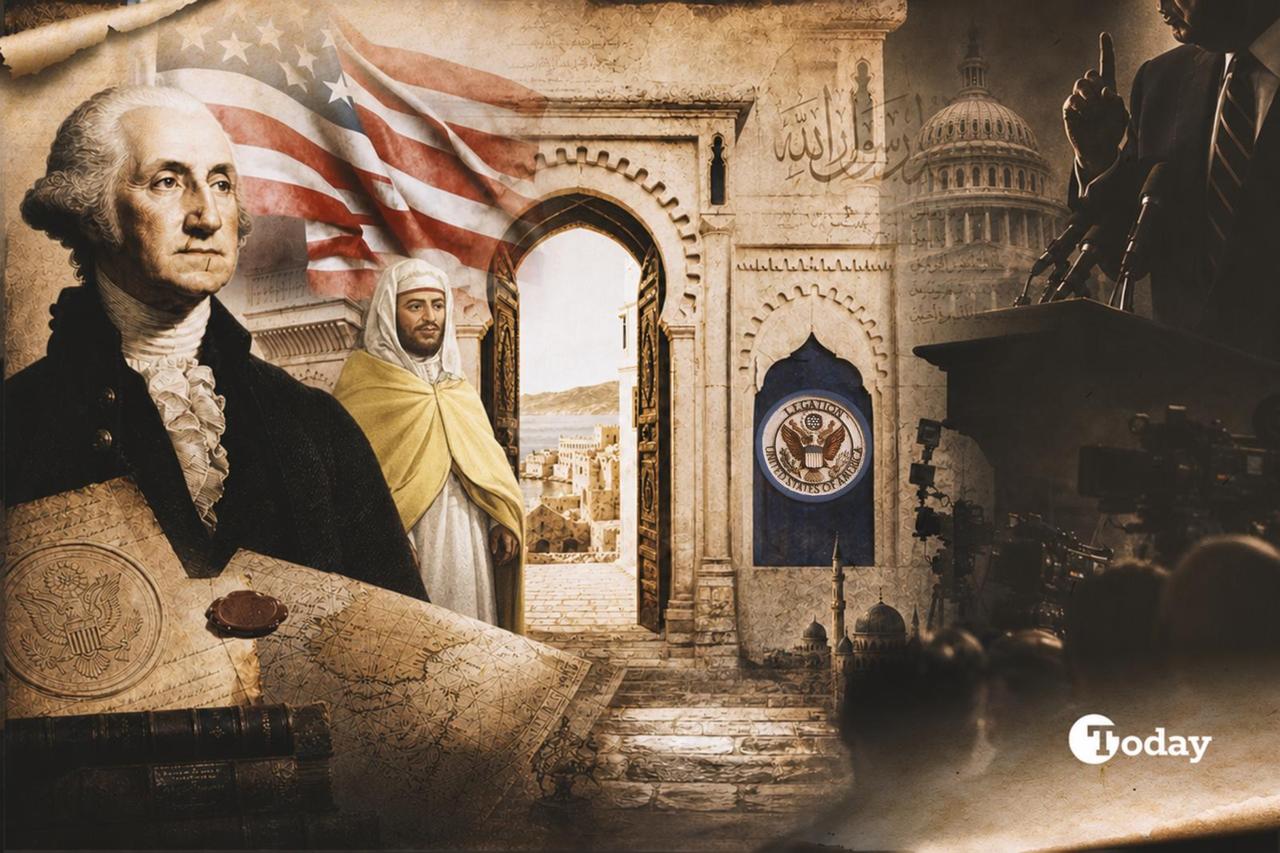


Long ago, before the librarian Jane Stubbs crossed the Pillars of Hercules by way of Natchez, Mississippi, a bejeweled porter stepped into the freezing white-capped surf.
It was December 7, 1797. Beyond him stood Tangier. On his shoulders rode James Simpson, coming ashore to meet the Muslim world.
No watchlist waited for the Scottish merchant, and no demagogue was making a career out of the sinister implications of a Muslim name. The national fever had not yet reached the point where a mosque could be mistaken for an invading army, or the American political imagination could conjure the Muslim at the gate—a wonderfully convenient monster President Donald Trump and his MAGA cronies would eventually move inside.
Instead, Simpson was being sent through the gate. He became the first American consul to the realm of Islam, arriving in Morocco barely eight years after George Washington became president of a republic still trying to convince the world it might survive.
It was First Contact: the young American republic coming face-to-face with the Islamic world, an 18th-century close encounter of the third kind—not by gunboat or crusader, but on the shoulders of a hammal wading through the winter sea.
“There was no American bad blood toward Islam in the 18th and 19th centuries,” Stubbs says inside the American Legation, Uncle Sam's first diplomatic outpost in Muslim territory, where 25 industrial-strength humidifiers now hum against Atlantic damp and burrowing termites and two centuries of fragilely recorded history.
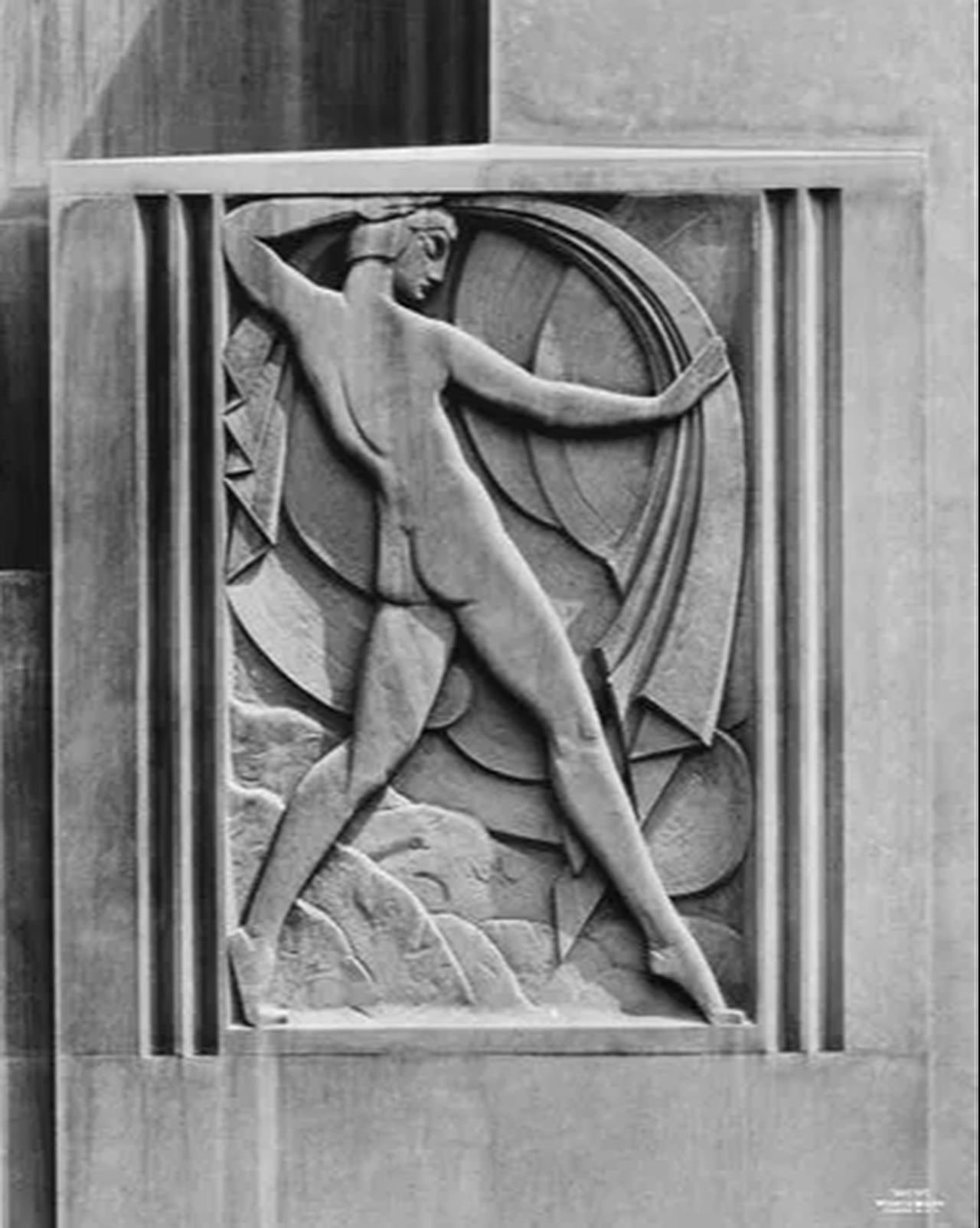

Before there was a kasbah to rock, Stubbs was a New York antiquarian book dealer with a perch inside Bergdorf Goodman. Nearby stood Bonwit Teller, the Fifth Avenue landmark Trump demolished in 1980 for Trump Tower, along with Art Deco sculptures promised to the Metropolitan Museum of Art.
Stubbs traveled the other way: from Fifth Avenue to Tangier, from a place where the past was knocked down to an American outpost in the Muslim world she is determined to keep standing.
The instinct for history and old paper took root at Tulane University in New Orleans. In Tangier, Stubbs now keeps watch over some 10,000 books, manuscripts, parchments, and histories that include the leather-bound remains of "Al-Moghreb Al-Aksa: The First Newspaper Published in the Moorish Empire."
“The records show Americans considered the Muslims scholars, erudite, and great connoisseurs,” Stubbs says through air thick with the briny damp of the Atlantic and a Mediterranean mist that settles into the walls.
The newspaper archives reveal there were Americans in Tangier who understood that diplomacy was not the only way to inspect a civilization.
Miss Blake had gossip.
Her column, “The Sultan’s Court,” chronicled what the viziers were doing after hours, transforming the machinery of the Moorish state into something resembling a society page. Ministers had lives. Courtiers had intrigues. The Muslim world was not some faceless horde massing beyond Christendom but a place populated by recognizable human beings behaving, reassuringly, like human beings everywhere.
And at night, when Tangier had exhausted its supply of tittle-tattle, the spectacle moved offshore. Across the Strait stood the Rock of Gibraltar, while overhead the shooting stars provided the only gunfire worth reporting.
It was another kind of American encounter with Islam: curiosity instead of panic, observation instead of caricature—a distinction worth remembering in September 2026, 25 years after 9/11, as another election season fills with politicians marketing Islam as an invading army rather than the faith of millions of their fellow citizens.
Morocco opened its ports to American ships in 1777 and signed a treaty with the new republic in 1786. In 1821, Sultan Moulay Suleiman gave the U.S. one of the salt-worn “dars” of the kasbah—America's first diplomatic property abroad and, eventually, its only National Historic Landmark on foreign soil.
The oldest physical piece of America outside America was a gift from a Muslim ruler. Try fitting that into the bumper-sticker theology of"All I Need to Know About Islam I Learned on 9/11." But the bumper decal forgot to mention the pirates.
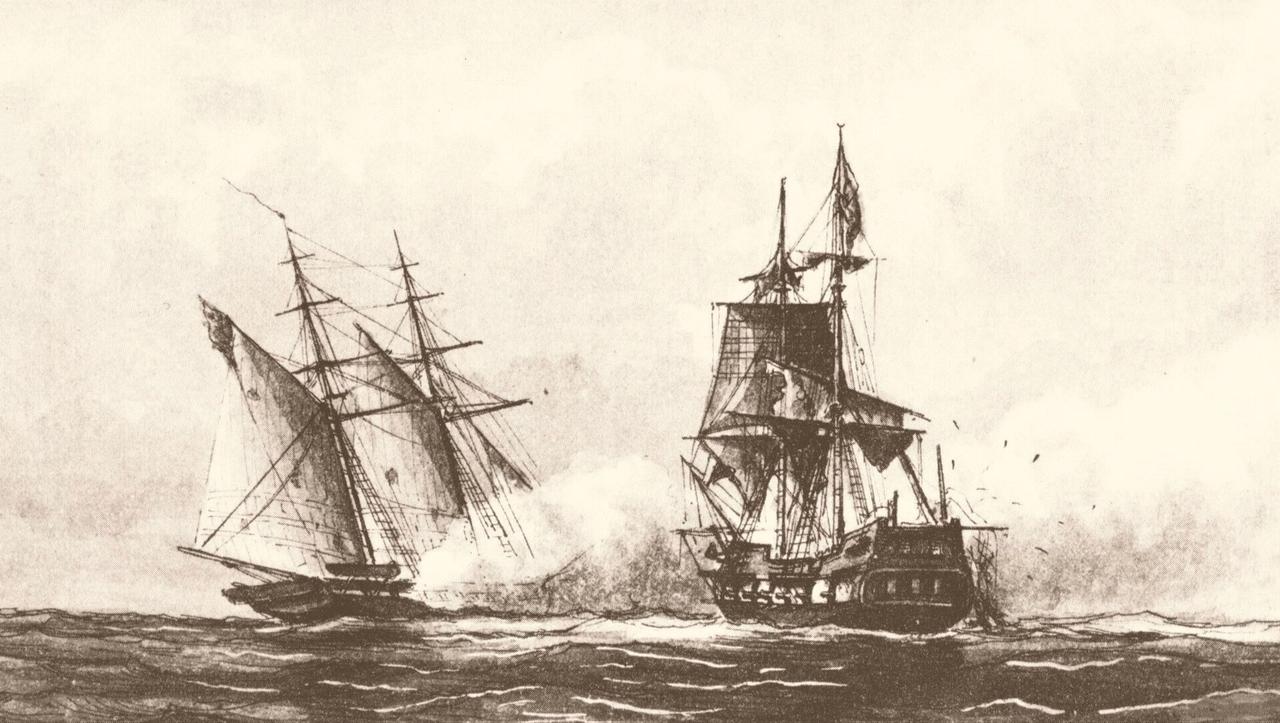
Corsairs, technically, though the distinction mattered little when they had your ship and crew. Independence had cost American merchants Royal Navy protection, leaving plenty of commerce and precious little to defend it. The Sultan wanted trade; America wanted safe passage. When his overtures went unanswered, a Moroccan corsair seized an American merchantman in 1784. By 1786, diplomacy suddenly looked pretty good.
Step through the Legation’s doors, and Washington is waiting, his words running across the wall like a message left there for America to find. Writing to Sultan Mohammed in 1789, the new president admitted that his battered little country had neither gold nor silver to throw around.
“But our Soil is bountiful, and our People industrious,” Washington wrote, “and we have Reason to flatter ourselves, that we shall gradually become useful to our Friends.”
Friends. Not infidels. Not invaders. Not a caliphate.
“Islam did not bother George Washington and the Founding Fathers,” Legation director Jennifer Rasamimanana says. “Islam was not a problem.”
“The best of America is here on display in the Legation,” she adds, sweeping a hand across the room, where two centuries of American-Muslim diplomacy linger in the old plaster, worn tile, and salt-heavy air.
This does not mean the Founders back home wandered around Philadelphia preaching interfaith harmony.
In Hillsborough, North Carolina, in 1788, the worthies assembled to consider ratification and discovered terrifying creatures lurking inside Article VI: “Mahometans and Papists.”
The Constitution prohibited religious tests for federal office. William Lancaster contemplated the consequences: “Papists may occupy that chair, and Mahometans may take it.”
Henry Abbot pushed the nightmare further. Without religious tests, he warned, “pagans, deists, and Mahometans might obtain offices among us.”
The young republic stood one badly supervised election away from theological chaos.
Then James Iredell rose.
Iredell, soon to become one of the first justices of the U.S. Supreme Court, did not argue that Muslims would never seek office.
“How is it possible to exclude any set of men,” Iredell asked, “without taking away that principle of religious freedom which we ourselves so warmly contend for?”
Allow religious exclusion, he warned, and “the door to persecution is opened.”
If a non-Christian acquired “the confidence and esteem of the people of America by their good conduct and practice of virtue,” Iredell said, “they may be chosen.”
That was 1788.
“American prejudices generally come from two sources, wars and large-scale waves of immigration,” explains Robin Einhorn, Professor Emerita of American History at the University of California, Berkeley. “Neither of these raised much concern about Muslims until the Iranian Revolution and the hostage crisis, and especially 9/11.”
The Muslim American politician whom Republican America is being instructed to fear in 2026 was, theoretically at least, standing inside the Constitution before Washington had even taken the presidential oath.
And now they’ve arrived.
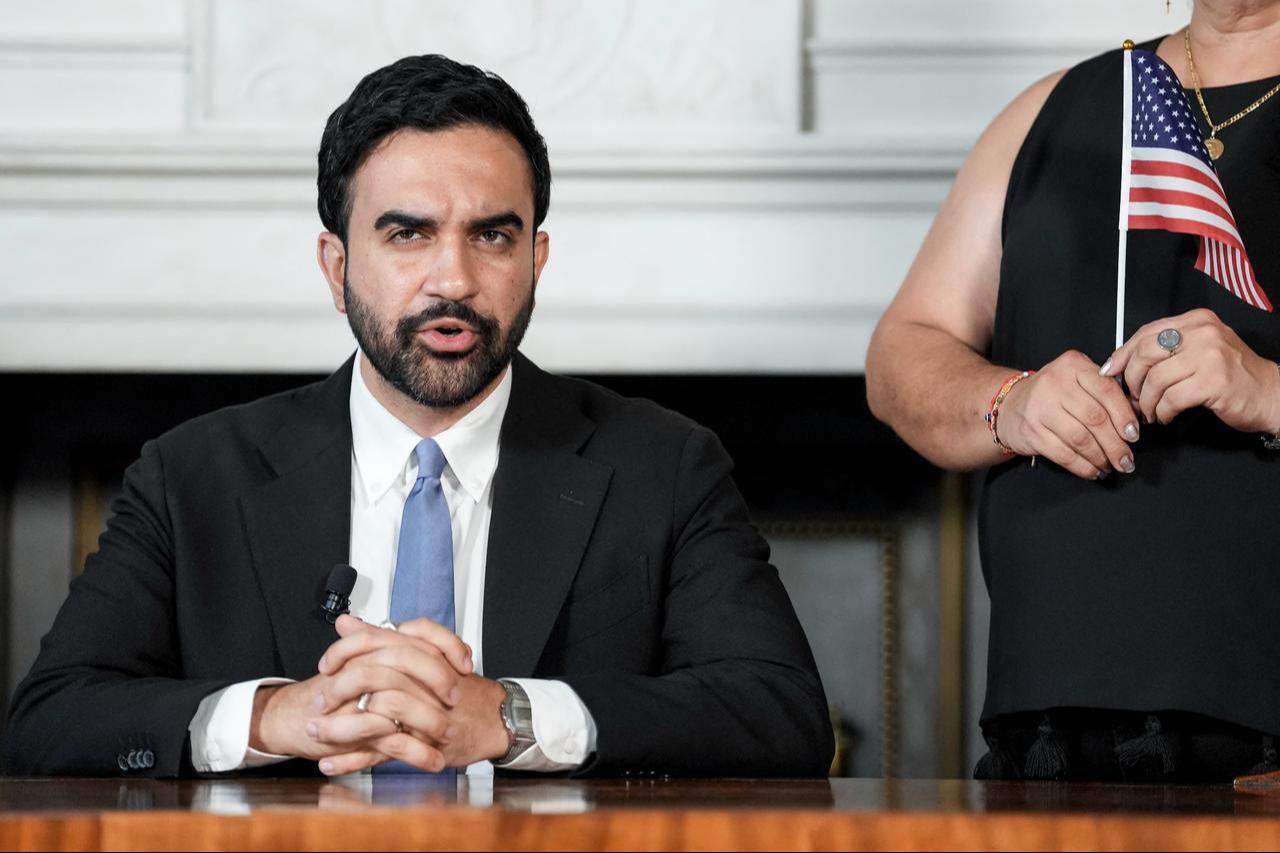
Their names might be Zohran Mamdani in New York, Abdul El-Sayed in Michigan, Ilhan Omar in Minnesota, or Rashida Tlaib in Michigan. Different names, different cities, same fever dream: the Muslim politician transformed from citizen into contagion, from elected official into something dark at the doorway.
The Center for the Study of Organized Hate examined the official social media accounts of 46 Republican elected officials between February 2025 and March 2026.
Researchers counted 1,111 posts targeting Muslims or Islam with bigotry or conspiracy narratives in a domestic American context.
The monthly volume increased by 1,450% over 13 months. Five members of Congress produced 73% of the posts. Florida Rep. Randy Fine alone accounted for 29%.
Sixty-four posts called for deportation or denaturalization.
Sixty-three described Muslims or Islam with dehumanizing language, including “demons,” “cancer,” “plague,” and “death cult.”
Eight Sharia-related bills appeared in Congress. A Sharia-Free America Caucus accumulated 62 members within four months. Counting social media, legislation, and caucus membership together, researchers identified 89 Republican elected officials participating in at least one part of the phenomenon.
Those numbers land with the dull metallic thud of an ammunition crate and provide cover fire for the oldest political gimmick in the book.
Turn the Muslim into a terrorist, the mosque into a forward operating base, and the candidate into an infiltrator—and announce the enemy is already inside the gates.
The bigotry has moved beyond talk radio. It now has legislation, a congressional caucus, letterhead, and an election.
Reuters reported this month that Republicans are going full-tilt boogie to make Muslims and Islam an explicit issue in the November midterms.
Vice President JD Vance called Michigan Democratic Senate Candidate El-Sayed, an American-born Muslim, “very, very evil.”
Texas Governor Greg Abbott has attacked a proposed Muslim-led development and raised allegations about “sharia courts,” claims disputed by the developers and civil-rights groups.
In Alabama, where Muslims constitute less than one-half of 1% of the population, Sen. Tommy Tuberville warned of radical Islam: “The enemy is inside the gates.”
There are approximately 5.5 million Muslims in the United States, according to Pew figures cited by Reuters—about 1.6% of the population. The political usefulness of the minority becomes clearer when voters are worried about the cost of living, war, and tariffs.
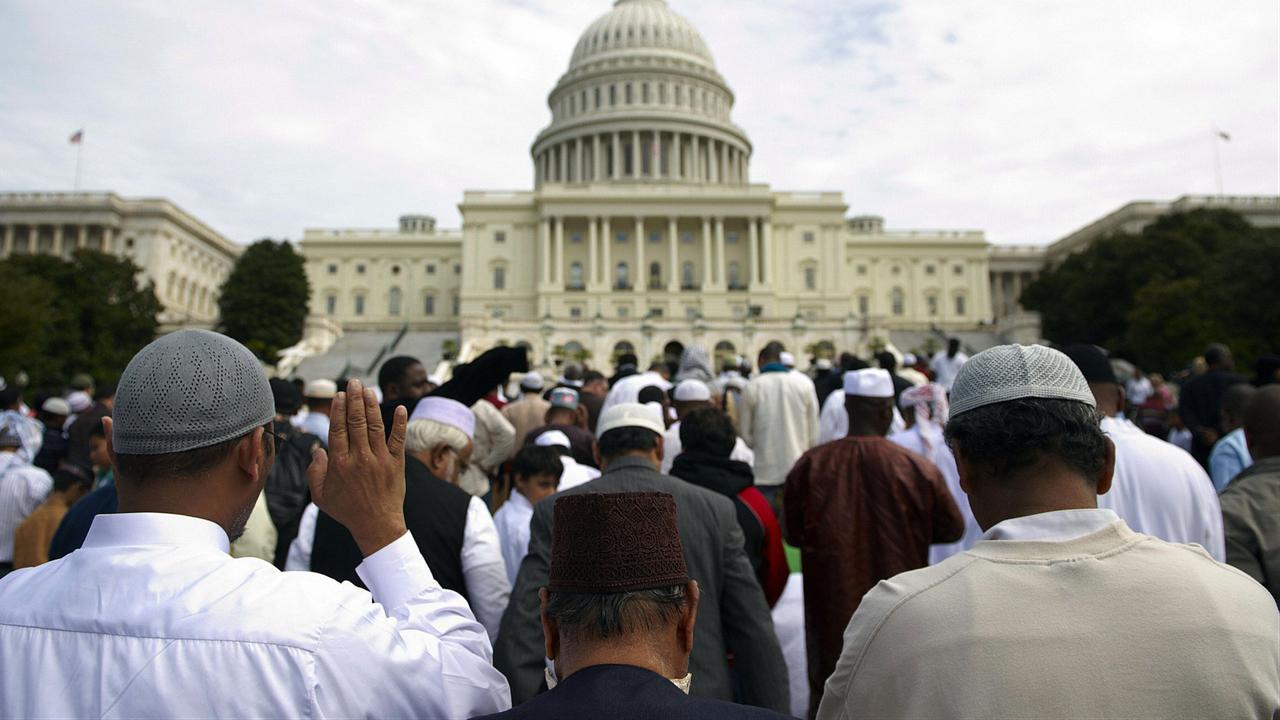
Aaron Hughes, a University of Rochester scholar of Islam and Judaism, supplied Reuters with the diagnosis. “If you can wrap yourself in the flag and you can criticize Muslims and Islam,” he said, “that means you don’t really have to deal with the issues.”
Fear is cheaper than groceries. And considerably easier to manufacture.
Which brings us back to Tangier, where the historical lunacy is magnificent.
The Legation survived wars, imperial rivalries, spies, diplomats, and bureaucrats. During World War II, it housed American intelligence personnel connected to preparations for Operation Torch. It later became an Arabic-language school, a Peace Corps training center, a museum, a library, and a cultural center.
Today, it's 10 employees on five floors and 45 rooms overlooking the kasbah, with an operating budget of $450,000 per year. Roughly 40,000 people visit annually, according to the Legation, about 40% of them are Americans.
Of the dozen or so Americans I met at the Legation on Sept. 11, only one agreed to speak on the record.
Lauren Vela, a retired health-care executive from California, stood amid the old tile and weathered walls, with two centuries of American history pressing in around her.
“We’re Americans, and that’s why we’re here,” she said. “I’d urge Trump and his MAGA administration to come visit the place.”
Then Vela looked around the room and raised her voice, as if addressing more than the people standing in it. “This,” she added, “is America.”
Vela is right. The Legation is America. Not the marbleized America of schoolbooks, where powdered founders descend from heaven carrying parchment.
The Legation is the real deal. Argumentative. Contradictory. Commercially minded. Occasionally frightened. Frequently hypocritical. But possessing, at its best, a peculiar constitutional genius for leaving the door open.
The Republican wager of 2026 is that enough Americans can be frightened into closing that door—that Muslim neighbor becomes suspect, Muslim immigrant becomes infiltrator, and Muslim politician becomes jihadist advance guard.
Faith becomes suspicion. Suspicion becomes fear. And fear, the oldest currency in the political racket, becomes votes.
But the old building in Tangier keeps refusing to cooperate. It stands there amid the medina, inconvenient as an original document.
For some visitors, the Legation may be nostalgia, an escape hatch from MAGA America, or a “Field of Dreams” built out of tile, cedar, manuscripts, and diplomatic ghosts. But I watched people enter disillusioned with their country and leave thinking perhaps its better instincts were not entirely dead.
America’s open house is still open.
The humidifiers keep humming. The old treaty survives.Somewhere inside those rooms, beneath George Washington’s words to a Muslim king, the Republic is waiting to see whether its citizens still recognize it.
And then there’s the deed. Washington still holds the title, under a lease obscure enough to miss: the NGO keeping the Legation’s legacy alive pays the U.S. $12 a year. Power, maintenance, and the works—a buck a month while the Republican Party at full volume campaigns against Muslims belonging in America at all.
Here, history acquires an address. Donald Trump—real estate mogul, president and architect of MAGA—finds himself custodian of a 205-year-old American house in the Muslim world, built on a friendship his political movement now teaches voters to fear.
MAGA has the keys, but American history refuses to move out.


 Set as preferred source
 Set as preferred source



 4 min read