Newsletters


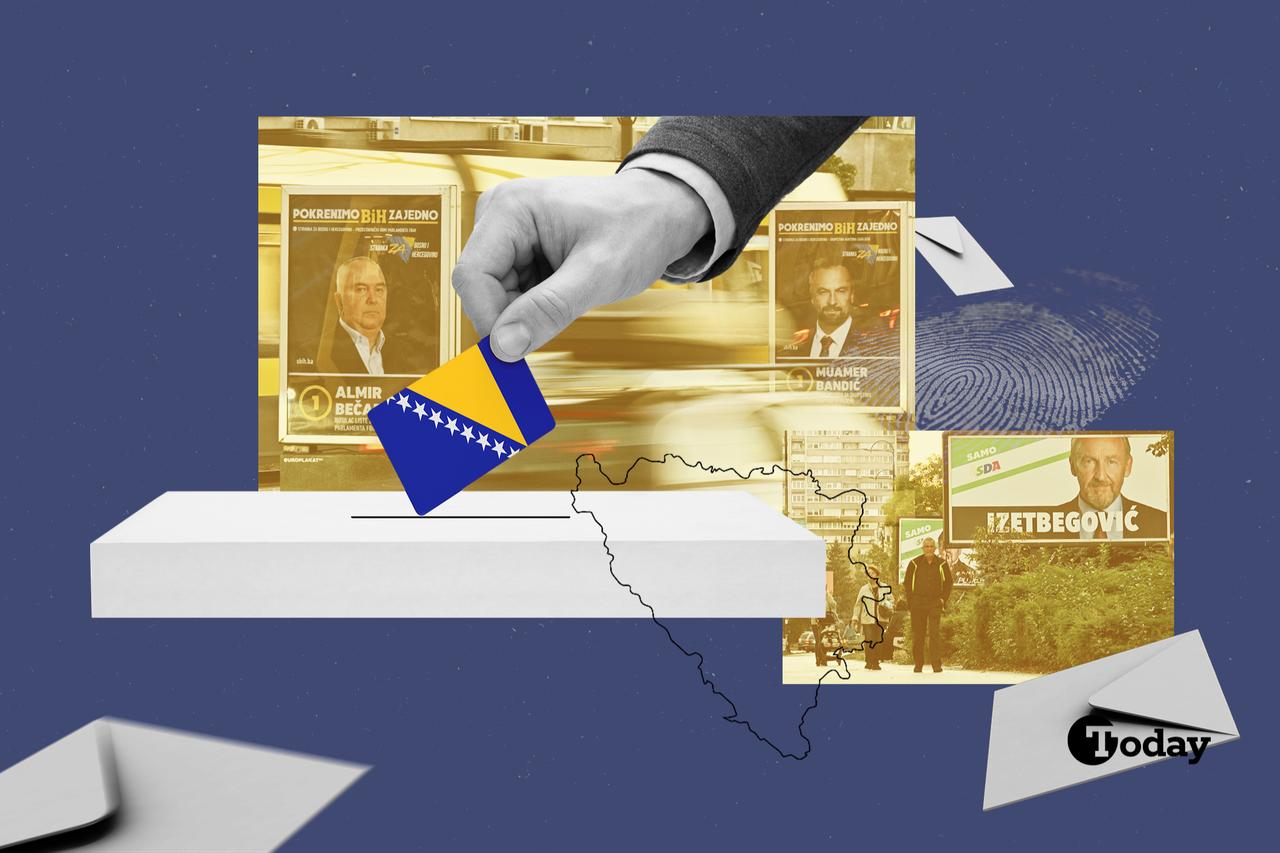


In Lewis Carroll's "Through the Looking-Glass," the Red Queen teaches Alice a peculiar rule: sometimes it takes all the running you can do merely to stay in the same place. Bosnia, once again, is lacing up its shoes.
Bosnian politics can sometimes feel remarkably similar.
On Sunday, Bosnia and Herzegovina will run again.
The polling stations have new scanners and fingerprint readers. The ballots have new names. Milorad Dodik, for once, will not be one of them, although anyone looking at the campaign in Republika Srpska could be forgiven for thinking otherwise.
An academic in Sarajevo recently described Sunday's general election as Bosnia and Herzegovina's most important since the 1992-95 war.
I would frame it a little differently.
The election is certainly important. Bosnia will choose its three-member state presidency, state and entity lawmakers, the president of Republika Srpska and members of 10 cantonal assemblies. Around 3.41 million people are registered to vote.
But importance and the ability to produce lasting political change are not always the same thing in Bosnia.
In fact, I think the campaign itself offers one of the best explanations why.
"It's the same as every time. Before every election, we hear about higher wages, better living, factories and jobs," one Banja Luka resident told Radio Free Europe.
Four years have passed since Bosnia's last general election. Listening to parts of this campaign, you could be forgiven for wondering whether they had.
Salaries, pensions, jobs, infrastructure and a better standard of living are hardly invented concerns. Cost-of-living pressures, economic stagnation, corruption, public services and the steady departure of young people cut across ethnic lines. You can hear similar frustration among voters ahead of Sunday's ballot.
These are problems that do not ask whether somebody is Bosniak, Serb or Croat before entering a household.
But there the agreement largely ends.

A little context matters.
Bosnia was one of the former Yugoslavia's most ethnically mixed republics. Its 1992-95 war tore the country apart before the U.S.-brokered Dayton Peace Agreement ended the fighting.
Dayton kept Bosnia and Herzegovina together as one state but built an elaborate power-sharing system around Bosniaks, Croats and Serbs. The country consists of two main entities, the Bosniak-Croat Federation of Bosnia and Herzegovina and Serb-majority Republika Srpska, alongside the self-governing Brcko District.
At the state level, even the presidency is collective: one Bosniak, one Croat and one Serb member.
Dayton stopped a war. It also produced a political structure in which competing national interests, veto mechanisms and layers of government can make agreement painfully difficult.
That distinction matters. The agreement's success in securing peace and Bosnia's later struggles with political functionality are not the same question.
Sunday's ballot plays out almost entirely inside that tension.
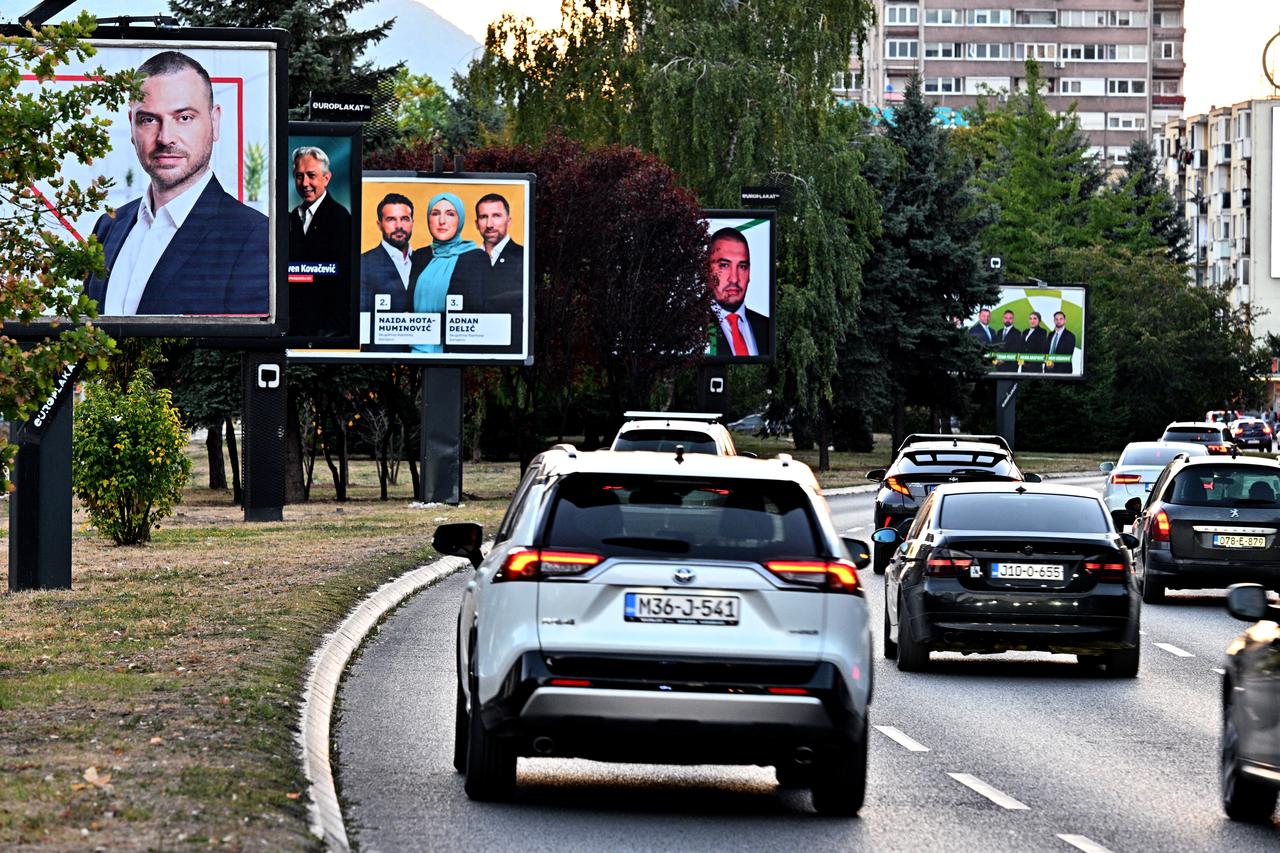
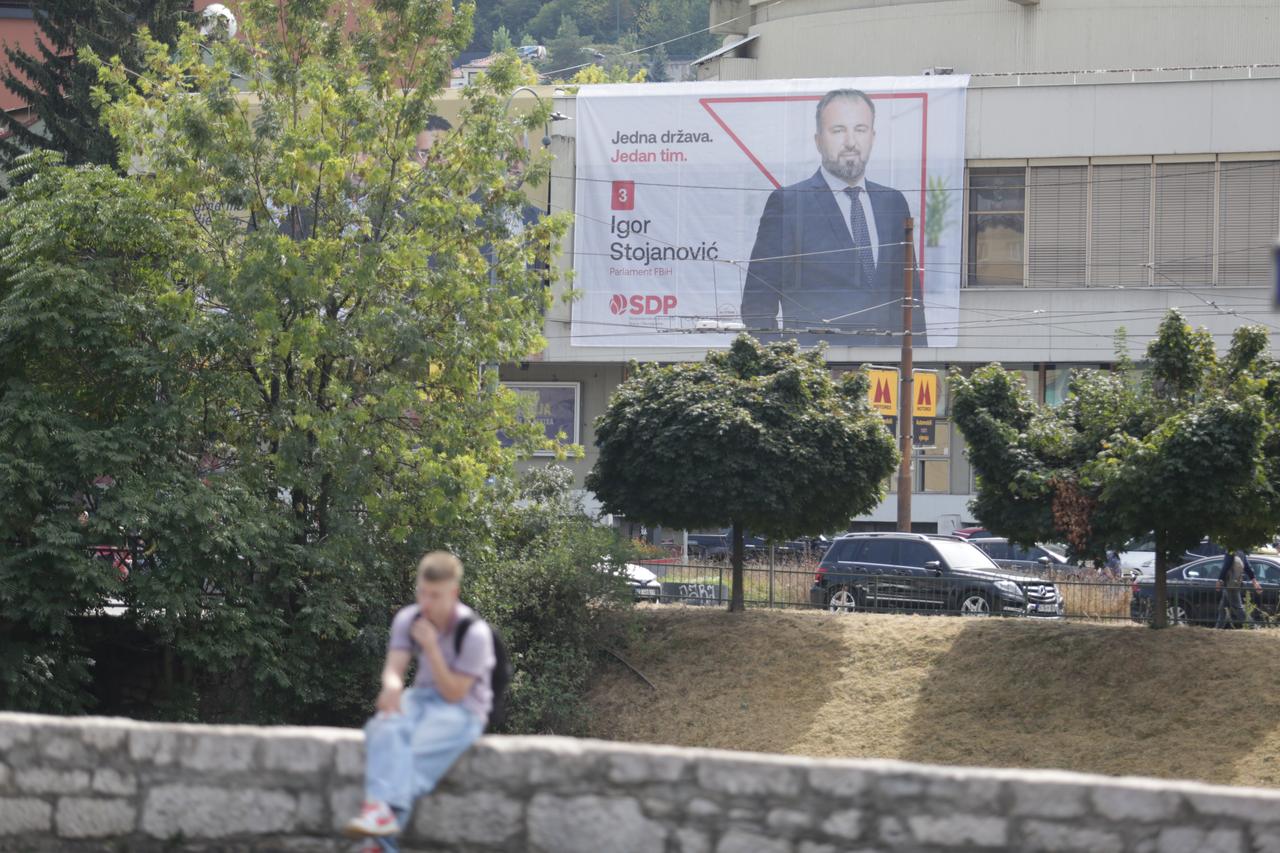
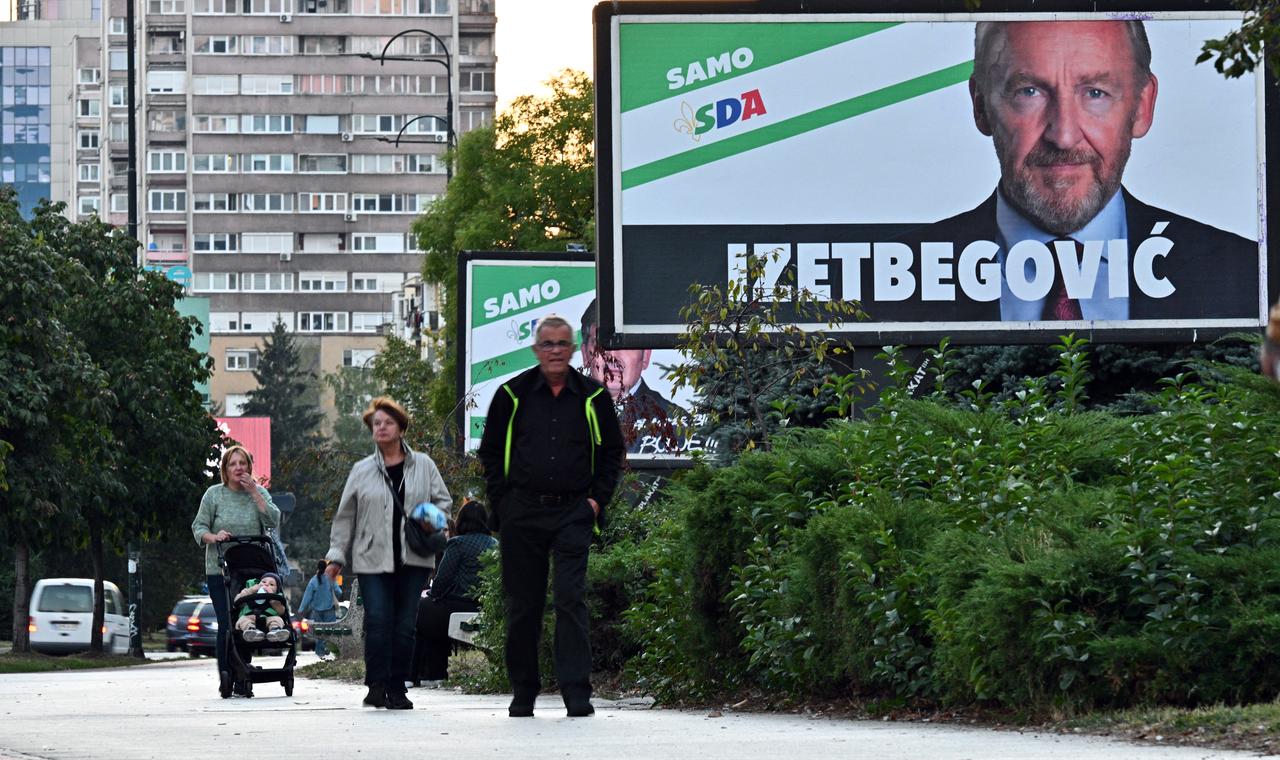
Among Bosniaks, incumbent presidential candidate Denis Becirovic is again facing Bosniak nationalist SDA leader Bakir Izetbegovic, whom he defeated in 2022.
Pre-election reporting citing polls and analysts has pointed to an advantage for Becirovic, while also stressing the SDA's formidable organizational infrastructure and Izetbegovic's ability to mobilize it.
Becirovic has cast himself as a defender of a united Bosnia, warning against those who seek to weaken or break apart the state.
Yet unity is itself one of Bosnia's recurring political problems.
Bosniak politics remains divided among several competing parties, while the country's Croat and Serb political arenas revolve around very different constitutional priorities.
Bosnian Croat parties, particularly HDZ BiH, have for years demanded electoral changes that would give Croats greater control over choosing the Croat member of the presidency. Their argument is that the much larger Bosniak electorate in the Federation can effectively determine who represents Croats.
This year, HDZ BiH's Darijana Filipovic faces Zdenko Lucic and Slaven Kovacevic in a race whose significance extends beyond the personalities involved. At its core is the old argument between ethnic representation and a more civic conception of the Bosnian state.
Then there is Republika Srpska.
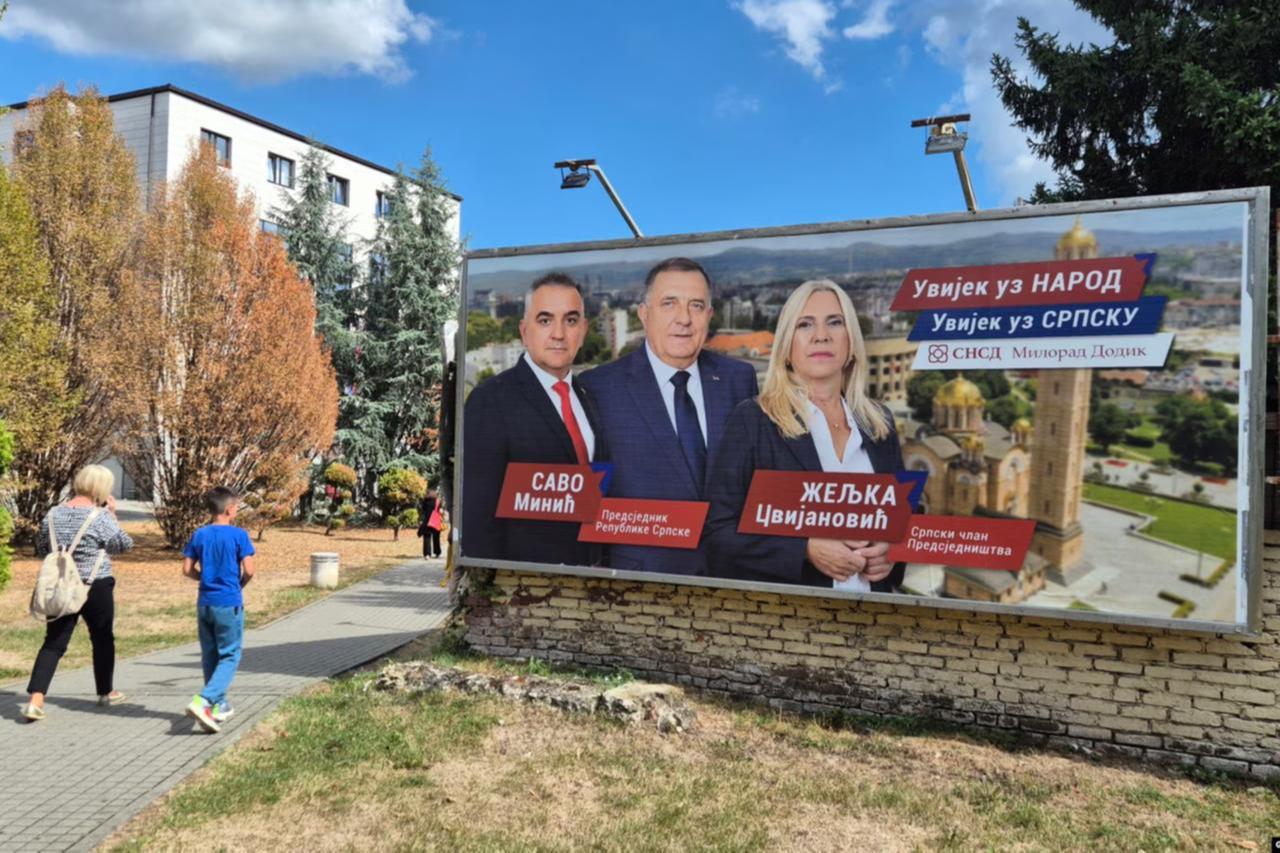
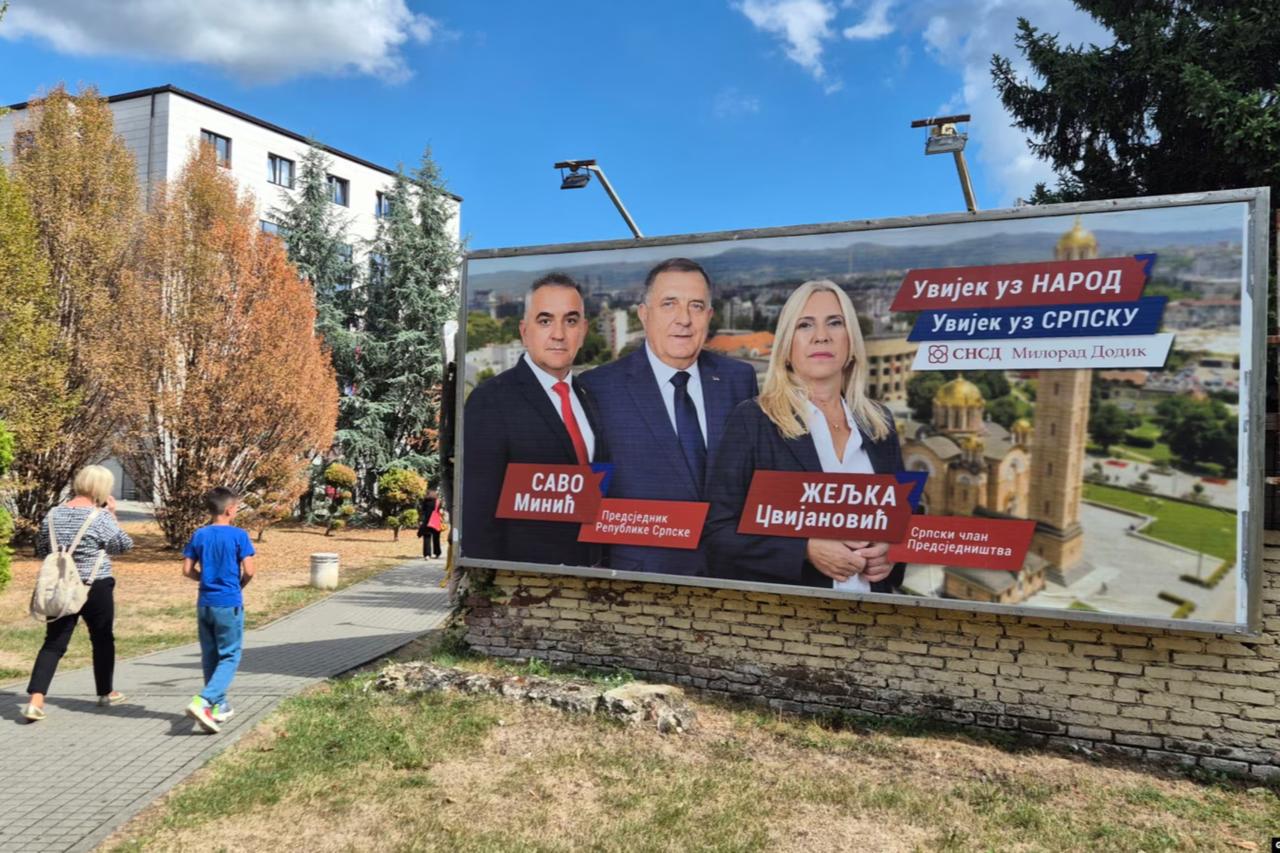
If I had to choose one image to sum up this campaign, I might pick a billboard in Banja Luka.
Milorad Dodik is still there.
He cannot stand in Sunday's election after losing the Republika Srpska presidency following his conviction and being barred from public office. Yet the SNSD leader remains one of the most visible and consequential figures in the campaign.
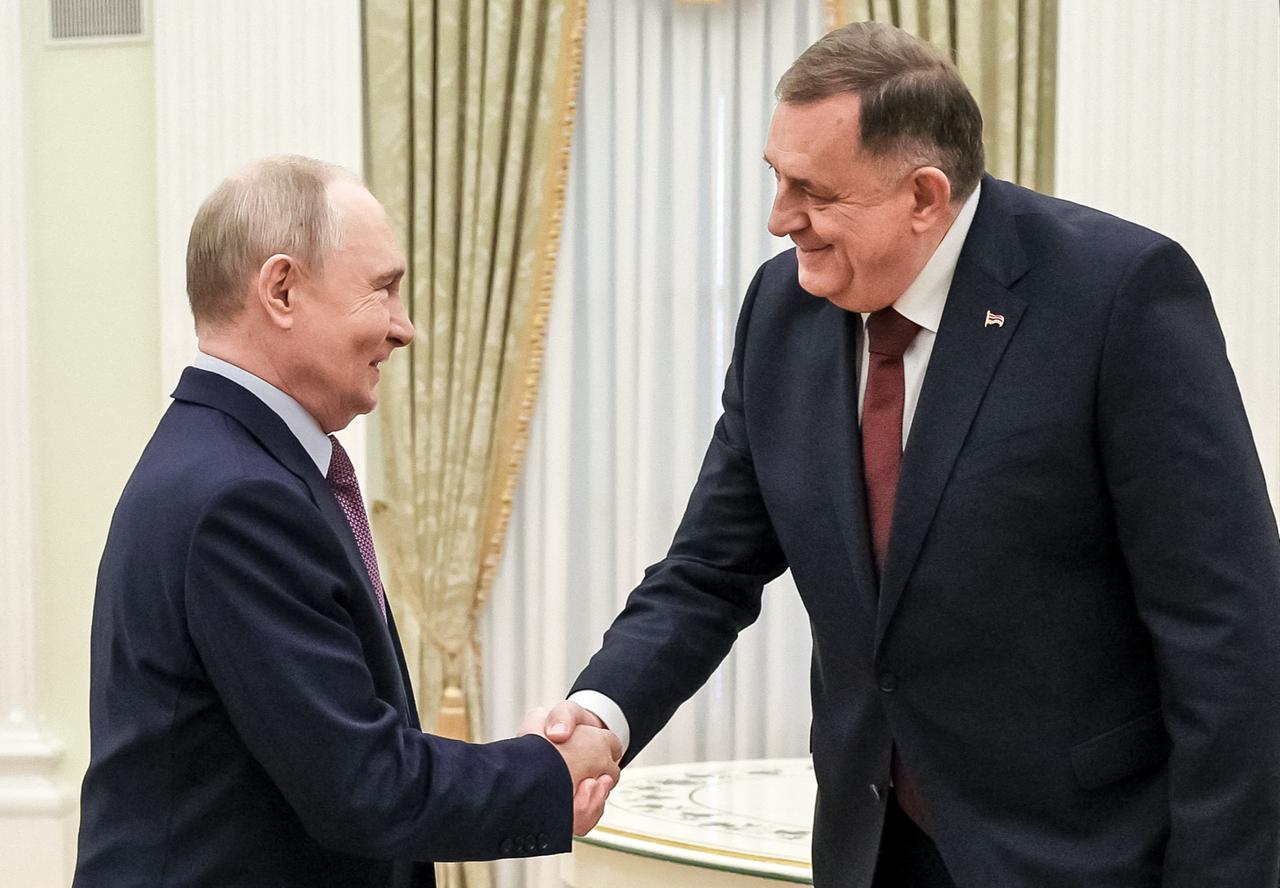
Days before the election, Dodik and Republika Srpska Prime Minister Savo Minic were in Moscow meeting Russian President Vladimir Putin.
That tells us something about this election: removing Dodik from the ballot did not remove Dodik from Republika Srpska politics.
The most consequential test of his remaining power may instead be the contest for entity president between Minic, the SNSD candidate backed by Dodik, and opposition SDS candidate Branko Blanusa.
European Stability Initiative researcher Adnan Cerimagic told AFP that a Blanusa victory was "not impossible" and said it could change the political landscape in both Republika Srpska and Bosnia.
The office matters. The Republika Srpska president nominates the entity's prime minister, meaning this is not merely a symbolic contest over who succeeds Dodik.
The race for the Serb seat on Bosnia's presidency offers another test. SNSD's Zeljka Cvijanovic faces Marinko Bozovic and Nebojsa Vukanovic, with opposition votes potentially divided between two challengers.
Dodik has repeatedly described Bosnia as a failed or impossible state and advocated Republika Srpska's separation. That rhetoric has defined much of his political career and remains part of the election environment even when his name is absent from the ballot.
His continued influence and close relationship with Moscow remain central features of the campaign.
The campaign's treatment of Ratko Mladic offered another reminder of how quickly Bosnia's present returns to its past.
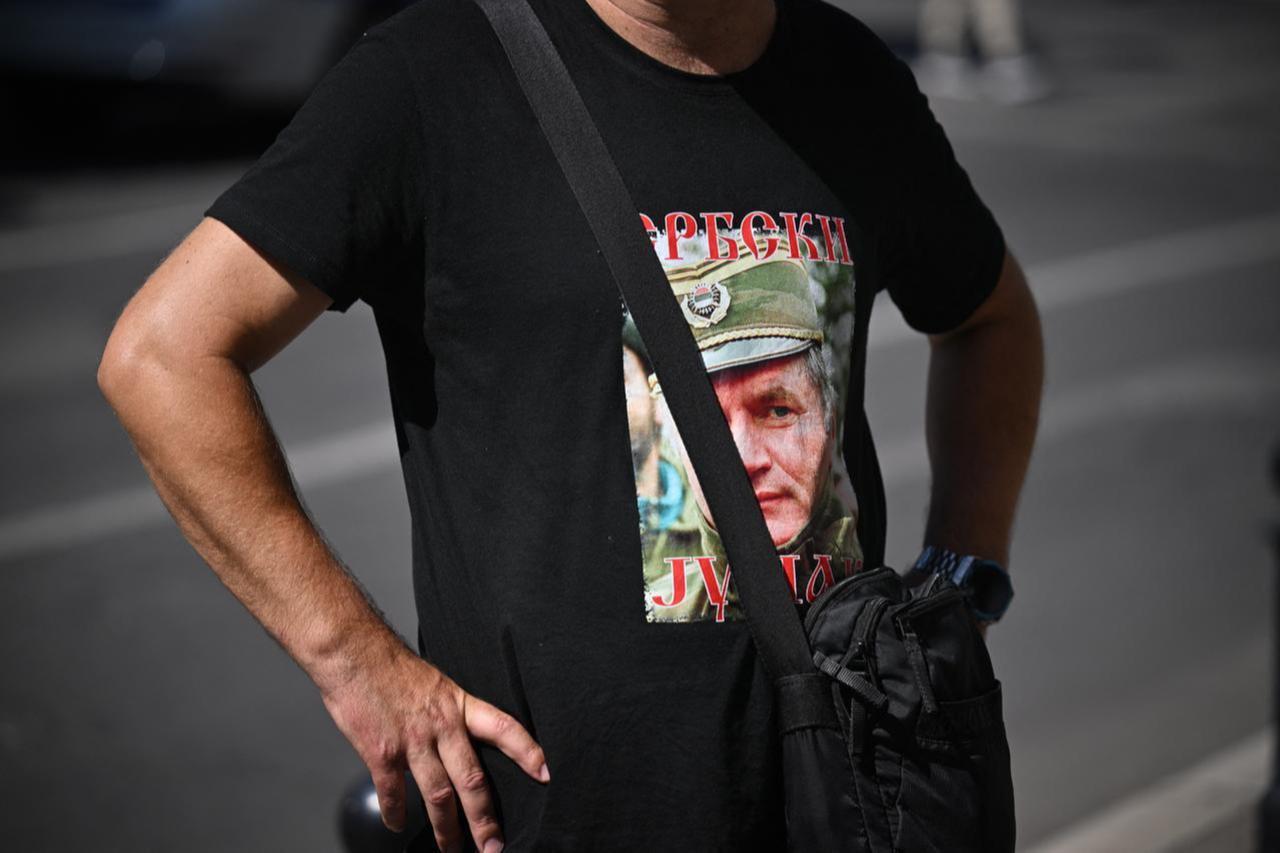
Mladic, the former Bosnian Serb military commander convicted of genocide, war crimes and crimes against humanity, was buried in Belgrade on Sept. 7. His funeral drew thousands and reopened some of the deepest divisions left by the war.
Politicians from both governing and opposition circles in Republika Srpska used his death and funeral to express admiration or defend the right to commemorate him. Elsewhere in Bosnia, the reaction was dramatically different.
The episode came just as campaigning gathered pace.
For all the talk of economic hardship and better government, wartime memory remains an extraordinarily effective political language in Bosnia. When the campaign becomes difficult, politicians rarely have to search far for an older argument.
The genuinely new element on Sunday may therefore be found not on the billboards but inside polling stations.
For the first time in a Bosnian general election, biometric voter identification and ballot scanners are being introduced nationwide. The Central Election Commission says the system includes equipment for biometric identification and scanning ballots, backed by a new technical infrastructure.
That may sound like a technical footnote.
I don't think it is.
Bosnia has spent years confronting allegations involving voter lists, irregular ballots and manipulation at polling stations. The new system cannot make politicians more accountable, stop vote-buying by itself or persuade disillusioned citizens to vote.
But it can make some forms of electoral manipulation harder, speed up the count and give election authorities another means of checking what happened at polling stations.
It also arrives in a country with a peculiar demographic problem.
More than 600,000 people are estimated to have left Bosnia between 2013 and 2023, while the voter register still contains around 3.41 million names. Turnout in recent elections has hovered around half of registered voters.
The discrepancy does not itself prove electoral fraud; the register also includes Bosnian citizens living abroad, but it illustrates a much larger problem.
Bosnia is electing an enormous political apparatus while the society beneath it is shrinking.
Then there is the European Union.
Almost everybody talks about it. Far fewer explain how Bosnia gets there.
This is where the Sarajevo academic I mentioned at the beginning becomes useful.
Jahja Muhasilovic, an associate professor of international relations at the International University of Sarajevo, argues that EU and NATO integration have increasingly become slogans rather than political programs.
"Since the war, the European Union and NATO discourse has remained a slogan," Muhasilovic said. "No one is presenting the concrete steps for how we will join NATO or how we will move forward on the path toward the European Union."
Mustafa Krupalija, an assistant professor of political science and international relations at IUS, was even more pointed, describing EU accession during the campaign as a "bureaucratic slogan" without a clear explanation of how, or with whom, the process would actually proceed.
That criticism gets to something deeper than campaign messaging.
Political actors can promise Brussels, but Bosnia's institutional structure still requires politicians with fundamentally different visions of the state to agree on many of the reforms needed to get there.
Meanwhile, the international architecture created to oversee Dayton is itself unsettled.
Christian Schmidt ended his mandate this summer. Louis J. Crishock has served as acting High Representative since July 1 while the Peace Implementation Council has struggled to agree on a permanent successor. The council said in July that finding a mutually acceptable candidate remained a matter of urgency.
The vacancy has also become part of a broader disagreement between Washington and European governments over Bosnia's international supervision, while Russia continues to cultivate close ties with Dodik and the Republika Srpska leadership.
None of this means Sunday's election does not matter.
Quite the opposite.
A change in the Republika Srpska presidency could alter the balance around Dodik and SNSD. The composition of the tripartite presidency will matter whenever Bosnia's competing visions collide at state level. Parliamentary results will determine coalition arithmetic in Sarajevo, the Federation and Republika Srpska.
Those are tangible stakes.
But I think the more interesting question begins on Oct. 5.
Bosnia may elect different people. It may alter some important balances. It may even produce surprises.
They will still wake up inside the same system, facing many of the same vetoes, unresolved arguments and mutually incompatible ideas of what Bosnia and Herzegovina should ultimately become.
Which brings us back to the Red Queen.
Is this Bosnia's most important election since the war?
Perhaps.
But after another campaign of familiar promises, ethnic anxieties and arguments left unresolved for decades, I would ask a different question:
When a country spends so much political energy running, how do we know when it has actually moved?


 Set as preferred source
 Set as preferred source


 1 min read
 1 min read