Newsletters




Civilization is not collapsing as the prophets predicted.
There are no trumpets, no celestial announcement. The Four Horsemen have been retired and replaced by a more economical arrangement involving private contractors, dubious miracle workers and a human-resources department.
The results are already apparent.
Cruise passengers are being evicted from paradise, self-proclaimed billionaires are struggling to substantiate their fortunes, and the latest savior of a ruined nation is arriving with 2,000 soldiers and a social media account.
The governing delusion of our age is that confidence can replace competence, that a sufficiently extravagant promise can overcome the stubborn requirements of reality. The apocalypse has been outsourced to private enterprise, political ambition and the public relations department.
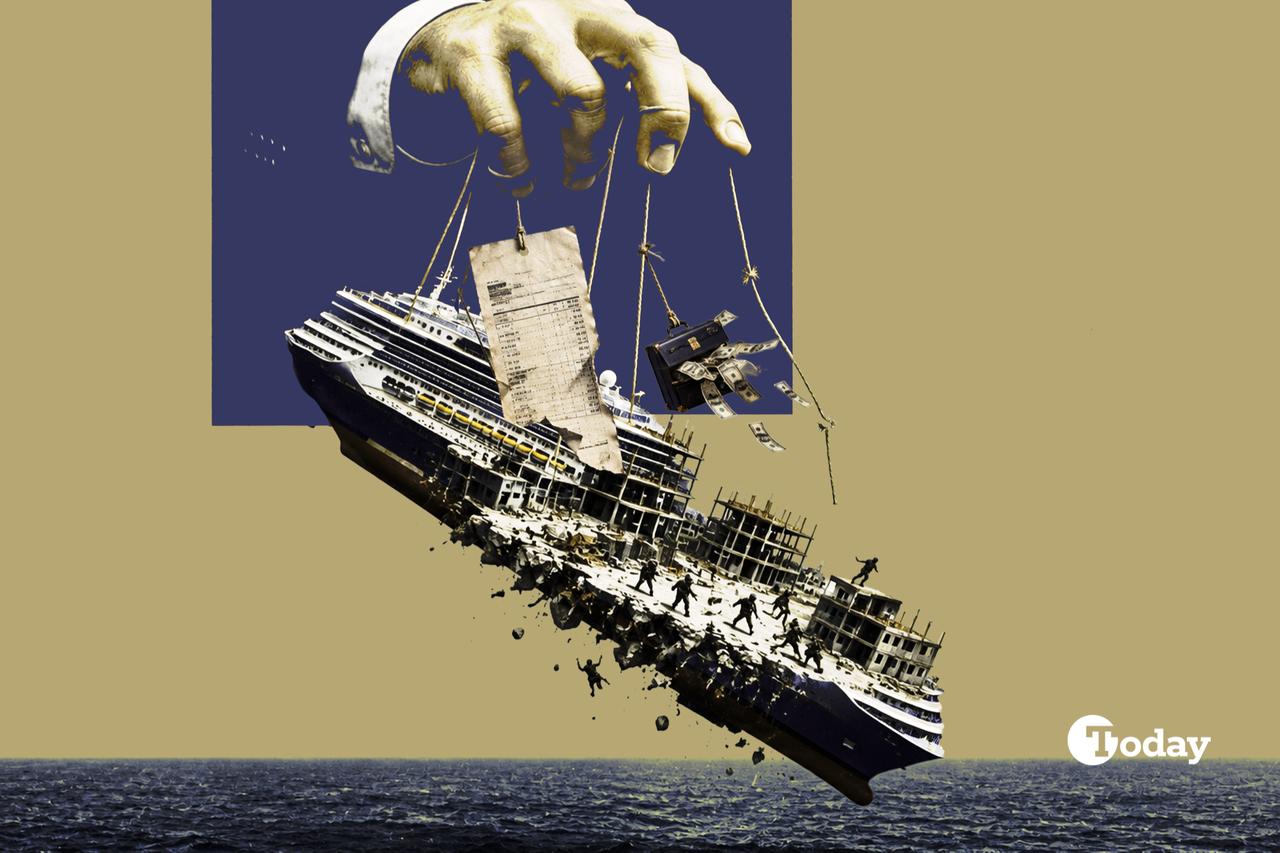
The passengers aboard the once-good ship "Odyssey" had purchased eternity, or something approaching it. For $100,000, they were promised years of carefree wandering aboard a floating paradise, safely insulated from the world's troubles. Then came the war with Iran, soaring fuel prices and a message from management: Everybody off. By two o'clock.
Paradise, it turned out, ran on diesel.
Some 203 passengers found themselves stranded in Sihanoukville, a Cambodian port town notorious for gambling and online scams. Some had sunk their retirement savings into the dream of escaping the world's uncertainties, only to discover that their permanent home depended upon an affordable supply of diesel.
The passengers were not wrong to dream. Their mistake was believing a commercial promise could somehow repeal economic reality.
The same faith in the magical properties of a promise flourishes in considerably grander surroundings, where a sufficiently extravagant claim can pass for a fortune and proximity to power for proof of its existence.
"Double, double toil and trouble; fire burn and cauldron bubble."
Presto! Enter the Great and Powerful Turhan Mildon, a self-styled sultan of fortunes and presidential friendships, whose professed billions and privileged access to power would have made Türkiye's legendary illusionist Zati Sungur gasp in disbelief.
Mildon’s next trick involves $17.6 million and a spectacular White House feud. Mildon's wife, Alina Habba Mildon, formerly Donald Trump's lawyer, has accused Trump ally Richard Grenell of making a supposed donation from her husband to the Kennedy Center disappear.
But the money trail, according to reports of a White House investigation, leads somewhere rather less enchanted. The millions appear to have come not from Mildon's own supposedly bottomless pockets but from a government account in the Democratic Republic of Congo, with the payment apparently going to a Texas company linked to Grenell for what U.S. officials believe was a software contract with the Congolese government.
Grenell denies wrongdoing, and his precise role remains unclear. The trick, it seems, is not simply making millions disappear, but persuading an audience that they were yours to give away in the first place.
The inquiry then turned an unforgiving light upon the Young Turk himself.
Mildon claims to be 29; official documents indicate 25. He describes himself as a billionaire with businesses generating $2.6 billion annually, although his wealth remains unverified.
His companies have secured more than $500 million in Congolese government contracts, but several projects remain unfinished. In Venezuela, workers and suppliers report unpaid debts. His spokesperson disputes allegations that he has misrepresented his background or business affairs.
Mildon has also advertised extraordinary access to presidents from Washington to Caracas and Kinshasa. Yet people close to those governments question the depth of several claimed relationships. A photograph showing Trump passing a table where Mildon stood hardly establishes intimacy with the American presidency.
Such is the peculiar currency of our age: proximity masquerading as authority, ambition as achievement, publicity as proof.
In Haiti, the same sleight of hand has acquired an army. Or at least the illusion of one.
President Nayib Bukele of El Salvador has dispatched more than 2,000 troops to confront the gangs controlling much of Port-au-Prince, confident that the methods credited with reducing violence in his own country can succeed where international intervention has failed.
Four Salvadoran servicemen have been abducted, thousands of Haitians killed, and a struggling U.N.-backed security force has been overtaken by a separate military operation whose command arrangements remain unclear. Haiti's government has welcomed the deployment, and Washington supports it.
Bukele can point to his country's dramatic reduction in homicide, though his incarceration of over 80,000 people has drawn serious human-rights criticism. But exporting that model assumes that overwhelming force can substitute for functioning institutions in a country where the state itself has largely disintegrated.
Soldiers may recapture streets. They cannot, by force of conviction alone, rebuild the political and economic foundations of a nation. The darkness into which they march is older and more complicated than the certainty with which they have been dispatched.
The danger is not merely that another promise may fail. It is that this particular voodoo comes armed.
The cruise company promises escape without economic limits. The dealmaker promises influence without proven connections. The strongman promises security without rebuilding the state. Each offers a shortcut around reality, and each eventually encounters the world as it is, rather than as advertised.
This is the deeper disorder of our age: the steady elevation of confidence over competence, spectacle over substance and assertion over proof.
And beneath these grand performances stand ordinary people, paying the charges. Retirees stranded thousands of miles from home. Workers waiting for wages. Haitian families are wondering whether the next armed men entering their neighborhood will bring rescue or another catastrophe.
The world has not run out of dreams, money or characters prepared to promise miracles. It has merely perfected the art of making accountability disappear.
Somewhere in Cambodia, the "Odyssey" lies motionless, its grand itinerary abandoned. The spell has broken, the conjurers have vanished, and the audience has been left to settle the bill. Beyond the harbor, the oceans remain vast and indifferent to human incantations.
The ship was supposed to carry its passengers away from history.
But history is the one ghost no magician can make disappear.


 Set as preferred source
 Set as preferred source


 2 min read


 1 min read