Newsletters


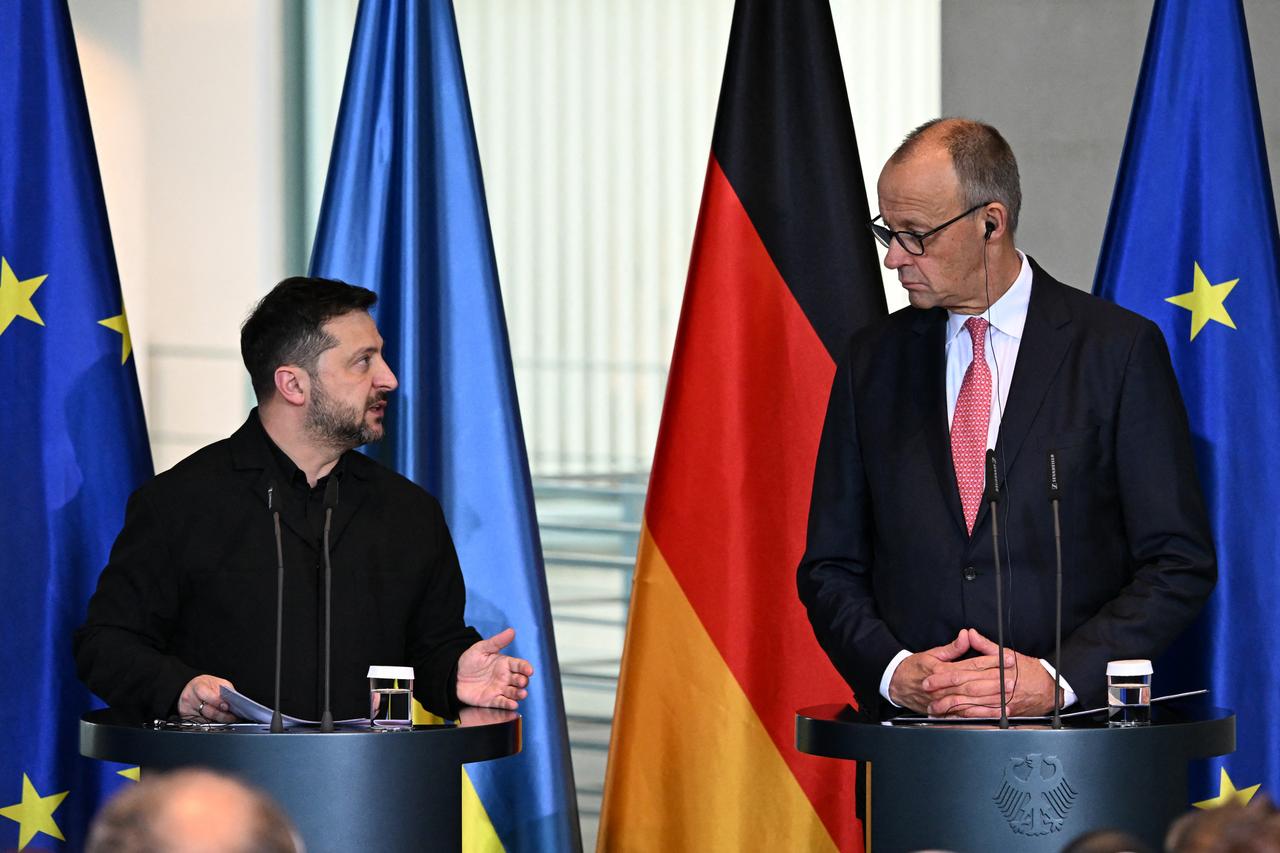


German Chancellor Friedrich Merz wants fresh money for Ukraine before signing the EU's 2028–2034 budget. With Kyiv €70 billion ($77.62 billion) short for next year, European Council President Antonio Costa has said the bloc will cover two-thirds of it before the year's end.
Speaking for the EU's largest contributor in a Nov. 9 letter to Costa, Merz made his condition clear, "Supporting Ukraine is a matter of our indivisible European security, and so must be the burden sharing for that support."
Slovakia, Hungary, the Czech Republic, and Bulgaria pushed back the next day. Relying on EU budget funds at home while opposing new joint debt for Kyiv, the four rejected the link: Slovak Prime Minister Robert Fico called it "a textbook case of blackmail," prompting Costa to move both files from this week's Dublin summit to Brussels later this month.
The standoff exposes the gap between Brussels's global ambitions and its institutional reality. Seven years ago, Commission President Ursula von der Leyen promised a "geopolitical Commission" built for global crises, but Merz's ultimatum shows why that goal keeps stalling.
Driven by a weak economy and far-right gains at home, the chancellor wants other capitals to share Kyiv’s bill. But the budget and joint borrowing each need all 27 votes, so linking them gives objectors a double veto and strands urgent winter aid in Brussels’s horse-trading while faster players shape the war’s next phase.
Berlin's finances explain the timing. Germany's economy shrank two years running and barely grew last year, with 1.3% growth expected this year.
Berlin refuses to carry the next budget alone. It paid €18 billion more into the 2024 budget than it got back, its central bank reported.
Fiscal pressure hardened Merz's line toward Brussels. In June, he called the Commission's plan "unaffordable" at €20 billion extra a year, insisting in October that it stay "affordable for those who carry the main burden of financing it."
The letter dresses German belt-tightening in the language of European solidarity. Capitals wanting Berlin's budget money must share its Ukraine bill.
Merz is also losing ground at home. In September, his Christian Democrats fell to 4.9% in Mecklenburg-Western Pomerania, a result he called a "disaster." Moreover, a November Infratest dimap poll puts the Alternative for Germany seven points ahead of his bloc.
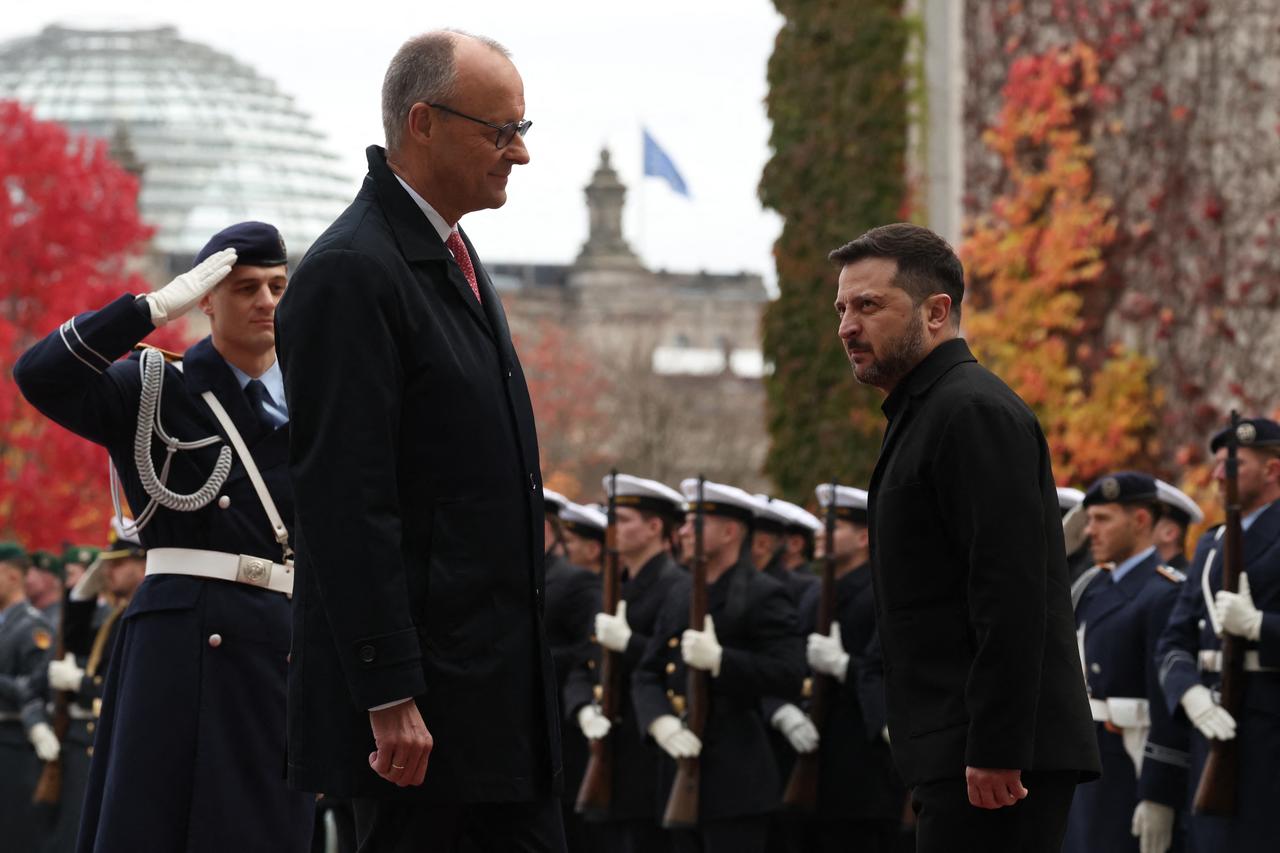

The four rebels offer a mirror image of that self-interest. All four belong to the 17-nation Friends of Cohesion, protecting their farm and regional subsidies while refusing to underwrite a new Kyiv loan.
While sharing that goal, the four object on different grounds. Only Fico threatens a veto over sovereignty, whereas Hungary's Peter Magyar and Bulgaria's Rumen Radev cite deficits. Czech Prime Minister Andrej Babis quipped that Merz "probably doesn't realize" the draft budget already earmarks Ukraine funds, though none flows before 2028.
Because their objections differ, no single concession from Berlin answers all four.
Furthermore, EU budget contributions do not match Ukraine aid. Germany was Europe's largest military donor in volume last year, whereas Denmark, the Baltic states, and Poland gave more relative to gross domestic product (GDP) between 2022 and October 2025, a Peterson Institute study using Kiel Institute data found.
Poland's reaction shows how Merz's tactic alienates Kyiv's allies. Although Warsaw was a net recipient like Hungary in 2023, it backs Ukraine; nonetheless, Deputy Minister Ignacy Niemczycki warned before the letter's release that linking the files could "backfire."
Rather than isolating objecting states, Merz has handed them a double veto. Unanimity under EU treaties gives every member that power, as Fico noted on 10 November: "We have the same veto power as the German federal chancellor."
To be sure, two of the four are not walking away. Radev says Bulgaria is "in no way blocking" Ukraine decisions, while in Berlin, Magyar called new EU debt "unacceptable for us" before adding: "We will find a solution for the EU budget."
Earlier standoffs ended too, though at a price. Brussels repeatedly bought off objecting states: Viktor Orban blocked €50 billion in aid for seven weeks until winning an annual debate, while Hungary held up €6.6 billion in military aid for three years until Orban lost office before September's deal.
Last December's €90 billion Ukraine loan required a similar exemption. It passed only because the Czech Republic, Hungary, and Slovakia were allowed to stay out, creating the precedent Merz now wants to end.
Because Kyiv's €70 billion gap falls next year, Ukraine cannot wait for the 2028 budget. Costa has a simpler option at the Brussels summit this month: separate the two files, pass the 2027 loan through willing states as the Council did in December, and leave the budget fight for 2027.
Failing to separate the two tracks risks leaving Kyiv short in winter and exposes Europe's strategic weakness.
With Washington stepping back, financial support is Brussels's main card in the conflict. Even so, when the bloc spends months bargaining with objecting states just to sign a check, it sidelines itself from diplomacy.
Regional powers that do not wait on 27 vetoes are filling that diplomatic space instead. Moving directly at the leader level, Turkish President Recep Tayyip Erdogan and Volodymyr Zelenskyy agreed in late October on a Black Sea grain corridor, building on last year's Istanbul talks that delivered prisoner exchanges.
A budget deal may still come out of Brussels. Even so, a Union that takes months to buy off its own members while faster neighbors shape the diplomacy around the war is far from the "geopolitical Commission" von der Leyen had in mind.


 Set as preferred source
 Set as preferred source


 2 min read

 1 min read