Newsletters


An analysis published by Carnegie Diwan under the title “Is Türkiye a New Iran in Lebanon?” seeks to interpret Türkiye’s growing diplomatic visibility in Lebanon through the prism of Iran’s proxy-based influence model. While the timing of the analysis is understandable given recent regional shifts, the analytical framework rests on a loose analogy that is not sufficiently tested against structural realities, sociological constraints, or evidentiary standards. Yet, equating Türkiye’s engagement with Iran’s Hezbollah-centered model confuses fundamentally different tools, channels, and outcomes. Rather than reflecting an attempt at ideological projection or proxy replication, Ankara’s approach is better understood as issue-based leverage shaped by Eastern Mediterranean geopolitics, international law, and risk-aware state behavior.
The maritime delimitation agreement signed on Nov. 26, 2025, between Lebanon and the Greek Cypriot administration marked a new phase in Eastern Mediterranean energy diplomacy. Türkiye formally objected to the agreement on the grounds that it disregarded the rights of Turkish Cypriots, framing its response in legal and diplomatic terms. This specific focus highlights a critical distinction often missed by external observers: Ankara’s priority is not to carve out a sphere of influence within Lebanese domestic politics, but to secure the sovereign rights of the Turkish Republic of Northern Cyprus (TRNC) in the Eastern Mediterranean. By anchoring its objection in maritime jurisdiction rather than Lebanese internal affairs, Türkiye demonstrates a state-centric approach distinct from Iran’s proxy-building model. In the aftermath, the Carnegie analysis sought to connect this objection, along with Türkiye’s broader regional engagement, to an Iran-style influence strategy in Lebanon.
This is a demanding claim. To argue that a state is replicating the “Iran model” in another country requires solid proof. At minimum, such a claim must show three things working together: the use of comparable tools, the existence of command or control channels, and the production of durable political or security outcomes. The analysis struggles to meet this standard and, in doing so, suffers from three main flaws: mistaken analogies, reading too much into sociology, and weak cause-and-effect links.
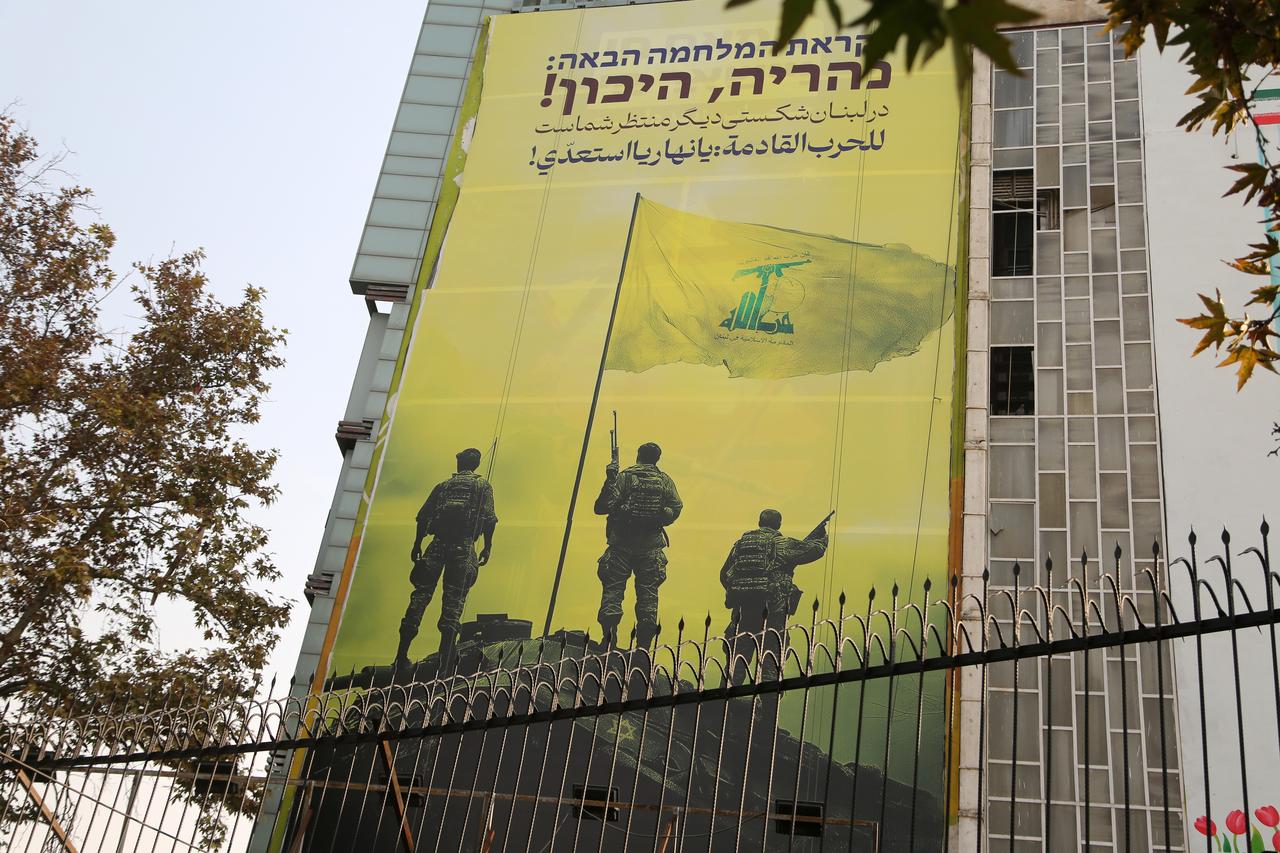

At the core of the argument lies an implicit assumption of equivalence between Iranian and Turkish instruments of influence. This assumption does not withstand closer scrutiny.
Iran’s model in Lebanon rests on long-term organizational consolidation. It combines ideological hierarchy, sustained financial infrastructure, and an armed actor that substitutes key state security functions. Over time, this has produced a parallel governance architecture embedded in Lebanon’s political and military landscape.
Türkiye’s engagement operates on a different plane. Its tools consist primarily of diplomatic outreach, development assistance, humanitarian activity, and political dialogue. Crucially, this approach challenges the narrative of sectarian exclusivity. While the analysis suggests an intent to mobilize a Sunni constituency, Türkiye’s actual footprint, spanning commercial ties and state-level cooperation, often cuts across confessional lines rather than deepening sectarian trenches. Engagement with local actors, even when sustained and visible, does not in itself amount to building a proxy network. Networking is not equivalent to command. Contact is not control.
This distinction matters because influence without an enforceable hierarchy generates different outcomes. Iran’s model depends on organizational continuity and coercive capacity. Türkiye’s approach relies on flexible relationships that remain contingent, transactional, and reversible. Treating these two approaches as basically the same hides more than it reveals.
A second weakness of the analogy lies in its treatment of Lebanon’s Sunni political space. The analysis frames this space as a vacuum following Saad Hariri’s withdrawal from politics, implying that it isopen to being captured by an outside power.
This reading oversimplifies a far more complex reality. The Sunni field in Lebanon is fragmented, competitive, and internally diverse. Religious currents, local notables, urban economic actors, and secular networks coexist without a single authoritative center. External engagement in such an environment tends to produce short-term transactional alignments rather than durable proxy control.
It is important to note that acknowledging this fragmentation does not require portraying other sectarian arenas as perfectly uniform. Shiite political life in Lebanon also contains internal variation. The critical difference lies not in the absence of diversity, but in the degree of organizational consolidation around a security actor capable of enforcing discipline. That condition does not exist in the Sunni sphere.
As a result, projecting a model of external capture onto this sociological landscape stretches inference beyond what the evidence can support.
The analysis further compounds the analogy by drawing parallels between Hezbollah and groups such as al-Jamaa al-Islamiyya and its armed wing, the Fajr Forces. This comparison introduces a clear category error.
Hezbollah represents a hybrid political and military organization with regional operational reach and sustained institutional depth. By contrast, available institutional reporting consistently describes Fajr Forces as local, limited in scale, and primarily defensive in orientation. The existence of armed activity, or participation in episodic violence, does not by itself establish equivalence in strategic function.
Media appearances or rhetorical alignment by individual actors do not constitute evidence of state-directed proxy integration. A public interview or political statement reflects access and visibility, not command or doctrinal alignment. Acknowledgment, however, is not equivalent.
The most fragile element of the argument is the attempt to link Türkiye’s objection to the maritime agreement with an alleged intent to obstruct disarmament dynamics in Lebanon. This linkage is asserted rather than demonstrated.
Maritime delimitation disputes and internal disarmament processes operate in distinct legal and political domains. Türkiye’s objection is rooted in its interpretation of Eastern Mediterranean jurisdiction and the rights of Turkish Cypriots. Translating this position into an intent to manipulate Lebanese internal security outcomes requires a demonstrable mechanism. None is provided.
Thelinkbetween these files is largely assumed. Without evidence of operational linkage, claims of quid pro quo behavior remain speculative.
None of this suggests that Türkiye’s engagement is inconsequential, nor does it imply the absence of risk in regional interaction. It does suggest that the “New Iran” label imposes an explanatory frame that the available evidence does not sustain.
A simpler explanation views Türkiye’s behavior as issue-driven bargaining. Ankara seeks to register its legal positions, preserve negotiating leverage in the Eastern Mediterranean, and manage spillover risks from post-conflict Syria. These objectives reflect conventional statecraft rather than ideological export or proxy replication.
Saudi Arabia’s continued weight in Sunni political life, the fluidity of Lebanon’s internal balances, and the uncertainty surrounding Syria’s transition all impose structural constraints on any external actor. Within these constraints, durable hegemonic penetration remains unlikely.
The central flaw of the analysis is not its attention to Türkiye’s growing visibility, but its reliance on an untested analogy to explain that visibility. Labeling Türkiye as “Lebanon’s new Iran”confusesengagement with control and presence witha proxy network.
Analytical rigor requires resisting such shortcuts. Influence claims must be matched to tools, channels, and outcomes. Where those elements do not align, caution is warranted.
A disciplined reading recognizes Türkiye as a consequential but constrained actor pursuing issue-based leverage within a complex regional environment. Misdiagnosis does not merely weaken analysis. It narrows the space for realistic policy assessment.


 Set as preferred source
 Set as preferred source



 7 min read