Newsletters


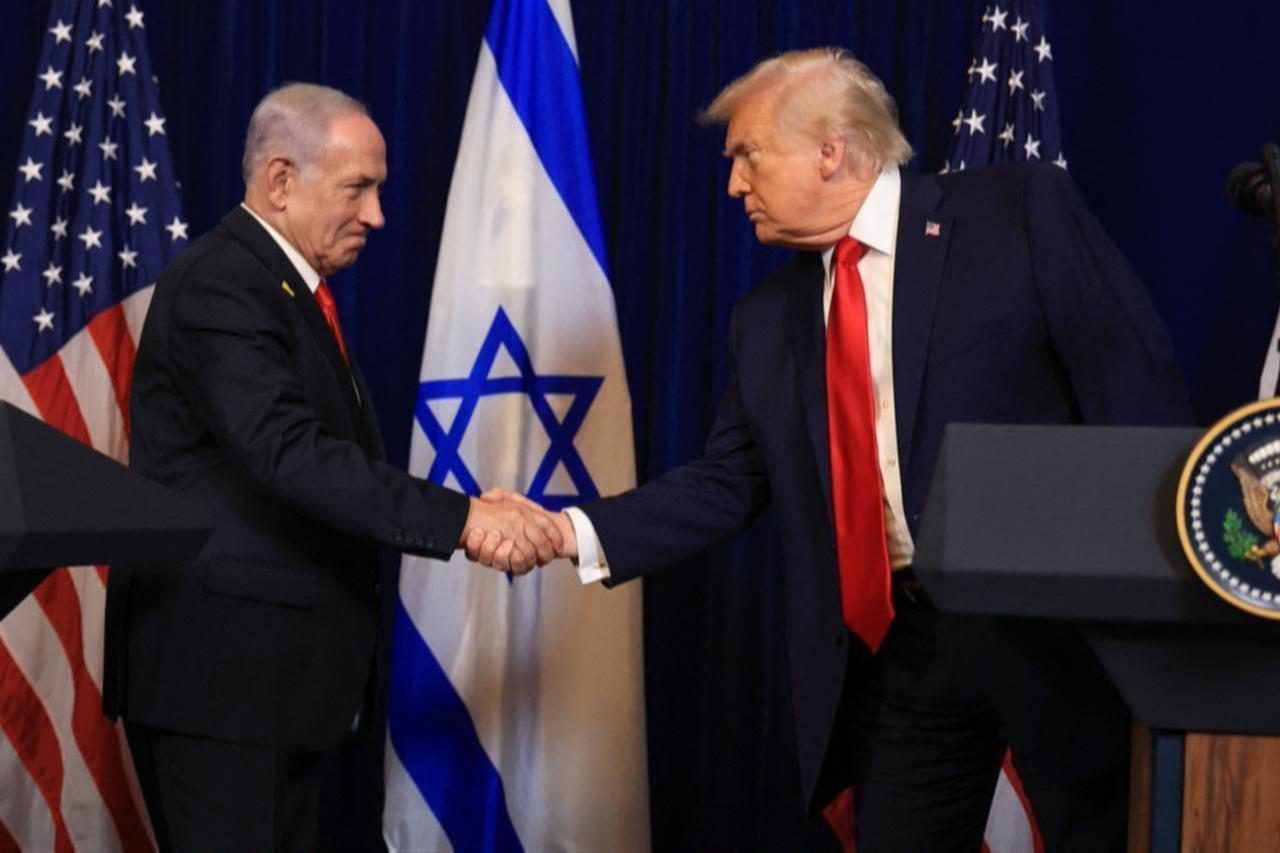


The United States and Israel carried out coordinated strikes against major targets in Iran. Whether this remains limited or grows into a sustained campaign will determine the region’s trajectory in the coming weeks.
A short video on X showing an Iranian woman crying with joy after witnessing attacks hitting Tehran's government building offers a striking insight.
There is a large Iranian population that abhors the Iranian regime. They wish the regime the worst. However, relying on their ability to take to the streets or engage in an armed struggle to topple the regime is a highly risky business.
We saw it last month. The U.S. and Israel have been working toward such a possibility for a long time.
Investing billions of dollars of U.S. taxpayer money and risking many American lives might be based on an idea that Netanyahu sold to Trump: being the only U.S. president to overthrow the Iranian regime that has created a headache for the U.S. and Israel for decades.
In his second term, Trump is after a legacy, and he is obsessed with it. And he is afraid of being impeached and needs allies. Netanyahu is a figure who gets standing ovations from both sides of the aisle for reasons that remain "hard to explain."
This calculation may be driving decisions that go far beyond immediate security concerns. The assumption that internal unrest can be catalyzed from the outside has historically proven unreliable in the region.
If the expected uprising fails to materialize, Washington could find itself drawn into a prolonged and costly confrontation.
In that case, what was framed as a decisive, legacy-defining move could instead become a destabilizing quagmire with unpredictable consequences.
For Türkiye, the implications of an attack on Iran are immediate and structural.
The Trump-Erdogan bromance played a role in preventing Türkiye's possible excessive reaction to a U.S.-Israel joint attack on Iran.
Ankara does not view instability in Iran as a distant geopolitical contest but as a direct security concern.
Any prolonged confrontation risks triggering asymmetric responses across Iraq and Syria, disrupting energy routes, and creating new migration pressures.
Turkish security officials have long warned that a destabilized Iran could generate operational space for PJAK—the Iranian offshoot of the PKK—precisely when Ankara is attempting to consolidate a fragile regional de-escalation process involving PKK-related armed networks.
Diplomatically, Türkiye is likely to revert to a familiar posture: public calls for restraint, private engagement with all sides, and a clear emphasis on preventing regional spillover.
Ankara has little interest in being drawn into a binary alignment.


 Set as preferred source
 Set as preferred source


 7 min read