Newsletters


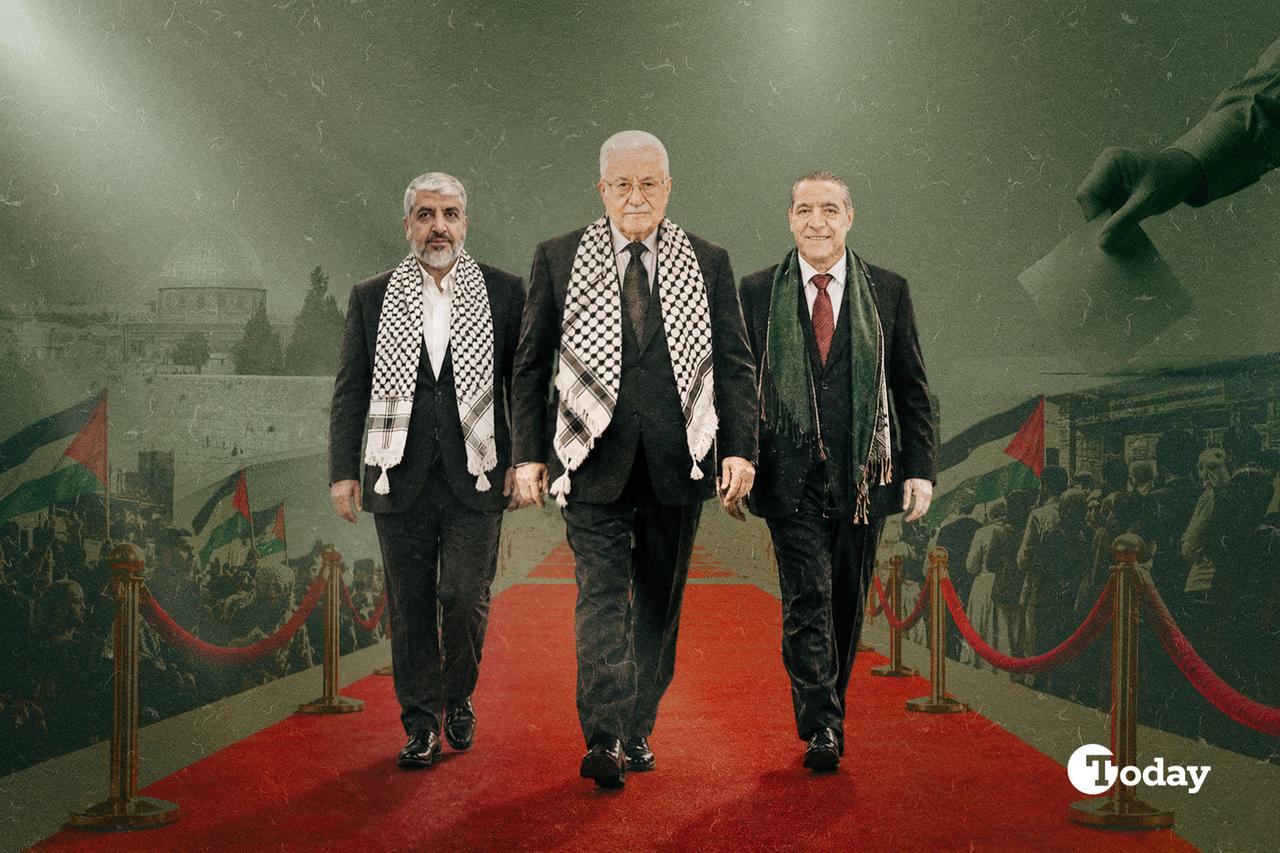


Politics and fashion have an exquisite appetite for selling last season’s merchandise as revolution.
And this autumn, Israel and Palestine are staging elections one month apart that will help determine whether the next chapter is negotiation or another war from the same old collection.
Two electorates, two runways, and two political establishments hauling familiar garments from the back of the closet and insisting that this time the tailoring is different.
But the Palestinian show carries the greater democratic anomaly: its voters have been waiting 20 years to get back into the room. On Nov. 28, they are scheduled to elect a 132-seat Legislative Council for the first time since January 2006.
Two decades in which skinny jeans died, returned, and died again; Twitter became X; Gaza was pulverized; governments rose and collapsed across the Middle East; and Palestinian parliamentary democracy remained locked in the wardrobe. Now the Central Elections Commission says the show is finally booked.
Cue the catwalk.
First comes the old house of Fatah, the Chanel of Palestinian politics if Chanel had stopped producing collections and governed the atelier by decree.
At its pinnacle sits Mahmoud Abbas, born in 1935, when plus-fours were still a fashion statement rather than a museum piece.
Now 90, he was elected president in 2005 for what was supposed to be a four-year term and still presides over a Palestinian political house considerably less enthusiastic about changing its own collection.
The problem is not the candles on the birthday cake. It is the political archaeology: Abbas was elected in 2005 and, over two decades later, still occupies the penthouse of Palestinian power.
Behind him struts Vice President Hussein al-Sheikh, born in 1960: Fatah establishment, PLO establishment, government establishment, the institutional prêt-à-porter of Ramallah. Across the divide, Hamas has its own veteran collection: Khaled Mashal, born in 1956, remains a member of its political bureau.
This is Palestinian politics’ peculiar autumn collection: leadership formed in another century asking a vastly younger electorate to believe that the future remains safest in the hands of the past.
Then comes the corruption problem. The numbers require no fudging.
The old Palestinian political house had already demonstrated a taste for off-the-books accessories. In 2003, for instance, the IMF found roughly $900 million in public revenue diverted into accounts controlled by the first president of the Palestinian National Authority, Yasser Arafat, between 1995 and 2000.
Most was later traced to Palestinian investments and assets, and it was not EU aid—but $900 million passing outside the normal budget was quite a handbag to misplace.
More than two decades later, the problem is no longer simply what disappeared into which account, but what happened to the institutions supposed to prevent such things from happening in the first place.
AMAN, Transparency International’s Palestinian chapter, reported in 2026 that concentrated presidential authority, the absence of a functioning legislature, and weakened oversight have increased corruption risks.
It documented patronage and politically driven appointments, including senior officials elevated beyond normal classifications and diplomatic appointments involving political factions and people connected to senior or former officials.
It counted 84 senior civilian and security appointments, 46 promotions, and 41 ambassadorial and consular appointments or promotions during 2025.
That does not prove every PA official or affiliated faction is corrupt. It does demonstrate something more consequential than gossip: a political system whose safeguards against patronage and abuse have been badly degraded.
Hamas-run Gaza has hardly provided a spotless alternative; AMAN has previously documented loyalty-based appointments, monopolization of decision-making, and weak accountability under both rival governing authorities.
The public has noticed. In recent Arab Barometer research, 87% of West Bank Palestinians said corruption existed in PA institutions, while only 17% considered the government very or largely responsive to public demands.
And now, down the Palestinian political défilé , come the challengers.
Among them is Masar Jadid—New Path—headed by East Jerusalem Palestinian Samer Sinijlawi. The party says democracy, nonviolence, accountable government, dialogue with Israelis, and a negotiated two-state settlement belong in the Palestinian wardrobe again.
Sinijlawi argues that Palestinian freedom and Israeli security need not be mutually exclusive garments and that political legitimacy comes from voters rather than guns, foreign patrons, or permanent incumbency.
His most important proposition may be simpler: let Palestinians vote.
At least seven electoral lists emerged by early October, including established factions and newer challengers; nominations closed on Oct. 7, so the final lineup will not be confirmed until Nov.5. The significance is not whether Sinijlawi, Fatah, Hamas or another list deserves applause. That's for Palestinian voters to decide exclusively.
The significance is the runway itself.
Because democracy is not a new accessory unveiled in Paris. It is the battered basic that Palestinian politics somehow left hanging in the closet for 20 years.
Cancel the election, and the old collection stays on display: presidential decrees, factional privilege, patronage, unaccountable power and young people watching men from their fathers’ and grandfathers’ political generation determine the limits of their future.
Hold a genuinely competitive election—including Gaza and East Jerusalem—and something far more dangerous to entrenched politicians appears.
A fitting room.
The electorate gets to look at Fatah. Look at Hamas. Look at New Path and everybody else. Examine the stitching. Check the pockets. Ask who paid for what. Decide which promises are counterfeit and which might survive first contact with reality.
Then send some of the collection back.
That is why Nov. 28 matters beyond Ramallah.
A Palestinian state cannot acquire democratic legitimacy from recognition ceremonies abroad. Nor can legitimacy be tailored in Washington, Jerusalem, Doha or Paris and shipped in with the labels already sewn on.
It has to be made at home.
Twenty years after the last legislative election, the lights are supposedly coming back on. The candidates are approaching the runway.
The revolutionary thing would be to let the audience choose what it buys.


 Set as preferred source
 Set as preferred source


 1 min read

 1 min read