Newsletters


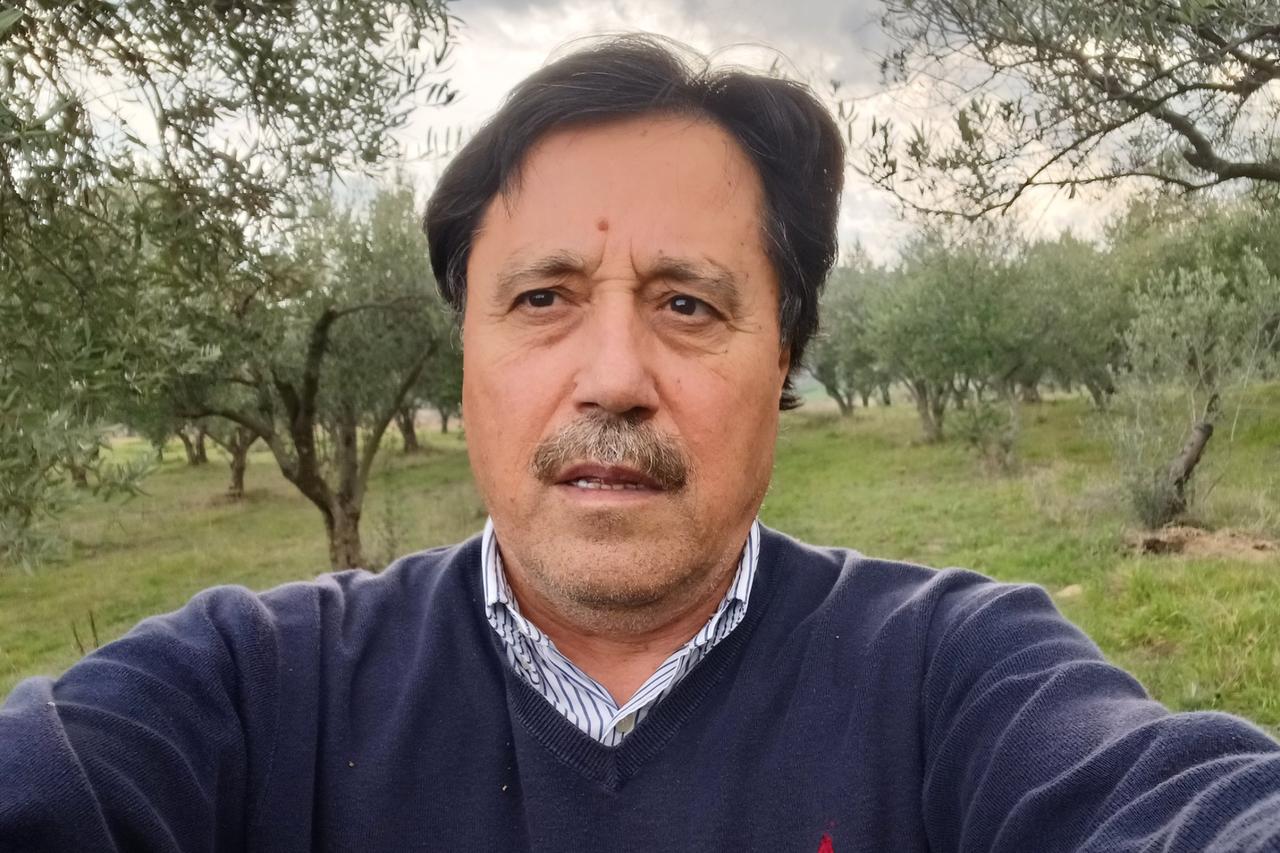


The Turkish public generally knows him as a former Greek intelligence officer who appeared on television making harsh statements against Türkiye and accompanying jailed terrorist organization PKK ringleader Abdullah Ocalan. However, Savvas Kalenteridis’ story is much deeper and more complex than that. Without understanding him, it is impossible to comprehend anything he says today. The purpose of writing this article is precisely that: to make visible not only Kalenteridis’ words, but also the mental state, fears, vulnerabilities, traumas, and identity conflicts that shape those words.
The sources I have—his book, academic documents, and anecdotes that appeared in the Turkish press years ago—when brought together, reveal a picture that not only draws the portrait of an intelligence officer but presents a multi-layered psychological landscape, showing a collective subconscious forged by historical traumas, a quest for revenge and retribution, a sense of personal victimhood, and the clash between national identity and the individual self. Most importantly, this picture reveals in full why Kalenteridis approaches Türkiye with such anger and obsession.
Savvas Kalenteridis was born in 1960 in the town of Vergi near Serres, as the child of a family that had migrated from Amasya to Greece. For many, this may seem like an ordinary detail, but it holds a central place in understanding his personality. Because the memory of Pontus, in the Greek national consciousness, is not just a geography; it symbolizes loss, victimhood, exile, defeat, and the feeling that “the account has not been settled.”
For a child growing up in the shadow of these historical pains, the image of Turks is not a calm neighbor but becomes the representation of collective trauma. The roots of Kalenteridis’ intense hostility toward Turkish identity and emotional rigidity lie precisely in the construction of his identity during childhood.
Entering the Evelpidon Military Academy at a young age, Kalenteridis began to see the military–state relationship not as a profession, but as a “national sacred duty.” Military discipline, strict obedience, national pride, and a doctrine based on the Turkish threat shaped his identity.
He then learned Turkish. This education was not for understanding a culture, but for monitoring a target. When he was sent to Izmir as a military attache, he was still in his early 30s. The years he spent in Türkiye were both the period in which he closely observed Turkish society and analyzed Turkish state institutions through his intelligence perspective.
This period was when Kalenteridis’ perception of Türkiye sharpened. Ankara, for him, was not a state; it was the modern face of the historical enemy, a power to be monitored at every step. During his assignment in Izmir, the Turkish public did not know him, but he was observing, reporting, and analyzing many of Türkiye's state mechanisms and security institutions. Alongside his composure, a strong ideological filter was present. His greatest flaw was that he never broke this filter.
Kalenteridis’ role in Türkiye officially appeared diplomatic, but in reality, it was much more. His expertise within the Hellenic Intelligence Service (EYP) turned him into an active “field agent” covering a broad range, from military movements to political balances, intelligence structures, and the course of the Kurdish movement.
Izmir was one of the most critical cities for the EYP; it was at the center of tension in the Aegean, hosted the main operational area of the Turkish Navy, and was the source of decisive data for Greece’s Aegean policies. Additionally, during the same period, PKK activities were observed in the Aegean corridor.
Kalenteridis’ knowledge of Turkish and his field contacts gave him a mobility far beyond that of an ordinary attache. His contacts with Turkish academic circles, minority groups, businesspeople, and the press made him a primary source for Greek intelligence analyses on Türkiye. These years marked the beginning of his transformation into both a “Türkiye expert” and someone “obsessed with Türkiye.”
From the mid-1990s, the PKK’s activities via Greece began to increase. Athens provided logistics, training, and travel facilitation to the PKK through centers such as Lavrion Camp. Later, documents submitted to the court revealed that the Greek state had provided $75 million in support to the PKK over the years.
This support carried not only a strategic but also a psychological dimension: “Anyone fighting the historical enemy is a potential ally.”
A significant portion of Kalenteridis’ activities in Türkiye was influenced by the political background of this period. As an officer handling the PKK dossier in the EYP, he prepared reports on Ocalan’s mobility, influence in Türkiye, and internal organizational dynamics. His view of Türkiye had now ceased to be analytical; it had turned into an ideological confrontation.
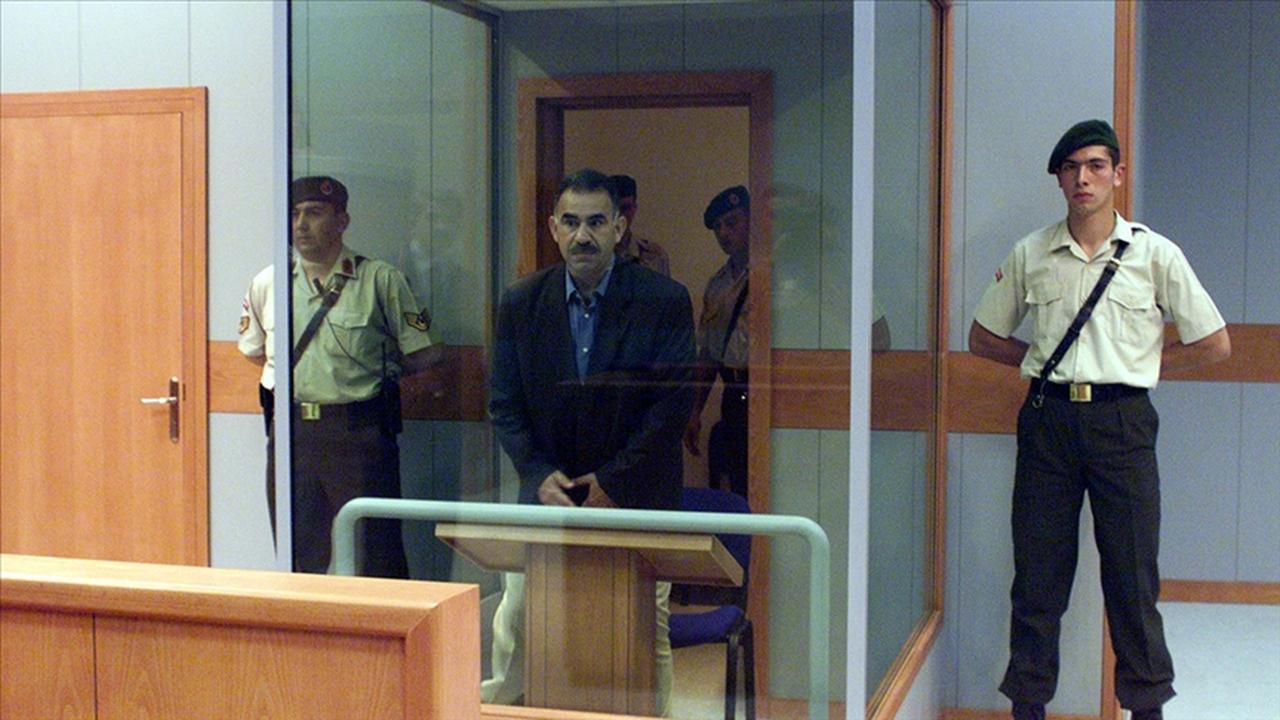

The Nairobi crisis in 1999 was the greatest breaking point in Kalenteridis’ life. In those days, he thought he could be not just an intelligence officer, but a “hero of the national story.” Ocalan’s asylum in Greece and the subsequent diplomatic chaos left both the Greek state and Kalenteridis in a dilemma.
Kalenteridis saw Ocalan not as a terrorist leader, but like Greek independence hero Kolokotronis, as a figure fighting the historical enemy. Therefore, he opposed his extradition to Türkiye. At that moment, it was not only Ocalan who was delivered to Türkiye; in Kalenteridis’ mind, what was delivered was the national honor of Greece.
The phone conversation cited in Nur Batur’s book reveals Kalenteridis’ psychology at that time: “I’m afraid, Kostas … Outside is full of MIT and CIA agents. I don’t know if I will survive.”
These words reflect the feelings of a traumatized human being more than an intelligence officer. At that time, Kalenteridis was under intense psychological pressure and dominated by three main fractures in his mind. First, paranoid arousal: he perceived everything as a threat filled with agents, feeling constantly observed, even with every step. Second, a sense of encirclement: he saw himself abandoned and alone by both the Greek state and international actors, experiencing the anxiety of not being able to find a force to trust. Third, existential panic: he questioned his chances of survival, struggling with the fear of death or betrayal at any moment. These three fractures formed the basic psychological building blocks that later shaped his anti-Turkish rhetoric and ideological obsessions.
Theodoros Kolokotronis, one of the leaders of the Greek War of Independence, was considered a rebel, a “traitor” from the Ottoman perspective. The Greek national narrative, however, glorifies him.
In Kalenteridis’ mind, there is an unconscious identification between Ocalan and Kolokotronis. This identification is the product of the Greek state’s memory, shaped by the trauma of 1821. Therefore, Ocalan’s extradition to Türkiye was perceived not merely as “the surrender of one person,” but as “the handing over of a national hero to the enemy.” This heavy historical shadow is arguably the strongest factor determining Kalenteridis’ emotional reactions.
Today, the Savvas Kalenteridis seen in the media may present himself as an “analyst,” but in reality, the speaker is an inner child shaped by trauma. Behind his harsh comments about Türkiye lie two main emotions: first, the desire to avenge the rupture of national identity; second, the transformation of personal victimhood into retribution.
These emotions lead him to perceive every Turkish move as a threat, every action as an attack, and every success as a blow to Greek interests. There is no objective data or strategic assessment in his analyses; his commentary echoes the voice of a self reflecting the wounds of the past and collective trauma. This is why his ideological obsessions overshadow his professional composure and lead him to interpret events filtered through historical and emotional lenses rather than as they truly are.
Understanding Kalenteridis is not possible by examining only his biography; the essential task is to decode the nation–history–trauma triangle behind him. Today, all his statements about Türkiye are not impartial evaluations of a composed analyst, but the cries of a wounded self shaped by the burden of the past. His portrait is a psychological form of a spirit wandering the dark corridors of Greek state intelligence, combined with the pursuit of historical revenge.
However, one point must be noted: Kalenteridis’ extreme nationalist and ideological motivation has overshadowed his capacity to act professionally. Ideally, an intelligence officer should be able to analyze developments objectively and assess field events strategically. Kalenteridis, however, insisted on viewing everything through an ideological lens, tending to interpret every event and move through the prism of national identity fractures and historical desire for revenge.
This led to field events and facts finding meaning in his mind only after passing through the filters of collective trauma and the desire for revenge. All these findings indicate that Kalenteridis lacks the objectivity and composure expected of a professional intelligence officer, instead operating under strong emotional and ideological motivations. Individuals without impartial reasoning and rational assessment are more prone to errors and biases. In this context, Kalenteridis presents a profile of someone acting solely on emotional and ideological impulses, unable to maintain analytical distance. Psychologically, this distorts his risk perception and shapes his analytical judgments through ideological deviations.


 Set as preferred source
 Set as preferred source


 4 min read