Newsletters




Libya looks calm from a distance. That calm can be misleading. When external actors describe a country as a “frozen conflict,” they typically mean that the front lines have ceased to move. Yet, a conflict can persist without artillery exchanges.
It survives in supply chains, payrolls, discreet training cycles, and the quiet circulation of parts that later become platforms. A country can appear post-conflict on paper while drifting toward pre-conflict conditions through procurement. Libya now sits uneasily between those two states.
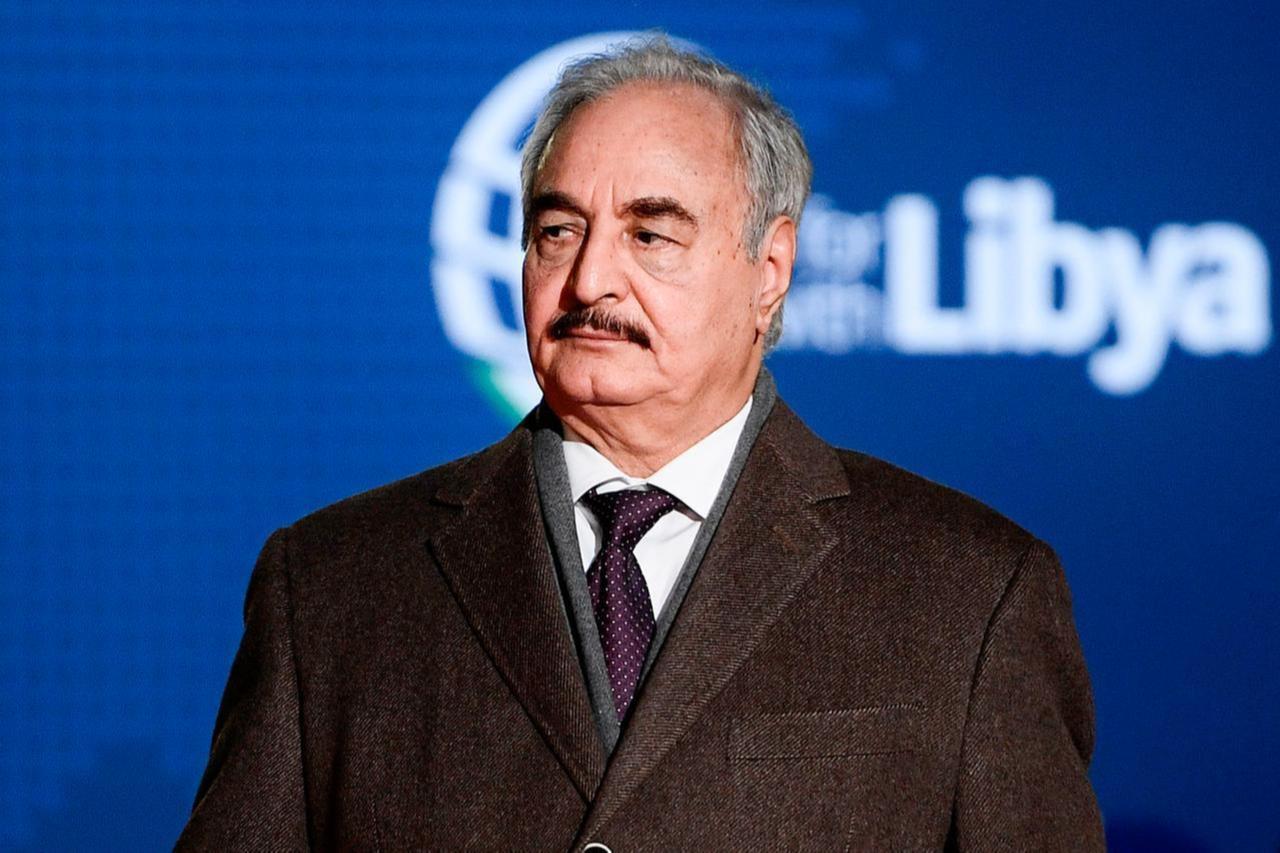
The past weeks have offered two converging signals. One point east, toward reported procurement tied to Khalifa Haftar’s Libyan National Army (LNA). The other points south, where Sudan’s war is stretching the map and turning Libya’s desert into a corridor of spillover. Taken separately, each looks like a localized development. Read together, they suggest a slow remilitarization that could harden Libya’s political stalemate into a sharper security dilemma—with direct consequences for the Eastern Mediterranean and for Türkiye’s strategic calculus.
A South Asian report claims Pakistan has clinched a major arms deal—reportedly around $4 to $4.6 billion—connected to Libya, widely framed as a package for the LNA.
Even if details remain contested, the strategic meaning of such reporting is clear. The point is less the exact hardware and more the signal: fresh supply channels may be opening for Haftar’s camp. In Libya, procurement shapes politics because it changes expectations about leverage. A credible hint of new capability can shift bargaining positions well before any system is deployed.
There is also the uncomfortable question of enforcement. Libya has lived under a U.N. arms embargo for years, yet embargoes constrain behavior only when key stakeholders treat them as more than paperwork. When talk of multi-billion-dollar deals circulates with confidence, it indicates permeability and uneven monitoring across the Mediterranean.
If enforcement is selective, the embargo becomes a political instrument rather than a practical barrier—and that, in turn, encourages actors on the ground to plan as if new deliveries are plausible.
Haftar’s camp has long used “modernization” as leverage. Military capability in the east rarely serves an operational purpose alone; it also functions as negotiation currency, deterrence messaging, and a tool of internal legitimacy. In fragmented security systems, perception matters because it alters risk calculations: rivals hedge, sponsors adjust support, and local brokers raise their price. This is why even rumors about specific systems can carry strategic weight in Libya.
The danger is not necessarily a sudden return to a 2019-style nationwide escalation. Libya’s more likely slide is incremental: a capability appears here, a training loop expands there, and logistics become smoother over time. Meanwhile, the political process continues in official language while the security balance tilts quietly. When that gap widens, the “frozen conflict” label stops describing reality and starts obscuring it.
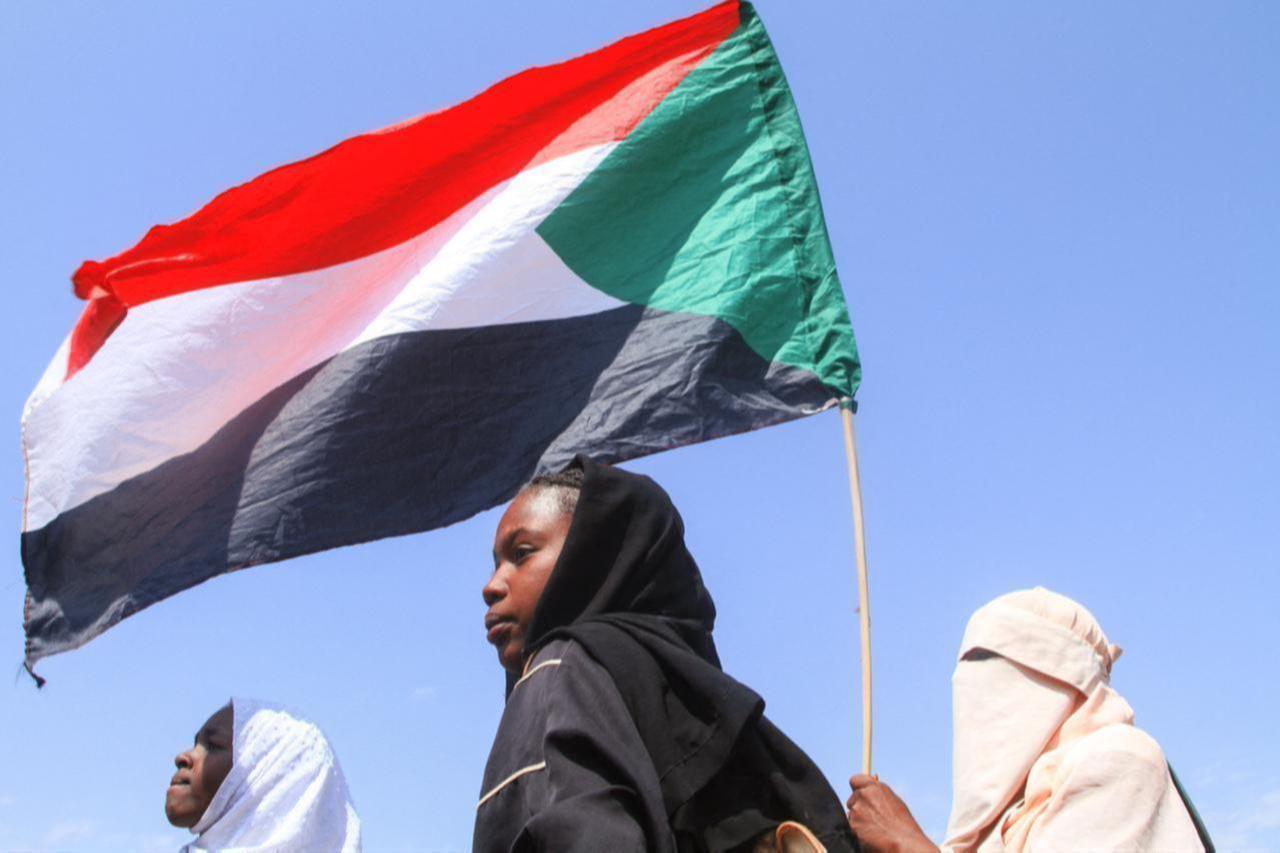

If the east is the arena of procurement signals, the south is the arena of spillover. Libya’s desert is often described as empty space. In reality, it is connective tissue linking Libya to Sudan, Chad, Niger, and the broader Sahel. It moves fuel, arms, people and money—and it moves wars as well.
Sudan’s conflict has been steadily dissolving borders as meaningful barriers. The UNHCR has warned that militia advances could trigger a new refugee exodus, with potential scenarios involving tens or even hundreds of thousands of Sudanese displaced into Libya’s south.
Displacement is the visible face. The less visible face is the war economy that follows in its shadow. As civilians flee, traffickers widen routes, local authorities lose bargaining power, and paid protection markets expand around transport, storage and cross-border passage.
Beyond the humanitarian toll, Sudan’s war is quietly redrawing the balance of coercive power in southern Libya. As RSF-linked fighters and intermediaries move across the border, they bring weapons, cash and intelligence ties that plug into existing Libyan patronage networks. This does more than add firepower to the desert. It changes who can credibly threaten whom, and which local actors can bargain with external sponsors.
That is why reports about Sudanese actors using Libya’s desert matter even when they are difficult to verify in granular detail. An investigation has described an alleged RSF presence and facilities hidden in Libya’s desert, pointing to a replenishment-and-logistics logic operating beyond Sudan’s borders.
A recent report maps how Sudan’s war is reshaping arms markets and mercenary networks in Chad and Libya, describing “collateral circuits” that thrive on weak oversight and profitable distance.
A basic mechanism ties these threads together. Violence travels through deserts because they offer depth, deniability, and revenue: fewer checkpoints, weaker state presence, and supply routes that can be rented, taxed, or protected. Southern Libya—through nodes such as Kufra—becomes a strategic hinge precisely because it sits outside the state’s daily supervision. External conflicts can therefore plug into local rivalries, turning episodic spillover into a durable security ecosystem.
As these southern nodes become more deeply embedded in Sudan-linked war economies, Libya’s conflict acquires a new axis of volatility that neither Tripoli-based authorities nor Haftar’s eastern command fully controls. In practice, future confrontation in Libya may be shaped as much by forces and flows originating in Sudan as by decisions taken in Libyan capitals.
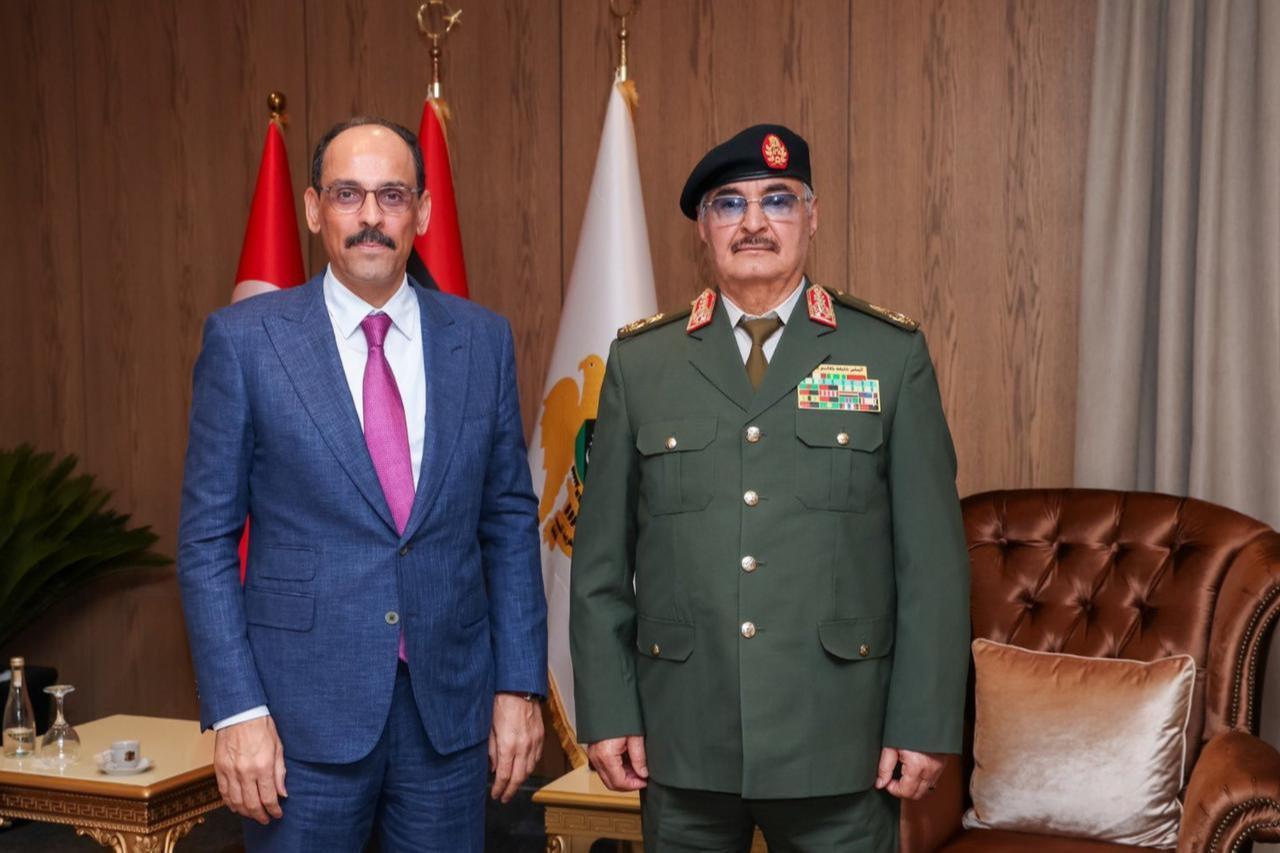
For Türkiye, Libya is less a distant crisis than a nearby test of strategy because it touches maritime jurisdiction, energy routes, migration pressure and Ankara’s formal security cooperation with the Tripoli-based government. Türkiye’s posture in western Libya, its defense cooperation, and its Mediterranean interests have produced significant leverage. The changing dynamics, however, require a recalibration to prevent erosion of the security environment that underpins that leverage.
The core challenge is to preserve stability while eastern forces potentially achieve a qualitative leap in capability and the south becomes a freer market for fighters. If these trends accelerate, uncertainty will spread into the Mediterranean, complicating energy planning and migration management. For Ankara, the practical concern is that an unstable, Sudan-influenced south reduces the value of understandings reached with actors on the coast by introducing veto players and spoilers who sit outside formal negotiation rooms yet can still shape events on the ground.
Three pathways deserve attention. A tense “cold peace” could persist, with all sides accumulating the capability to deter the other, which would require Türkiye to keep a robust yet cautious defense posture. A second trajectory is “spillover contamination,” where Sudan-linked networks introduce unpredictable actors, pushing Ankara to widen its intelligence focus beyond the coast. A third possibility is diplomatic acceleration, where fear of remilitarization drives international stakeholders to press harder for a settlement—an arena where Türkiye’s diplomatic weight would matter.
So, what is the roadmap? The first step is to treat Libya as one theater with three layers: the coast, the cities, and the desert. Stabilizing Tripoli while ignoring southern corridors leaves the state exposed at its weakest points. That means greater attention to transnational networks and closer intelligence cooperation along trafficking routes.
It also means reinforcing Western Libya’s security architecture. Coherent, institutional partnerships yield better security outcomes than fragmented alliances. A unified framework reduces the space for militia entrepreneurship and increases resilience against spillover dynamics.
Libya is sending signals on multiple fronts. In the east, procurement talk keeps circulating; in the south, corridor dynamics deepen. Meanwhile, the political process continues in the official language, but the temperature in the security environment is quietly rising.
For Ankara, the actual choice is whether to maintain the current holding pattern or to proactively shape the security environment before these quieter trends turn into louder realities. The moment to read the map is now.


 Set as preferred source
 Set as preferred source


 2 min read