Newsletters


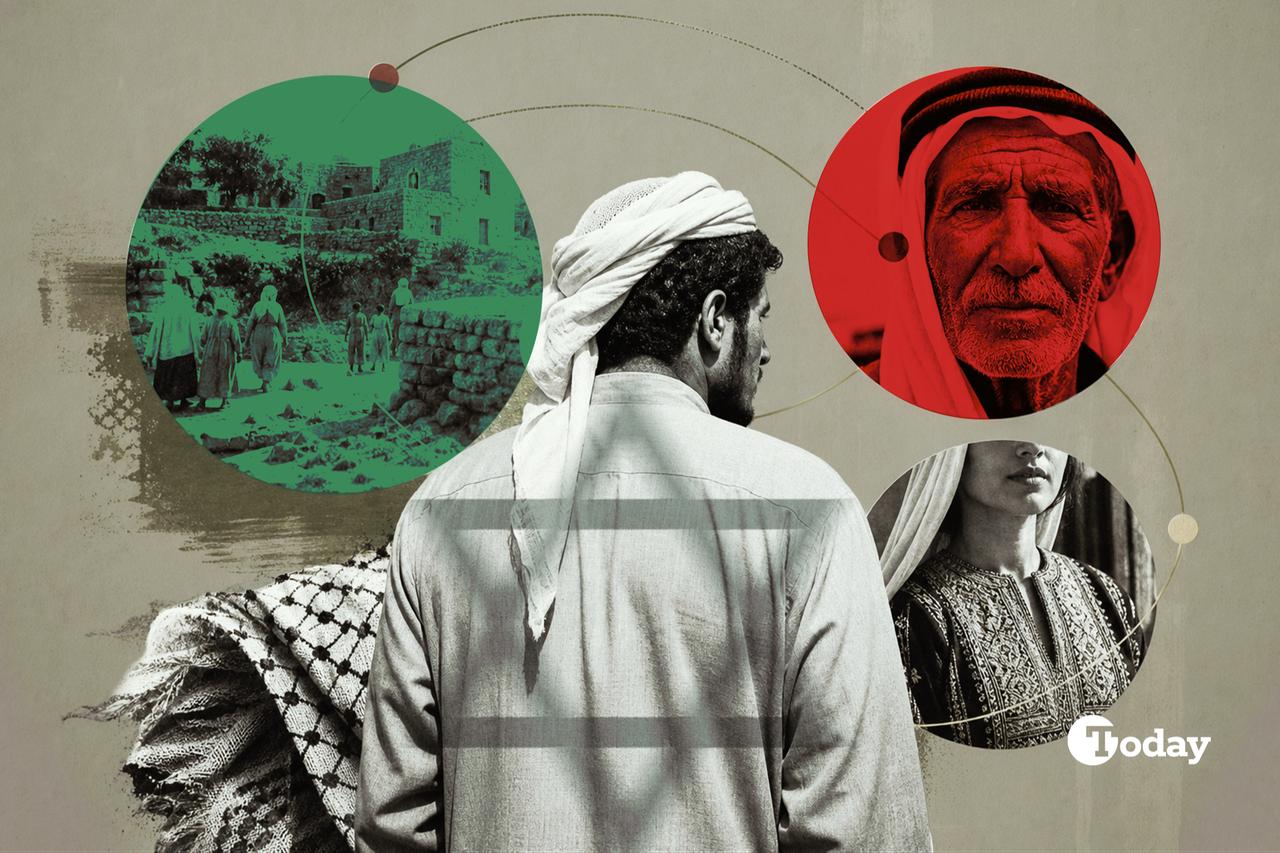


For the past three years, I’ve been touring the United States and parts of Europe with my film, "LYD," which tells the story of the Palestinian Nakba, and meeting people who come to the screenings.
At a time when much of the world opposes the genocide in Gaza and the ethnic cleansing in the West Bank, few people know about the least-talked-about Palestinians: the two million Palestinian citizens of Israel. Or, as we call ourselves, “48ers,” because we came under Israeli rule when Israel founded itself on the ruins of our Nakba in 1948. I’m used to getting basic questions about us. However, especially over the past three years, prompted by the unfathomable actions of the Zionist state against civilians in Gaza, one surprisingly basic question has been lingering in my head: How do you live with Zionists?
Before October 2023, I don’t think I ever thoroughly explored this question. It was just one of those things in my life, something most 48ers have lived with for as long as they can remember. Kids nowadays are born into a world riddled with AI and screens and are less inclined to question their reality because it is the only world they know. We’re born into this.
We have to distinguish between the “before times” and the world after October 2023. We live in a fundamentally different Israel now. And I think the entire world needs to reevaluate many things about the occupying state. One is the way it treats us, its Arab citizens, and forces us into an identity crisis.
We’re not about to start a laundry list of discrimination against us, though there’s plenty of it.
What’s lacking from the conversation isn’t an account of how a country founded on racial and ethnic supremacy discriminates against its indigenous minority, which it traumatized almost 80 years ago and has targeted ever since. That story is familiar. Instead, let’s shine a light on how the state actively fights Palestinian identity within Israel and how these attempts create other identities.
The three-body problem is well known in physics. We can accurately predict the motion of two bodies interacting through gravity, but when a third is introduced, their interactions become far more complex, potentially chaotic, and difficult to predict. Now, let’s use these physical bodies as analogies for identity.
Why does identity matter anyway? Many take what I’m about to say for granted. Individual and collective identities are the basis of every culture, and communities are built on shared identities—an agreed-upon collective that brings individuals together, from which other sub-identities emerge. In the United States, for example, the Black community's struggle for equality is based on the principle that Black Americans are just as “American” as other groups.
So how does a discriminatory ideology forced on an indigenous minority rupture that?
After Israel was founded and the Palestinians who remained after the Nakba were subjected to military rule until 1966, two main identities emerged: the “Israeli Arab,” also known as the “good Arab,” and the "Palestinian-Israeli Arab." The former chose to collaborate with the establishment—sometimes against their own people, forgoing their heritage and identity—while the latter refused to adopt this synthetic, forced Zionist identity. They chose their own collective identity, culturally and politically.
These were the two bodies around which our political representation revolved: those who accepted the Zionist establishment’s terms for belonging, and those who insisted citizenship could never replace their Palestinian identity or national and historical claims.
For years, the equation—though unique—was rather simple: all Arabs had to accept citizenship in the new Zionist state that occupied them and ethnically cleansed their towns and villages. Some tried to survive while fighting cultural erasure; others decided to go full Uncle Tom and get ahead of their fellow Arabs by appeasing the Zionist hegemony.
Tragic, but somehow manageable. For years, the collective held on to its political and cultural identity. The Uncle Toms remained a minority within a minority and barely received votes from the Palestinian community. And most of them, especially those serving in the Israeli army, were seen as traitors. The equilibrium was stable and easy to predict. “House Arabs,” such as propaganda activist Yousef Haddad, are ridiculed among Palestinians and will always have far greater popularity and influence among Jewish Israelis than among Arab citizens. Our Palestinian identity was at no risk of disappearing when only two bodies were present.
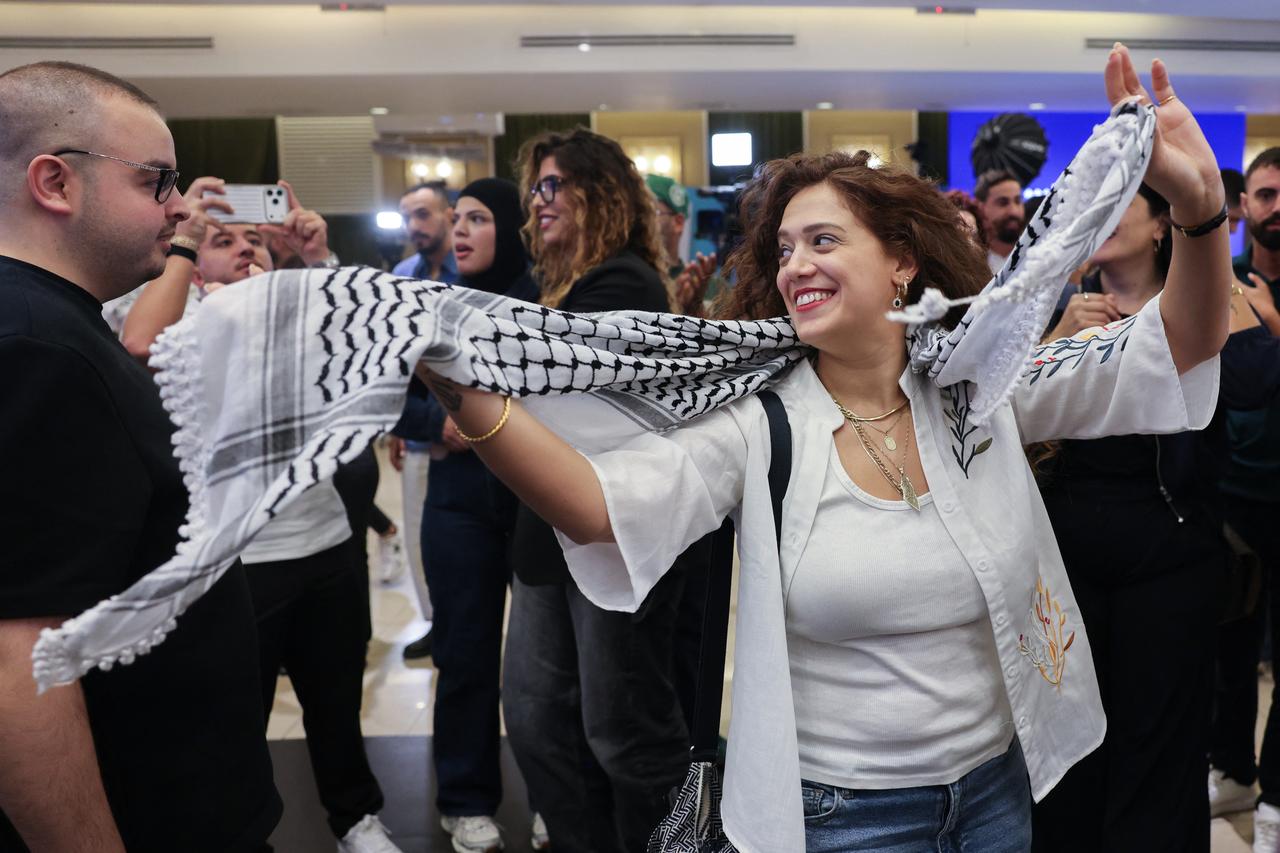

But what happens when a new movement introduces a third option? Say, an Arab politician who, backed by liberal Zionists, convinces other Arabs to deprioritize claims for equality based on recognition of historical wrongs, weakening the thread that holds the collective together?
Unlike the traditional collaborator, this third body doesn’t necessarily ask Palestinians to stop being Palestinian. Instead, it offers a different political bargain: keep your identity, but push its national and historical demands to the margins of the political arena.
By deprioritizing national and political claims and accepting Israel as a “Jewish state”—something Arab leadership in Israel has refused to do for years—Mansour Abbas and his “Mowahada” (Ra’am) party are pursuing a dangerous line: Put demands for equality and an end to the occupation of our people throughout Palestine on the back burner. Instead, prioritize immediate demands: bigger budgets and forcing the police to stop criminal gangs terrorizing our communities. These are the demands they want to put first. You’d think he’d fail, no?
And to be clear, these demands are not trivial. Palestinian citizens of Israel desperately need better public services, resources, and protection from organized crime. Abbas and his supporters would argue that pursuing these improvements isn’t a betrayal of Palestinian identity but a practical way of improving Palestinian lives. It’s a serious argument, particularly when people are struggling to survive.
But the question isn’t whether these demands are legitimate. It’s whether obtaining them should require pushing aside the political struggle that gives them broader meaning. When equality becomes primarily a request for better treatment within an unequal system, rather than a demand to change that system, the price may be far greater than the benefits.
Election results in Israel have shown he already almost rivals the joint list, as the latter stands at 11-12 seats and Abbas at 7-8. He served in the coalition that backed the previous government, making Ra’am the first independent non-Zionist Arab party to join an Israeli governing coalition.
The three-body problem is now real for us. Whatever happens in the Israeli elections, Abbas’ movement isn’t going away. Until this movement emerged and recognized the Jewish state, it was easy to predict that most Arabs in Israel would never sell out in exchange for joining the army and taking an active part in crimes against their own people.
But now, this third body clearly has gravitational force. Arabs are increasingly desperate just to survive in a genocidal society, and the Israeli mainstream is signaling which kind of Arab will have a future place on their own land. Can we say for sure which body will prevail?
Perhaps that is the real danger of the third body: not that it will immediately erase our Palestinian identity, but that it will gradually redefine what being Palestinian is allowed to mean. A people once united by shared history, collective memory, and struggle for equality may find themselves divided over whether survival requires pushing those things aside. And unlike the three-body problem in physics, this isn’t an abstract equation. The forces at play are political, the consequences are real, and the future is ours to lose.


 Set as preferred source
 Set as preferred source



 5 min read