

 Newsletters


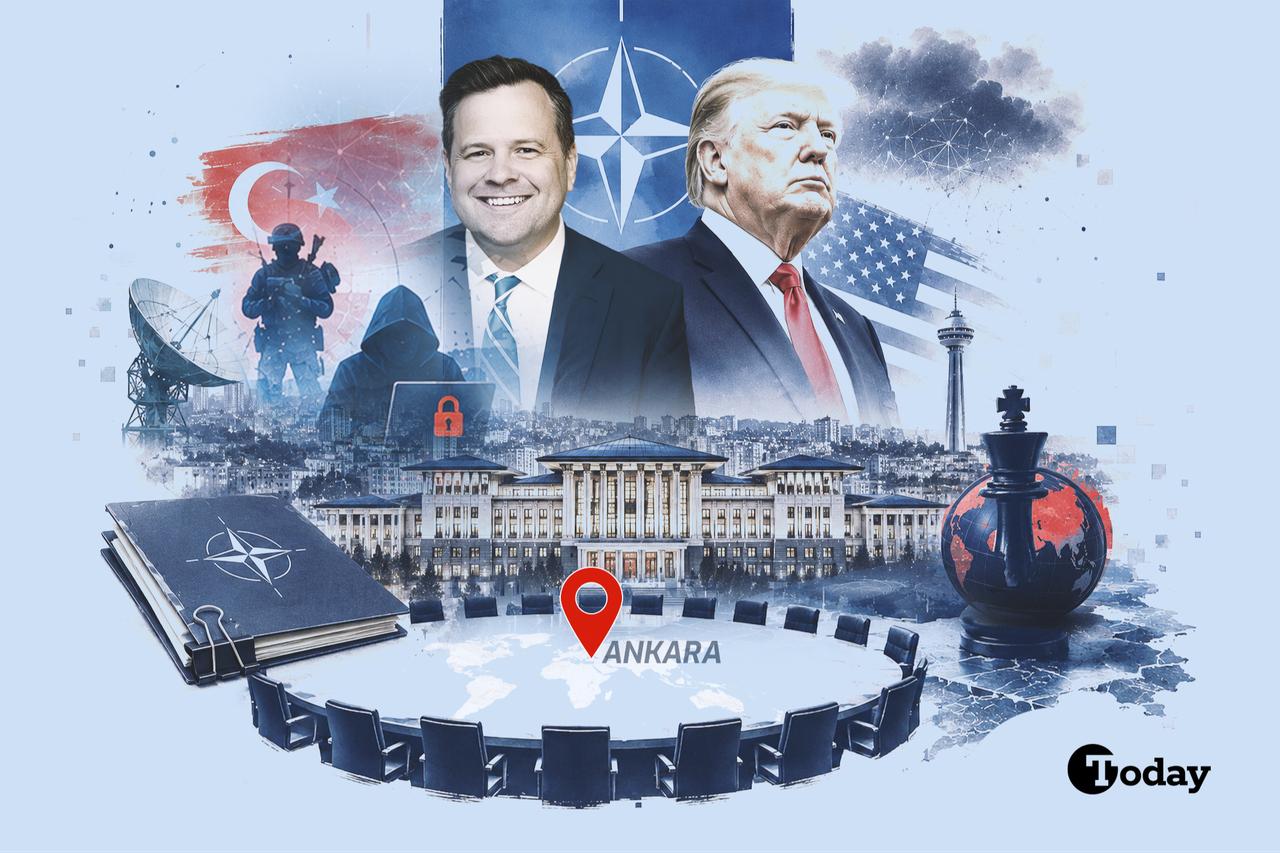


NATO caravans will roll into Ankara on July 7 and 8, bringing their cargo of diplomats, generals, intelligence mandarins, and other highly paid spooky specialists in controlled anxiety.
But upon arrival, the delegates from 31 allied nations may discover that the most dangerous storm system in the Atlantic alliance is not swirling above Eastern Europe, stalking the Black Sea, or flexing its muscles in the Taiwan Strait.
It may already be seated at the conference table, wearing a glittery American flag pin.
For generations, America's allies operated under a comforting superstition. Presidents came and went. Administrations rose and collapsed like carnival tents in a windstorm.
Political fashions and ideologies rotated through Washington like seasonal influenza. Yet somewhere beneath the noise, the machinery of intelligence remained a professional enterprise—flawed, frequently arrogant, occasionally catastrophic, but generally governed by rules and institutional memory.
The arrangement was less a system than a scar. Americans had spent the 20th century repeatedly learning the same expensive lesson: secret powers are like weasels.
They are dangerous enough when pointed outward. Turn them inward, and they begin chewing through the furniture of democracy.
The cunning and deceit still haunt the hallways. Wilson's wartime crackdowns. McCarthy's anti-communist fever dream. Hoover's FBI, which accumulated dossiers the way cows accumulate stomach gas.
Then came Watergate, that glorious national nervous breakdown that convinced Republicans and Democrats alike that perhaps agencies capable of wiretapping citizens and collecting secrets should not be operated like personal vendetta machines.
Guardrails appeared. Oversight expanded. Procedures multiplied like rabbits in a federal laboratory. The republic, battered and cynical, learned to distinguish national security from partisan warfare.
Then came the Trump Dump.
Like a garbage truck overturning on a freeway, it has scattered assumptions across the political landscape, leaving everyone standing on the shoulder wondering how so much institutional debris arrived here so quickly.
The latest fuel in this rubbish fire is Trump's selection of Bill Pulte as acting director of national intelligence.
If NATO officials were handed Pulte's resume without a name attached, most would assume there had been a blithering clerical error.
They might politely return it to the nearest aide and explain that they had requested the biography of America's intelligence chief, not the paperwork of a housing administrator who took a wrong turn at the Pentagon.
They would be correct.
Pulte arrives with no background in espionage, intelligence analysis, strategic warning, signals collection, counterterrorism, covert operations, or the management of sprawling national-security bureaucracies.
Senators tasked with intelligence oversight have privately expressed uncertainty about whether he could pass the background check administered to the baristas at the Starbucks cafe inside CIA headquarters in Langley.
Yet here he is, ascending toward one of the most sensitive positions in the federal government, rather like a child asking to be excused from history class.
In another age, the spectacle would be comedy.
Today, it’s attached to nuclear weapons, surveillance networks, counterterrorism operations, and intelligence-sharing agreements spanning half the globe.
That tends to drain some of the laughter from the room.
NATO officials arriving in Ankara may find themselves wondering what exactly awaits them. Will they discuss Russian military capabilities, Chinese strategic ambitions, cyber warfare, and terrorist threats?
Or will they be forced to navigate an American intelligence structure increasingly tangled in domestic grievances, political score-settling, and the endless social media knife fights that now consume so much of Trump’s time and the attention of America’s governing class?
The concern is not merely biographical.
Pulte's public reputation has been shaped less by expertise in national security than by enthusiasm for raging political combat.
Critics point to social media campaigns, public feuds, and attacks on figures regarded as the president's opponents. These activities bear roughly the same relationship to intelligence leadership as professional wrestling bears to neurosurgery.
That distinction matters because intelligence cooperation runs on trust.
Trust requires professionalism. Professionalism requires confidence that information is being collected and evaluated for national security rather than partisan advantage.
Once that confidence begins to crack, suspicion spreads through alliances the way mold spreads through an old basement—quietly, relentlessly and always faster than expected.
MAGA’s defenders argue that Trump is entitled to appoint loyal subordinates who share his priorities.
“I don’t care, I couldn’t care less,” is how Trump earlier this week vocalized his view on the significance of peace negotiations to end the U.S.-Israeli war against Iran that continues to devastate the Persian Gulf and the global economy.
The talks, Trump added, “started to get very boring.”
That argument now appears to be arriving in Ankara, carrying diplomatic credentials.
This is the peculiar gravity field of contemporary American politics. Standards once regarded as bedrock now float like balloons.
Qualifications once considered essential have become optional accessories. Norms once defended by both parties sit in museums alongside rotary telephones and functioning congressional committees.
The intelligence officials gathering in Ankara are not hobbyists collecting geopolitical baseball cards. They confront actual threats. Russia continues military operations. China expands strategic competition. Cyberattacks grow more sophisticated. Terrorist organizations adapt to the persistence of viruses.
These problems do not respond to slogans. They cannot be intimidated by loyalty tests. They remain stubbornly indifferent to social media feuds.
The controversy surrounding Pulte echoes far beyond Washington. The question is not whether one appointment succeeds or fails.
 2 min read
The larger issue is whether allied governments can continue believing that the most powerful intelligence apparatus on Earth remains guided by professional standards rather than political gibberish.
And so, as the NATO summit unfolds beneath the summer skies of Ankara, America's allies may find themselves confronting an unsettling possibility.
The greatest ambiguity in the room is not what Moscow intends, what Beijing plans, or what hostile actors may attempt next.
The doubt is whether America’s institutional levees built after generations of abuse are being dismantled while the floodwaters are already rising.
If that question settles over the summit, it will not resemble a policy dispute. It’s a thunderhead, a vast black anvil cloud hanging above the conference hall, crackling with static, visible to everyone, acknowledged by no one, and growing larger with every passing hour.
NATO will not need an intelligence briefing to identify it. They’ll already be standing beneath it.


 Set as preferred source
 Set as preferred source



 1 min read


