Newsletters


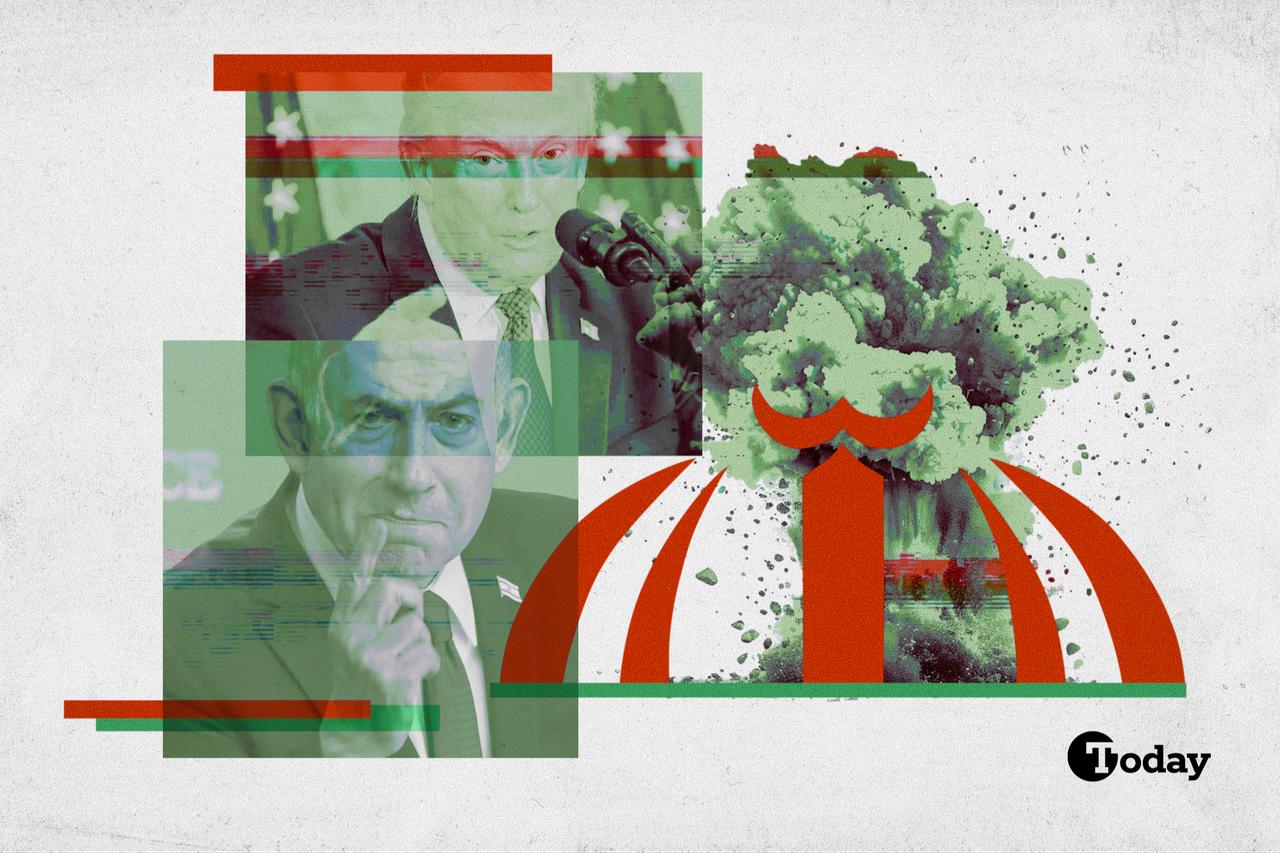


President Trump's proposal to link a ceasefire agreement with Iran to the participation of Saudi Arabia, the UAE, Qatar, Pakistan, Türkiye, Egypt, Jordan, and Bahrain in the Abraham Accords has generated confusion across the region. It was often received with dismissal or silence by officials in these countries.
Trump suggested that Saudi Arabia and Qatar should join first, followed by other countries, and later even indicated that Iran itself could eventually sign such an agreement. Analysts have argued that, aside from the UAE and Bahrain, which are already signatories of the accords, none of the countries mentioned are likely to take this step, and that the proposal ignores regional realities and the widespread perception of Israel as a destabilizing actor.
For Türkiye and Egypt, the proposal was particularly puzzling given that both countries already recognize Israel and maintain diplomatic relations with it.
Among the countries mentioned, Türkiye is perhaps the most notable case.
It was the first Muslim-majority country to recognize Israel in 1949 and has never fought a war with it. Until recently, the Palestinian issue was the only major source of disagreement between the two states.
Although bilateral relations reached a low point in the past decade, Türkiye and Israel share a long history of strong political, economic, military, and cultural ties. For decades, societal and economic exchanges between the two countries exceeded anything Israel's newer partnerships with Gulf states are likely to achieve in the near future.
Between 1992 and 1997, Türkiye and Israel established a pioneering strategic partnership through a series of military agreements. Cooperation included joint air and naval exercises, intelligence sharing, counterterrorism, and border security initiatives, and defense-industrial collaboration. A mechanism was also put in place for a "strategic dialogue" to assess regional threats and coordinate responses.
Defense cooperation was particularly significant, exemplified by the joint production of medium-range air-to-ground missiles by Roketsan and Rafael. Türkiye also explored participation in the Israeli-U.S. Arrow II missile defense program, though negotiations ultimately failed because of disagreements over technology transfer. Nevertheless, Israeli technology transfers and expertise contributed significantly to Türkiye's efforts to develop an indigenous and self-sufficient defense industry, one of the primary drivers of the partnership from Türkiye's perspective.
The Israeli-Palestinian conflict has long influenced bilateral relations, well before the AK Party came to power in 2002. Although the issue became more prominent in Turkish political discourse thereafter, it was not the primary cause of deteriorating relations. Turkish and Israeli leaders often compartmentalized their disagreements, as demonstrated by Türkiye's mediation of Syria-Israel talks in 2007–2008 despite tensions over Hamas and conflicts in Gaza and Lebanon.
Likewise, the decision in 2010 to host the NATO Kurecik Radar Station—an asset that indirectly strengthened Israel's deterrence against Iran—was taken only six months after the Mavi Marmara crisis and implemented while diplomatic relations remained frozen. Defense-industrial cooperation also continued until 2011, ending largely because of a dispute over the Heron UAV program rather than diplomatic tensions. Moreover, despite recurring political crises, bilateral trade remained resilient throughout the last decade, with Türkiye among Israel's top trading partners and Israel among Türkiye's key export markets.
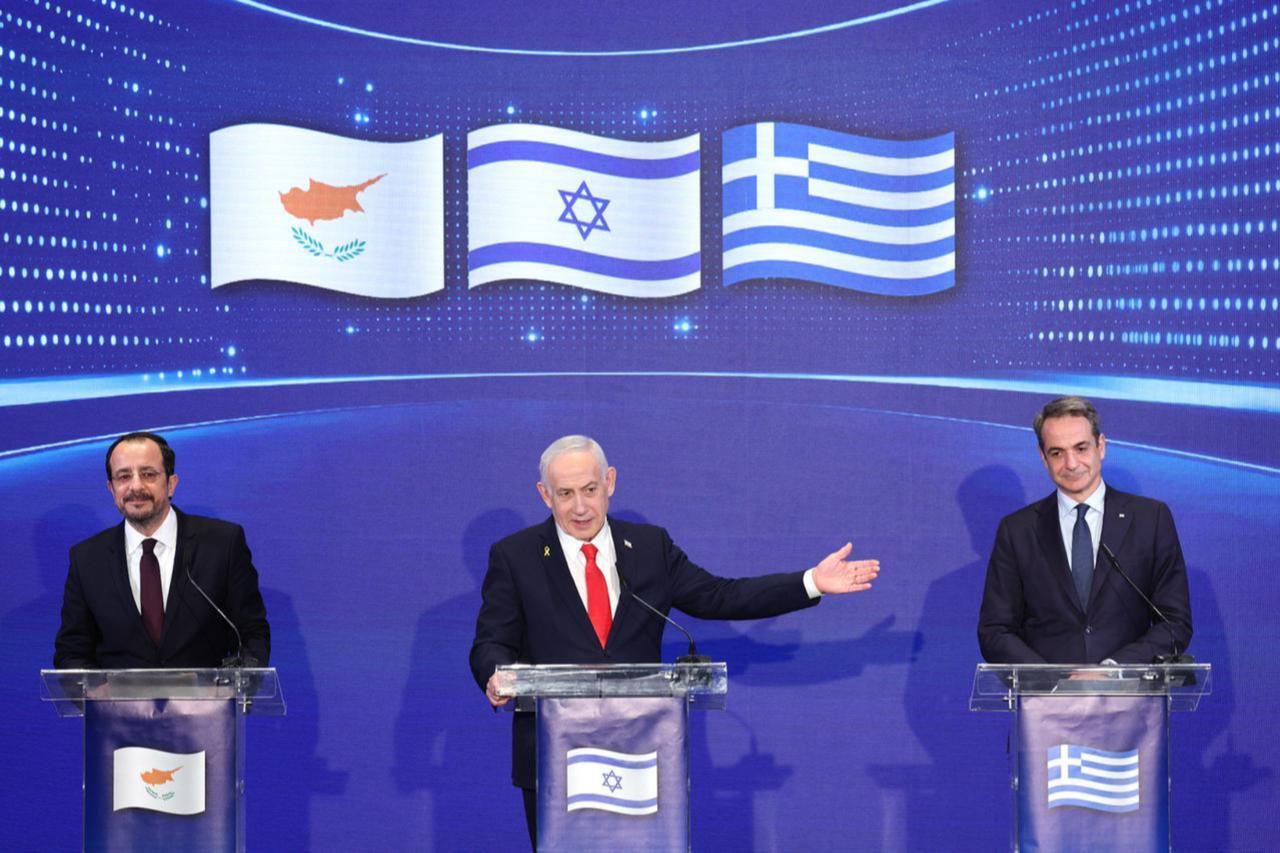

Unsurprisingly, the United States would like to see its regional partners and allies maintain good relations. Washington has long supported close Turkish-Israeli ties and actively facilitated reconciliation, including after the Mavi Marmara crisis. Unlike the 2016 normalization process, however, the 2022 rapprochement was driven primarily by political will in Ankara and Jerusalem as a response to the U.S.’s gradual regional retrenchment rather than by external pressure.
In 2022, pragmatic leaders were again in charge on both sides. President Erdogan and Prime Minister Netanyahu met as recently as September 2023 on the sidelines of the U.N. General Assembly. That trajectory was upended by Hamas's October 7 attacks and Israel's subsequent military campaign and genocide in Gaza.
Türkiye positioned itself as one of the strongest advocates for Gaza on the international stage. As in past Israeli-Palestinian conflicts, mutual rhetoric became increasingly harsh. Türkiye backed South Africa's genocide case against Israel, became a leading voice highlighting conditions in Gaza, and played an active role in ceasefire diplomacy. Alongside Egypt, it played an important role in persuading Hamas to agree to negotiations and implementing the agreement.
The fallout extended to economic ties. In May 2024, Türkiye suspended all direct trade with Israel, including exports, imports, and transit shipments. Turkish authorities have repeatedly rejected claims that trade continues indirectly through third countries, insisting that commercial relations have been fully halted.
At the same time, a striking shift occurred in Israeli and pro-Israel public opinion in the United States. Türkiye began to be portrayed not only as a threat, but as the "next Iran" and even a potential “next military target” for Israel.
What triggered this shift was, above all, the change in power in Syria and the rise of Türkiye-backed opposition forces. Almost immediately, articles began warning of an inevitable Turkish-Israeli confrontation. What concerned Israel was Türkiye's growing regional influence. Today, the view of Türkiye as the region's most significant threat after Iran has become increasingly common in Israeli public debate, echoed by both current and former officials.
Israel is also uneasy about Türkiye's growing ties with Saudi Arabia and Egypt, its already close partnerships with Pakistan and Qatar, and Ankara's increasing coordination with these countries on regional issues. While Israel seeks to avoid the emergence of strong regional blocs, Türkiye increasingly emphasizes regional cooperation and collective action.
Türkiye, like many countries in the region, has watched with concern Israel's push for U.S. strikes on Iran, which many regional states view as disregarding their interests, its attack on Qatar while ceasefire talks with Hamas were underway there, and its destruction and occupation policies in Gaza and Lebanon. As long as the current Israeli government remains in power and continues on this course, normalization with Türkiye—or most other regional states—remains unlikely.
Nor is it clear what the Abraham Accords could offer Türkiye and Israel that they did not already enjoy. The two countries once maintained extensive cooperation across virtually every field. Looking ahead, Israel's presence in Syria is likely to become the principal source of bilateral tension.
 3 min read

U.S. support for regional integration in the Middle East has been a bipartisan policy since President Trump's first term and reflects Washington's broader strategic shift toward the Indo-Pacific. As the United States gradually reduces its regional footprint, it seeks to leave behind a Middle East in which Iran is contained, and Israel's security is safeguarded.
A few months ago, Turkish Foreign Minister Hakan Fidan argued that the rupture in Turkish-Israeli relations is not "structural" but "conditional." Responding to President Trump's comments on the Abraham Accords and recalling the close diplomatic and economic relations the two countries once enjoyed, he said relations could normalize if Israel stopped the killing of Palestinians and ensured that the people of Gaza had access to basic humanitarian needs. He also reiterated Türkiye's support for a two-state solution.
Fidan also suggested that Israel could join a regional platform of Middle Eastern states if it recognized an independent Palestinian state. Fidan's proposal acknowledges the need for a regional framework to balance Iran while reflecting Türkiye's preference for regional ownership over U.S.-led initiatives. Although Israeli recognition of a Palestinian state is unlikely in the near term, the proposal highlights Türkiye's emerging role as a regional balancing power. Ankara increasingly sees itself as part of a regional effort to contain potential Iranian and Israeli destabilization.
At present, only the United Arab Emirates and Bahrain are openly aligned with Israel in the region. The future of the U.S.-led Middle East Air Defense early-warning network—and of indirect security cooperation between Israel and countries such as Saudi Arabia and Qatar—remains uncertain.
Türkiye already contributes early-warning intelligence to the United States through the Kurecik radar station, making it a de facto contributor to the network. However, Iran's targeting of Gulf-based radar systems and U.S. military facilities has raised questions about the network's resilience. Strengthening regional coordination and investing in regional early-warning capabilities even in the absence of the U.S. would be a more sustainable path toward regional security.
In a potential post-Netanyahu era, many regional states may prefer to engage Israel through multilateral frameworks rather than purely bilateral channels. Under the current Israeli leadership—or one pursuing similar policies—few Middle Eastern governments are likely to find domestic support for deeper ties with Israel. If the United States would like to see some of these countries develop closer ties with Israel, the first step would be to encourage Israel to include them in the mechanisms established to secure and reconstruct Gaza.


 Set as preferred source
 Set as preferred source


 1 min read