Newsletters




This article was originally written for Türkiye Today’s weekly economy newsletter, Turkish Economy in Brief, in its Aug. 17 issue. Please make sure you are subscribed to the newsletter by clicking here.
The Central Bank of the Republic of Türkiye (CBRT) released its closely watched third Inflation Report last week amid geopolitical risks deepening into a stalemate in the Middle East.
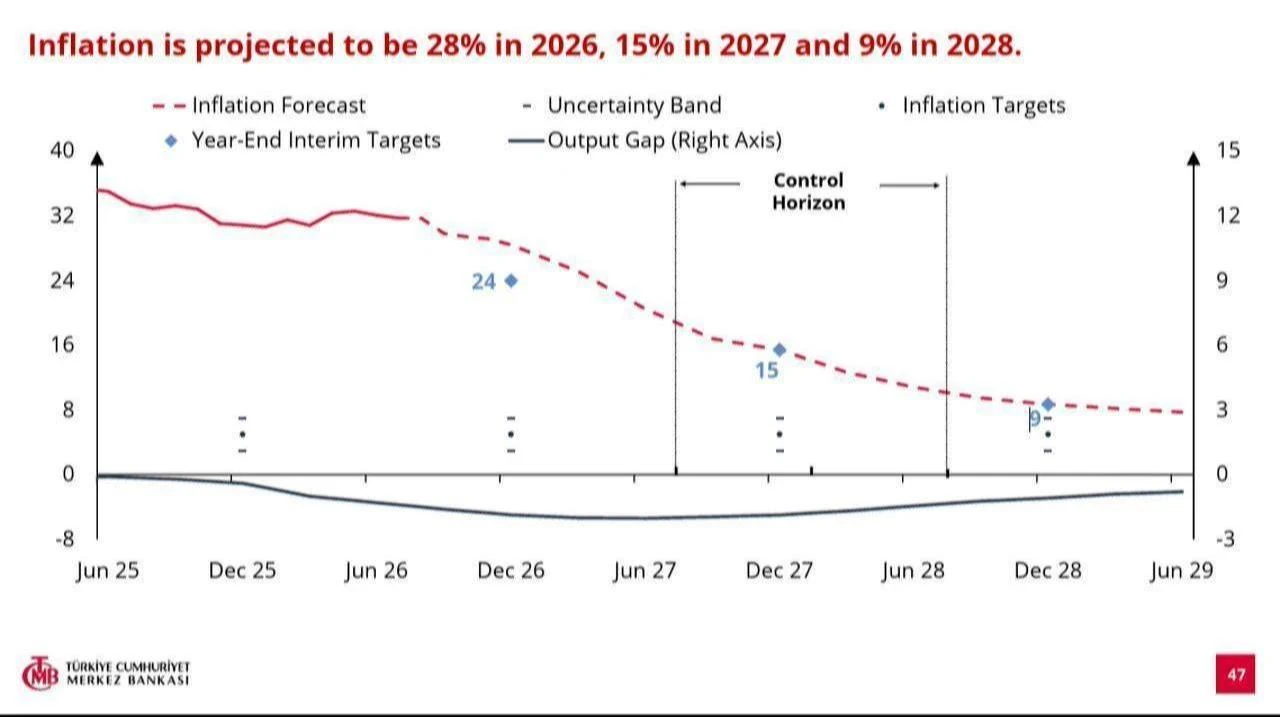
According to the report, the CBRT revised its year-end consumer inflation (CPI) forecast upward to around 28%, from 26% in its previous inflation report.
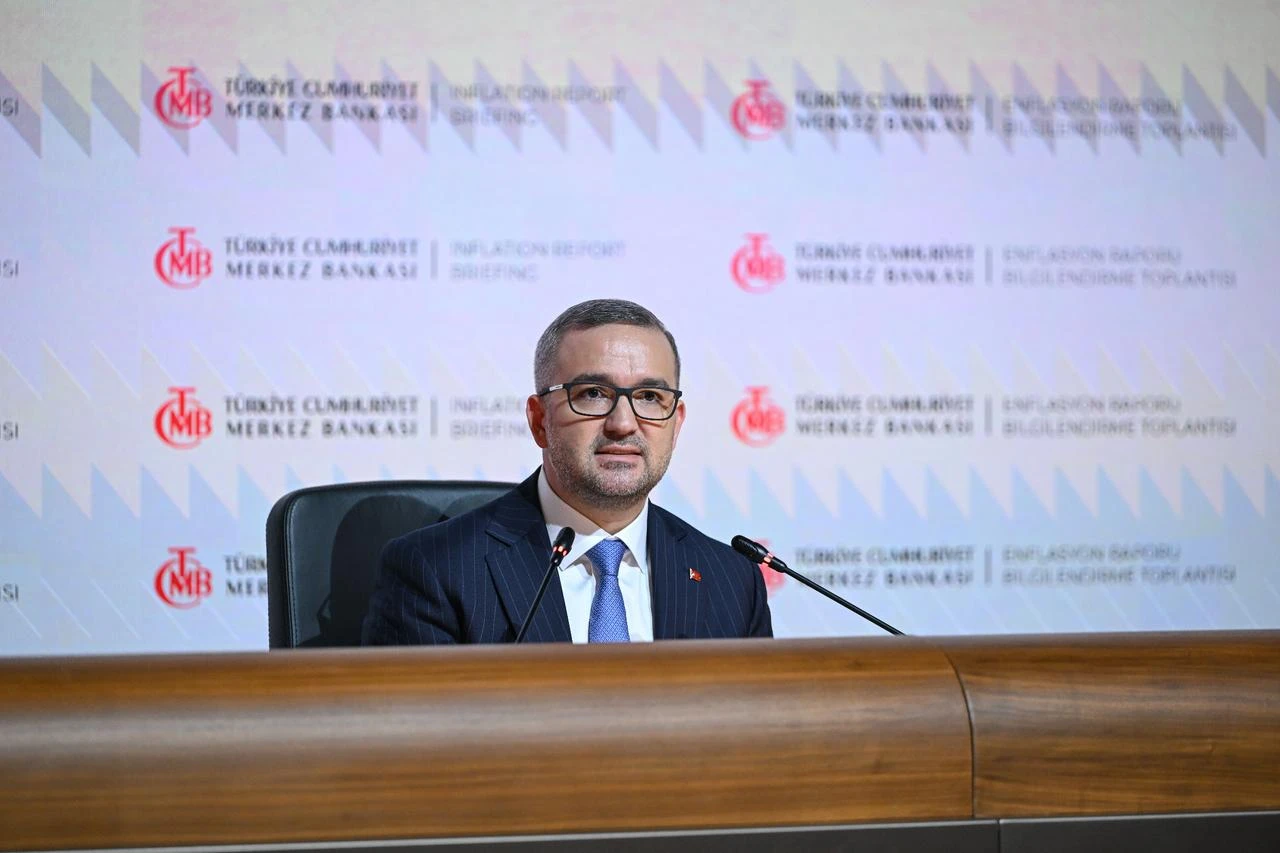
CBRT Governor Fatih Karahan explained the main reasons behind the latest revision, saying, “The outlook for diesel, natural gas and non-energy commodity prices was a factor in the 2-point revision to our 2026 year-end forecast. We also incorporated the impact of regulations concerning the sliding-scale excise tax system into our forecasts. In addition, the upward revision to our food inflation assumption and administered/regulatory prices also played a role in raising our inflation forecast.”
The CBRT has continued to conduct market funding through the upper end of its 40% interest-rate corridor since the war began in March. The policy rate stands at 37%.
While markets were looking for a signal at the third Inflation Report meeting that the CBRT could return to the policy rate, the central bank also gave its first indication.
Following the report, particularly during the question-and-answer session, the CBRT emphasized that the 2-point upward revision to the year-end CPI forecast was driven by supply-side factors outside the control of monetary policy and therefore did not require a “policy response.”
It also highlighted a noticeable weakening in demand conditions and said a transition of the funding rate to the policy rate was being considered, but that this would constitute a normalization step and its timing would depend on market conditions.

Markets are now focused on when a potential rate cut could come. Akbank Chief Economist Cagri Sarikaya said, “When we assess these messages collectively, we can consider a reduction in the funding rate from 40% to 37% at the Sept. 10 Monetary Policy Committee meeting as our base scenario.”
Is Investment’s assessment described statements by CBRT Governor Fatih Karahan as “hawkish” in some instances and “dovish” in others.
The report said Karahan’s reference to a return to weekly repo operations effectively opens the door to a rate cut at the Sept. 10 Monetary Policy Committee meeting, while his statement that the CBRT will act based on data helps ease concerns about an “early cut.”
Under Is Investment’s base scenario, if tanker traffic through the Strait of Hormuz resumes in the fall and Brent crude stabilizes around $80-$85 per barrel, funding would gradually shift toward the 37% weekly repo rate in October-November, followed by a 150-basis-point rate cut at the December MPC meeting.
Gedik Investment said the inflation and monetary policy path is largely tied to oil prices. The brokerage said it sees a stronger possibility that the transition to weekly repo funding could be delayed until October.
At the same time, the CBRT’s emphasis on a clear cooling in demand and its statement that it had not seen a deterioration in inflation expectations despite higher oil prices indicate that the central bank remains inclined toward easing when conditions permit.
Gedik Investment said the CBRT would shift its funding toward weekly repo operations and take the first step toward monetary easing if oil prices normalize by falling permanently below $80 per barrel.
Kuveyt Turk Investment said the upward revision to the inflation forecast was driven primarily not by demand conditions but by global geopolitical tensions, oil and natural gas prices, import unit values and cost pressures stemming from food supply.
The brokerage forecast that, if geopolitical risks ease and improvements in core indicators continue, the CBRT could take a liquidity normalization step by returning to weekly repo auctions in late August or September, pointing to an earlier timeline.
Kuveyt Turk Investment also forecast 100-basis-point cuts at each of the final two rate meetings of the year, scheduled for Oct. 22 and Dec. 10, putting its year-end 2026 policy rate forecast at 35%.


 Set as preferred source
 Set as preferred source



 7 min read