Newsletters




This article was originally written for Türkiye Today’s weekly newsletter, Saturday's Wrap-up, in its June 20, 2026, issue. Please make sure you subscribe to the newsletter by clicking here.
In December 2024, just two days after the fall of Bashar al-Assad, Türkiye's Foreign Ministry issued a statement that was, by any means, surprisingly muted. No congratulations to the people of Syria. No audible sigh of relief, even though the Assad regime had caused countless troubles for Türkiye. One would have expected Türkiye to be a bit more euphoric. For the first time in the republic's existence, there was a genuine prospect of a friendly government in Damascus.
Instead, the Foreign Ministry's statement read, "We strongly condemn Israel's violation of the 1974 Separation of Forces Agreement by entering the Israel-Syria zone and its continuing advance into Syrian territory. In this sensitive period, when there is a possibility of achieving the peace and stability that the Syrian people have been longing for for many years, Israel is once again displaying its occupying mentality."
Foreign Ministries are rarely euphoric, yet Turkish politicians were cautious, too.
Almost immediately, Israel emerged as the biggest hurdle to Syria's new status quo. Some in Türkiye even had nightmares that Ahmad al-Sharaa might one day be killed in a surprise assassination campaign in the middle of the night.
Today, a similar sense of caution defines Türkiye's mood following the newly minted U.S.-Iran memorandum of understanding. As Türkiye Today's Levent Kemal explains, Ankara welcomed the agreement with a mixture of satisfaction and carefully measured caution.
President Erdogan's description of the deal as "an important development" reflects the confidence Ankara derives from the regional architecture of dialogue it has sought to build. Yet, as Kemal notes, the real negotiations have not yet begun. A ceasefire stops a war, but building a durable peace is a far more difficult undertaking. The unresolved calculations of regional proxies and Israel's volatile posture remain significant risks, which is why Ankara remains in a period of careful observation.
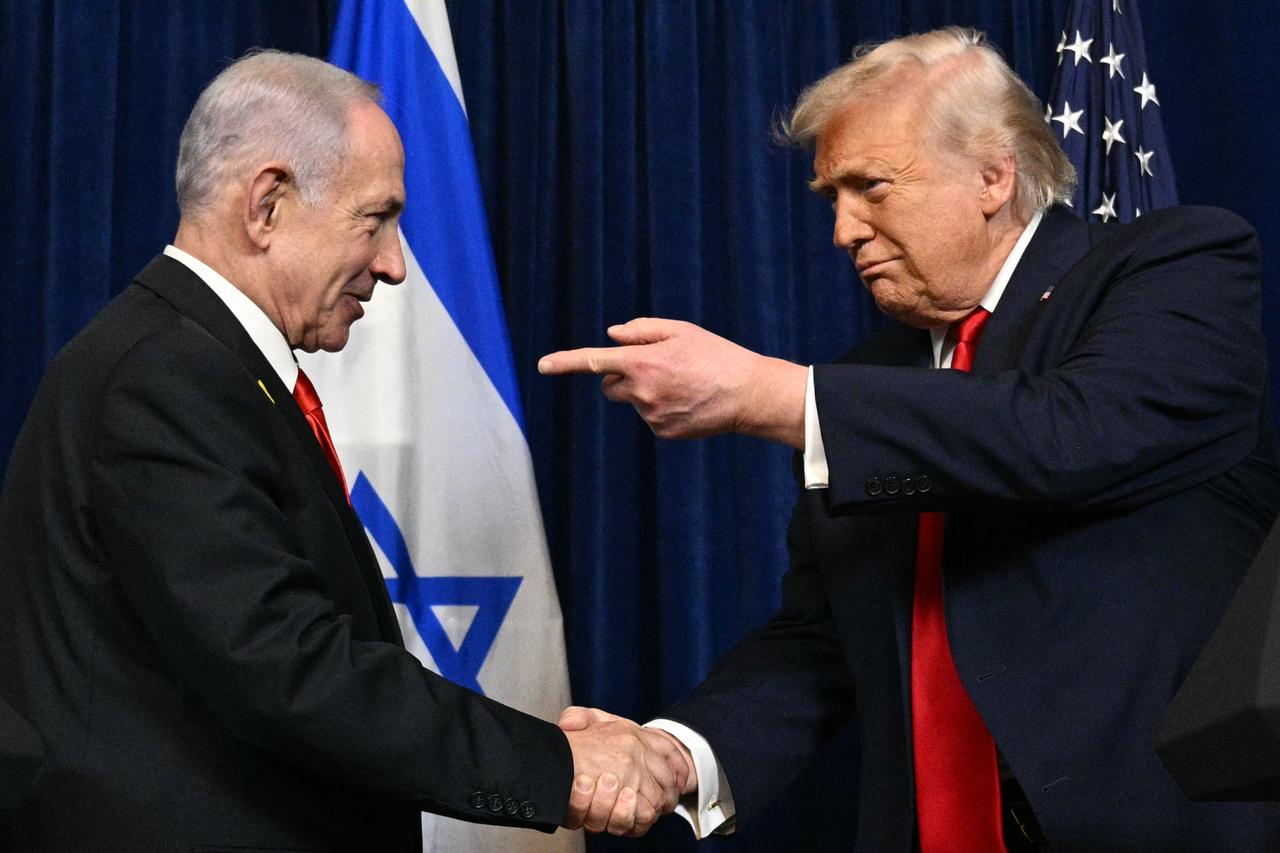
Despite this necessary caution, Türkiye views the new deal between Iran and the U.S. very positively. Ankara is particularly happy that the U.S. visibly sidelined Israel's demands during negotiations with Iran and deliberately excluded it from the process. As Tucker Carlson put it, the U.S. essentially "bcc'ed" Israel only after the deal was complete. Shortly after the deal, Vice President JD Vance's remarks likely deepened that sense of satisfaction in Ankara.
Vance directly challenged Israel, stating, "What is your exact proposal? You’re a country of 9 million people. You can’t just kill your way out of solving every single national security problem that you have."
For Türkiye, it was a reassuring remark showing that the U.S. still has some bones. Just a few months ago, soon after the start of the Iran war, Israel appeared to designate its next targets as if it had already won the war. The excitement in Tel Aviv was palpable; a country built from a random combination of exiled and angry people over centuries finally felt like it was now a hegemonic power in the Middle East where everyone had to obey.
As Türkiye Today's Omer Ozkizilcik points out, Israeli propaganda during their initial euphoria was short and clear: "Türkiye is next".
However, months later, those dreams have turned to ashes. Israel completely failed to achieve its war goals against Iran, whether in Lebanon, Iraq, Yemen, or Iran itself. The Iranian regime still stands, as do Hezbollah, Iran-backed militias in Iraq, and the Houthis. To complicate the picture further, Israel failed to form an anti-Iranian alliance with the Gulf states and ultimately damaged its relationship with the Trump administration. Ozkizilcik rightly diagnoses Israel's biggest mistake: its unrealistic hegemonic ambitions.
This staggering collapse of strategy brings us to why Israel is absolutely furious with Washington right now. According to Pinar Dost, the new MoU leaves the United States—and by extension, Israel—in a worse position than it was before the war. While Trump touts the ceasefire as a historic success, the reality is that the deal overwhelmingly favors Iran. Washington failed to achieve its stated objectives of regime change or the destruction of Iran's ballistic missile program. Instead, the U.S. granted Iran massive concessions, including oil transport waivers and the release of frozen assets, all while securing no tangible gains on preventing Iran's nuclear weapon development.
Dost argues that the first Trump administration and Israel fiercely criticized the Obama-era JCPOA for only temporarily constraining Iran. Yet today, the sweeping concessions made in this new memorandum significantly weaken America's leverage in future nuclear negotiations, offering even less oversight than the 2015 deal. In this context, it is no surprise that Israel feels blindsided and fiercely opposes the MoU.
Ultimately, while Ankara is mature enough to avoid blind optimism, watching the U.S. actively discipline Israel's unchecked ambitions is offering Turkish policymakers a profound, silent joy.


 Set as preferred source
 Set as preferred source


 4 min read