Newsletters




Time is no longer on America's side. Somebody should tell the Rolling Stones.
More than six decades after Mick Jagger made that reassuring proposition famous, the United States approaches its Nov. 3 midterm like an insomniac empire, convinced it can bully history into granting an extension while the rest of the world quietly makes alternative arrangements.
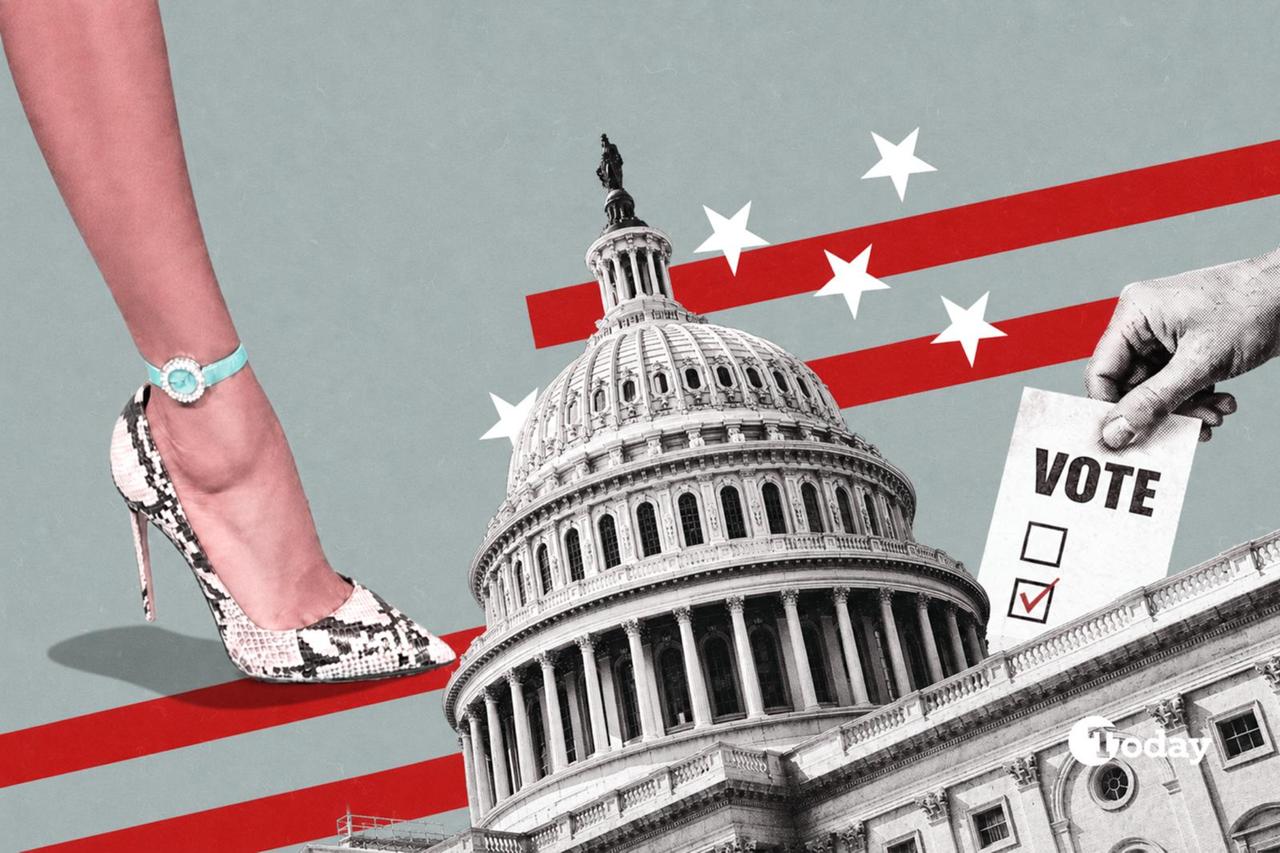
South African pop star Tyla Laura Seethal, a gleeful embodiment of a generation that regards convention as an optional extra, has found a more inventive relationship with time: wearing $40,800 worth of it around her ankle at the MTV Video Music Awards.
Not her wrist. Her ankle.
An 18-karat gold Chopard, glittering with 2.35 carats of diamonds and a turquoise dial, dangling above her shoe like an exquisitely expensive electronic-monitoring device issued by the Ministry of Excess.
And why not?
Her stylist, Ron Hartleben, has described a creative philosophy of turning clothes backward, upside down, and inside out, treating convention as an unfortunate misunderstanding rather than a binding obligation.
Tyla broke the rules of fashion and made something interesting. Washington keeps breaking the rules of government and somehow makes everything worse.
There, in miniature, is the American political crisis.
On Nov. 3, Americans will elect a new Congress in what amounts to a national referendum on President Donald Trump's second term. Republicans are fighting to preserve their MAGA majorities; Democrats hope to win enough seats to investigate the administration, restrain its legislative ambitions, and restore some measure of institutional oversight.
The winners will take office in January 2027, with two years remaining before Trump's presidency ends in January 2029.
The stakes are considerable, although Washington has developed the remarkable ability to make even the most consequential elections resemble a prolonged argument over who gets custody of the television remote.
Naturally, this is an excellent opportunity to raise several billion dollars and produce another season of televised hysteria. American democracy has become the only enterprise in which spending a fortune to convince people that everything is terrible qualifies as a growth industry.
Trump, the tireless impresario of political spectacle, has spent much of his second presidency treating the American government like a casino where the house rules can be rewritten between hands.
Unfortunately for the house, the customers have begun examining their chips.
A Reuters/Ipsos poll released Oct. 26 put Trump's approval rating at 32%, with Democrats leading Republicans 47 to 36% among registered voters on the congressional ballot. More ominously, 73% said the cost of living was heading in the wrong direction.
Seventy-three percent is not a political warning light.
That's the dashboard bursting into flames while the driver insists the engine has never performed better and offers to sell the passengers commemorative hats.
The Republicans are selling continuity, strength and the peculiar American fantasy that prosperity can be summoned through sheer presidential willpower.
The Democrats are selling accountability, affordability, and the tantalizing prospect of putting a congressional leash on the White House.
Neither party has yet demonstrated that it can make the average American feel financially secure. This is a minor inconvenience in a political culture where a good slogan is routinely mistaken for an economic policy and a television appearance for an act of statesmanship.
Still, the Democrats may capture the House. The Senate remains a more difficult proposition. Polling is not destiny, and American elections have an ugly habit of humiliating anyone foolish enough to mistake a forecast for a result.
This has never discouraged the nation's political experts, who can explain precisely why an election happened after spending six months explaining why it couldn't.
But the deeper problem is not which collection of political operators gets to occupy the committee rooms. It is whether either party can persuade an increasingly exhausted electorate that government is capable of doing something useful.
 1 min read
Beyond America's borders, perhaps a more important question is acquiring an unpleasant urgency: will the Nov. 3 election change anything that matters, or merely confirm the world's growing America fatigue?
For decades, the U.S. exported confidence, ambition, and the reassuring belief that tomorrow would somehow be better than today. Now it exports political anxiety, institutional dysfunction and an endless procession of televised grievances.
Allies watch with mounting bewilderment. Adversaries watch with undisguised satisfaction.
And the rest of humanity is wondering whether the world's most powerful democracy has mistaken its nervous breakdown for entertainment.
America once offered the world a grand experiment in democracy. Today, it offers a permanent reality show in which the contestants refuse to leave, and the audience is expected to finance the production. Washington keeps insisting that the world cannot function without its leadership.
But the world is discovering that American exceptionalism is merely dysfunction with an aircraft carrier and a divine right to interfere. The trouble is that Washington still thinks it gets to choose the music.
The Rolling Stones had time on their side. Tyla has a new generation on her side.
Washington has neither the imagination to change the tune nor the sense to recognize when the audience has stopped listening.


 Set as preferred source
 Set as preferred source


 1 min read