Newsletters


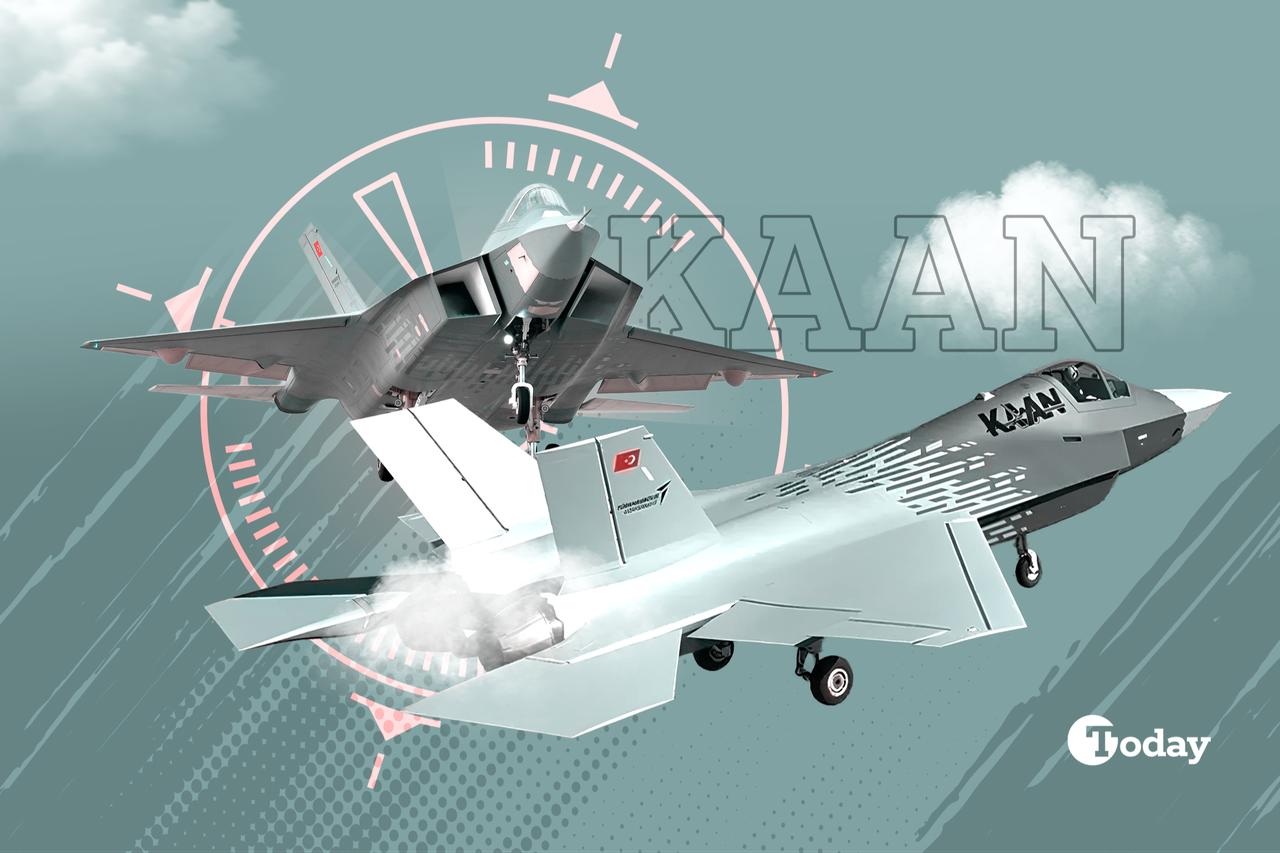


In September 2025, Türkiye's Foreign Minister Hakan Fidan stood before a room of journalists at the Turkish House in New York and said something unusually candid for a diplomat.
Türkiye had built its own fifth-generation fighter jet, KAAN. Yet, the plane that was supposed to announce Türkiye's arrival as a serious defense power was, for that moment, grounded by paperwork, specifically by export licenses stuck somewhere in the machinery of the U.S. Congress.
"KAAN's engines are waiting in Congress," Fidan said. "Production can't begin until those licenses come through."
Fidan's words were a warning. For years, Türkiye had spent billions constructing a single argument: that it no longer needed Washington's permission to arm itself.
And yet there in Manhattan, Fidan had said out loud what no one else dared to. At the time, it read as a confession—an admission of helplessness. But Ankara's outburst was not motivated by desperation but rather by a desire for Washington to fully comprehend the consequences of failing to act. If the engines don't arrive, Türkiye will look elsewhere.
The backstory was long and bitter. In 2019, Türkiye acquired the Russian S-400 missile defense system. Washington had warned it not to. The reaction was swift: Türkiye was expelled from the F-35 program, the most advanced fighter jet in NATO's arsenal, one that Türkiye had helped manufacture. Decades of partnership, severed by a single procurement decision.
What followed was a strange defiance. Rather than retreat, Türkiye accelerated. The KAAN project, which had existed mostly on paper, became a national priority. Ankara poured resources into its defense industry, into drone programs that would later reshape battlefields from Libya to Nagorno-Karabakh, into the quiet, grinding work of building the kind of technological credibility that makes a country harder to ignore.
But credibility has gaps. And Türkiye's gap was propulsion. The KAAN needed engines, and the only engines ready in time were American—General Electric's F110, the same turbofan that powers the F-16. To buy them, Türkiye needed Washington's approval. The same Washington that had just kicked it out of the F-35 club.
For months, that approval didn't come. Congressional skeptics raised objections. Some pointed to the S-400. Others to Türkiye's complicated relationships with Russia, Greece, and Syria. The licenses stalled. The production timeline slipped.
But here is what the congressional skeptics may have failed to fully reckon with: Türkiye had options.
Not good options, not clean options, but options nonetheless. China's WS-10 engine had been quietly discussed in Turkish defense circles as a theoretical fallback.
The Russian engine model was also among those discussed. However, it was quickly ruled out. Although it may seem somewhat odd that the AL-41 was even considered for a moment, given the status of the S-400 procurement, Türkiye’s evaluation of Russian military equipment on paper—despite U.S. objections—was part of a genuine review of the available options.
Neither path was appealing to Ankara. Both would have deepened dependencies of a different and more dangerous kind, entangling Türkiye's most sensitive defense program with powers that had their own interests in keeping it tethered.
A Türkiye that turned to Beijing or Moscow for KAAN's engines would not simply be an inconvenient ally. It would represent something more serious: a NATO member whose most advanced weapons platform ran on Chinese or Russian propulsion, maintained through Chinese or Russian supply chains, potentially subject to Chinese or Russian pressure at the worst possible moments. The intelligence implications alone were severe. The symbolic ones were worse.
This was the argument Türkiye did not need to make explicitly. The logic made itself.
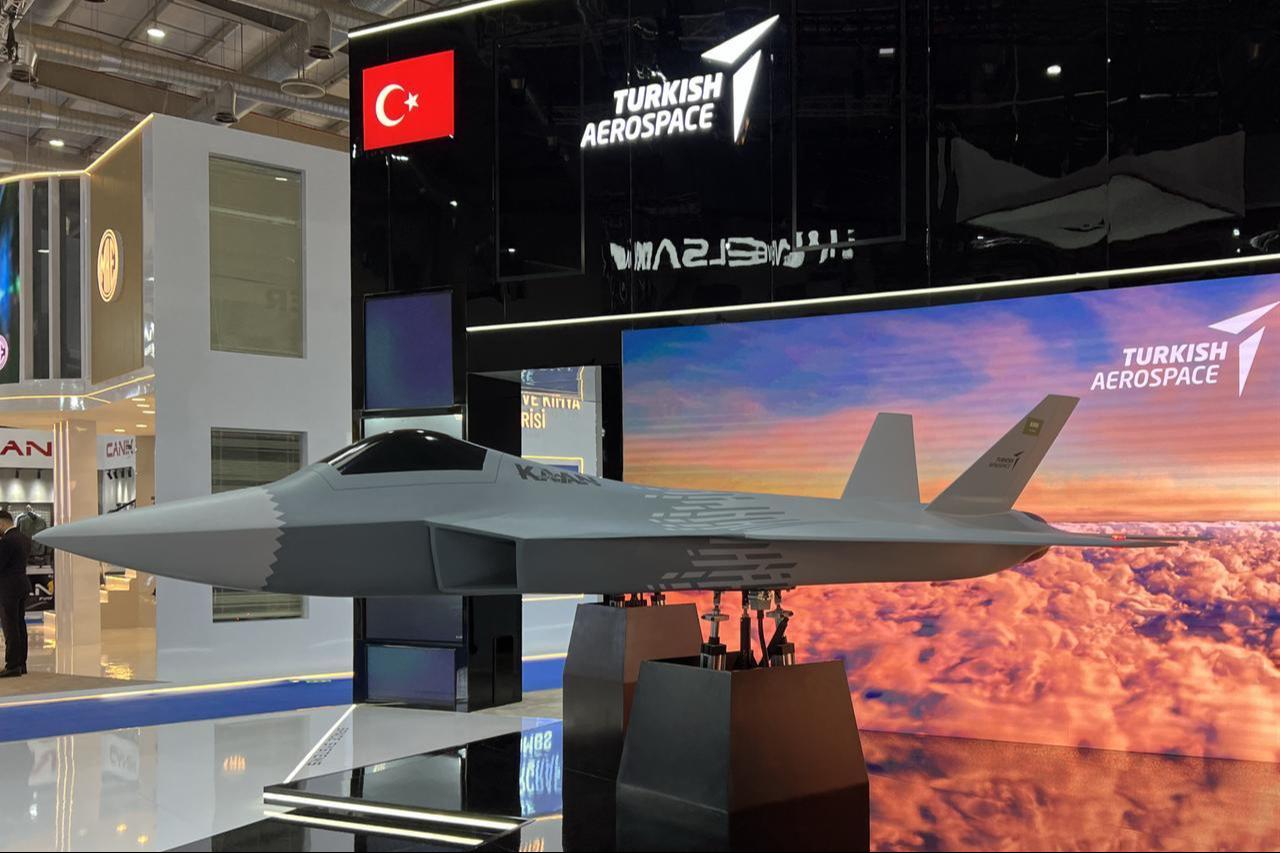

By early 2026, the geopolitical weather had shifted in ways that made congressional hesitation look increasingly costly. The NATO summit is scheduled in Türkiye. Russian pressure on NATO's eastern flank had not relented. The question of which direction ambiguous members leaned was no longer theoretical.
Washington had watched, over the preceding decade, as one ally after another quietly began hedging. Each individual case had its own explanation. The aggregate pattern was harder to explain away.
That brings us to how these things work in Washington, because the phrase "Congressional objections" tends to conjure a more dramatic picture than the reality warrants.
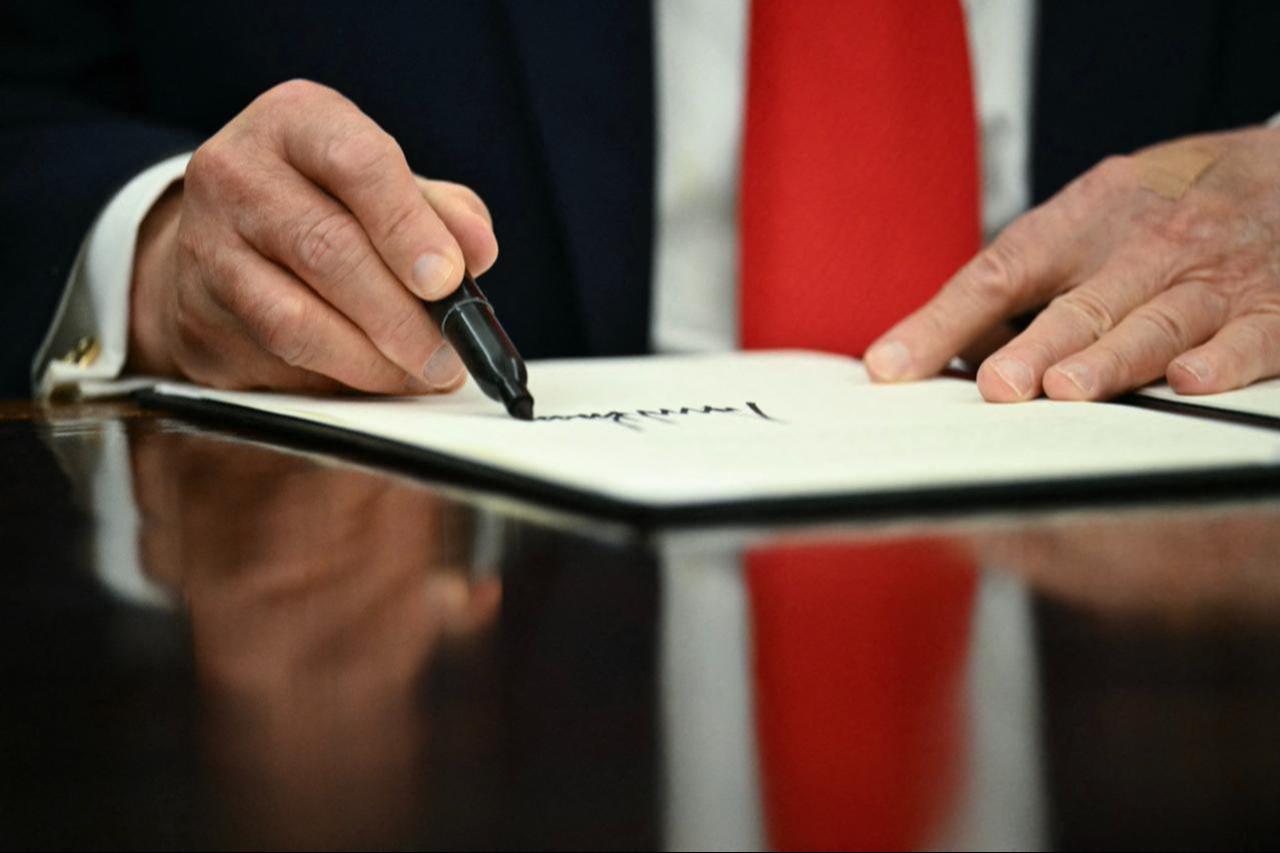
Under the Arms Export Control Act, the executive branch notifies Congress before major foreign military sales. The Trump administration already did it. The 15-day process has begun. Congress can object. Individual members can protest, hold press conferences, and write letters.
But the formal mechanism for stopping a sale is a high bar by design. It has rarely been cleared for any sale to any ally. The Trump administration, characteristically uninterested in procedural friction, had already navigated similar political currents on arms sales to other partners. What mattered, in the end, was whether the White House wanted to move. He did.
That said, the administration did not simply bulldoze its way through. There were Republican concerns on the Hill that required patient conversations before they dissolved. Some skeptics, once engaged, came around.
Others, particularly on the Democratic side, did not—and the administration chose to proceed regardless. The political management was real, even if the legal constraints were not as binding as the headlines suggested.
In June 2026, the formal notification went to Congress for more than 80 GE F110 engines, approved for Türkiye. The announcement landed days before the NATO summit, framed publicly as a gesture of alliance solidarity.
Privately, it was a calculation: the cost of continued hesitation—in leverage ceded to Beijing, in an ally left to find its own way—outweighed the domestic political discomfort.
Ankara is not celebrating quite yet. The engine deal puts KAAN's production timeline back on track, removes a real source of uncertainty, and signals that the current administration is willing to invest political capital in the relationship.
What it does not do is open the door Türkiye most wants opened. The F-35 remains out of reach—and the path back runs directly through the S-400, the Russian air defense system sitting on Turkish soil that triggered the original expulsion.
Ankara's position, that it purchased the system and that the matter should be considered closed, and that goodwill gestures like the engine deal demonstrate its alignment with NATO, is not the same as Washington's position, which is that the S-400's presence near NATO assets constitutes an ongoing intelligence risk that no amount of diplomatic warmth fully resolves.
The Trump administration has shown more appetite for creative solutions here than its predecessors. Quiet conversations are happening at levels that were silent under previous administrations. Trump himself has made clear he wants the relationship to work, that he sees Türkiye differently than the foreign policy establishment does, and that he is willing to entertain arrangements others have refused.
Whether that appetite translates into an actual resolution, a storage arrangement, a decommissioning deal, or some technical framework that allows both sides to declare victory, remains genuinely uncertain.
According to many sources familiar with the matter, the biggest obstacle to a storage arrangement that could be established via a passive ally subject to joint oversight is Russia. At this stage, Türkiye does not wish to see such a source of tension with Russia on its agenda—at least not yet.
What Ankara has learned, watching this process, is that even a sympathetic American president operates inside a system that does not move on warmth alone.
 2 min read
American officials, once engaged on the topic of reintegrating Türkiye into the program, move quickly from the surface issue to a longer list. The concerns accumulate: the presence of Chinese telecommunications infrastructure in Turkish networks, questions about the security architecture around Turkish air bases, the broader ecosystem of business relationships and commercial entanglements in the vicinity of sensitive facilities.
Each item, taken individually, might be manageable. Taken together, they describe a due diligence process that is less a checklist than a posture—a way of assessing whether Türkiye, as a system, meets the standards that operating the world's most sensitive fighter jet requires.
Turkish officials find this frustrating in ways they express carefully. The implication, as they read it, is that no amount of goodwill gestures will fully satisfy a process whose goalposts can always be moved.
The S-400 was the stated reason for exclusion, but may not be the only reason for continued hesitation.
According to the interpretation of Turkish officials, the key takeaway is this: it is virtually impossible to fully comply, in good faith, with a process whose objectives and conditions can be altered unilaterally at any moment and remain open to one-sided interpretation.
While there are precedents for such situations, the S-400 issue—although explicitly cited as the reason for exclusion—may not be the only factor behind the continuing reluctance.
Nine months have passed since Fidan spoke in Manhattan. The engine issue, for the moment, seems to have found its answer.
However, if Fidan were asked, he would probably point out that this issue was always the easier of the two. The engine deal was a transaction; a negotiation involving a price, a timetable, and a resolution mechanism.
The F-35 issue is something else entirely—a test of trust between an alliance and a member state, both sides harboring suspicions of the other, conducted through intermediaries, checklists, and quiet conversations that may or may not be leading anywhere.
Türkiye bolstered its hand by building its own jet, then used that hand to secure its engines. Whether the same logic extends to the elite club of Western air power is another question entirely—the answer still being written.
The engines are on their way. The real negotiations have not yet begun.


 Set as preferred source
 Set as preferred source


 1 min read