Newsletters


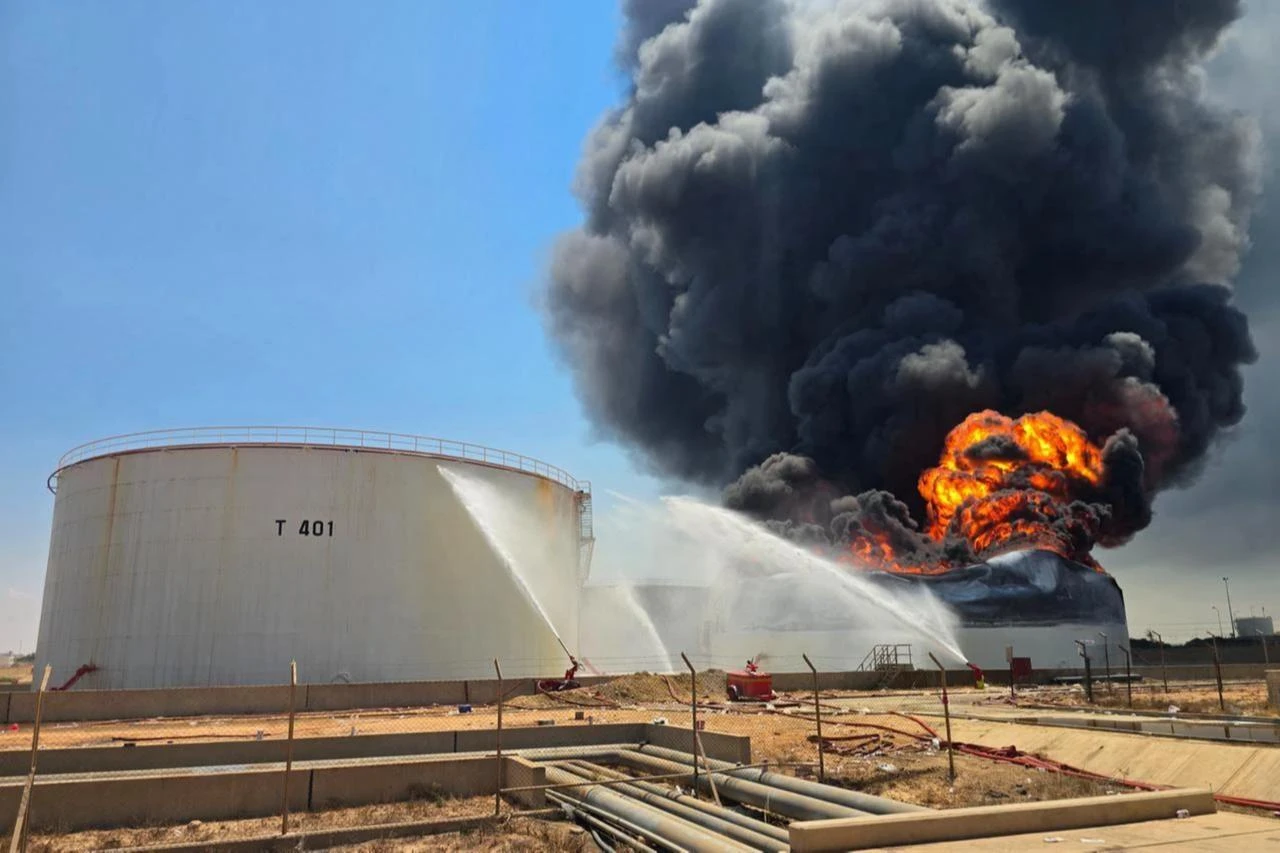


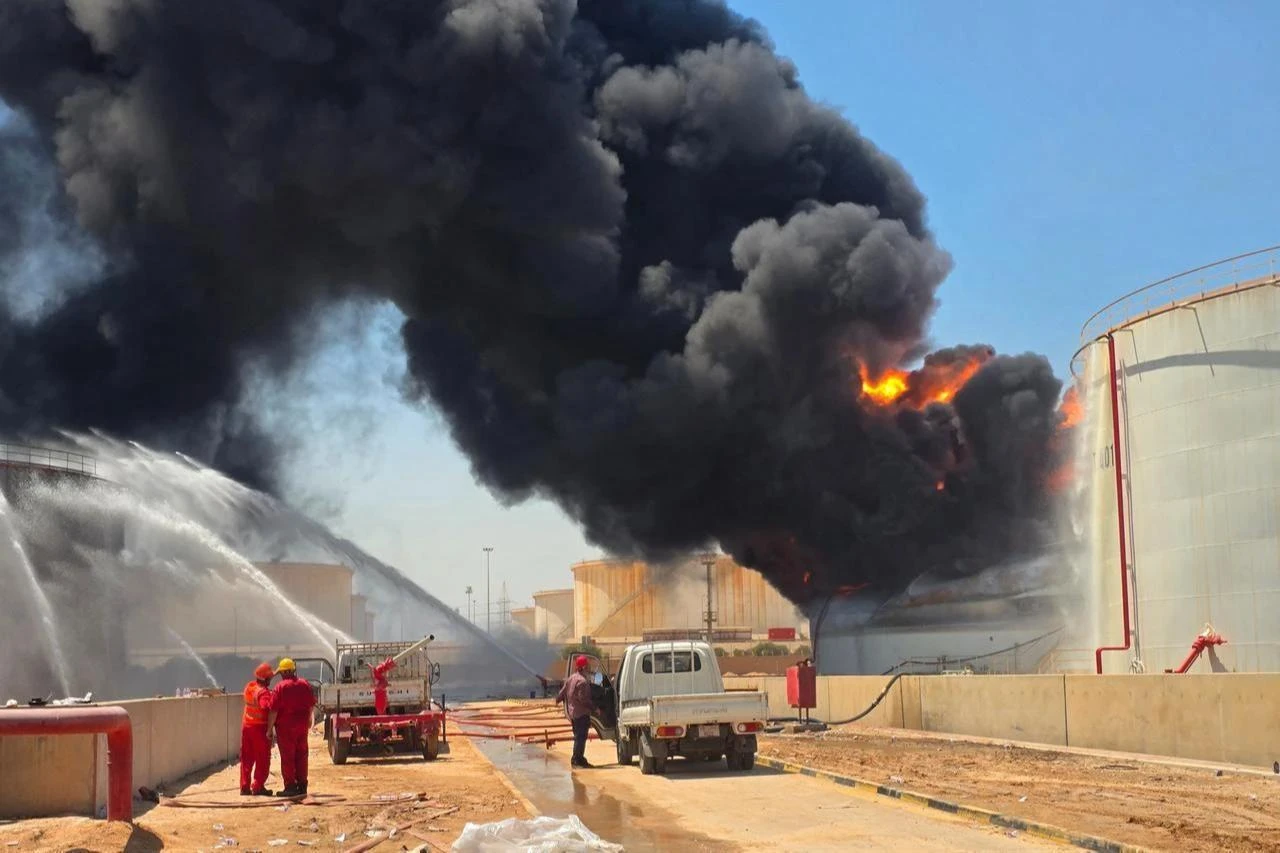
Libya has once again been marked by violence following drone attacks on an oil refinery west of Tripoli and the assassination of Libyan National Army intelligence chief Fawzi al-Mansouri in Benghazi. The attacks could undermine the ongoing reconciliation process and deter foreign investment in the country’s energy sector.
Libya’s power struggle remains multilayered, with the main divide between the U.N.-recognized Government of National Unity (GNU) in Tripoli, led by Prime Minister Abdul Hamid Dbeibah, and the eastern-based Government of National Stability (GNS), backed by Gen. Khalifa Haftar’s Libyan National Army (LNA).
This domestic divide is compounded by competition among external powers, most notably Russia, which has expanded its military presence following the loss of influence in Syria, and the United States, which, under the second Trump administration, has pursued a power-sharing plan between the rival sides through an extensive diplomatic effort led by U.S. Senior Advisor for Arab and African Affairs Massad Boulos. Türkiye has also shifted from exclusively backing the western government to engaging Haftar while coordinating with Washington, emphasizing its “One Libya” policy.
Traditional supporters of Haftar, including France, Egypt, Russia, and the UAE, now publicly favor stability, reconciliation, and a political settlement. Yet recent violence suggests that rivalries within the eastern and western camps remain unresolved. Speaking to Türkiye Today, Atlantic Council Resident Senior Fellow and Director of the North Africa Initiative Karim Mezran argues that these internal power struggles are contributing to the renewed violence.
Meanwhile, the competing power struggles and efforts to “unify” Libya largely overlook what Libyans themselves want.

The U.S. is seeking to broker a power-sharing deal that would unify Libya’s state institutions, establish a single government and military command, and pave the way for presidential and parliamentary elections within six months of agreeing on a new executive structure.
The plan would reportedly retain Dbeibah while elevating LNA Deputy Commander-in-Chief Saddam Haftar to an executive presidency.
Washington has also expanded its military engagement, including an April exercise in Sirte involving forces from both eastern and western Libya and European partners, including Türkiye.
Supporters argue that the plan could promote stability, curb Russian influence, and protect oil production and foreign investment, with U.S. energy giants such as Chevron and ExxonMobil having signed deals to resume operations in Libya.
Mezran sees the initiative as an elite bargain rather than an effort to unify Libya and argues that President Trump is primarily seeking a political win.
“What Boulos is trying to do is simply an elite pact that would crystallize the situation on the ground, which consists of an authoritarian system led by a couple of individuals and their clan—a cluster of families, not just one.”
This solution could entrench existing military and political elites, sideline popular demands, and undermine the U.N.-led political process and elections.
Mezran rejects the widely suggested attribution of the recent violence to the opposition, arguing that the sophisticated attack that killed Mansouri was beyond its capabilities. He believes Saddam Haftar may have ordered the killing of a Salafi rival, possibly with Russian assistance, as Moscow was reportedly uncomfortable with the excessive influence Khalifa Haftar had granted to Salafists.
Since 2020, the military presence of Türkiye and Russia—among the most influential external powers in Libya—has helpedfreeze hostilities.
Russia, which has traditionally supported Haftar’s forces in eastern Libya, reorganized Wagner forces under the “Africa Corps,” while also developing relations with the western GNU and reopening its embassy in Tripoli.
Following Assad’s fall, Moscow transferred military equipment from Syria to eastern Libya and reinforced several Libyan air bases, including al-Khadim, al-Jufra, Matan al-Sarra and bases in the south.
Libya has increasingly become a hub for Russia’s activities in the Sahel and for Russian arms trade with countries including Mali, Niger, Burkina Faso, and Sudan, as experts have argued and open-source satellite imagery has indicated.
Moscow also seeks a naval base in Tobruk to strengthen its long-term Mediterranean position, although it has yet to secure one, likely because eastern Libya is reluctant to jeopardize its improving ties with the U.S., Türkiye, and Europe.
Russia’s expanding presence concerns Europe because of Libya’s importance for energy security and migration management, while Moscow could undermine Western interests in the Sahel and exert pressure on Europe through migration routes.
Türkiye is another major external actor and has recently intensified diplomatic engagement with both Libyan administrations. Türkiye–Libya relations strengthened significantly after Ankara signed a maritime delimitation agreement with Libya’s U.N.-recognized government in 2019. In 2020, Türkiye provided drones, troops, and air-defense systems to the Tripoli-based government, helping it defeat Haftar’s forces and regain much of western Libya, including Al-Watiya Air Base.
Türkiye subsequently established a lasting military presence through facilities and bases including Al-Watiya, Mitiga, Misrata, and Khoms, while expanding cooperation in defense, intelligence, and law enforcement. This intervention made Türkiye a major political and security actor in Libya, with its military presence reflecting a long-term security and deterrence strategy rather than a temporary intervention.
Since last year, following the normalization of relations with Egypt, Ankara has pursued a hedging strategy, engaging not only with the western government but also with Haftar and eastern Libya in coordination with Washington.
This approach seeks to preserve Turkish influence across Libya’s divided political landscape while protecting strategic interests, including securing recognition of the 2019 maritime agreement by eastern authorities and expanding Turkish business interests.
At the same time, Ankara frames its engagement with both sides as part of its “One Libya” policy, aimed at supporting state reconstruction, national unity, reconciliation, and Türkiye’s economic and maritime interests in the Eastern Mediterranean and Africa.
Although the U.N.-led political dialogue called for presidential and parliamentary elections in December 2021, their indefinite postponement has left Libyans unable to choose their government.
Several Western Libyan political and security actors oppose both power-sharing with Haftar’s camp and externally brokered settlements. Mezran notes strong opposition to the Boulos plan in western areas affected by Haftar’s 2019–20 offensive, where numerous acts of violence and blatant human rights violations were committed, with no investigation or prosecution of those responsible.
He argues that this is the reason why Tripolitans oppose the deal that would grant Haftar politically what he failed to achieve through war. Discontent also exists in eastern Libya, where tribes and local communities face repression by the LNA, while rivalries persist among pro- and anti-Dbeibeh factions in the west and between Haftar’s sons and other actors in the east.
Moreover, the Boulos plan risks undermining the Libyan Political Agreement and the U.N. Support Mission in Libya’s political roadmap. These dynamics raise doubts over whether a power-sharing arrangement centered on Libya’s ruling elites, rather than its people, elections, and institutions, can deliver lasting stability.


 Set as preferred source
 Set as preferred source


 7 min read