Newsletters


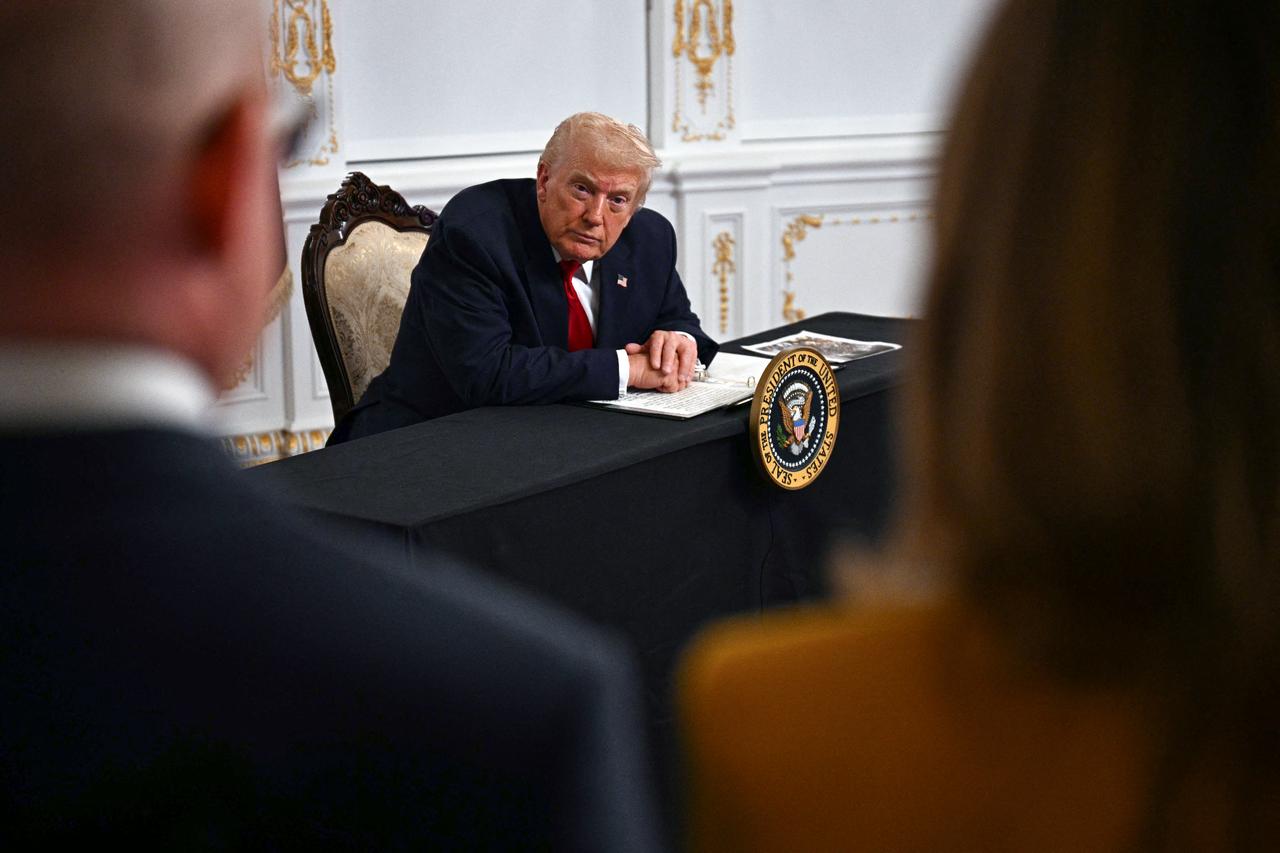


U.S. President Donald Trump has revived a dormant ambition of the American right, but with a tactical shift that makes this attempt far more potent than its predecessors. On Nov. 24, the president signed an executive order instructing the State and Treasury Departmens to begin designating the Muslim Brotherhood’s chapters in Egypt, Jordan, and Lebanon as foreign terrorist organizations.
This move is a sharp departure from the administration's 2019 proposal. That earlier effort, which sought a blanket designation of the entire movement, stalled in the corridors of the State and Defense Departments amid legal concerns and policy disputes. The new strategy is surgical. By invoking Section 219 of the Immigration and Nationality Act, alongside the International Emergency Economic Powers Act, the White House is bypassing previous bureaucratic friction with a narrower, country-specific focus.
The timeline is aggressive. The order mandates that intelligence agencies submit an assessment of Brotherhood-linked financial networks immediately, initiating a 45-day countdown toward potential terrorism designations. This is not merely symbolic; it is the prelude to a financial siege intended to freeze assets and sever the designated chapters from the global banking system.


To understand the logic behind this directive, one must look back to the tremors of the early 2010s. The Arab Spring did more than topple dictators; it shattered the region’s political assumptions. When the Freedom and Justice Party captured nearly half the vote in Egypt, and Ennahda emerged as the dominant force in Tunisia, the monarchies of the Gulf viewed these victories not as democratic transitions, but as existential threats.
Saudi Arabia and the United Arab Emirates responded by categorizing the Brotherhood as a paramount national security risk. Riyadh formally designated the group a terrorist organization in 2014, while the UAE released a blacklist including the Brotherhood and dozens of affiliates. The Gulf states backed this worldview with capital, funneling nearly $23 billion to the post-2013 government in Cairo to ensure the Brotherhood’s exit was permanent.
These foreign policies were rooted in domestic anxieties. The UAE’s prosecution of the “UAE 94” and Riyadh’s crackdown on the Sahwa movement highlighted a zero-tolerance approach to transnational political activism. For these capitals, the Brotherhood represents a rival source of legitimacy that competes with state authority.
Yet, despite nearly a century of suppression since its founding in 1928, the Brotherhood remains the region’s most resilient political variable. Its survival in Jordan illustrates the complexity the U.S. now faces. The Islamic Action Front recently secured the largest opposition bloc in the Jordanian parliament, winning 31 seats. However, in a paradoxical twist, the Jordanian government declared the parent organization an illegal association in April 2025. The movement is simultaneously a formidable electoral force and a prohibited entity.
Trump’s initiative aligns Washington directly with this Gulf consensus. It also satisfies a persistent demand within the American conservative movement. Figures such as Sen. Ted Cruz have introduced legislation to designate the Brotherhood in every congressional session since 2015. Following the Oct. 7 attacks, the argument that confronting Hamas requires dismantling its ideological adjacency has gained traction.
This geopolitical alignment is rapidly becoming a domestic issue. Texas Gov. Greg Abbott recently directed state police to investigate the Brotherhood and the Council on American-Islamic Relations (CAIR). While ostensibly a state-level law enforcement action, it signals a widening aperture. We are moving from the courtroom prosecutorial model of the 2008 Holy Land Foundation case toward a broader administrative and political offensive.
Ultimately, this executive order is an attempt to institutionalize the security architecture of the Abraham Accords. The administration is assembling a coherent structure linking Washington with its regional partners. In this new alignment, the Muslim Brotherhood is no longer viewed as a political competitor to be managed, but as a structural defect to be excised through coordinated legal and financial warfare.


 Set as preferred source
 Set as preferred source


 2 min read