Newsletters




China is often described as a country that avoids alliances. That description is useful only up to a point.
Rather than rejecting partnerships, Beijing avoids treaty structures that would narrow its diplomatic space, fix obligations in advance and force clearer choices among partners that serve different purposes. It still pursues security cooperation when the terms suit its interests.
This preference has become clearer since the end of the Cold War.
A recent study identifies 109 Chinese bilateral strategic partnerships, while only a limited minority include a military or security component in the written partnership documents. The pattern is telling. Beijing wants influence, access and coordination, while keeping distance from automatic military liabilities.
The logic is practical. China wants coordination with Russia without absorbing every cost of Moscow’s confrontation with the West. It wants energy from the Gulf, trade with Europe, markets across the Global South and crisis management with neighbours. A formal alliance system would make these relationships harder to hold together.
China’s record does not support a simple story of alliance aversion. While Chinese states often sought partners under pressure, they usually tried to turn those partnerships into relationships that preserved their own autonomy, status, or control.
The Ming court needed allegiance from Mongol and Chinggisid elites, but it used titles, gifts, court access and patronage to pull them into an imperial order rather than leave military partnership outside an imperial hierarchy.
The early Qing followed a sharper version of the same logic. Manchu rulers builtalliances with southern, later Inner, Mongol groups before 1644. In the 1630s, those ties were folded into the League-Banner system, the jasaq system and the Lifan Yuan.
Partnership moved toward tutelage. The relationship reduced military danger on the northern frontier and created a more manageable imperial order.
The 1950s Sino-Soviet alliance left a different lesson. It gave the new People’s Republic security, industrial support and technology transfer. It also created a hierarchy that Beijing found difficult to accept.
By the late 1950s, disputes overnuclear assistance, long-wave radio stations, a joint fleet, Taiwan and the Sino-Indian borderhad turned alliance management into mistrust. Beijing wanted help, while resisting arrangements that looked like Soviet control on Chinese territory.
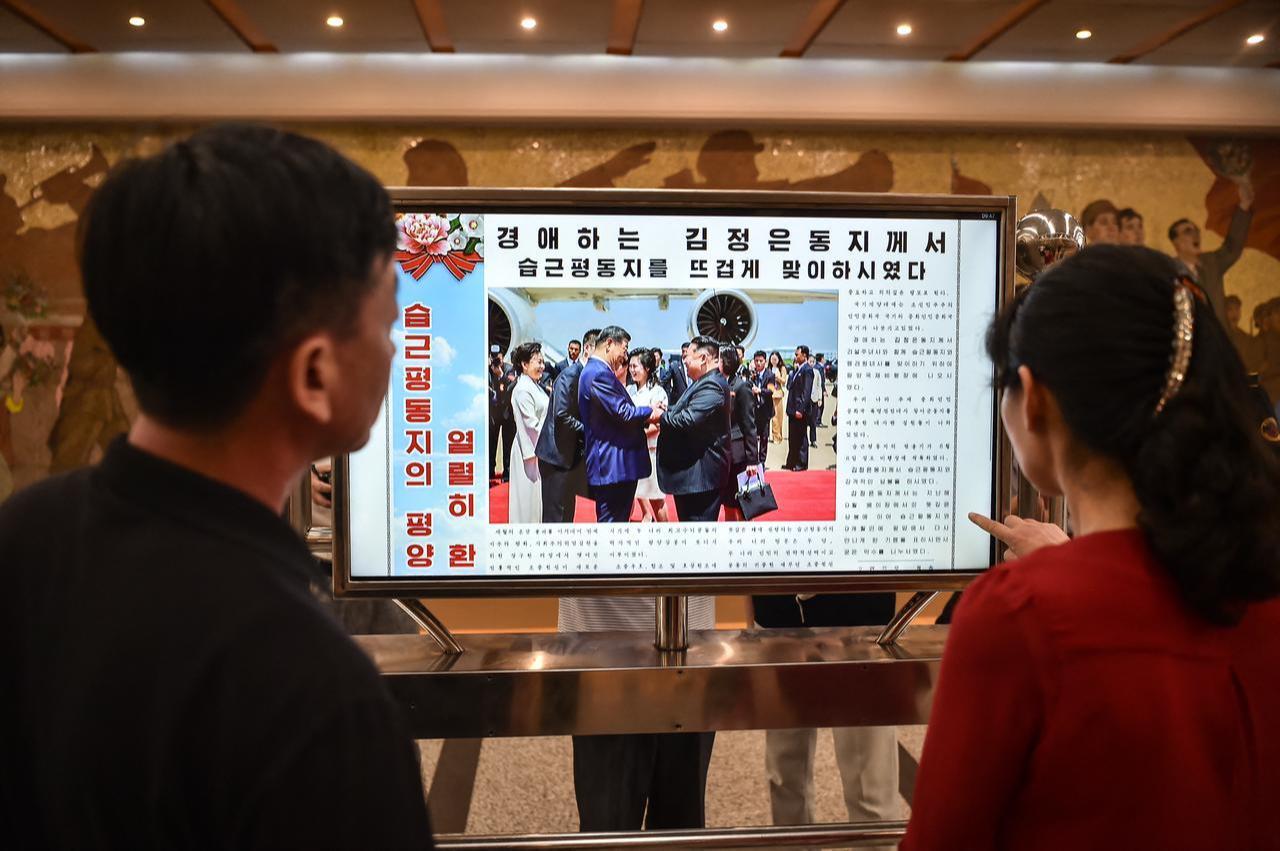
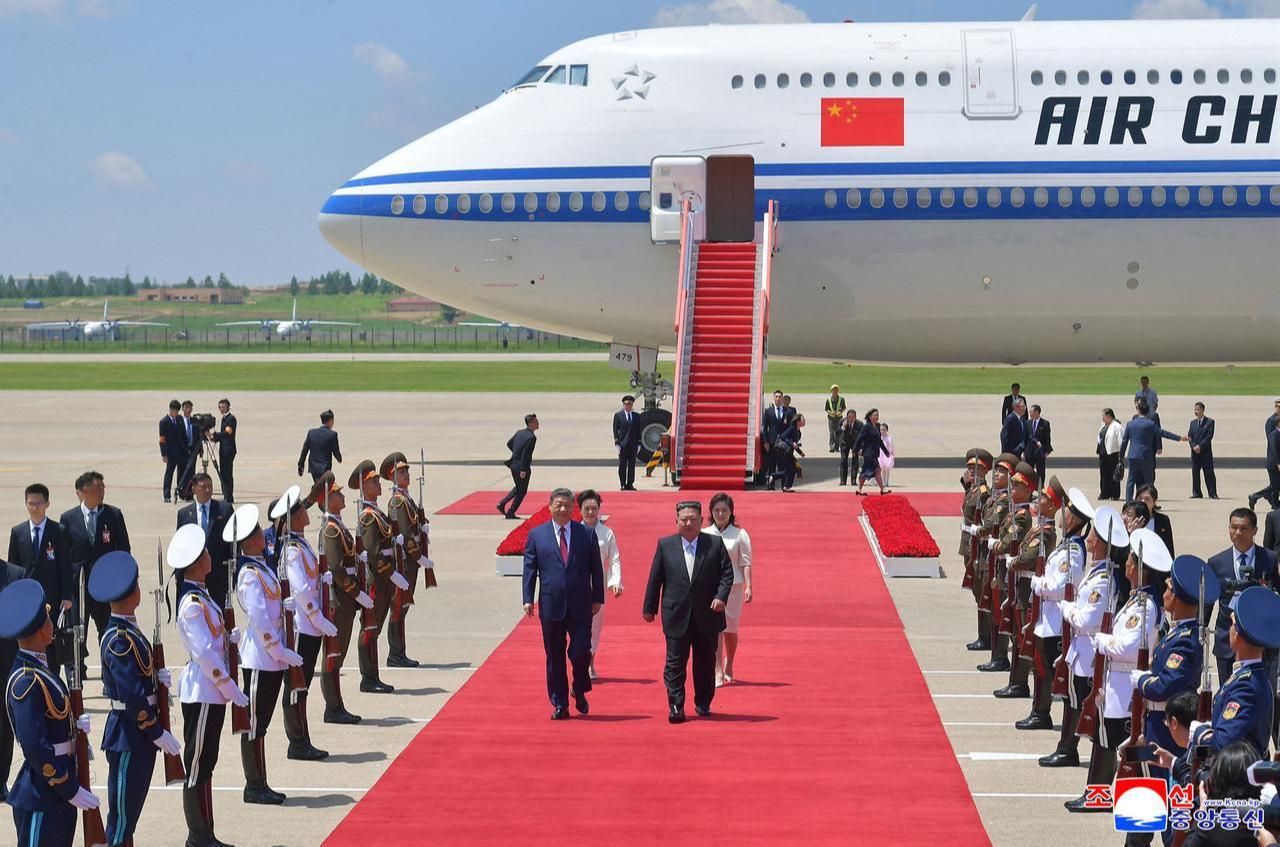
North Korea remains the exception. The1961 China-DPRK Treaty of Friendship, Cooperation and Mutual Assistanceis still China’s clearest formal defense treaty. Yet it did not become a template for Chinese grand strategy. It is better read as a borderland and Cold War exception than as evidence that Beijing seeks a global alliance system.

Chinese official language presents today’s preference in normative terms. TheGlobal Security Initiativespeaks of common security, dialogue and opposition to bloc confrontation. The wording matters because it tells us how Beijing wants its policy to be understood. The stronger explanation, however, sits in the structure of China’s interests.
China’s potential partners do not share one ideology, one threat perception or one strategic horizon. Russia, Pakistan, Iran, Saudi Arabia, the UAE, ASEAN members, African states and Latin American governments cannot be placed inside one treaty structure without creating contradictions.
Some want investment, weapons or diplomatic cover. Others want infrastructure, market access, energy demand or technology. Many also want to preserve relations with the United States, Europe, India or Japan.
Partnership diplomacy lets Beijing calibrate each relationship separately. It can hold military exercises with one country, buy energy from another, finance infrastructure in a third, coordinate votes with a fourth and avoid binding commitments to all of them. The model works because the relationships are issue-specific and flexible. It does not require a common ideology or a shared enemy.
China’s economic position reinforces that preference. A state exposed to global shipping, imported energy, export markets, overseas citizens, supply chains and technology chokepoints cannot behave like a closed continental bloc. Its own2015 military strategytied defense planning to maritime struggle, overseas interests, cyberspace and outer space.
Beijing’s security problem now includes access, vulnerability and connectivity, alongside territorial defense. Formal alliances would solve only part of that problem and could create new liabilities elsewhere.
The Quad worries Beijing for a reason, although the “Asian NATO” label is too blunt. The Quad has no mutual defense clause. India’s strategic autonomy, its Russia ties and its participation in BRICS and the SCO limit the chance of a treaty alliance.
A recent work onChinese scholarship about India’s role in the Quad shows the same tension: Chinese analysts see the Quad as part of a U.S.-led effort to constrain China, but also see India as a constraint on full militarisation.
The more serious issue is functionality. The Quad can affect China’s room for manoeuvre before it becomes a formal alliance. The2026 Quad foreign ministers’ statementpoints in that direction.
It refers to maritime domain awareness, a common operational picture, coordinated maritime surveillance, tabletop exercises and real-time information sharing. It also covers critical minerals, energy security, port infrastructure in Fiji, undersea cables, 5G, 6G, AI, semiconductors and pharmaceutical supply chains.
These policy areas belong together in a crisis. Surveillance affects how quickly states see ships. Port access affects logistics. Undersea cables affect data resilience. Critical minerals affect batteries, sensors, defense electronics and clean-energy systems. Technology standards affect interoperability.
The Quad’s relevance lies in this connective tissue. It can turn loose cooperation into operational convenience. That is the pressure point for Beijing. A treaty alliance would be easier to identify and denounce. A working network is harder to counter because it grows through technical projects, supply-chain policy, exercises, infrastructure and investment coordination. It asks participants to make selected systems compatible enough to matter, without asking every participant to become a formal ally.
China is unlikely to answer with a mirror-image alliance system. A more plausible answer is to raise the cost of coordination against it.
At sea, this means stronger anti-access capacity, naval reach, coast guard activity, maritime militia presence, missile forces and surveillance around the First Island Chain, Taiwan, the East China Sea and the South China Sea.
Arecent U.S. defense assessmentplaces China’s current military focus on the First Island Chain, from the Japanese archipelago to the Malay Peninsula. That source reflects an American institutional view, rather than neutral evidence of Chinese intention. It still captures the geography of the problem.
In the economy, China uses market access, industrial capacity and supply-chain centrality as strategic buffers. The purpose is not total control over partners. That would be unrealistic. The more attainable goal is to make alignment against China costly, uneven and politically contested. Rare earth processing, batteries, intermediate goods, telecoms, ports, rail, digital platforms and infrastructure finance can serve that purpose.
Critical minerals show the point clearly. TheIEA’s 2025 critical minerals outlooktreats supply-chain concentration as a major risk across lithium, nickel, cobalt, graphite and rare earths.
China’s strength in processing and downstream manufacturing gives Beijing leverage, but also creates pressure for other states to diversify. The result is a contest over resilience rather than a clean separation into blocs.
In diplomacy, China works to prevent separate coalitions from becoming a single front. It has reasons to stabilize ties with India, keep ASEAN from choosing sides, preserve Gulf energy relationships, sustain Russia as a strategic partner and maintain enough economic interdependence with Europe to slow full decoupling.
This strategy carries contradictions. Russia’s war creates costs. India is not easily reassured. ASEAN hedges. Europe de-risks. But China does not need perfect alignment. It needs enough fragmentation among potential counter-coalitions to preserve room for manoeuvre.
China’s alliance policy is best understood as a strategy of optionality. Beijing buys time and leverage by keeping partners useful, ties flexible and liabilities limited. The Quad challenges that logic when it turns optional cooperation among its members into usable capacity. Namely, better sight at sea, more resilient supply chains, harder-to-disrupt cables, and standards that travel across borders.
For Beijing, the sharper question is whether the Quad can make coordination routine. A coalition that works in peacetime can shape choices in a crisis. That is why China watches the Quad less as a future NATO than as a practical test of whether loose networks can still constrain a great power.


 Set as preferred source
 Set as preferred source


 7 min read