

 Newsletters


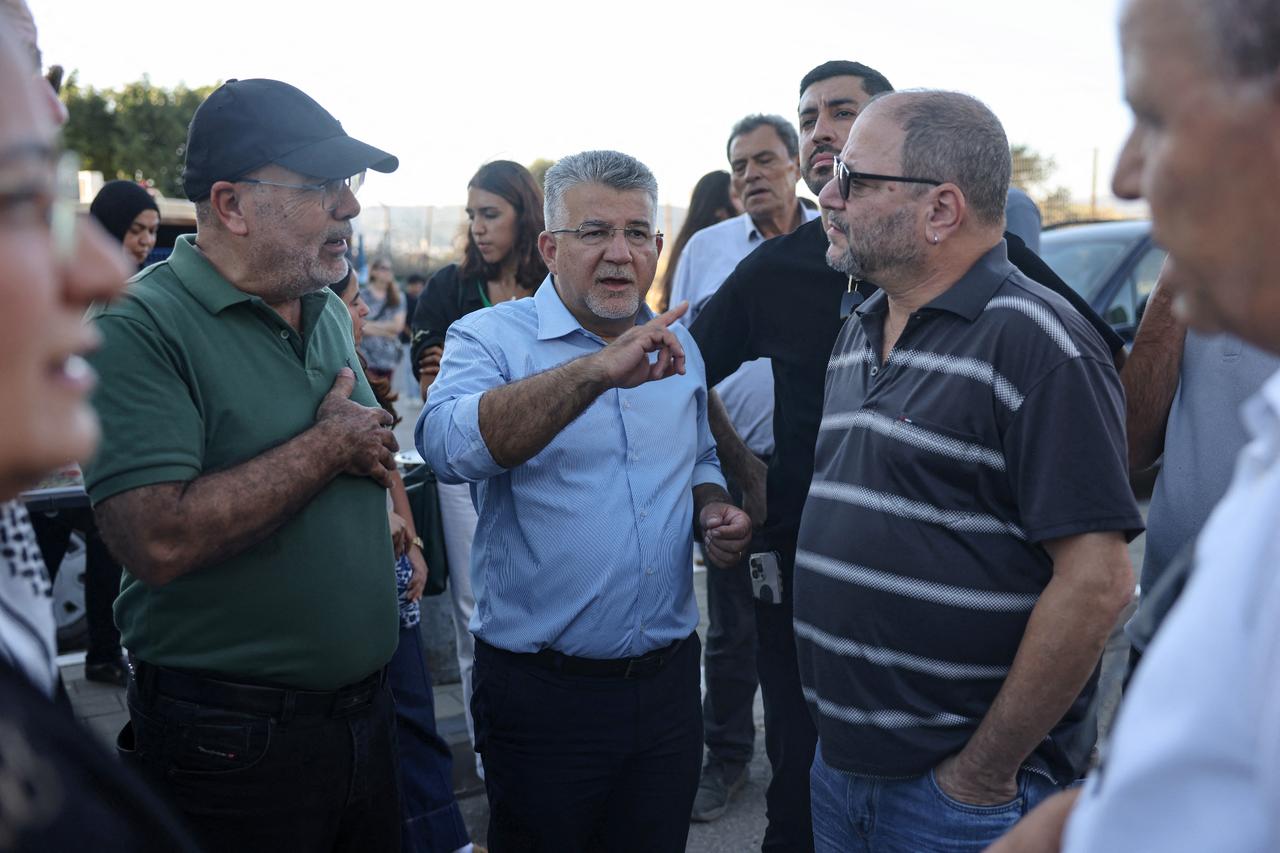


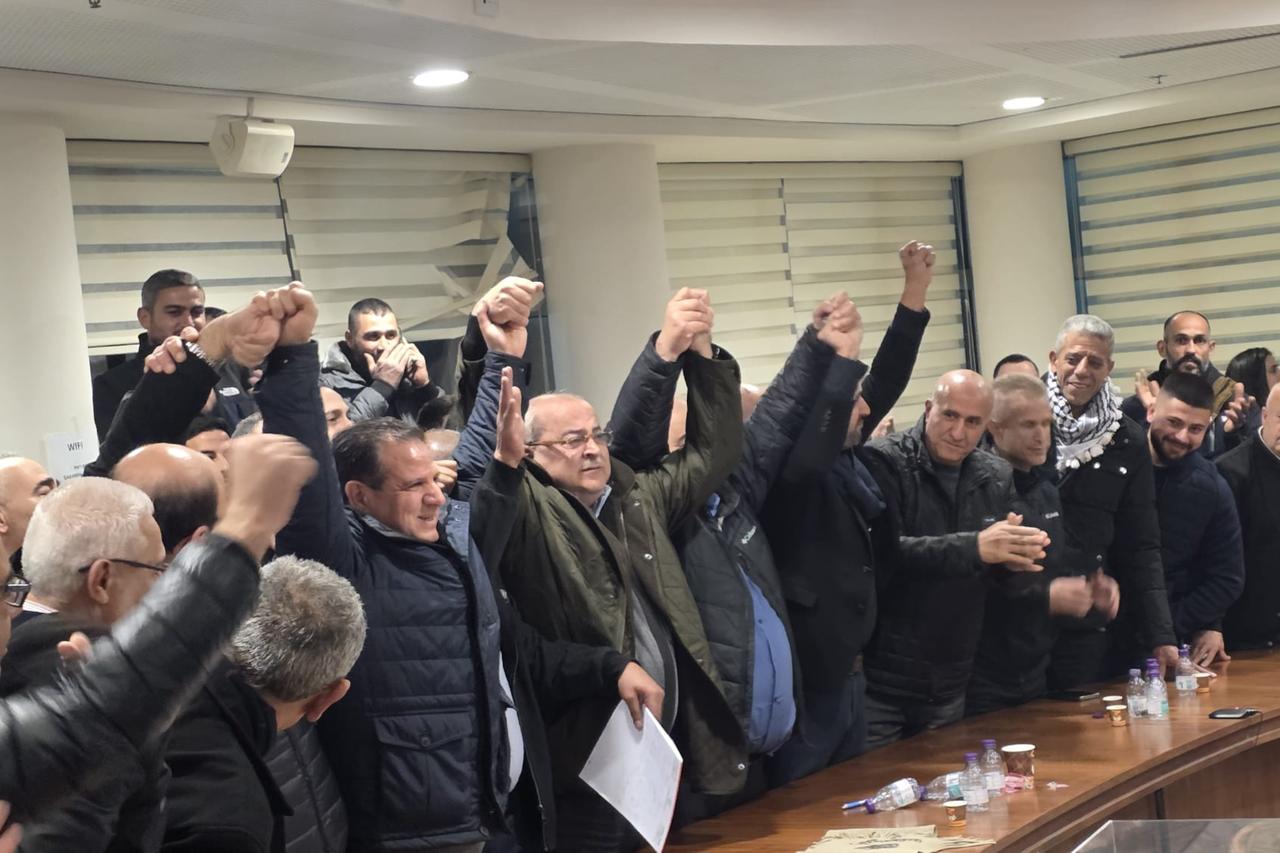
A turnout of more than 70% among Arab citizens of Israel could prevent Prime Minister Benjamin Netanyahu from forming another government after the Oct. 27 Knesset election, Joint List leader Yousef Jabareen told Türkiye's state-run Anadolu Agency (AA).
"If the turnout among Arab citizens rises above 70%, Netanyahu will not be able to form a government," Jabareen said. "There is a strong and serious desire among Arab citizens to bring down this government through the ballot box."
Polls show neither Netanyahu’s bloc nor the Jewish opposition reaching the 61 seats needed to govern, giving Arab parties, projected to win 12 to 14 of the Knesset’s 120 seats, a potentially decisive role.
Jabareen described Netanyahu’s government as "fascist and occupying."
"Over the past four years, we have suffered greatly: a genocidal war on the Gaza Strip, terrorism by Israeli occupiers in the occupied West Bank, policies of repression and restrictions on freedoms, land confiscations and home demolitions," he stated.
"Arab citizens have increasingly become aware of the danger posed by the government and its policies," he said, adding, "There is a strong and serious desire to bring down this government by going to the ballot box, and we hope turnout will reach unprecedented levels."
"Arabs are the ones who will determine the identity of the next prime minister in Israel," Jabareen noted.
"Polls show Netanyahu’s bloc receiving around 52 seats and the opposition bloc the same number. Therefore, we in the Joint List will undoubtedly be an important force in deciding several questions, including who will be Knesset speaker and who will form the government," he said.
He said the alliance would use any parliamentary strength "to protect the issues of our people including equality for Palestinians inside Israel and broader Palestinian concerns."
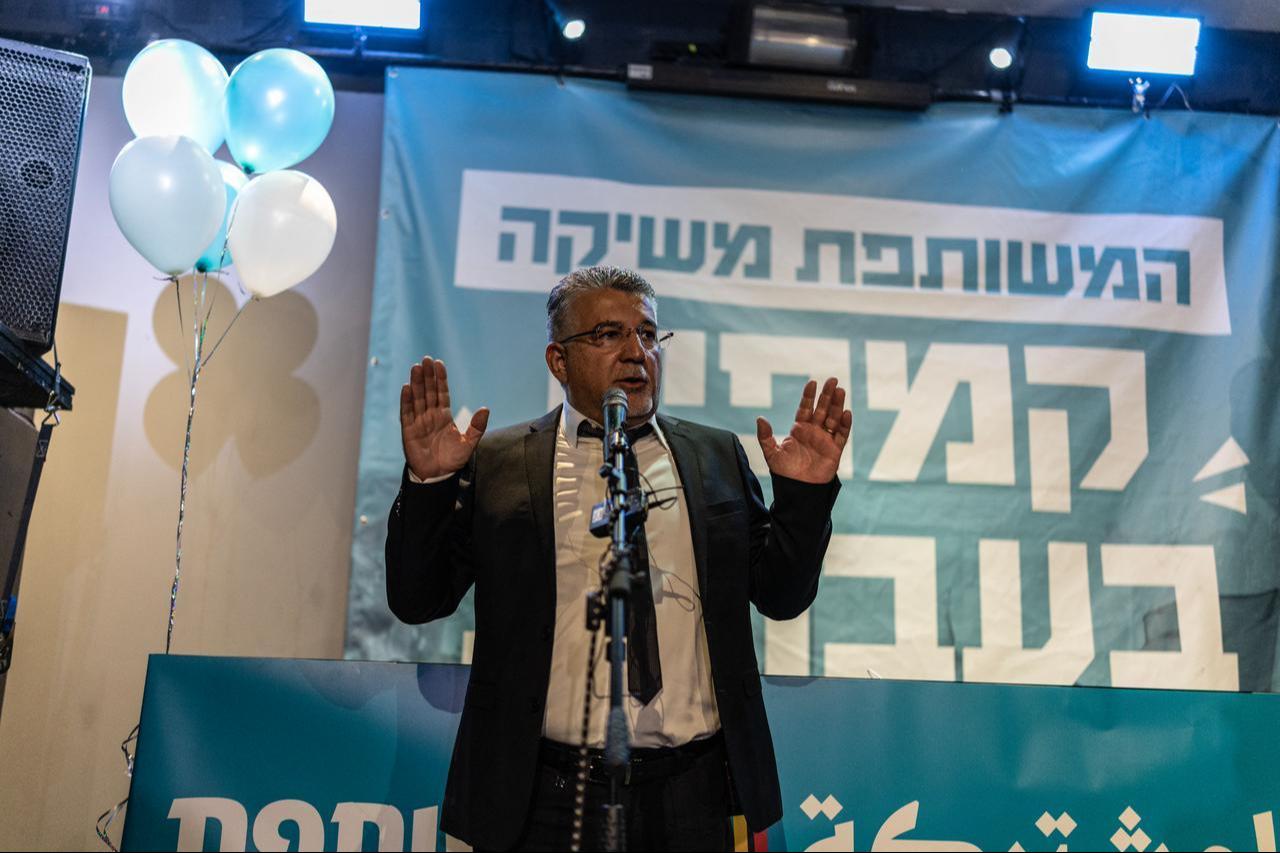

Jabareen said the Joint List parties agree on one central objective: "Unseating Netanyahu and removing his government from power."
He described the government as "far-right and fascist" and accused it of "apartheid policies."
"We feel these elections are decisive and may even be existential because they relate to our status as Palestinians inside Israel and also to the future of the Palestinian people as a whole," he said.
"Arab turnout in the previous election did not exceed 55%," Jabareen said, noting, "We are optimistic that there is growing awareness among our voters of the importance of raising turnout. A turnout exceeding 70% could truly be the guarantee for bringing down this government."
"In all our meetings with our people, we hear this desire, and we also hear their assessment of the danger of this government and its policies," he said.
"We are working around the clock to achieve unprecedented turnout in this election because that is the only thing that will guarantee that this extremist, racist and occupying government does not return," Jabareen stated.
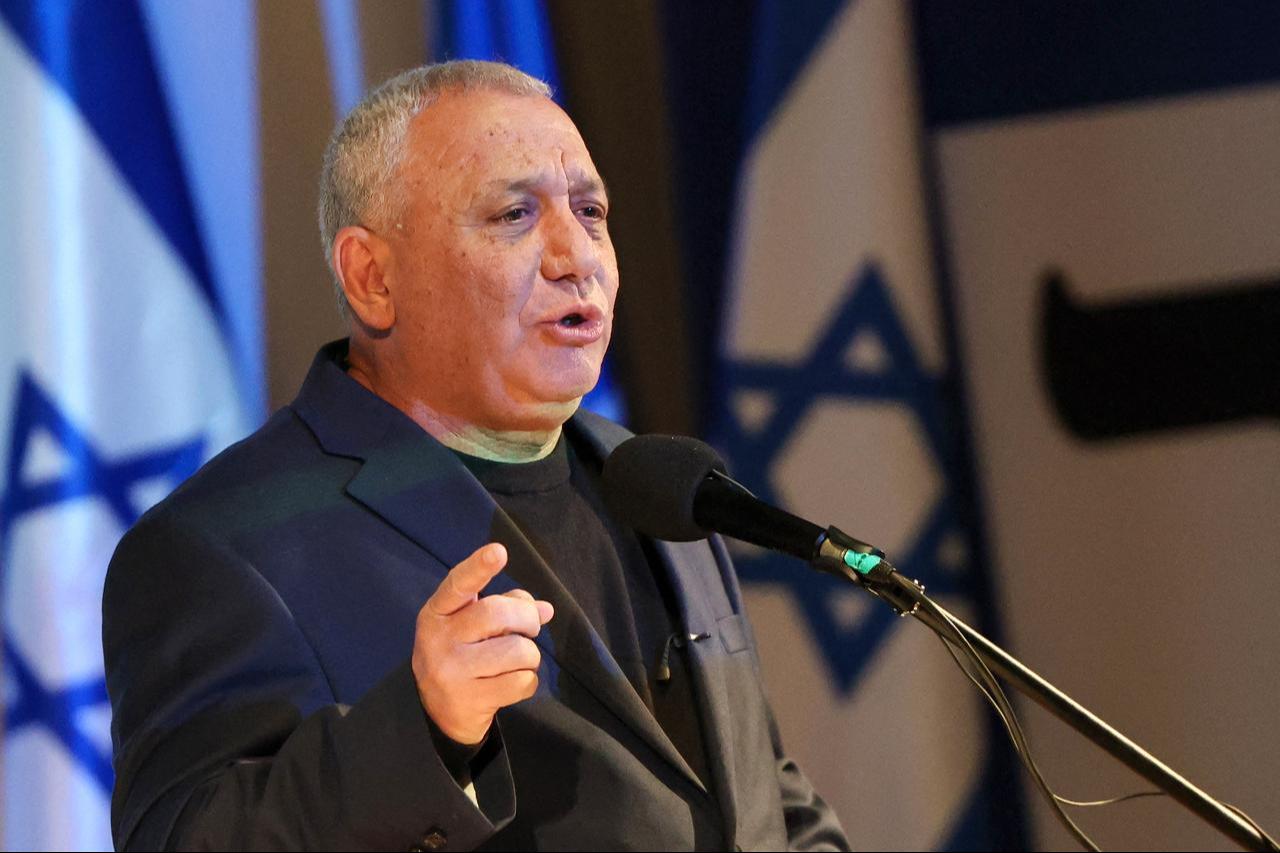
Asked whether Arab lawmakers would support Yashar party leader Gadi Eisenkot in forming a government, Jabareen said it was too early to decide.
“After the results are announced, we will assess the situation and see how the different blocs take shape,” he said. “We want to hear the political program of whoever seeks to be the alternative to Netanyahu.”
"We are seeking real change, and we hope to hear an actual change in the political positions of the opposition parties," he said.
"We will make the responsible leadership decision based on what serves our people."
Most Jewish opposition leaders have rejected relying on Arab parties to form a government.
Balad leader Sami Abu Shehadeh told AA that "the Arab vote in this election, according to all opinion polls over the past two years, will determine who will be prime minister in Israel."
"We are therefore very concerned in this racist society about efforts to disqualify the Arab vote and remove us from the political arena altogether. The closer we get to Election Day, the greater our concern becomes," he said.
"There are around 1.2 million Palestinian citizens of Israel eligible to vote. A Knesset seat requires roughly 40,000 votes. We expect turnout to be between 62% and 73%," he said, noting, "We therefore expect Palestinian Arabs to win around 14 to 16 seats in the Knesset. If we reach these numbers, Netanyahu and his criminal gang will not be able to form a coalition in the next phase."
"There is complete agreement among all the Arab parties that we want to prevent these criminals from returning to power," Abu Shehadeh said.
"These criminals are the most difficult governing coalition we have dealt with since the Nakba (1948)."
On the opposition, he said, "I wish there was a real opposition (in Israel). I wish someone was pushing a different political agenda from racist Netanyahu. A candidate who was ready to end the occupation." He added, "The issue is not changing the person in charge. We want to change Benjamin Netanyahu’s policies."
"We are in a very difficult election campaign and are working at every level to raise turnout. We expect it to be very high compared with the past 30 years," he said.
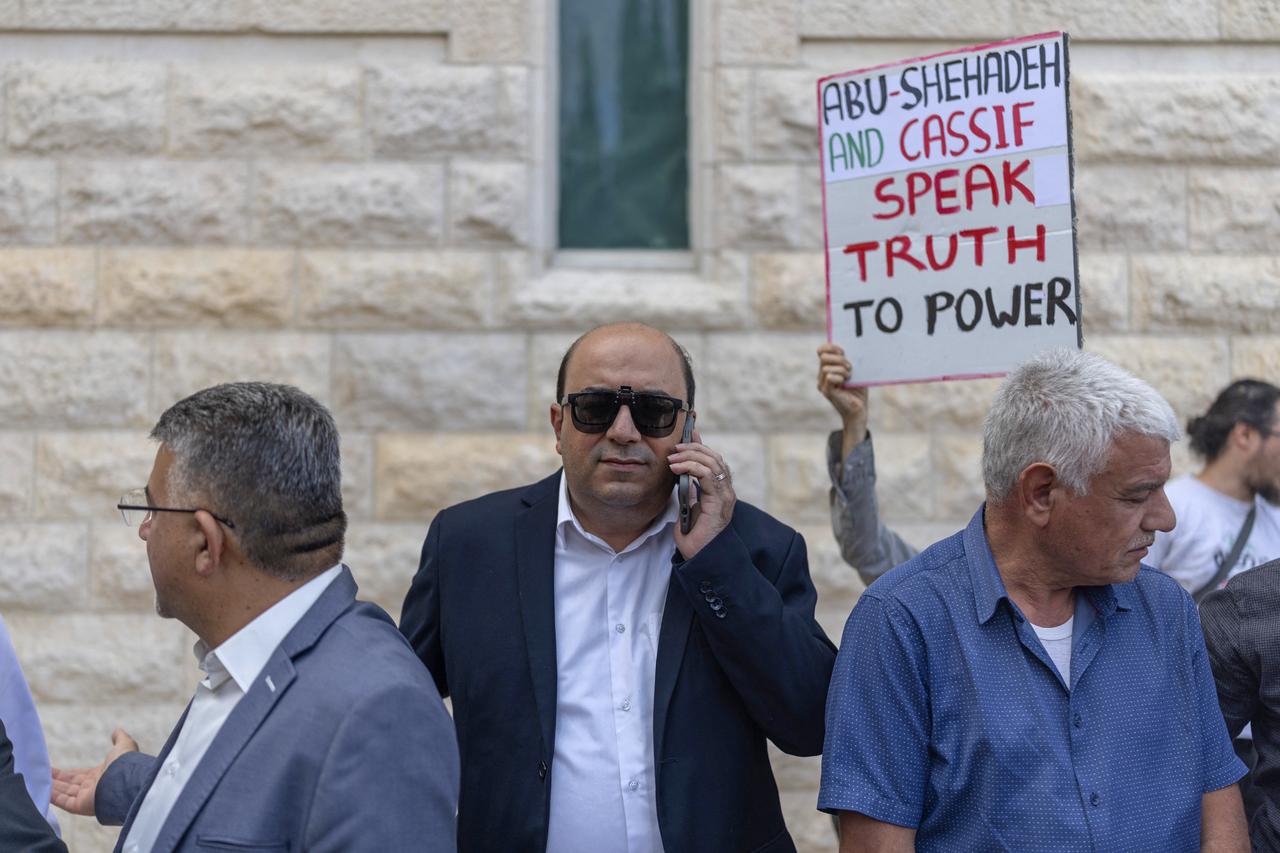
Israel’s Central Elections Committee voted Sept. 23 to bar the Joint List and Mansour Abbas' United Arab List, as well as Abu Shehadeh and Hadash lawmaker Ofer Cassif, before the Supreme Court overturned the decision.
Abu Shehadeh withdrew his candidacy after the court signaled it could uphold his disqualification.
"There was a serious attempt by Netanyahu and his gang to remove all the Arab parties from the political arena, and we stopped that in the Supreme Court," Abu Shehadeh said, adding, "Nevertheless, I was personally disqualified as head of Balad, but we are continuing. We will not stop."
"We will not derive our legitimacy from the criminal Itamar Ben-Gvir, Israel’s national security minister, from the Israeli court or from any other Zionist party. As leaders of our people, our legitimacy comes solely from the sons and daughters of our people," he said.
"I will do everything I can to ensure the Joint List succeeds," he noted.
Cassif said his first concern was whether the vote would take place at all. "We have to hope, first of all, that the elections actually take place," he said, warning that the government could provoke a wider conflict in the West Bank, Lebanon, Syria, Iraq or Iran.
"They will do everything they can to ignite a fire," he stated.
"We will do everything we can to get rid of this fascist government," Cassif said, adding, "The right to vote and to be elected is a right, not a privilege."
He called Abu Shehadeh’s exclusion "outrageous" and said: "I believe the attempt to disqualify Sami and to disqualify all of us has mobilized people."
On backing Eisenkot, Cassif said: "The ball is in their court, not ours. We cannot support a government that would simply be a carbon copy of the previous one."
"I have to be optimistic. But optimism is not just an assumption. It is something we fight for," he said, urging the world: "Open your eyes and your hearts, and stop these crimes. Stop the ongoing genocide in Gaza, stop the ongoing ethnic cleansing in the West Bank, and stop the fascism that dominates Israel."
Netanyahu, who faces corruption charges and an International Criminal Court arrest warrant, has denied wrongdoing, and his Likud party has not responded to the Arab leaders' remarks as Arab turnout emerges as a key factor in the race.


 Set as preferred source
 Set as preferred source


 1 min read

 1 min read


