

 Newsletters


Albania and Türkiye frequently describe their bilateral relationship as deeply strategic, underpinned by historical ties and a strong personal rapport between their leaders. Yet, according to Albanian Prime Minister Edi Rama, the reality of Türkiye's economic footprint in the Balkans fails to match its political clout.
In an exclusive interview with Türkiye Today, Rama offered a surprisingly blunt assessment of Ankara's role in the region. He dismissed persistent narratives of Turkish "neo-Ottoman" ambitions, challenging Ankara to move beyond the personal popularity of President Recep Tayyip Erdogan and anchor its Balkan strategy with substantial economic investments.
The Albanian premier also praised his personal relationship with President Recep Tayyip Erdogan.
“I have a great relationship with President Erdogan, who I find an easy person,” he said.
“He is very straightforward; yes is yes, no is no," he stated.
The conversation also touched upon the shifting global order, the 30th anniversary of the Dayton Peace Agreement, and Albania's record-breaking push toward European Union membership by 2030.
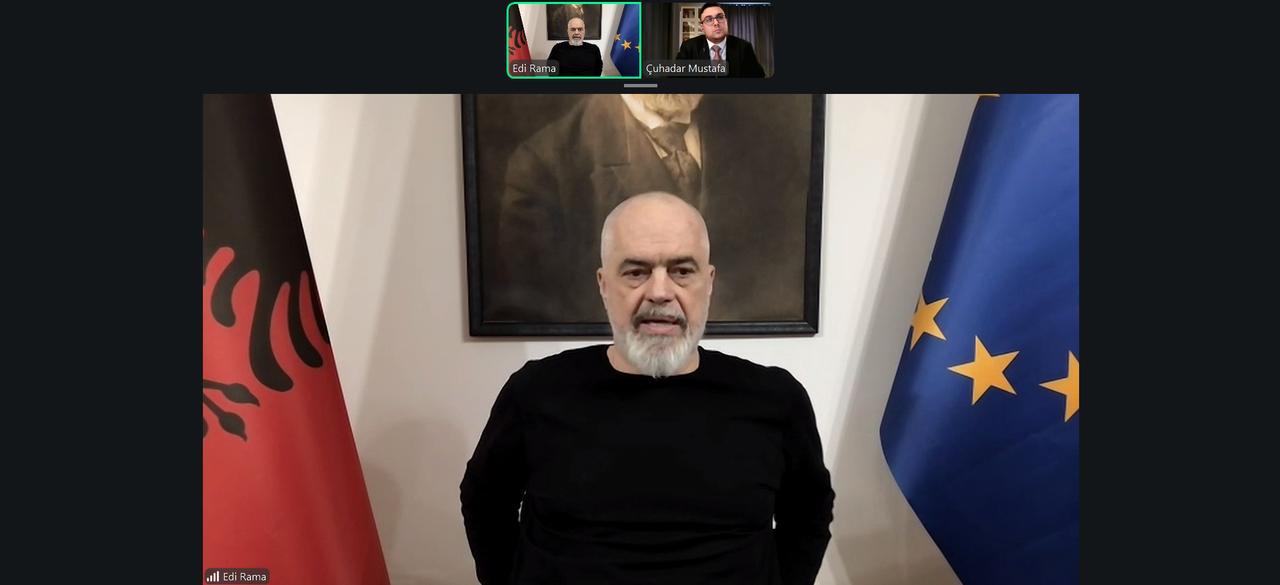

While Rama personally praised President Erdogan as a "great friend" and a "straightforward" leader, he stressed that Türkiye must do more to solidify its regional partnership. When asked about the structural pillars of the Türkiye-Albania partnership and whether trade was moving forward, Rama was unequivocal.
In a remark meant to illustrate the gap between political relations and economic ties, Rama offered a comparison with Türkiye’s biggest football clubs.
"I didn’t make the counts of the value of Galatasaray and Fenerbahce, but I’m afraid that taken together, that value is higher than the trade value between Türkiye and Albania, and it is not enough," Rama noted.
"We should at least overcome the Turkish league," he said.
He added that currently, there is no flagship economic project anchoring the bilateral relationship.
"The biggest, indisputably higher product that Türkiye has exported to the region is President Erdogan and his popularity," Rama said. "I don’t know if he likes what I say now, but I say it is not enough. It should be something beyond him."
“I wish Türkiye could do more,” Rama said, reflecting on Ankara’s presence in the region.
“There are a lot of prejudices, stereotypes, and nonsense about Türkiye’s involvement in the region, but to me, it is not enough. It is far from enough.”
Türkiye has significantly expanded its economic presence across the Balkans in recent years through trade, investment, and infrastructure projects. According to data compiled from the Turkish Exporters Assembly, Türkiye’s exports to Balkan countries reached approximately $25.3 billion in 2025, marking an 8.1% annual increase. Among these, Türkiye exported about $819.8 million worth of goods to Albania.
Ankara has steadily expanded its economic footprint in Albania through trade, infrastructure projects and private-sector investment. Bilateral trade exceeds $1 billion, and the two countries have set a target of reaching $2 billion, while Turkish investments in Albania total roughly $3.5 billion, according to a 2024 report.
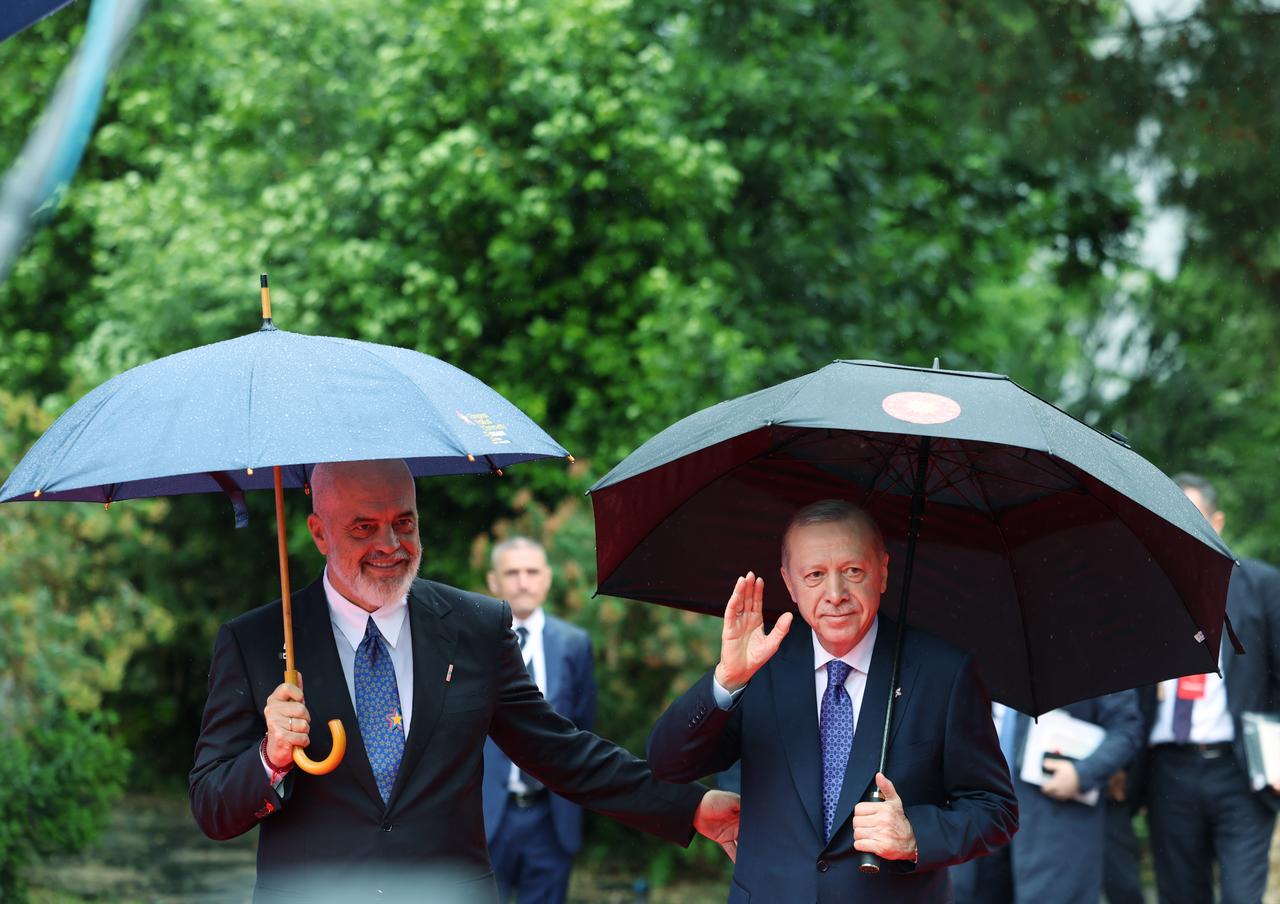
Addressing frequent allegations from neighboring countries about Türkiye’s "neo-Ottoman" ambitions, Rama scoffed, pointing to a delayed restoration project involving a "small, flood-damaged" mosque in Albania by the Turkish Cooperation and Coordination Agency (TIKA).
“We have one of the most beautiful mosques built in this region, a small thing, and it is, I don’t know, three years now we are waiting TIKA to do its job to repair,” he said.
“So if they were really neo-Ottoman at least that mosque would have been up and shining after the big flood that created so much damage," he added.
Rama also noted the irony of Serbia leveling these accusations, pointing out the stark reality of where Turkish capital actually flows in the region.
"What neo-Ottoman?" Rama asked. "I am sure, by being someone obsessed with numbers and figures, the president of Serbia can very well see that Türkiye invested more in Serbia than in Albania and Kosovo taken together."
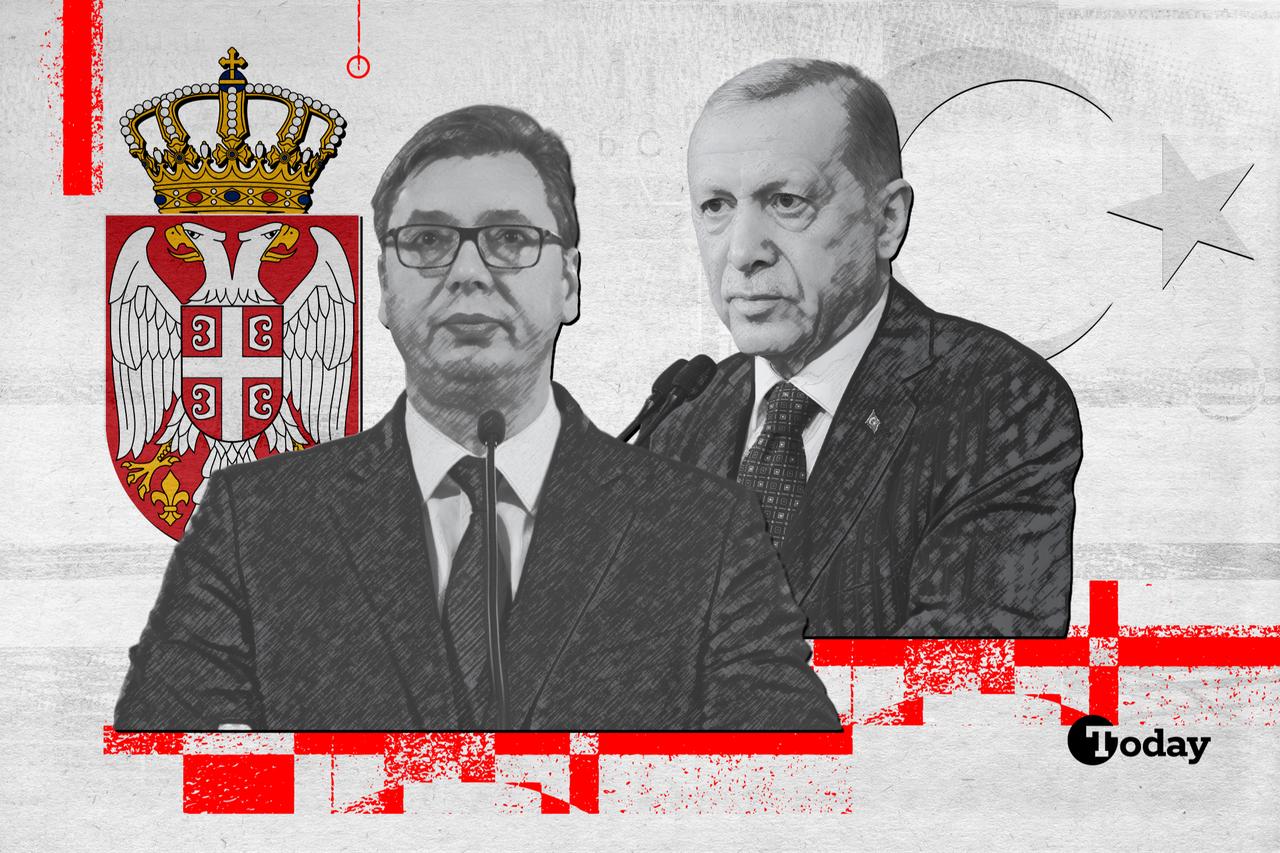
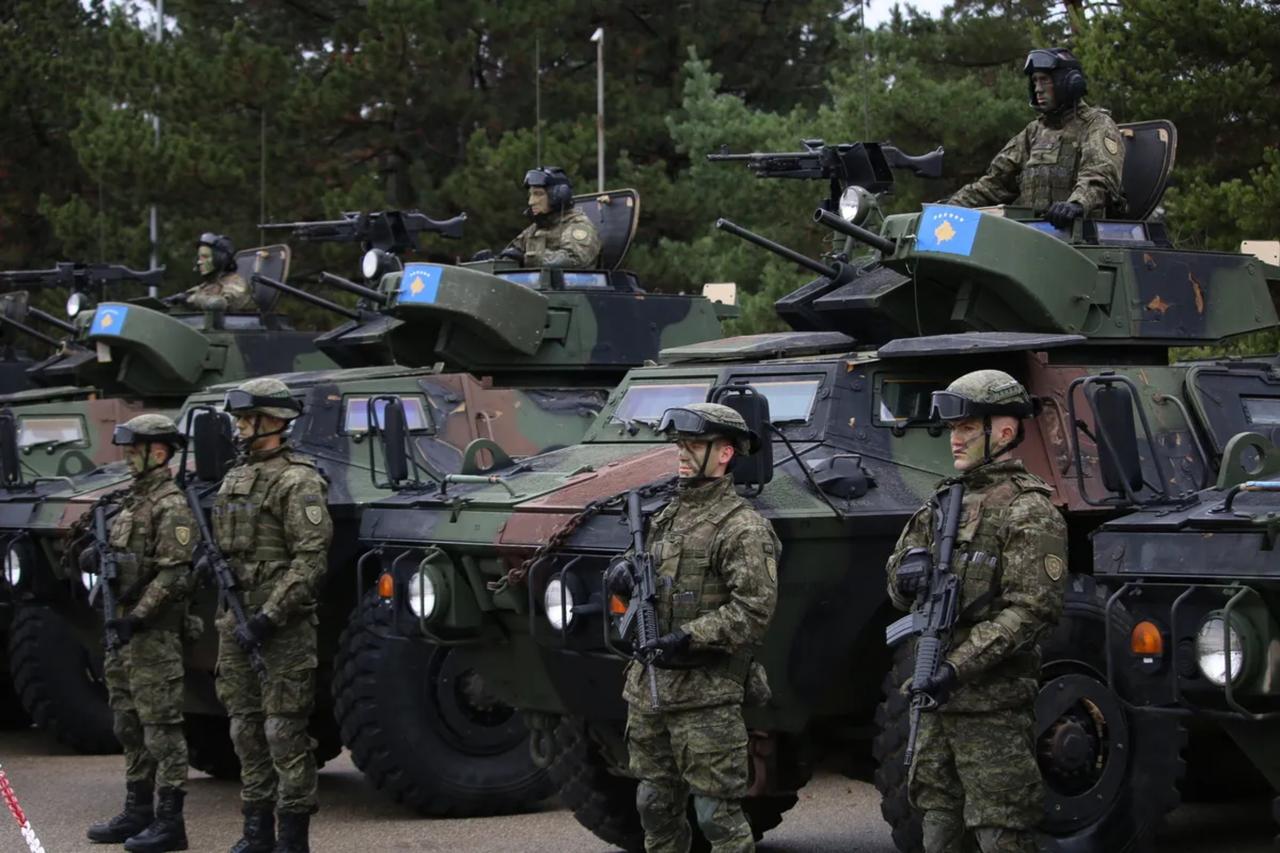
Last October, Serbian President Aleksandar Vucic accused Türkiye of “dreaming of the Ottoman Empire” after the delivery of Skydagger drones to Pristina. Later on, he also accused Türkiye and the United States of arming Albanians in Kosovo, portraying it as “a direct threat to Serbia and its territorial integrity."
The Albanian PM did not mince words regarding Vucic's recent accusations that Albania, Croatia, and Kosovo were forming a "military alliance" aimed at endangering Serbia. Rama characterized these claims as fears stemming from Serbia's inability to accept reality.
"President Vucic is someone really with great knowledge, great intuitions, very much looking forward to many things, but he has his own nightmare: it is Kosovo. That is it. Full stop," Rama stated.
"When the nightmare invades his emotions, he also succeeds in saying things that frankly do not make sense," he added.
Addressing the supposed "alliance," Rama brushed off the claim: "This is another scream in the nightmare... Guess what, Serbia has a much stronger agreement with Croatia than this one." His advice to Belgrade was blunt: "That is why I always say cut the rope, let it go. By letting it go, your nightmare will be over... Not letting go of something that is gone becomes a nightmare."
However, despite disagreements with Belgrade, Rama said Serbian President Vucic remains a leader “with whom one can talk and build together.”
“I think he is someone with whom one can talk and can build together based on common objectives,” he said of Vucic.
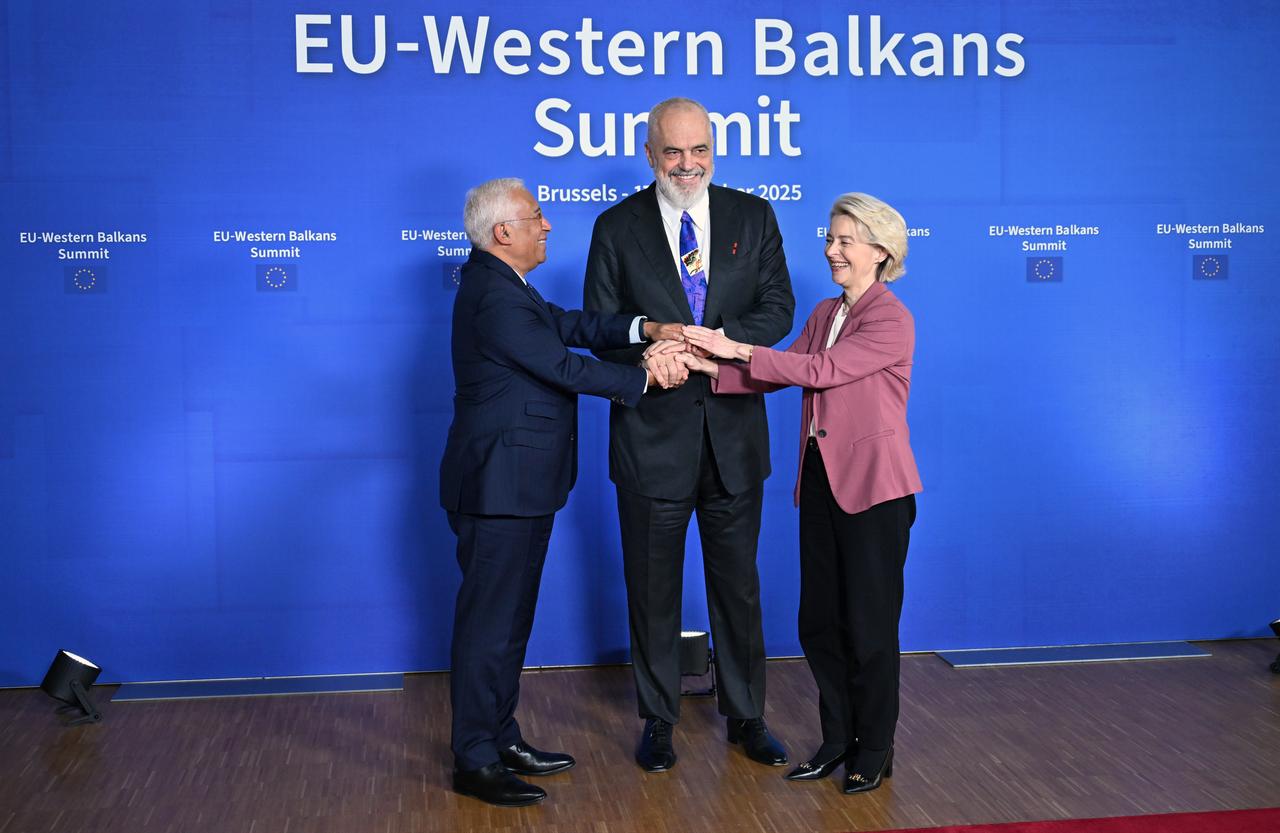
Turning to regional tensions, Rama reaffirmed Albania’s firm support for Kosovo and said its independence cannot be reversed.
“Kosovo is independent; it is a republic," he said.
“This process is irreversible," he added.
Rama also warned that any existential threat to Kosovo would directly affect Albania.
“If Kosovo is touched, Albania is touched,” he said.
“If Kosovo is under an existential threat, Albania is under an existential threat," Rama noted.
However, addressing the deadlocked EU-facilitated dialogue between Pristina and Belgrade, Rama acknowledged that his perspective from Tirana naturally differs from that of Prime Minister Albin Kurti and the leadership in Pristina.
"I am in Tirana, not in Pristina. I have witnessed the bloody war that broke apart former Yugoslavia, and that brought to Kosovo the fury of the national socialist machine of death and destruction," Rama reflected.
"The memories of that moment, the wounds and the nightmares are still very present in there and not so present here. This is the difference that I always have to consider when I see things differently from here," Albanian premier added.
In 2025, Albania decoupled from its neighbors to open all remaining EU negotiating clusters in record time. The government has set an ambitious target of full membership by 2030.
When asked if Albania has a "Plan B" should the EU stall, Rama was unequivocal: "There is no Plan B. We want to join, full stop."
The Albanian premier framed the accession process not as a diplomatic favor from Brussels but as a critical "know-how transfer" necessary for state-building:
"It is painful; sometimes it is even humiliating and disgusting, the way they are not able to deliver," Rama admitted of the EU's notoriously slow political machinery. "But at the end, it is what it is. It is not them asking Albania, 'Can we join you?' It is us asking them, 'Can we join you?'"
According to Rama, the EU accession process serves as a mechanism for institutional reform and governance improvements regardless of whether membership ultimately materializes.
Closing the interview, Rama encouraged Türkiye Today readers to visit Albania and experience the country firsthand.
“I wish good health to everyone,” he said.
“I wish they would visit Albania because then I’m sure they’ll come back," he added.


 Set as preferred source
 Set as preferred source


 1 min read
 1 min read


