Newsletters


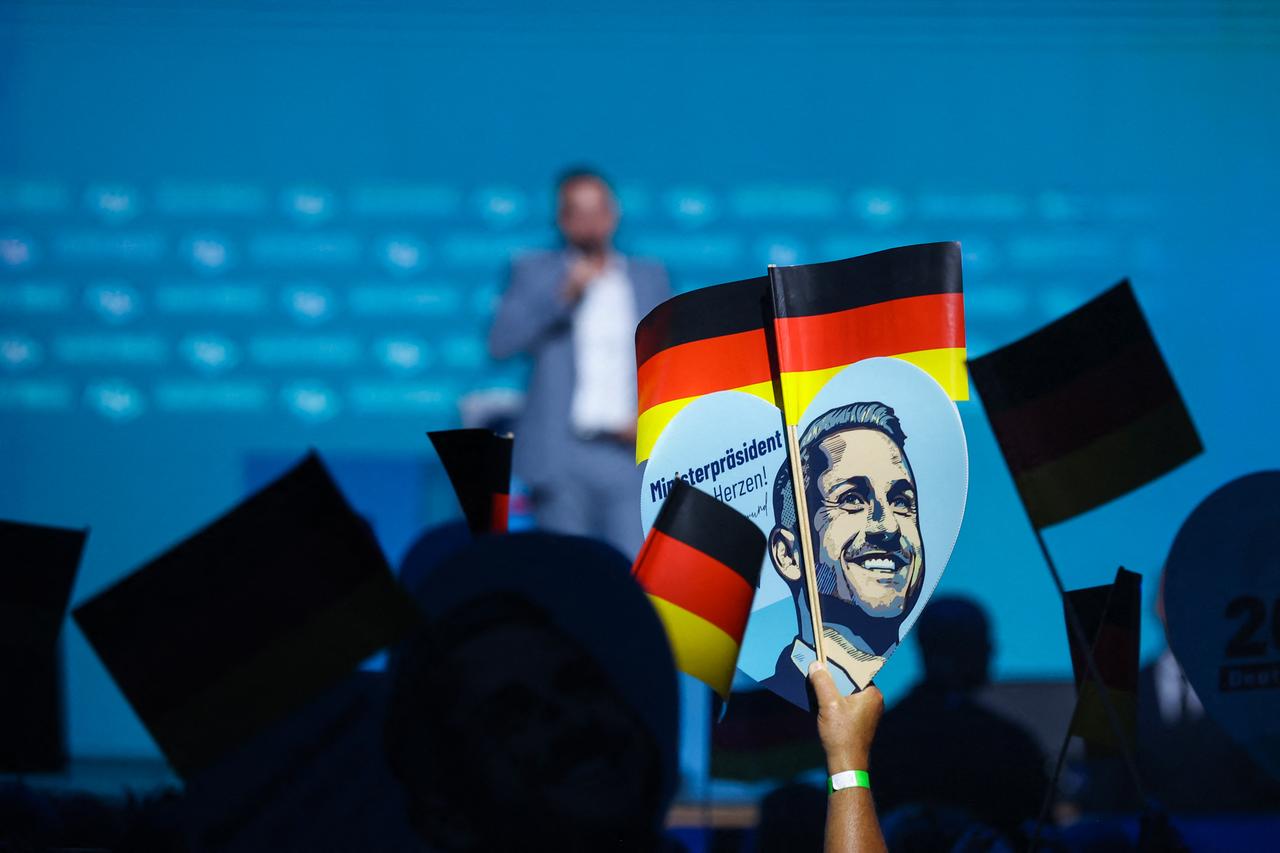


Polls opened Sunday in the eastern German state of Saxony-Anhalt for a regional election in which the far-right Alternative for Germany (AfD) is the clear front-runner and hopes to govern a German state for the first time.
More than 1.7 million voters have until 6 p.m. local time to elect state lawmakers in a vote seen as a key test for Chancellor Friedrich Merz’s increasingly unpopular federal coalition.
First projections will be released only after polls close.
Political observers expect turnout to rise from the 2021 vote, and even a small shift could determine whether the AfD wins a majority in parliament.
The latest survey by public broadcaster ZDF, conducted Sept. 1-3, put the AfD at 41% and Merz’s center-right Christian Democratic Union (CDU) at 23%.
The socialist Left Party stood at 11.5%, the Social Democrats at 8.5%, the Greens at 6%, the left-wing Sahra Wagenknecht Alliance (BSW) at 4% and the liberal Free Democrats at 3%.
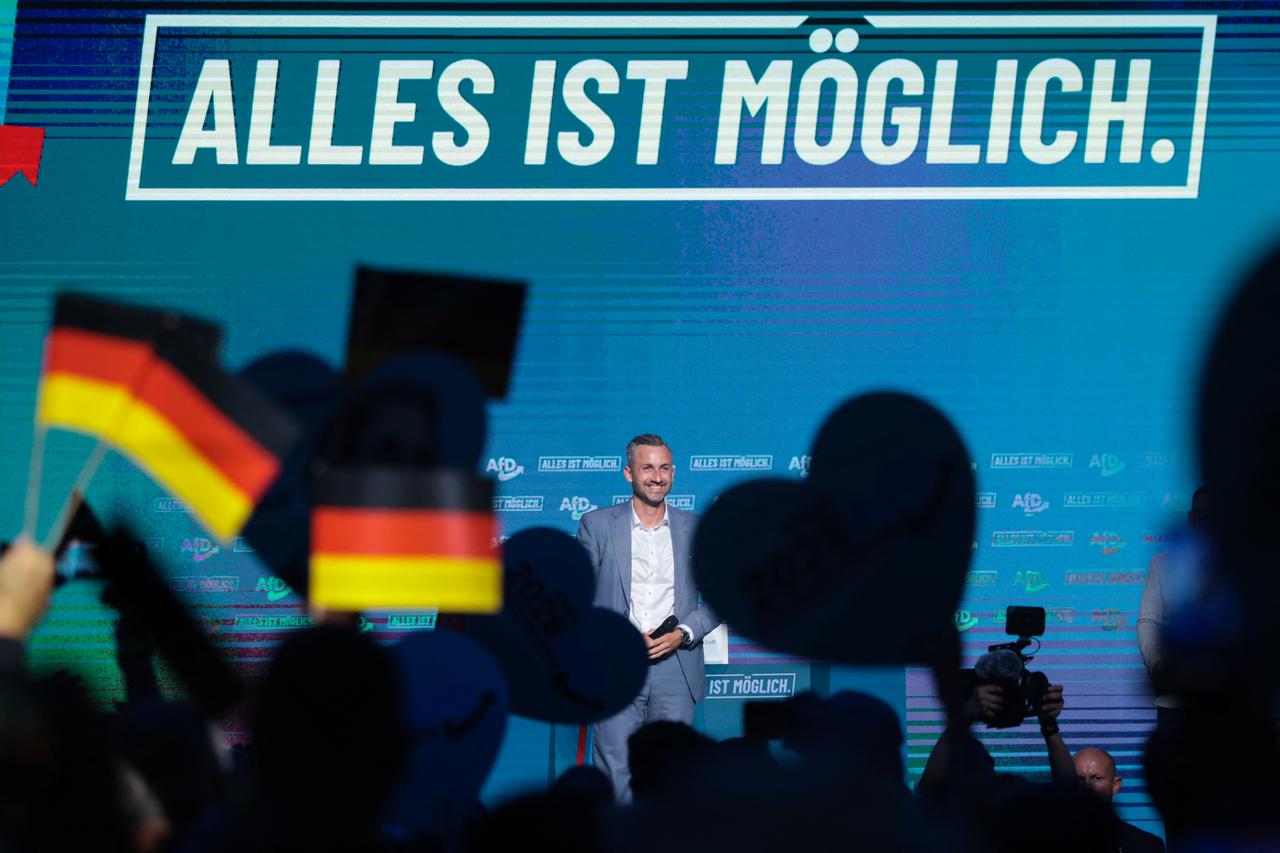

The AfD, which campaigns against immigration and vows to begin mass deportations, leads the polls and hopes to form a state government.
That would mark the first far-right administration in a German state since 1949, after the Nazi regime fell and the Federal Republic was founded.
The party has almost doubled its support in Saxony-Anhalt in five years, after receiving 20.8% in 2021.
Many observers credit AfD lead candidate Ulrich Siegmund for driving the surge.
The 35-year-old politician presents himself as a candidate of change and has already issued a “government program” and a 100-day plan.
He has pledged to expel people without legal status “from the first minute,” expand deportation detention from dozens of sites to hundreds, and make asylum seekers work or lose benefits.
Siegmund has also promised a “remigration and deportation offensive,” a ban on LGBTQ pride rainbow flags at public schools and an end to new wind farms.
The Moscow-friendly party has also tapped into nostalgia for communist East Germany and lingering resentment over an enduring wealth gap with western Germany decades after the 1989 fall of the Berlin Wall.
“It was the others who erected the firewalls,” Siegmund told Bild daily. “If no one wants to work with us, then we'll just have to do it alone.”
Siegmund’s closest rival is Premier Sven Schulze of the CDU.
The 47-year-old conservative took office in January after longtime leader Reiner Haseloff stepped down following nearly 15 years in power.
The CDU has governed Saxony-Anhalt with changing coalition partners for more than two decades.
The small state is currently ruled by the CDU in coalition with two smaller parties, and Schulze hopes to build another multiparty coalition to remain in power.
All other major parties have so far maintained a “firewall” of noncooperation with the AfD, whose Saxony-Anhalt branch is categorized as “right-wing extremist” by Germany’s domestic intelligence agency.
The prospect of an AfD state government has sparked alarm among mainstream parties and minority groups, even as many AfD voters say they want dramatic change.
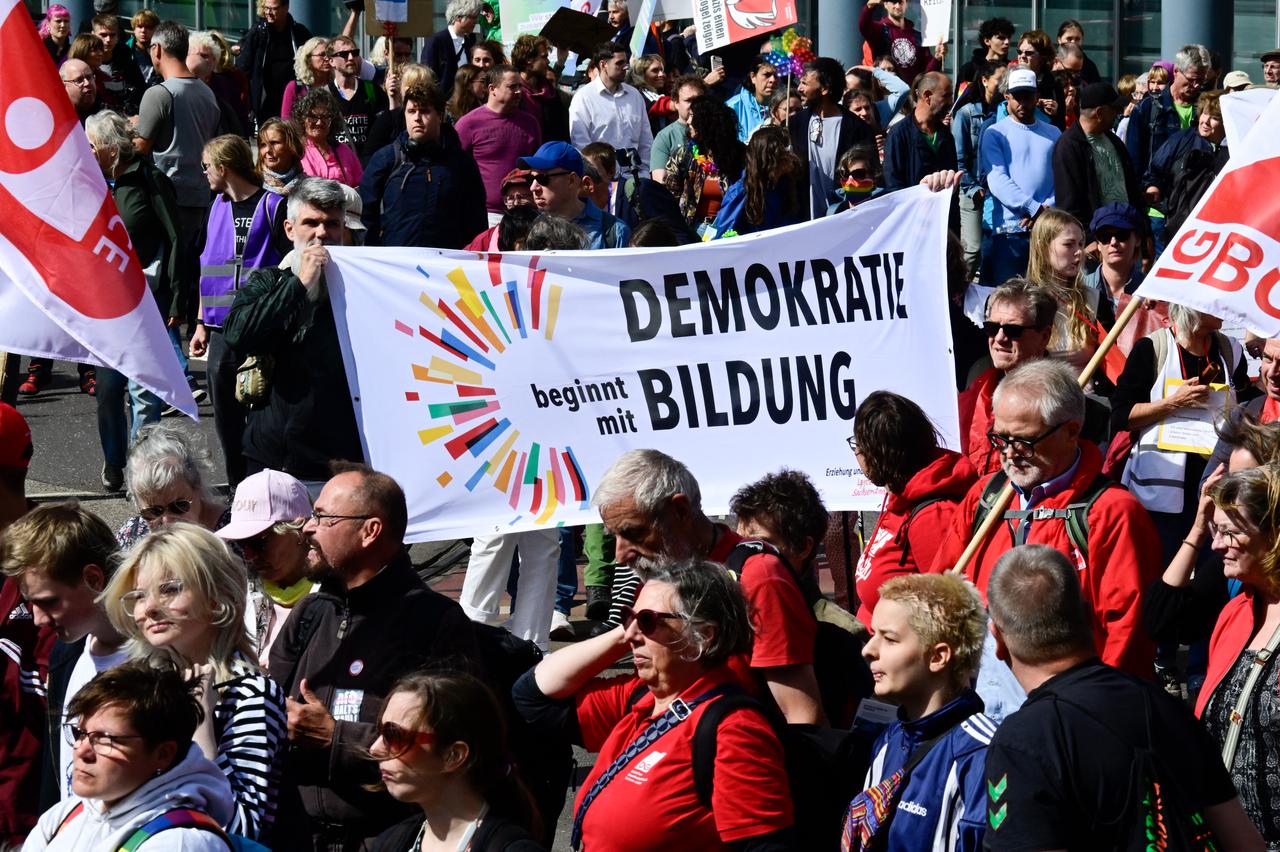
Thousands of AfD opponents joined a “festival of democracy” rally in Magdeburg on the eve of the vote.
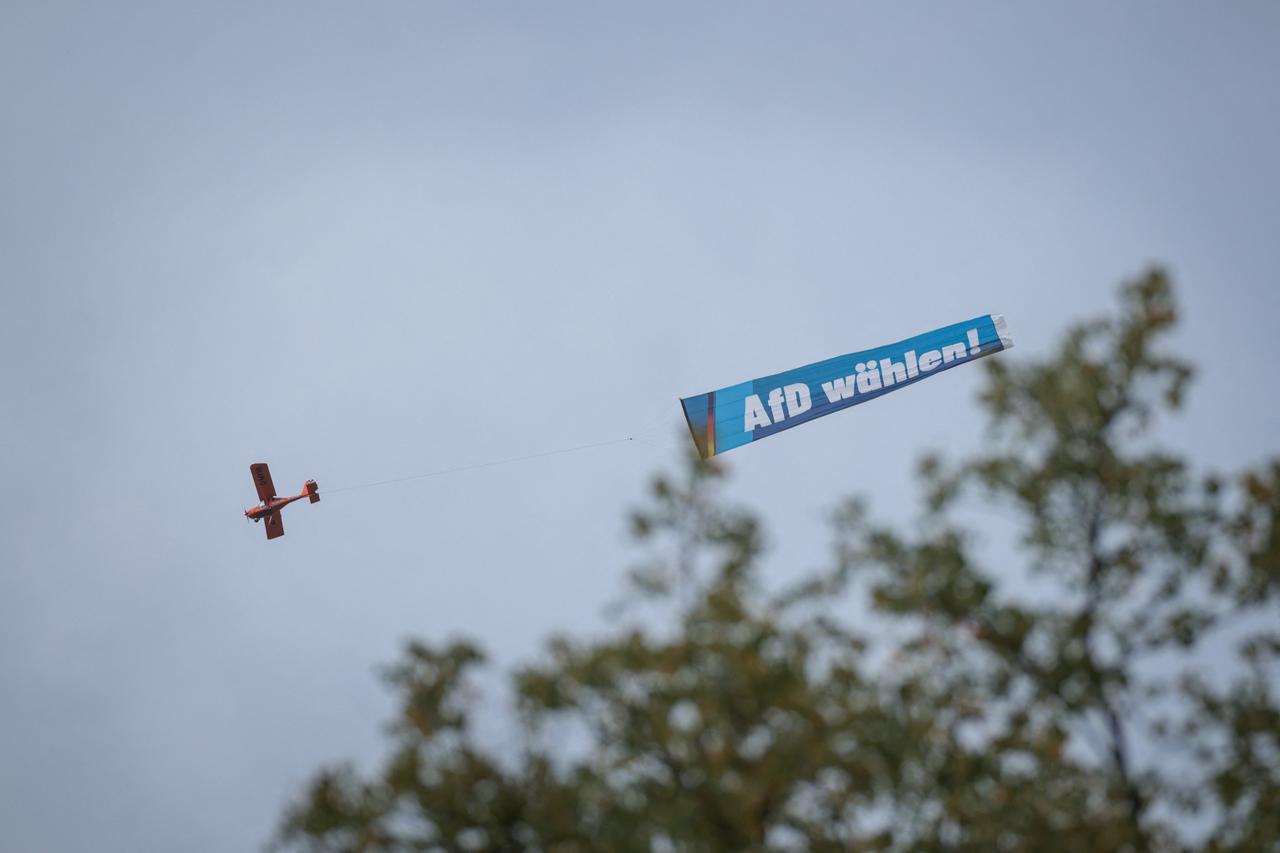
Polls from several institutes put the AfD at about 40% to 43%, far ahead of its rivals.
But finishing first would not automatically give the party control of the state parliament.
Seats are allocated only to parties that clear the 5% threshold and win representation in the Landtag. The number of smaller parties that enter parliament could determine whether the leading party has enough seats for a majority.
The latest ZDF poll showed the BSW and Free Democrats below the 5% threshold.
A similar result could allow a scenario in which the CDU and other parties form a minority government with ad hoc support from the far-left Die Linke party.
Political observers expect a deadlock after Sunday’s vote if the AfD falls short of a majority.
Merz’s CDU has ruled out any coalition or cooperation with the AfD, citing the party’s record and intelligence findings on its Saxony-Anhalt branch.
Other mainstream parties have taken the same stance.
If the AfD falls short, Magdeburg could spend weeks arguing over who becomes premier.
Schulze has said he will not make himself dependent on the Left Party.
AfD politicians would likely portray another exclusion from power as proof that mainstream parties are ignoring the will of voters.
Sunday’s vote is expected to have ripple effects in national politics, although few observers expect a snap federal election.
A strong AfD result and a weak CDU showing could reignite questions about Merz’s standing within his party.
“If the AfD wins in Saxony-Anhalt, Merz's critics will become even more vocal, and calls for better leadership will become impossible to ignore,” said political scientist Wolfgang Schroeder of Kassel University.
However, Schroeder said he did not expect Merz to be ousted, given the current absence of a strong rival candidate.
“As far as I can see, there is no alternative chancellor,” he said.
In the latest poll by public broadcaster ARD, 83% of eligible voters said they were dissatisfied with Merz, while 13% said they were satisfied—the lowest level recorded for a sitting chancellor.
A leadership fight within the Christian Democrats would not automatically topple the federal government.
If pressure forced Merz to resign, parliament could choose a new chancellor without dissolving the Bundestag.
The German Economic Institute warned that the AfD’s immigration policy would be “ruinous” for Saxony-Anhalt, whose population is already aging and shrinking and is highly reliant on foreign-born workers.
Others have voiced fears that an AfD-run state security apparatus could leak sensitive information to Russia.
The Kremlin “makes no secret of the fact that the AfD is the most important instrument for destabilizing Germany for Putin,” Thuringia state Interior Minister Georg Maier told Handelsblatt daily.
In the final stretch of campaigning, a social media video stoked fears about mail vote fraud, with claims of manipulation at an elderly care home that were denied by state authorities.
Germany’s parliamentary speaker Julia Kloeckner dismissed AfD speculation about voter manipulation in comments to Der Spiegel.
“Questioning elections without concrete evidence appears to have one goal,” she said, “to sow distrust in our rules and to accept the results only if the outcome suits.”


 Set as preferred source
 Set as preferred source


 2 min read
 1 min read