Newsletters


A top Iranian security official responded to a recent statement by Donald Trump with a warning, “Be careful not to get eliminated yourself.”
In response to Trump’s recent post threatening further attacks on Iran if the Strait of Hormuz remains closed, Ali Larijani, who previously served as secretary of Iran’s Supreme National Security Council under Supreme Leader Ali Khamenei, said that the Iranian people do not fear Trump’s threats.
In a post shared on his account on the social media X, Larijani responded to Trump’s threat that the U.S. would carry out attacks that would make it “almost impossible for Iran to be rebuilt as a nation.”
In his post, Larijani said that the Iranian people are not afraid of "empty threats," adding, "Even the greatest among you could not eliminate it." Be careful not to become one of those who are eliminated.”
Meanwhile, an Iranian official ruled out diplomacy and said Tehran is prepared for a prolonged war with Washington and may continue attacks on Gulf countries to pressure them to urge U.S. President Donald Trump to step back from the conflict.

Kamal Kharazi, a foreign policy adviser to the office of Iran’s supreme leader, made the remarks in an interview with CNN late Monday.
“I don’t see any room for diplomacy anymore. Because Donald Trump had been deceiving others and not keeping his promises, and we experienced this twice in negotiations. While we were engaged in negotiation, they struck us,” Kharazi told CNN.
“There’s no room unless the economic pressure would be built up to the extent that other countries would intervene to guarantee (the) termination of the aggression of Americans and Israelis against Iran,” he added.
Kharazi suggested Gulf Arab countries and others should pressure Washington to end the conflict.
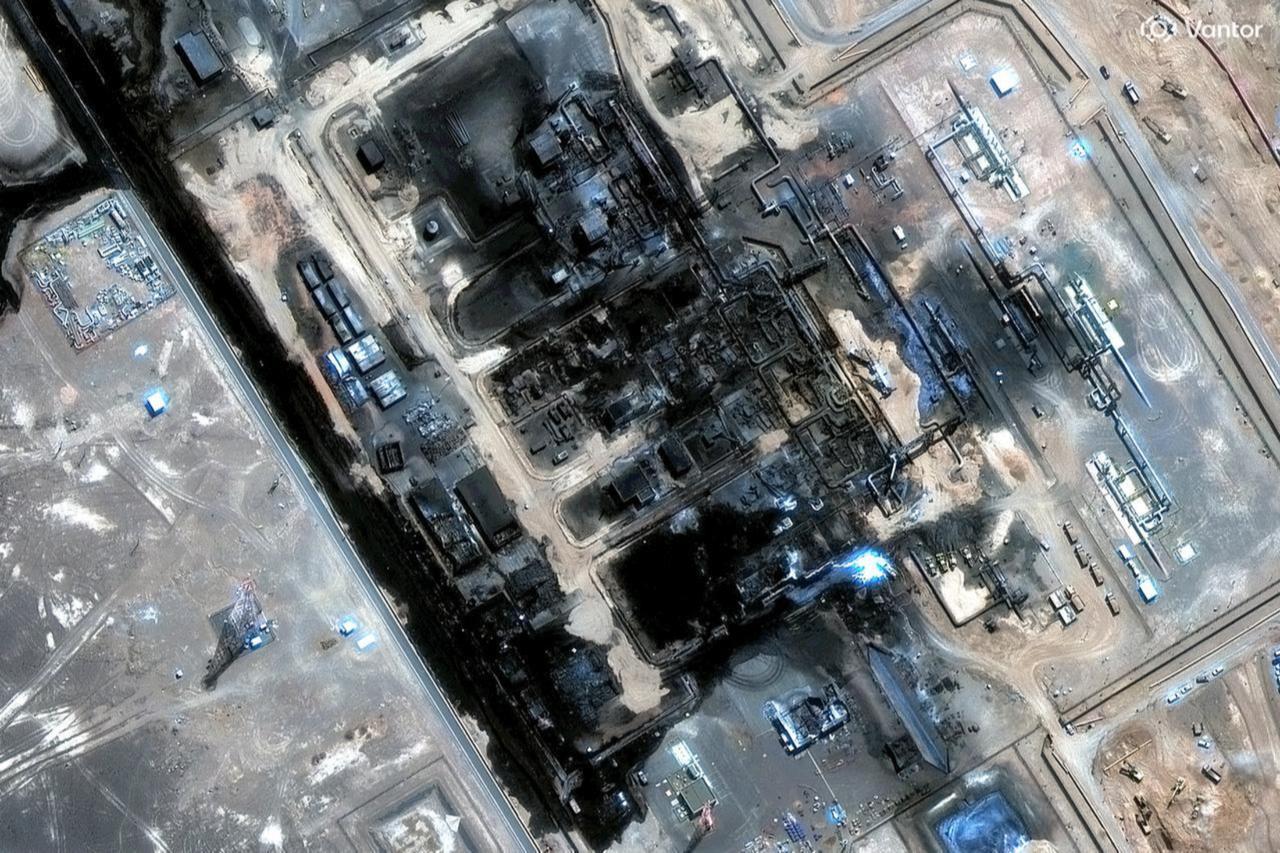
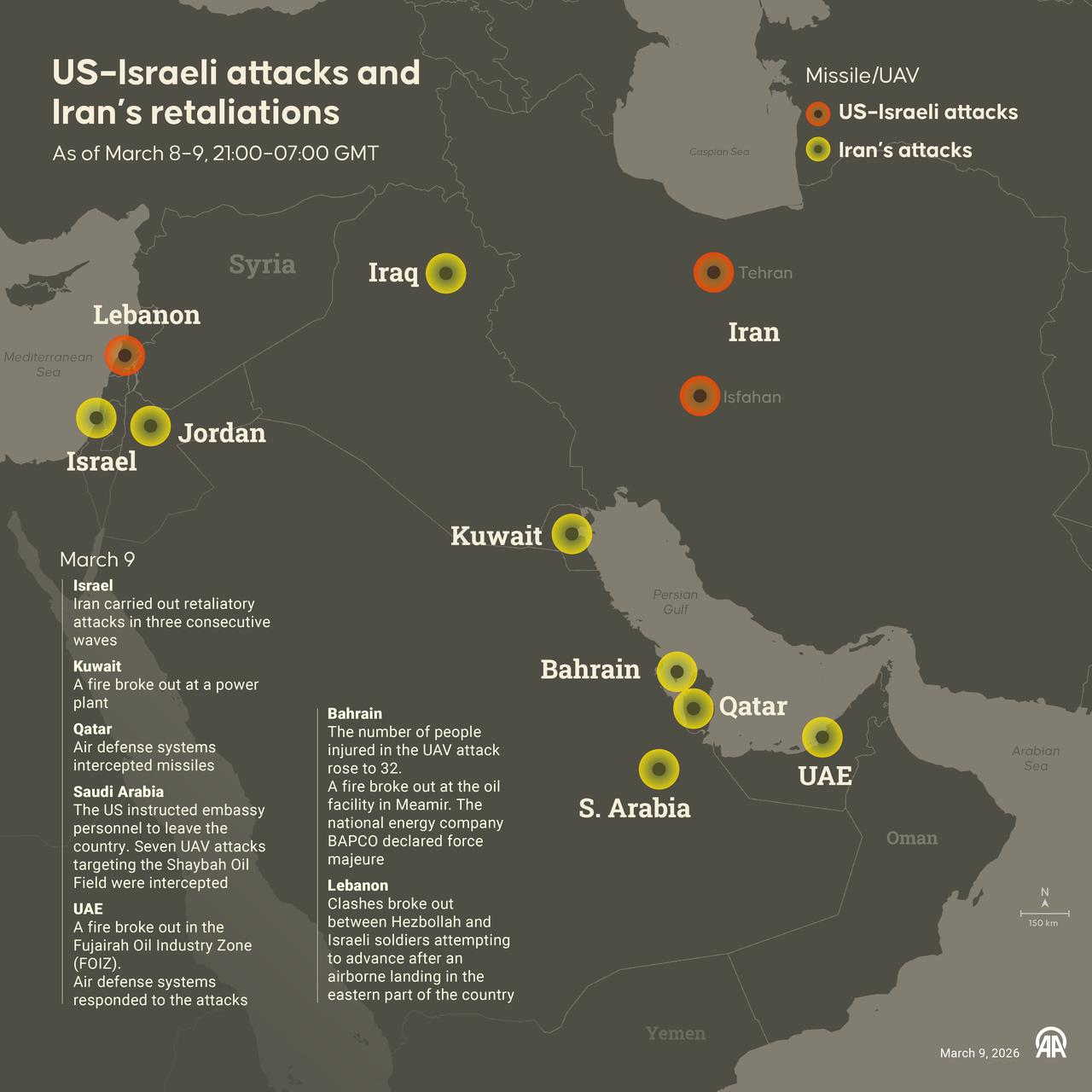
The remarks came as regional escalation intensified after the United States and Israel launched a joint attack on Iran on Feb. 28.
 1 min read
According to Iranian authorities, the strikes have killed more than 1,200 people, including Supreme Leader Ali Khamenei.
Iran has retaliated with drone and missile strikes targeting Israel, Jordan, Iraq, and several Gulf countries hosting U.S. military assets.
Iran has also effectively closed the Strait of Hormuz, a strategic waterway linking the Persian Gulf with the Arabian Sea.
The route normally handles about 20 million barrels of oil shipments per day and roughly 20% of global liquefied natural gas trade, much of it destined for Asian markets.


 Set as preferred source
 Set as preferred source


 1 min read