Newsletters





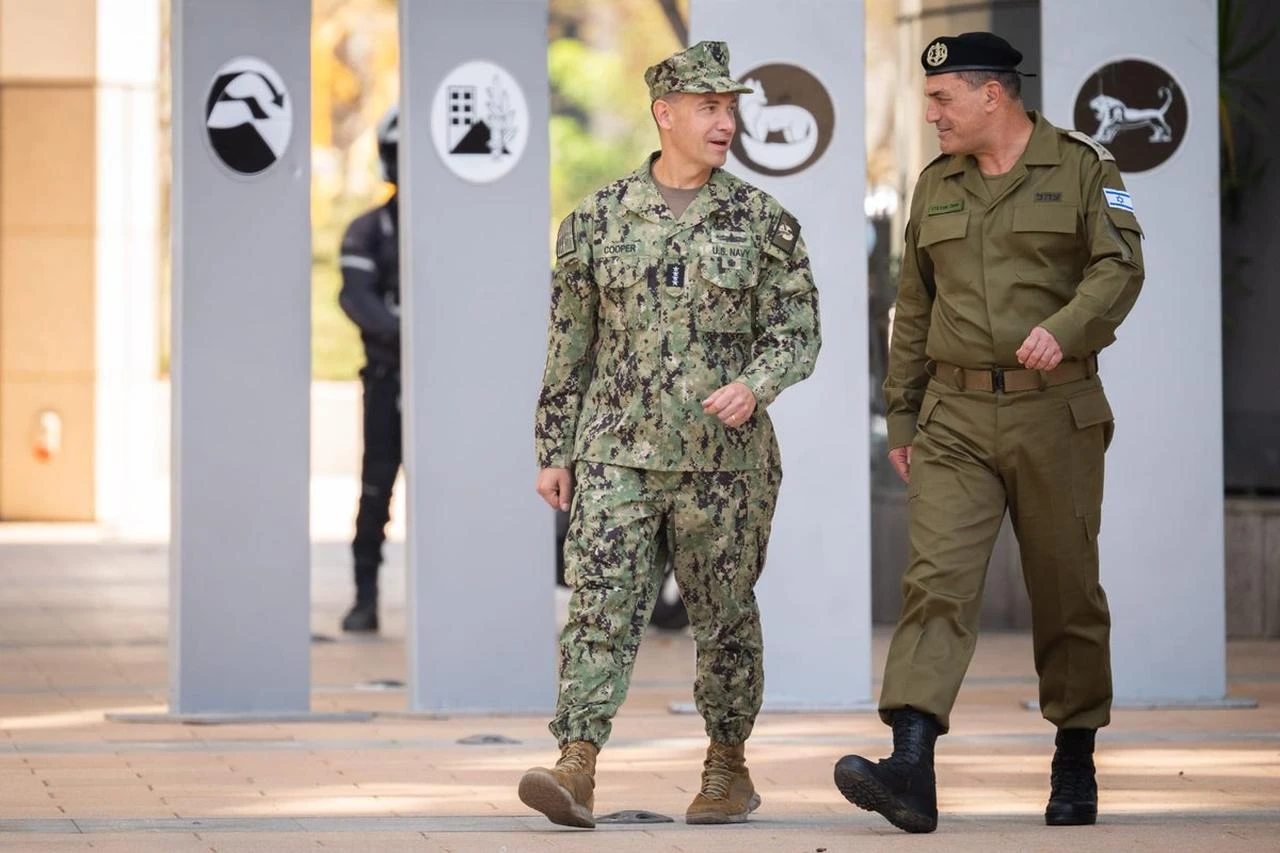
U.S. Central Command (CENTCOM) commander Adm. Brad Cooper met Israeli Chief of Staff Lt. Gen. Eyal Zamir on Saturday as Israeli media reported that Israel is continuing to prepare for possible unilateral strikes on Iran if the war between Washington and Tehran comes to an end.
Cooper traveled to Israel after visiting Bahrain and the United Arab Emirates, where he held talks with Zamir and other senior Israeli military officials on developments in the Gaza Strip and Iran, according to Israeli public broadcaster KAN. The CENTCOM commander returned to the United States following the meetings.
The outlet pointed out that the military consultations came after the Board of Peace unveiled a 15-point roadmap for implementing the second phase of the Gaza ceasefire.
The proposal calls for the phased disarmament of Hamas and other armed groups under international supervision, the deployment of an international stabilization force, the gradual withdrawal of Israeli troops from Gaza, and the establishment of a Palestinian technocratic administration to oversee reconstruction.
Israeli media previously reported that Prime Minister Benjamin Netanyahu's government rejected the proposal and formally conveyed its decision to the U.S. administration.
Netanyahu has repeatedly remarked that Israeli forces will not withdraw from Gaza until Hamas is fully disarmed.

At the same time, Israeli broadcaster Channel 13 reported that Israel continues to keep the option of striking Iran without direct U.S. involvement on the table.
The report said the Israeli military is pressing ahead with preparations while Washington seeks a diplomatic "exit route" to bring the war with Tehran to an end.
The report follows earlier CNN reporting that Chairman of the Joint Chiefs of Staff Gen. Dan Caine expressed concerns to senior U.S. officials over the direction of the conflict.
Caine reportedly warned that further escalation could create new risks and argued that President Donald Trump would struggle to achieve his objectives through airstrikes alone.
He is also reported to have discussed those concerns with CIA Director John Ratcliffe, Secretary of State Marco Rubio and Vice President JD Vance.


 Set as preferred source
 Set as preferred source


 1 min read

 1 min read