Newsletters


Scott Larsen was 4 years old when his father, a New York City firefighter, was killed in the collapse of the World Trade Center on Sept. 11, 2001.
Twenty-five years later, Larsen wears the same uniform and serves at the same Queens firehouse where his father once worked.
"It was something in me. I just always wanted to go here," Larsen, now 29, told Reuters.
Photographs of his father, Scott Larsen Sr., still hang inside the Woodside firehouse. His name is engraved on a memorial plaque and painted on a fire truck.
"His memory comes up every day, honestly," Larsen said. "There is never a day I come here and I don't look at him."
His story is one of thousands that remain tied to a morning that transformed New York, the United States and much of the world.
On Friday, New York is marking the 25th anniversary of the Sept. 11 attacks, when 19 al-Qaeda operatives hijacked four passenger planes and killed 2,977 people in New York, at the Pentagon and near Shanksville, Pennsylvania.


Thousands are expected to gather at the 9/11 Memorial in Lower Manhattan, where relatives of the victims will again read aloud the names of those killed.
There will be no political speeches. Bells and moments of silence will mark key moments of the attacks.
U.S. Vice President JD Vance is expected to attend alongside four former U.S. presidents: George W. Bush, who was in office during the attacks, as well as Bill Clinton, Barack Obama and Joe Biden.
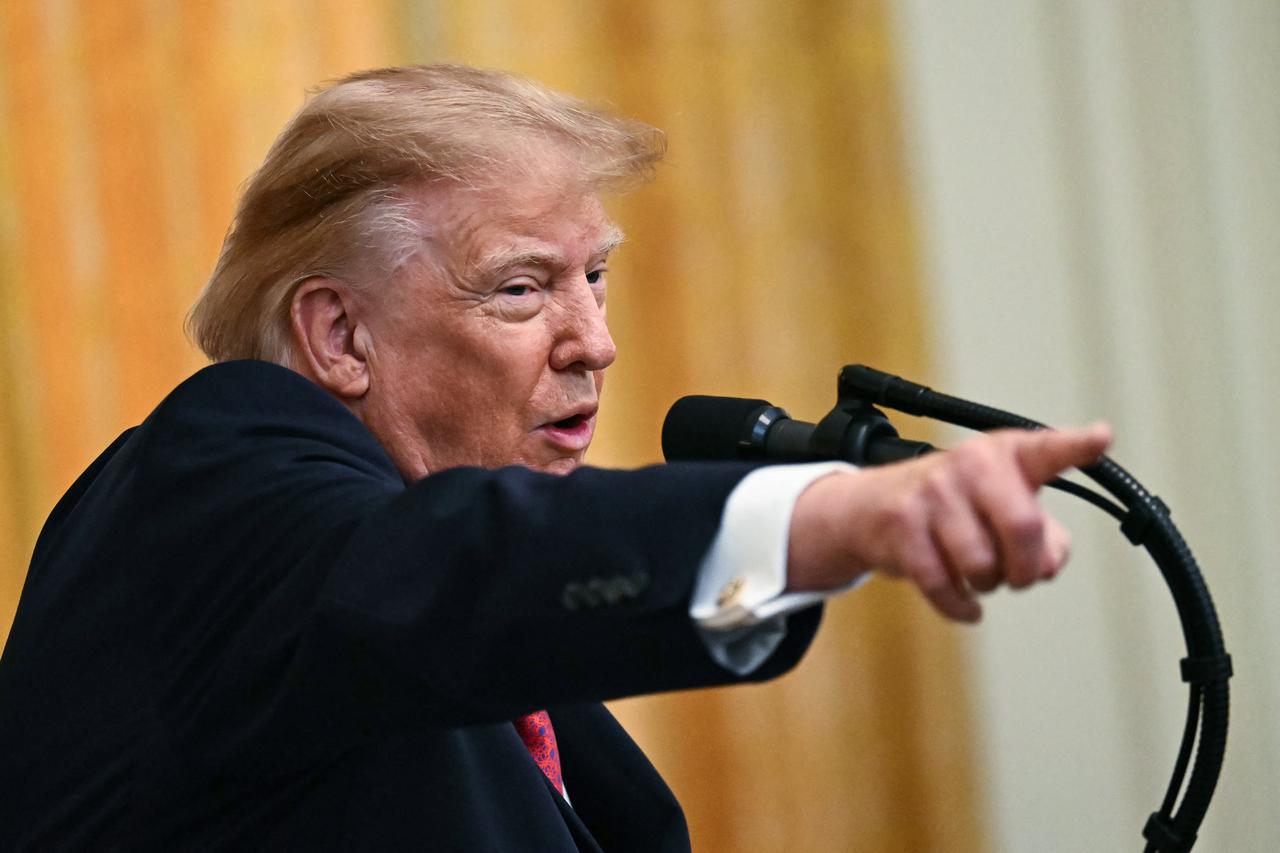
U.S. President Donald Trump will instead commemorate the anniversary at the Pentagon, where American Airlines Flight 77 struck the building on Sept. 11.
New York City Mayor Zohran Mamdani, the city's first Muslim mayor, is also expected at Ground Zero despite a campaign urging him not to attend.

A petition calling on Mamdani to stay away has gathered more than 100,000 signatures, accusing him of associations with unspecified individuals who are "dismissive of American institutions or insufficiently critical of extremist ideologies."
City Council member Shahana Hanif criticized the campaign.
"It's concerning to me that the mayor is being treated differently simply because he is Muslim," she told CNN.
Security around the memorial has been tightened for the anniversary, with the Secret Service establishing a security perimeter and New York police preparing an anti-drone team. Police Commissioner Jessica Tisch said there was no intelligence indicating a specific threat to the gathering.

On the morning of Sept. 11, 2001, two hijacked planes struck the World Trade Center's 110-story Twin Towers, which later collapsed.
A third plane hit the Pentagon outside Washington, while a fourth crashed into a field near Shanksville after passengers fought back against the hijackers.
Among those killed were 343 members of the New York City Fire Department.
The attacks reshaped U.S. national security policy, leading to the creation of the Department of Homeland Security, sweeping changes to airport security and new security legislation.
They also helped set in motion wars in Afghanistan and Iraq whose consequences extended for decades.
For many Americans, however, Sept. 11 has increasingly become history rather than lived memory. Some 100 million people in the United States were either not yet born or are too young to remember the attacks.
Logan Miller, 32, lost his uncle on Sept. 11 and later his grandfather to an illness linked to the aftermath of the attacks.
"I think the next generation just can't fathom what actually transpired and how someone could be impacted by that, and so I actually find them asking more questions," he said.

For thousands of survivors, first responders and people who lived or worked near Ground Zero, the consequences of Sept. 11 continued long after the fires were extinguished.
The collapse of the World Trade Center sent vast quantities of dust and debris across Lower Manhattan. Rescue and recovery crews worked for months at the site, often amid clouds of lingering dust.
The government-funded World Trade Center Health Program now provides care for 9/11-related illnesses to more than 150,000 responders and survivors who lived, worked or studied in the disaster area, Reuters reported.
As of June 30, people enrolled in the program had received about 85,000 certifications for World Trade Center-related health conditions. About half were linked to inhaling or swallowing toxic dust, while roughly 30% were for cancer.
More than 9,000 people tracked by the program have died since Sept. 11, although officials say determining the role the attacks played in each death is difficult.

The issue returned to the forefront ahead of this year's anniversary when Mamdani released thousands of documents showing what New York City officials knew about air quality and health risks in Lower Manhattan following the attacks.
"People got sick because the leaders they trusted lied and told them they were safe to breathe in toxic air," Mamdani said Tuesday.
The initial collapse covered Lower Manhattan in an enormous cloud of dust, followed by months of lingering pollution that has been linked to cancers and other illnesses among responders, residents and workers.
For Dr. Michael Crane, who helped oversee the health of rescue and cleanup workers and now serves as medical director of the World Trade Center Health Program at Mount Sinai Hospital, the aftermath was never simply a national tragedy.
"This was personal," Crane told Reuters. "This was personal to a lot of these guys who had lost people down there."

Ahead of Friday's commemoration, New York's skyline became part of the remembrance.
A drone display sent 2,977 lights into the sky over New York Harbor, one for every person killed in the attacks.
For a city where the absence left by the Twin Towers has shaped the skyline for a quarter-century, the lights offered another way to remember the scale of what was lost.
And 25 years after Sept. 11, as a generation with no memory of that morning comes of age, the names of the dead will once again be read aloud at Ground Zero.


 Set as preferred source
 Set as preferred source


 2 min read
 1 min read