Newsletters




A few years ago, a colleague telling me Armenian entrepreneurs would cross a historically closed border for business talks in the Turkish city of Kars would have sounded like fantasy at best. Yet, it happened. This breakthrough was the result of Türkiye dedicating its most skilled diplomats to the cause, coordinating closely with Azerbaijan, and utilizing a behind-the-scenes push by the U.S.
However, the strong political will in Armenia was the ultimate catalyst. Today, after decades of mutual animosity, an Armenian prime minister has gained surprising popularity in Türkiye for his realism, courage, and commitment to peace.
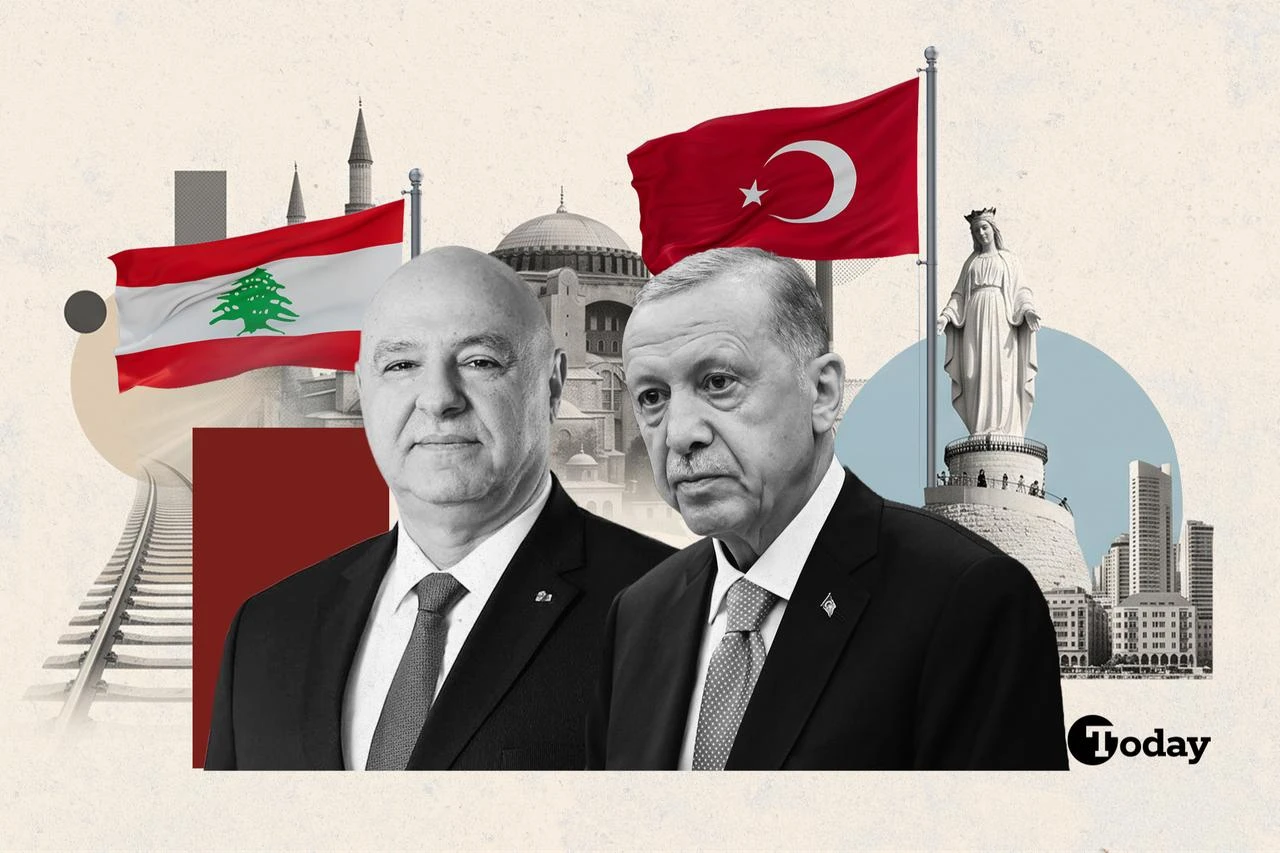
While the dynamics are markedly different, this momentum could serve as a precedent for deepening ties with Lebanon's Christian communities. Despite a lingering rhetorical distaste for Türkiye and its government, Lebanese Christians are quite familiar with the country's secular social fabric and economic production.
Historically, the strongest catalyst for anti-Turkish sentiment in Lebanon has been its politically and socially influential Armenian community, a sentiment compounded by the country's Christian policymakers, especially the Michel Aoun camp, who have long been wary of Turkish influence.
During the Nagorno-Karabakh War, some Lebanese Armenians even volunteered for the frontlines. In Beirut’s fiercely anti-Turkish neighborhood of Bourj Hammoud, posters branded Azerbaijan’s President Ilham Aliyev a genocidal leader alongside Tala’at and Jamal Pashas.
Such hostility showed itself again in August 2023, when a Turkish truck bearing the name "Turkkan" was attacked in Beirut, with Armenian-Lebanese protesters physically assaulting the driver and slashing the tires.
In June 2026, Turkish President Recep Tayyip Erdogan explicitly identified Beirut as one of the bastions of Türkiye’s national security for the first time. Israel’s aggressive air campaigns and its ambitions for regional hegemony present a new strategic opening—one that demands a shift beyond Türkiye’s current Lebanon policy.
The key to influencing Lebanese decision-making and winning public support lies in a consistent and sincere outreach to Lebanese Christians. This will require calculated political steps, serious public diplomacy, and potential security agreements, even if these efforts do not yield immediate breakthroughs.
Türkiye has a huge advantage that it can turn into political leverage in the long term. It has never openly picked sides in Lebanon’s chaotic political scene as Iran did. Therefore, in Lebanon’s dark political history, which is rife with civil wars and internal intricacies, Türkiye's image has never been stained.
Ankara’s economic production was a sweet childhood memory for every Lebanese, as Turkish products flooded the Lebanese market during the Lebanese civil war that ended in 1990. An entire generation grew up unwrapping Ulker chocolate bars and sharing packets of Eti biscuits. Long after the war ended, those flavors continue to evoke a deep sense of nostalgia, transporting many Lebanese back to their earliest years.
Now, amid Lebanon's severe energy crisis, Turkish electricity is ready to solve the problem via Syria. Beirut also wants to link into the historic Hejaz Railway through a connection line. More importantly, Türkiye's shift away from its decades-long policy of backing a single ideological camp across the Middle East could open new space for engagement in Lebanon.
But how does Ankara translate this strategic opening into actionable policy?
First, Türkiye must lean into the potent soft power it already wields in the region. For over a decade, networks like MTV and LBC have broadcast Turkish dramas into Lebanese living rooms, creating a subtle but undeniable cultural bridge. The feelings of Lebanese Christians are much deeper for Türkiye than for the remote Gulf cities in the desert where they earn their livings and keep missing Lebanon’s cedar trees.
More outreach to Lebanese media by Turkish diplomats and opinion leaders wouldn't just speak to Christians within Lebanon's borders; it would broadcast a message of partnership to a highly influential, globally dispersed diaspora.
The geopolitical weight of this diaspora cannot be overstated; descendants of Lebanese Christians occupy corridors of power worldwide, from prominent business figures like Tom Barrack to top U.S. diplomat Michel Issa in Lebanon. Winning hearts and minds here pays dividends far beyond Beirut. It is highly crucial, as Israel’s recent policy is to organize an anti-Turkish diaspora abroad to affect Western, especially the U.S., decision-making.
A friendlier Lebanese diaspora may weaken Israel’s front.
Second, this cultural affinity needs a physical footprint. Opening Yunus Emre Institutes to teach Turkish in majority-Christian coastal towns like Batroun and Jounieh would transform abstract soft power into tangible, everyday public diplomacy.
The sole Turkish language institute in Lebanon, located on Beirut's bustling Hamra Street, falls far short of meeting demand.
Third, diplomacy requires engaging with the harshest critics. If the rapprochement with Armenia continues to yield fruit, Türkiye should extend an unprecedented invitation to Lebanon’s Armenian societal leaders to visit Turkish cities.
Nobody should be naive; Lebanese Armenians are tough cookies, deeply rooted in their historical narratives, and they will likely view such an initiative with intense skepticism, perhaps even rejecting it outright at first. However, the new generation of Lebanese Armenians is more Lebanese than Armenian.
Contrary to their ancestors, their main language is Arabic, and they embrace their Lebanese identity much more than their elders. Some are positive toward Türkiye but are shy to speak out in public due to historical grievances.
The mere gesture of an open door disrupts the established narrative of perpetual enmity and puts the ball in their court. At some point, Turks need to counter the narrative common among Lebanese Armenians that one day, Ottoman Turks simply woke up as genocidal racists, despite having coexisted peacefully with Christian Armenians in the same towns for 600 years under the Ottoman Empire.
Fourth, strategic realism must guide all political engagements. Türkiye must abandon the habit of cherry-picking its political contacts that suit its comfort zone. To understand and influence Lebanese Christian dynamics, Turkish officials need to increase contacts and harmony with highly influential figures, including former warlords turned political heavyweights like Samir Geagea.
However, Ankara must manage its expectations: Türkiye should not expect the Lebanese Christian political leadership to suddenly pivot and adopt pro-Turkish stances on entrenched international disputes like the Cyprus issue. If Israel continues to provoke Greece and Greek Cypriots on the Cyprus issue, this may create a deeper rift with Lebanon’s Christians.
Lebanese President Joseph Aoun’s constant contacts with Greek Cyprus drew criticism from the community, as Cyprus carries no geopolitical significance for a state already grappling with far more pressing issues.
Despite all the points, Turkish leadership is very well aware that almost everything in Lebanon is highly transactional. Political leaders may change sides at any point, and Lebanon doesn’t have long-term state policies due to political and economic instability and the Hezbollah issue, which represents a state within a state. If Lebanon disarms Hezbollah and finds political unity, arms deals with Lebanon may follow friendly relations.
Ultimately, embracing Lebanon's Christians is not a sentimental endeavor; it is slowly becoming a geopolitical imperative. The road from Yerevan to Kars proved that the impossible is merely a matter of political will; the road from Istanbul to Jounieh demands nothing less from both sides.


 Set as preferred source
 Set as preferred source


 4 min read