Newsletters





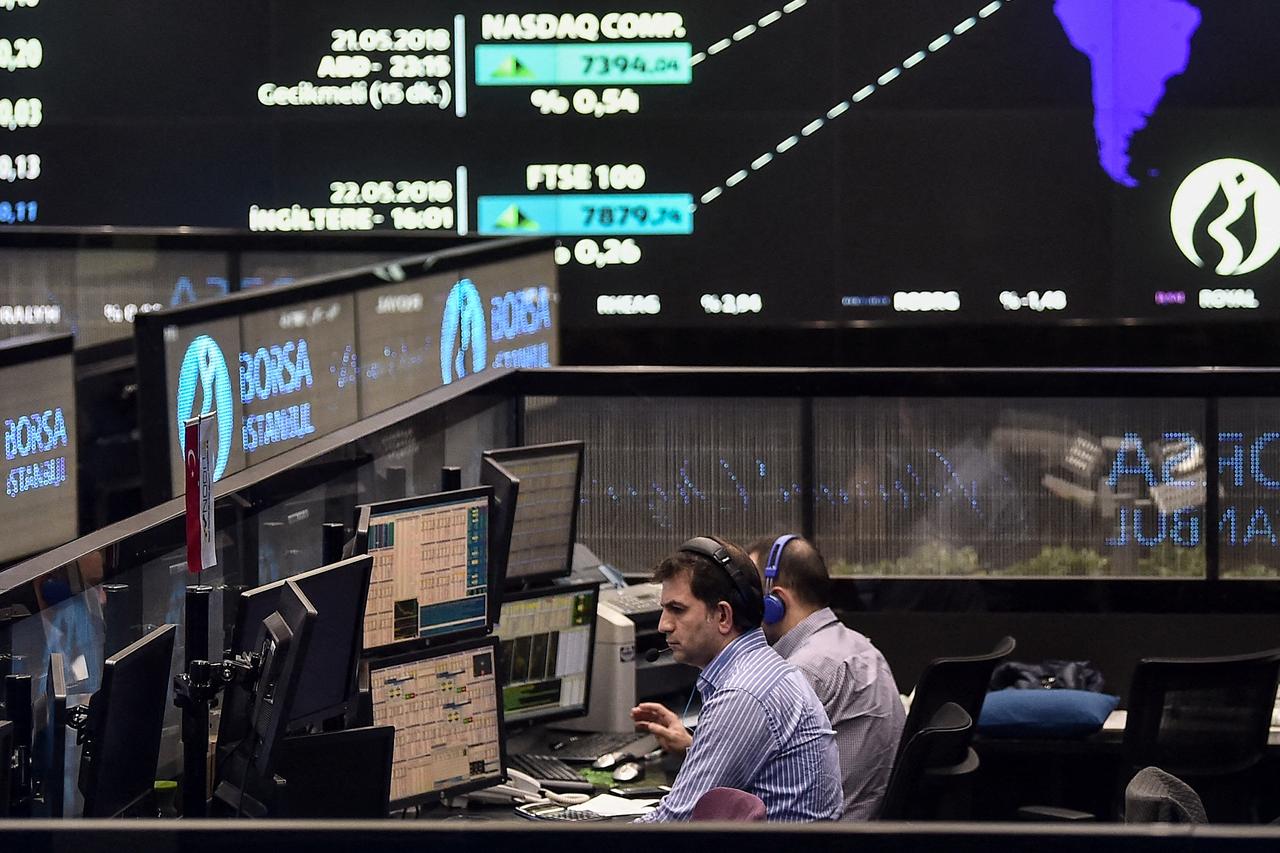
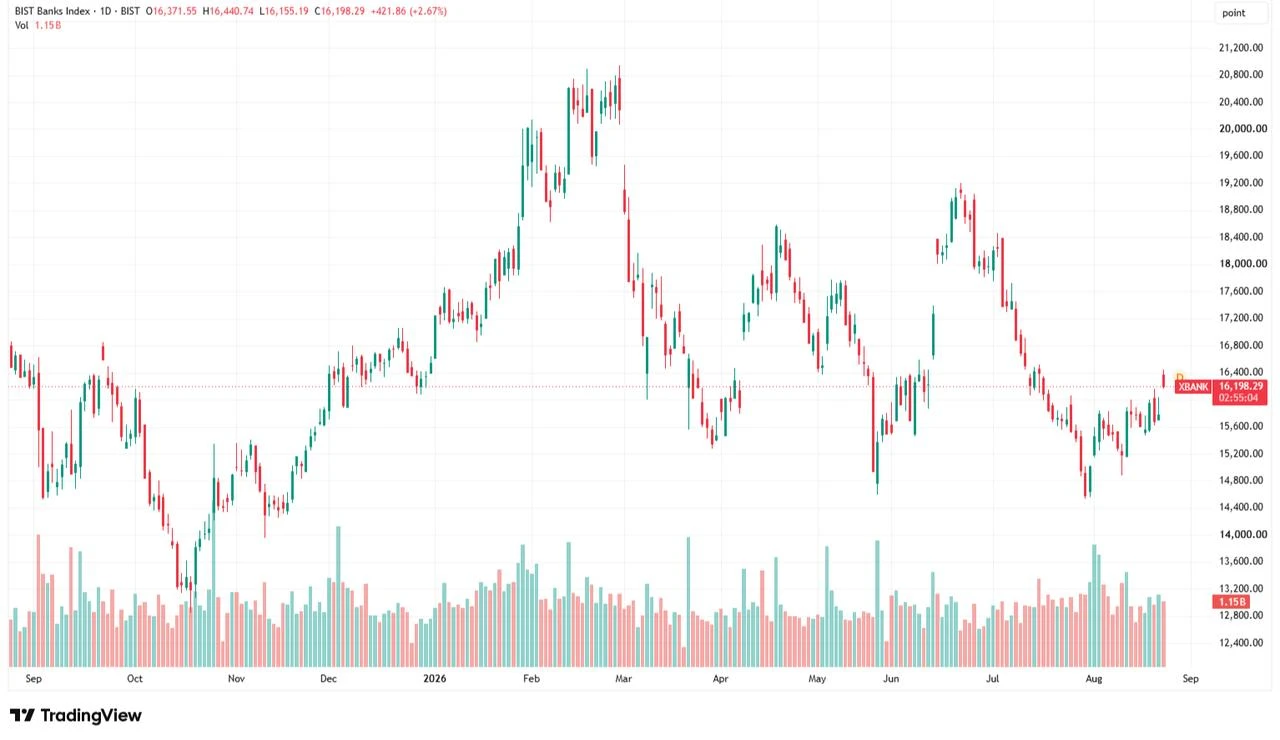
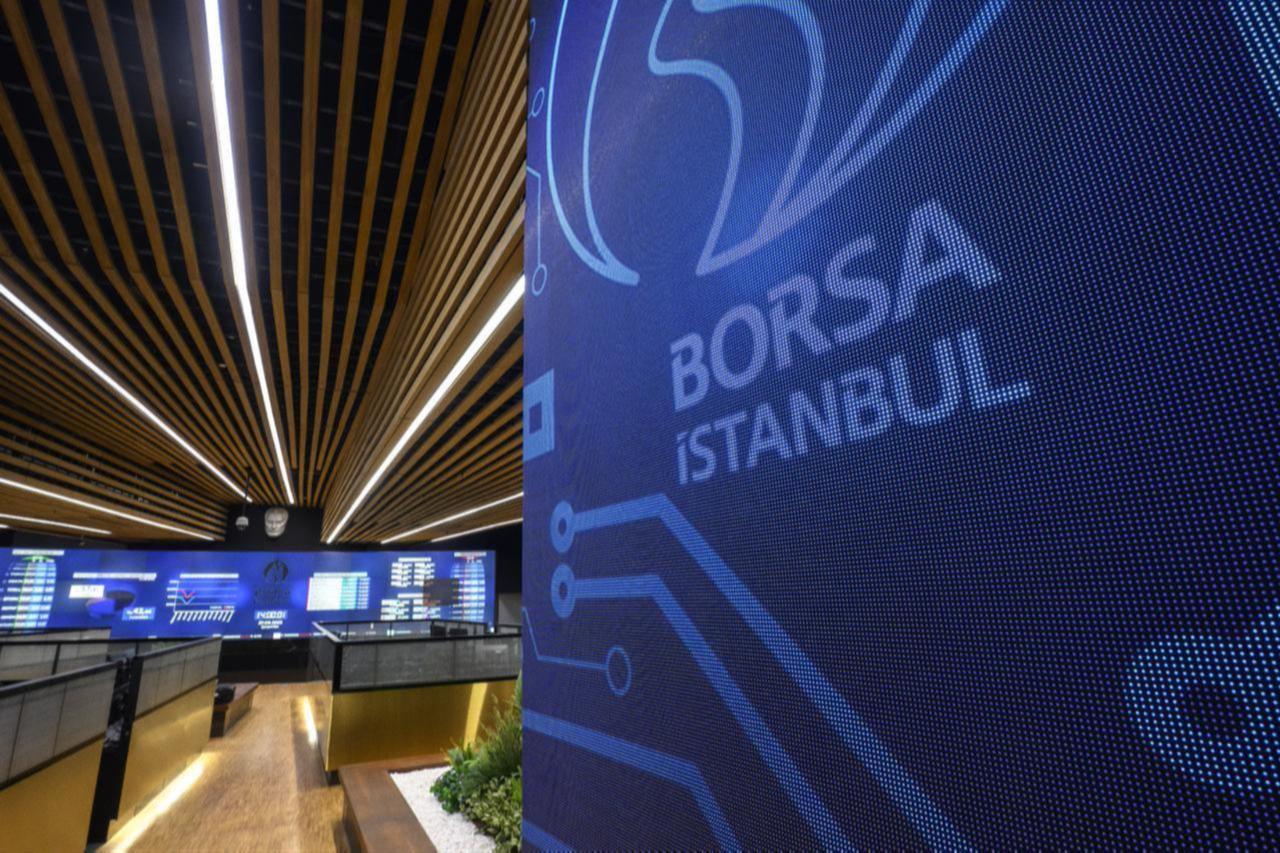
Banking shares listed on Borsa Istanbul, Türkiye's stock exchange, surged over 4% on Monday after the Central Bank of the Republic of Türkiye (CBRT) resumed one-week repo auctions, shifting funding operations back toward its 37% policy rate.
The central bank conducted a ₺1 billion ($20.8 million) one-week repo auction at a 37% simple interest rate, while the compound rate stood at 44.6%. In response, the benchmark BIST 100 index opened 0.9% higher at 14,637 points, gaining 122 points from its previous close, and it climbed as high as 14,650 before paring some of its gains.
The CBRT announced on Sunday that it would restart one-week repo auctions, a key channel through which it provides banks with short-term funding, nearly six months after suspending the mechanism as part of broader measures to counter the shock from the Iran war.
The CBRT had halted the auctions on March 1 as part of broader measures to tighten monetary conditions amid pressure from the Iran war. Banks seeking liquidity then had to rely on more expensive overnight funding at 40%.
The Dutch lender ING described the move as a positive signal for markets, noting that the suspension of weekly repo auctions in March had effectively amounted to a 300-basis-point rate increase.
The return to the auctions indicates greater confidence among local policymakers in the economic outlook and financial stability, according to the bank.
The decision also pushed down implied yields in short-term Turkish lira futures, with the 2-year benchmark Treasury yield falling to 40.2%. The bank said investors holding carry-trade positions, who bet on the lira outperforming its forward exchange-rate levels, were likely to maintain those positions.

Meanwhile, U.S.-based Goldman Sachs raised its USD/TRY forecasts, citing the lira’s recent pace of monthly depreciation. As of Aug. 24, the U.S. dollar hovered near 48.1, up 1.8% for the month, nearly matching the monthly inflation rate, which is expected to come in around 2% in August.
The bank raised its three-month forecast to 51 from 48, its six-month forecast to 53 from 50, and its 12-month forecast to 59 from 54.
The analysts warned that risks remain tilted toward a faster depreciation of the lira unless energy prices fall significantly, gold prices rise sharply, or the dollar weakens broadly. Goldman also pointed to gradually mounting pressure on the external balance and rising election-related volatility.
Despite the higher forecasts, Goldman maintained its view that the current exchange-rate regime will remain in place, although with a somewhat faster pace of depreciation.


 Set as preferred source
 Set as preferred source


 2 min read
 1 min read