Newsletters


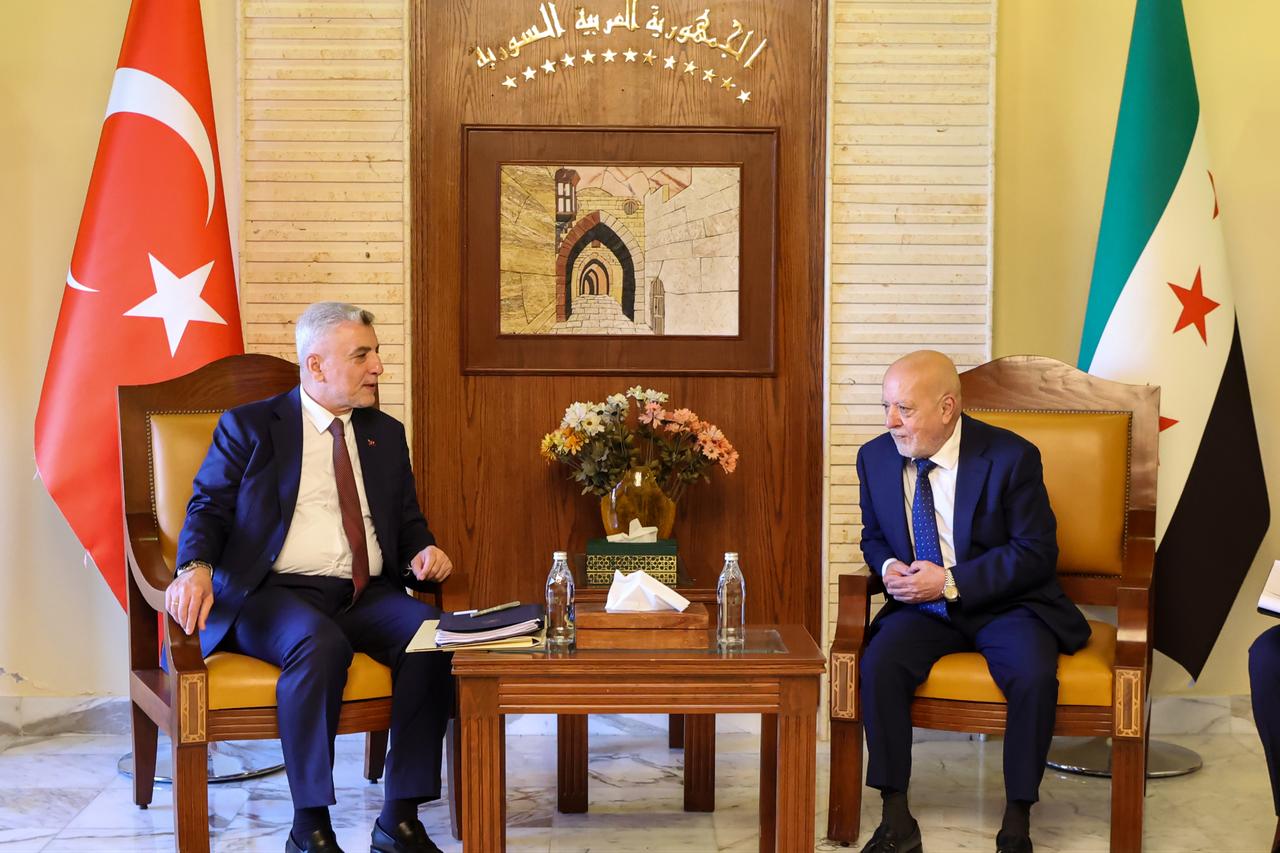


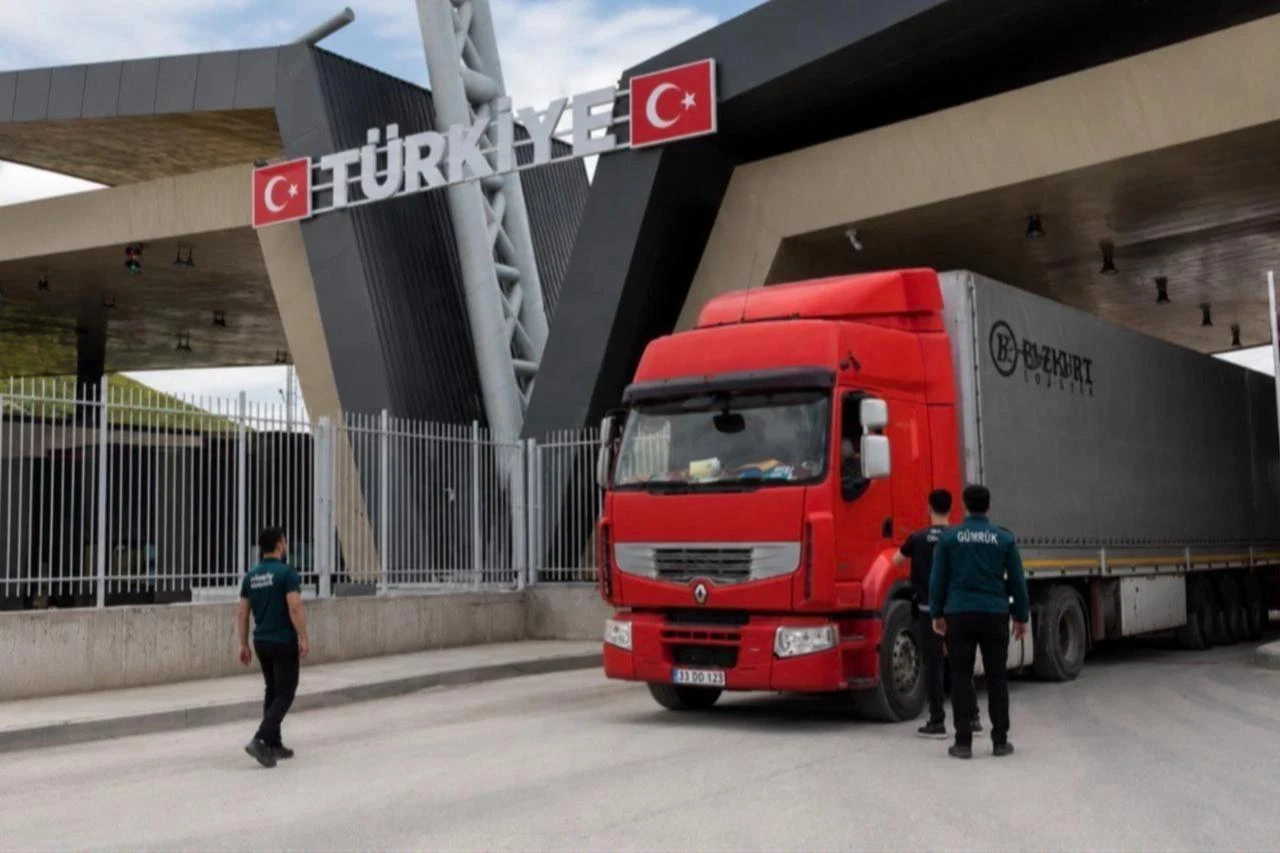
Syria has committed to reopening the Nusaybin-Qamishli border crossing by the end of the year, Türkiye’s Trade Minister Omer Bolat said Wednesday, as Ankara and Damascus work to deepen trade and economic ties.
Bolat made the remarks during a Türkiye-Syria trade delegation and bilateral business meetings in Damascus, where he outlined steps being taken to strengthen commercial cooperation between the two countries.
"This will be both a new entry point into Syria and a very positive step in terms of transit trade to Iraq and the Gulf," Bolat remarked.
The crossing linking Nusaybin in Türkiye’s Mardin province with Qamishli in northeastern Syria has been closed since Dec. 8, 2011, when Syrian authorities shut the Qamishli side.
The Turkish-side customs facility was completed on Dec. 27, 2011, but could not operate because the Syrian side remained closed. Construction there was later disrupted by the civil war.
Bolat outlined several steps to support bilateral trade, including a Customs Cooperation Agreement, a cooperation committee, and the Joint Economic and Trade Commission (JETCO), established in Ankara last August, with its first meeting held in Istanbul in April.
Central bank cooperation is continuing, while Türkiye expects progress on plans for Turkish banks to establish operations in Syria. Cooperation between border provinces and trade and industry chambers has also accelerated.
Türkiye participated in eight Syrian trade fairs last year and is taking part in eight in 2026. Turkish construction and building-material companies, including state-run TOKI, are also expected at a Syrian reconstruction and development fair in September.
Türkiye is also participating in the 63rd International Damascus Fair with about 33 companies and nearly 1,000 visitors. Bolat arrived in Damascus with a 200-member Turkish business delegation.
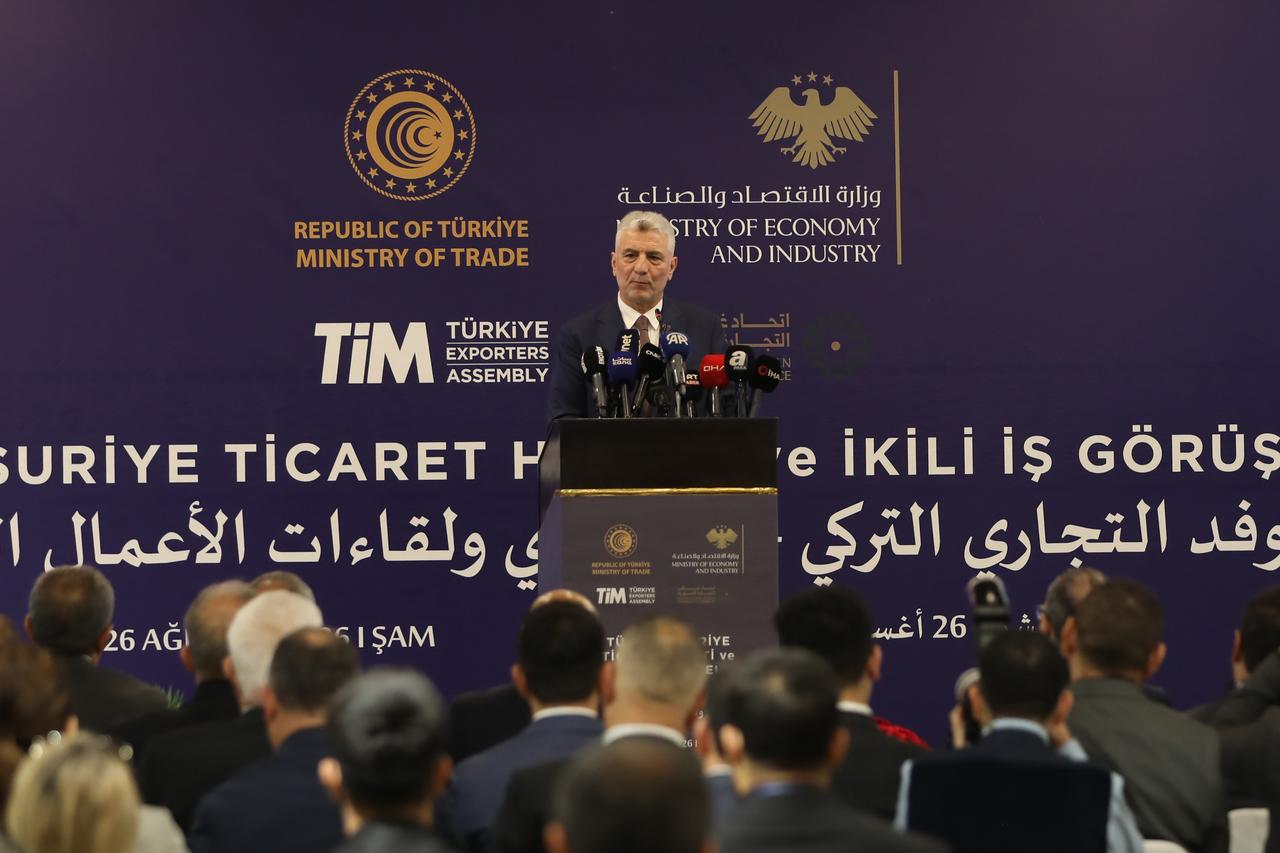

"The economies of Syria and Türkiye have very close integration," Bolat highlighted, adding that Ankara has worked closely with the Syrian government and ministries since the establishment of the new Syria.
Bolat pointed to geopolitical tensions, regional wars, and trade disputes as factors weighing on global trade and increasing the need for regional cooperation. He also cited Strait of Hormuz disruptions affecting energy supplies, petrochemicals, and global freight costs.
"An economic alliance has started to emerge among the Middle East, the Gulf countries, and Türkiye and Syria," Bolat noted. "The security alliance under the Mecca Agreement will expand with the participation of many countries. Economic ties and economic integration will also accelerate."
The Mecca Joint Defense Agreement was signed by Türkiye, Saudi Arabia and Pakistan on Aug. 7, creating a mutual-defense framework under which an armed attack on one member is treated as an attack on all.
Bolat added that regional countries were building stronger alliances against threats and destabilization, while deeper economic integration would support regional prosperity.
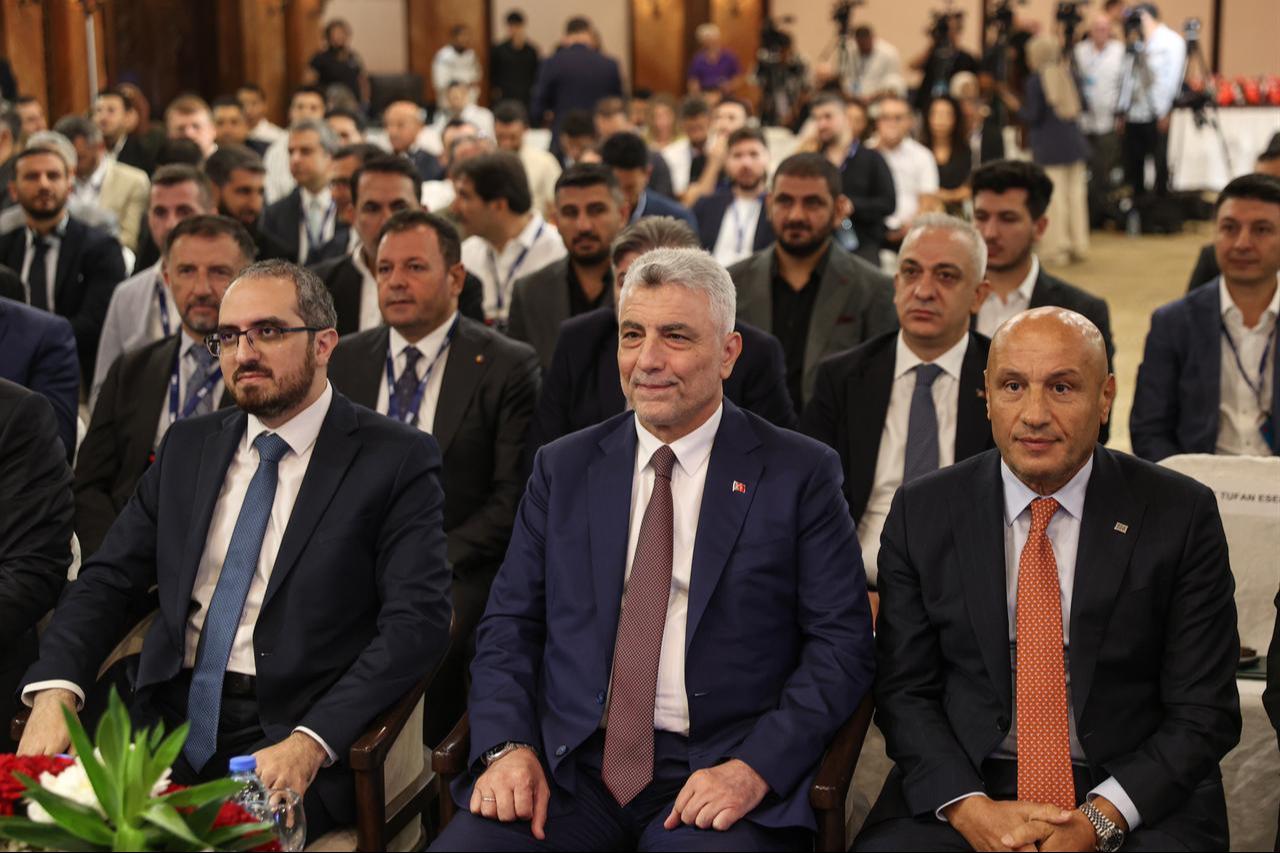
Turkish Exporters Assembly President Mustafa Gultepe reported bilateral trade of $3.7 billion last year, with nearly 5,800 Turkish companies shipping $3.5 billion worth of goods to Syria. Türkiye’s exports climbed 16.5% in the first seven months of this year to $2.1 billion.
"We see this table not as a result, but as a beginning," Gultepe said, describing Syria as both a market and a trade bridge linking Türkiye with the Gulf. "We want mutual gain, not one-sided sales. Let Syria produce, let Syria earn, let us grow together."
Turkish banks have reached an understanding to open branches in Syria, while Gultepe called for faster customs procedures, easier transit crossings, and greater border-gate capacity. He also urged greater consistency in documentation and more predictable procedures for partial-load shipments, particularly for SMEs.
"If we solve these problems, our trade volume will grow, and the way toward our $10 billion target will also open," he said.
Gultepe called for the free trade agreement suspended in 2011 to be updated and for new mechanisms to remove financial barriers to trade.
He also stressed that Turkish businesses were ready to invest in Syria’s reconstruction and invited participants to the Türkiye-Arab Countries Business Summit and Procurement Delegation Program in Istanbul on Dec. 10-11.


 Set as preferred source
 Set as preferred source


 1 min read
 1 min read