Newsletters


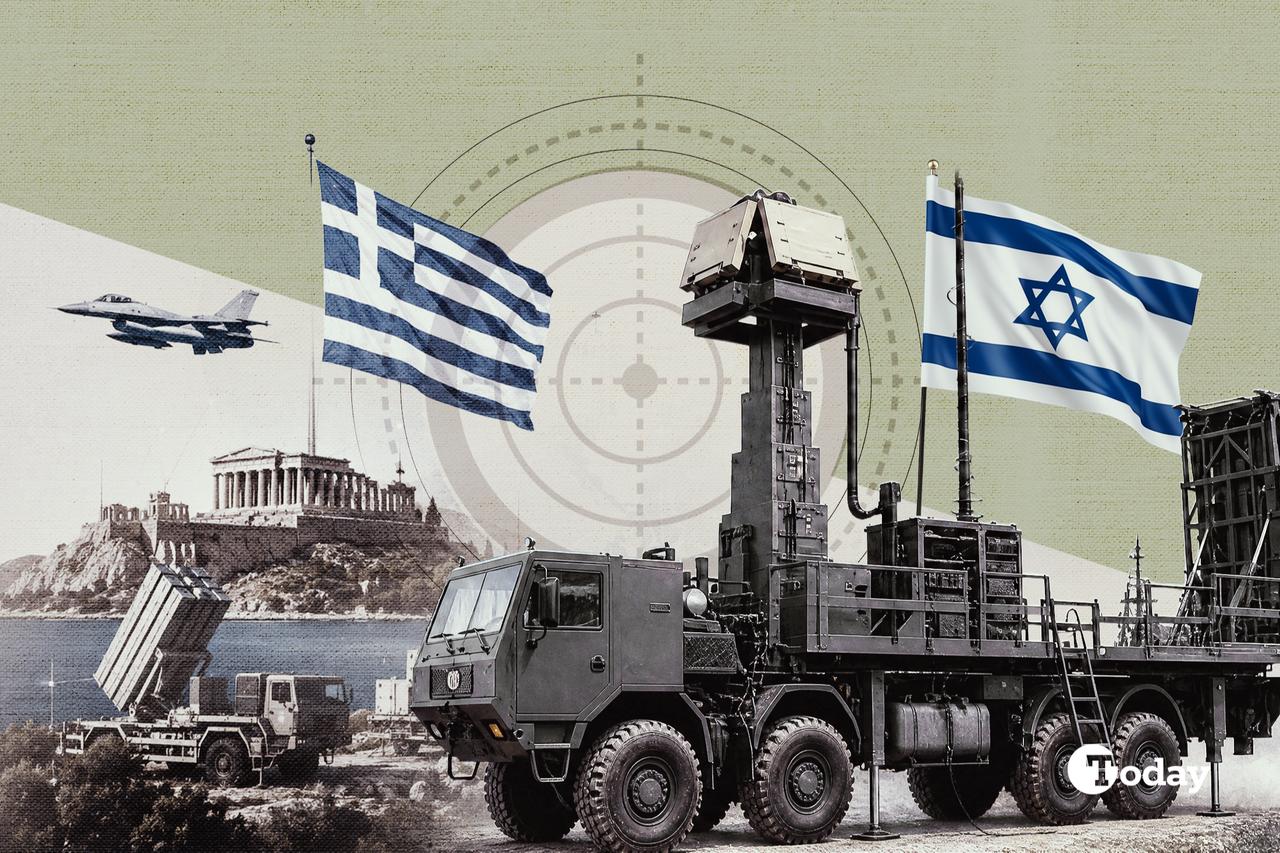


Achilles had one weakness, and it cost him everything. Greece named its new missile shield after him anyway, which either shows an admirable sense of irony or a complete disregard for how these stories usually end.
The $3.5 billion agreement signed on Aug. 31 gives Athens an integrated air-defense architecture built substantially by Israel—David's Sling, Barak MX, SPYDER, radar systems capable of tracking threats hundreds of kilometers out.
On paper, it is a modernization program, replacing Cold War leftovers with something that can actually talk to itself. In practice, it is something larger: a sensor network stretching from Thessaloniki to Tel Aviv, with Cyprus filling the gap between, and Türkiye sitting directly beneath its widening gaze.
Greece's ground-based air defense has long been a patchwork of American, Russian and French systems—many of them ageing, none of them talking to each other.
Greece already operates an extensive command-and-control structure centered on Larissa, supported by 11 ground-based early-warning radars and four EMB-145H airborne early-warning aircraft equipped with Saab ERIEYE radar.
Yet technological fragmentation, ageing equipment and the isolation of Russian-origin systems from NATO networks have increasingly limited the coherence of this architecture. Achilles Shield is intended to change that fundamentally.
Announced in 2025 with an initial budget of approximately €2.8 billion ($3.25 billion) and a planned operational horizon around 2027, the project envisages an integrated, network-centric architecture rather than merely another surface-to-air missile acquisition.
Its principal Israeli components are expected to include David’s Sling for medium- and long-range air and missile defense; Barak MX for the medium-to-long-range layer; and SPYDER-MR/LR for shorter and medium ranges. These systems would be supported by the ELM-2084 Multi-Mission Radar and an integrated air picture and weapons-management infrastructure capable of combining sensor inputs and allocating the most appropriate interceptor against different threats.
This marks a generational leap, shifting focus from standalone air-defense systems to an integrated air-defense ecosystem.
Barak MX illustrates this transformation. Developed by Israel Aerospace Industries, it is designed as a modular, distributed and network-enabled system capable of engaging aircraft, helicopters, cruise missiles, unmanned aerial vehicles and precision-guided weapons.
Its ELM-2084 AESA radar can simultaneously perform air-surveillance and fire-control functions and, depending on configuration and target characteristics, provide detection at ranges extending to hundreds of kilometers.
David’s Sling adds another layer against ballistic missiles, cruise missiles and other high-end threats, using the Stunner interceptor and sophisticated multi-sensor guidance. SPYDER, meanwhile, offers a mobile lower layer using both the imaging-infrared Python-5 and active-radar Derby/I-Derby missile families.
But focusing only on interception ranges misses what may become the program’s most strategically important feature. Achilles Shield has the potential to become an intelligence and early-warning arc stretching from Thessaloniki through Cyprus to Tel Aviv, with Türkiye positioned immediately adjacent to much of that sensor network.
Cyprus is particularly important in this equation. Greek Cyprus’ acquisition of Barak MX and ELM-2084 capabilities means that increasingly compatible Israeli-origin sensors, command systems and air-defense technologies may be deployed across Israel, Greek Cyprus and Greece.
This does not automatically create a single integrated network; political agreements, communications links, classification rules and data-sharing arrangements will determine the actual level of integration. Yet the technological foundations for much closer information exchange are clearly emerging.
For Israel, the value could be considerable. A broader network of ground radars, airborne early-warning platforms, electronic sensors and digital command systems across Greece and Cyprus could contribute to a much richer picture of military activity on Türkiye’s western and southern approaches.
In other words, the missiles may be the most visible part of Achilles Shield, but the sensors could prove more consequential.
There is also an important European dimension.
Achilles Shield constitutes a significant breach in Europe’s attempt to develop a more autonomous and comprehensive air-defense capacity based increasingly on European industrial and technological capabilities.
European strategic autonomy has long rested on an uncomfortable contradiction. European governments want greater freedom of action and less structural dependence on the United States, yet some of the continent’s most critical military capabilities remain dependent on non-European technology. Air and missile defense is one of the clearest examples.
Greece’s decision pushes this contradiction further. Instead of building the core of its future air-defense architecture around predominantly European solutions, Athens is turning to Israeli systems across several layers. This does not mean Greece is abandoning NATO or European defense initiatives. Rather, Achilles Shield inserts a major Israeli technological architecture into Europe’s southeastern defensive frontier.
The process can be interpreted as Israeli, and indirectly American-linked, military technology entering an area in which the European Union has simultaneously been trying to develop indigenous capacity and greater strategic autonomy.
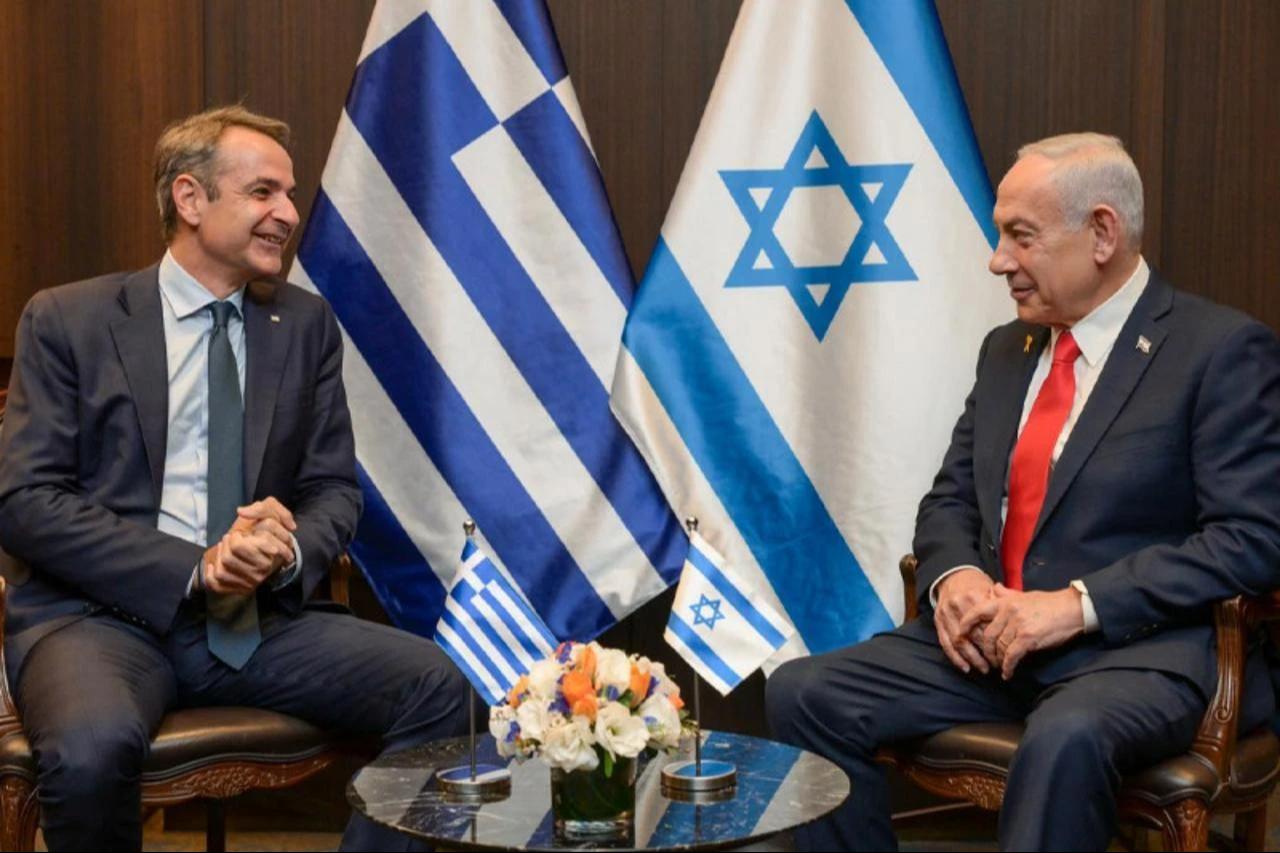

The geopolitical implications are equally important. Achilles Shield is the latest, and arguably one of the most significant, military elements in Israel’s developing strategy of strategically surrounding and constraining Türkiye through closer relationships with states on its periphery.
The Greece-Israel-GCA relationship originally developed heavily around energy, diplomacy and Eastern Mediterranean geopolitics. It has since acquired an increasingly substantial military component.
Joint exercises, training, intelligence cooperation, defense procurement and technology transfers are giving the relationship institutional depth.
From Ankara’s perspective, this matters because Achilles Shield does not emerge in isolation. It reinforces a broader strategic geometry in which Israel is strengthening military relationships on Türkiye’s western and southern flanks.
This development can be characterizes as an emerging “re-containment” strategy directed toward limiting Türkiye’s regional room for maneuver.
Whether every component of Greek-Israeli cooperation should be interpreted explicitly as anti-Turkish is debatable; nevertheless, the cumulative military effect is difficult for Ankara to ignore.
Airpower could accelerate this trend even further.
Israel is already one of the world’s most experienced F-35 operators, while Greece is moving toward introducing the F-35 into an air force already modernized through Rafale and F-16V acquisitions.
Greek and Israeli air forces have also developed extensive experience exercising together and exchanging knowledge on airpower tactics and operational concepts.
The arrival of the F-35 in Greek service could therefore become another powerful catalyst for Israeli-Greek military integration. A shared fifth-generation platform creates opportunities extending beyond flying the same aircraft.
Mission planning, sensor fusion, electronic warfare, intelligence preparation, tactics development, maintenance concepts and network-enabled operations can all become areas for deeper cooperation. Israel’s considerable operational experience with the F-35 gives this relationship additional significance.
Achilles Shield further strengthens that interaction. A more capable ground-based air-defense system can reduce the burden placed on Greek combat aircraft for defensive missions, allowing Rafale, F-16V and eventually F-35 forces to concentrate more heavily on offensive counter-air, maritime strike and power-projection missions. The result is not simply stronger Greek air defense, but potentially a more flexible Greek airpower structure.
None of this makes Achilles Shield an impenetrable dome. Missile inventories remain finite. Radar geography creates gaps. Saturation attacks can overwhelm sophisticated defenses.
Expensive interceptors facing large quantities of cheaper drones and missiles create the familiar problem of “interception economics.” Even SPYDER and David’s Sling ultimately depend on adequate ammunition depth, resilient command networks and properly positioned sensors.
Yet these limitations should not obscure the larger development.
Achilles Shield is important precisely because it combines air defense, intelligence, early warning, networked warfare and geopolitical alignment. It connects Greece’s military modernization with Israeli technology and operational experience while potentially linking Greece and Greek Cyprus into a much broader Eastern Mediterranean sensor architecture.
For Türkiye, therefore, the question is no longer simply how many Barak, SPYDER, or David’s Sling batteries Greece will acquire. The more consequential question is what happens when those weapons, their sensors, Greek and Cypriot early-warning infrastructure, Israeli operational knowledge and eventually two cooperating F-35 communities begin functioning within an increasingly interconnected military ecosystem.
That is why Achilles Shield should be viewed not only as Greece’s new air-defense system, but as an emerging strategic architecture extending from the Aegean to Israel, with Türkiye directly in the middle.


 Set as preferred source
 Set as preferred source



 7 min read