

 Newsletters


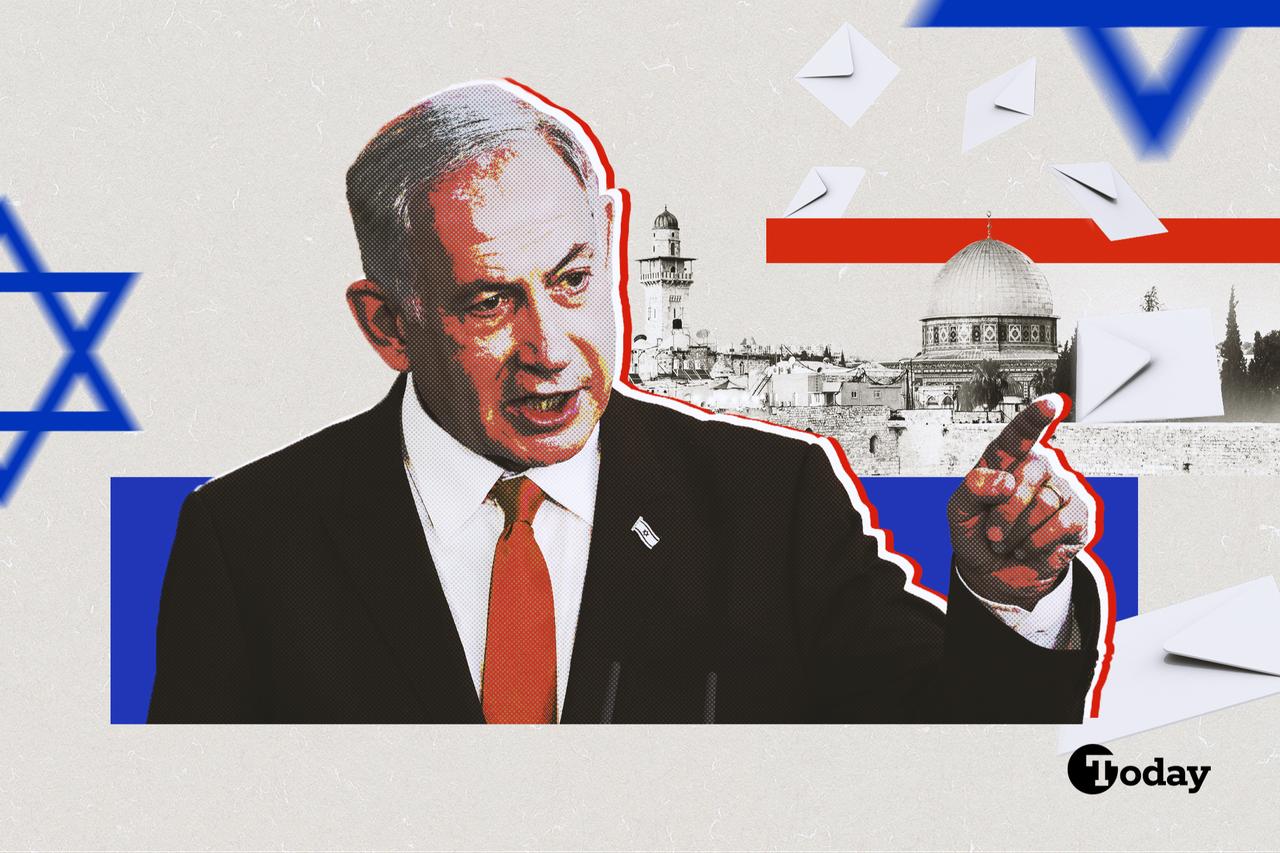


Israel's Prime Minister Benjamin Netanyahu has a problem no campaign consultant can spin away: he has run out of enemies.
Arafat is dead. Gaza is behind him. Iran didn't deliver the knockout he needed.
So as Israelis head to the polls on Oct. 27, Netanyahu has reached for the only playbook he's ever really run: find a threat, and ask voters if they can afford to ignore it. This time, the threat is Türkiye.
Israeli public has a chance to break the cycle of violence that Netanyahu has delivered so far, and promises for the next four years if he is elected once again.
It will be the first time that the public will have a clear opportunity to express its views primarily in the aftermath of the Gaza war and, subsequently, the war with Iran. The elections, scheduled for Oct. 27, will also serve as an indicator of the public's acceptance of Netanyahu's actions to date.
Netanyahu's entry into Israeli politics dates back to 1988. After serving in diplomatic posts between 1982 and 1988, he returned to Israel and entered domestic politics in 1988, becoming a member of parliament.
During the 1991 Gulf War, his command of English and strong media presence made him one of Israel's leading spokespeople to the West, further increasing his popularity. In 1993, he won the leadership of the Likud Party and became the leader of the opposition.
By 1996, he had defeated Shimon Peres in the elections, beginning his first term as prime minister.
Given Likud's political roots, Netanyahu comes from the Revisionist Zionist tradition within the nationalist right. While he does not embrace the far-right or radical-right political views associated with figures such as Itamar Ben-Gvir and Bezalel Smotrich, he has not shied away from forming coalitions with them.
Furthermore, his hardline stance on the Israeli-Palestinian issue and toward Iran suggests that Netanyahu adheres to a political approach that thrives on chaos and tension.
Looking at his electoral strategies, it is clear that Netanyahu has consistently employed a strategy of polarization, heightening perceptions of threat and framing elections as an "us versus them" conflict.
He has cultivated a political identity centered on security and national defense, a narrative that has sustained his electoral success for 30 years.
However, it is evident that he now needs bigger enemies to fight.
Having lost support, particularly in global public opinion, Netanyahu is now attempting to create new enemies, such as Palestine or Iran.
This time, in his bid to win the election, Netanyahu has pitted himself against President Recep Tayyip Erdogan and Türkiye, hoping to regain the votes that, as the polls suggest, he appears to have lost through the same polarizing strategy.
Let us examine in detail how Netanyahu has employed this politics of chaos to shape Israeli public opinion from the past to the present.
The Oslo Peace Accords formed the backdrop to the 1996 elections. Former Prime Minister Yitzhak Rabin, who initiated the peace process and shook hands with Yasser Arafat, was assassinated in 1995 by Yigal Amir, a far-right Jewish extremist.
Peres, who succeeded Rabin, based his main political narrative on continuing the process Rabin had started and leading Israel toward a more secure and regionally integrated future through an agreement with the Palestinians.
Netanyahu, on the other hand, approached the Oslo process with far greater skepticism. However, directly saying, "I will stop the peace process," was politically risky. Netanyahu's campaign therefore reframed the Oslo debate around a different question: "Do you want peace? Does the peace process pursued by Peres really keep you safe?"
It was therefore significant that one of Netanyahu's campaign slogans was "Netanyahu–Making a Secure Peace." In this way, he did not leave the concept of "peace" to Peres; instead, he redefined peace through the lens of security.
Likud used images of Peres and Yasser Arafat together in its television commercials. One commercial explicitly displayed the message, "Peres and Arafat, a dangerous combination for Israel," over their images. Other commercials showed Arafat delivering a speech, followed by images of him with Peres, claiming that this would lead to the division of Jerusalem.
In 1996, Netanyahu, who would secure his first term as prime minister, came to power by crafting a heroic narrative within his own country, without seeking enemies abroad.
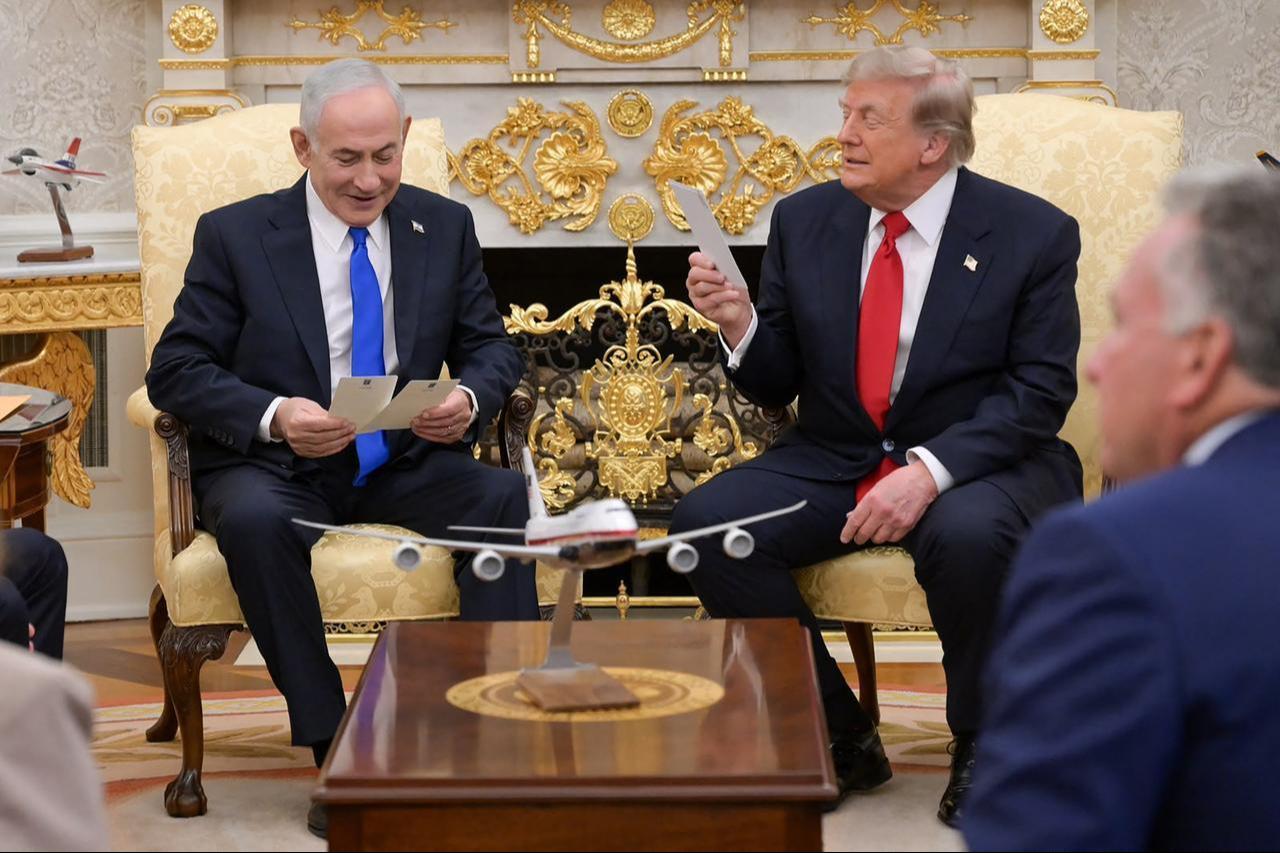

In the 2015 elections, Netanyahu's campaign, particularly in its final stages, turned to threat-based rhetoric aimed at mobilizing right-wing voters by invoking "the left + Arab voters."
In a video released on election day, he urged his supporters to go to the polls, saying, "Arab voters are coming to the polls in large numbers; leftist organizations are transporting them by bus."
This rhetoric framed the participation of Arab citizens not as ordinary democratic participation, but as a political threat that could bring an end to Netanyahu's and the right's hold on power. Netanyahu would later apologize to Israeli Arab citizens following the backlash triggered by his remarks.
In the broader context of the campaign, Netanyahu highlighted the possibility that the center-left Zionist Union, led by Isaac Herzog, could replace his government with the support of Arab parties.
Thus, the political divide shifted from a simple "Likud versus center-left" rivalry to a broader dichotomy of "right-wing rule versus a government supported by the left and Arab political forces."
In the 2019 elections, Netanyahu continued a similar strategy, this time linking Benny Gantz and the centrist Blue and White alliance with Arab parties.
One of the campaign's key messages was that Gantz would need the support of Arab parties to oust Netanyahu and that, as a result, a center-left government would be dependent on these parties.
Netanyahu, who had apologized to Arab citizens after the 2015 elections, appeared to forget his earlier remarks and framed the possibility of Arab parties gaining decisive influence over the government as a risk to Israel's security and the Jewish character of the state.
Thus, the choice before the electorate shifted from simply "Netanyahu or Gantz?" to "A right-wing government under Netanyahu or a Gantz government dependent on the support of Arab parties?"
This strategy also had a longer-term consequence. According to the Israel Democracy Institute, Netanyahu's years-long positioning of Arab parties not as legitimate coalition partners but as actors who should be excluded from the government-forming equation made cooperation with them politically costly for centrist and center-left parties.
Therefore, the rhetoric in 2019 was not only aimed at mobilizing right-wing voters; it also served to delegitimize Gantz's potential coalition options, reinforcing the perception that "a stable and legitimate government cannot be formed without Netanyahu."
More recently, Netanyahu has faced much more difficult times, both domestically and internationally. First and foremost, corruption investigations have come to the fore. He became the first Israeli prime minister to stand trial for corruption while still in office.
The victim narrative that Israel had sought to cultivate for many years lost much of its support in global public opinion amid the Palestinian conflict.
The genocide committed during the war, along with the marginalization of Palestinian supporters in the West and attempts to portray them as supporters of terrorism, negatively affected public opinion toward Netanyahu.
His pressure on the United States to become involved in the war with Iran over the Palestinian conflict led to a loss of support from the United States, Israel's biggest guarantor since its founding, while also negatively affecting the economic situation of other countries and exacerbating regional problems.
The recent economic difficulties faced by the US, particularly rising inflation rates, led to a significant loss of support both within the government and among the public.
The loss of global public support due to the Palestine War, the failure to achieve the desired level of relations with the U.S. due to economic considerations, and the failure to secure the desired gains despite causing thousands of deaths in the Iran-Iraq conflict have pushed Netanyahu behind in the polls ahead of the 2026 elections.
Having pursued a polarizing and exclusionary approach to winning elections throughout his 30-year political career, Netanyahu is now seeking a new path to victory. This path involves creating a new enemy.
Türkiye and President Erdogan, representing one of the region's largest political powers, are now at the forefront of Netanyahu's election campaign.
However, a crucial question arises for the Israeli people: Do they want a new enemy or a new prime minister? The answer awaits us on Oct. 27.


 Set as preferred source
 Set as preferred source


 2 min read
 1 min read


