Newsletters




This article was originally written for Türkiye Today’s weekly newsletter, Saturday's Wrap-up, in its Jan. 17, 2025, issue. Please make sure you subscribe to the newsletter by clicking here.
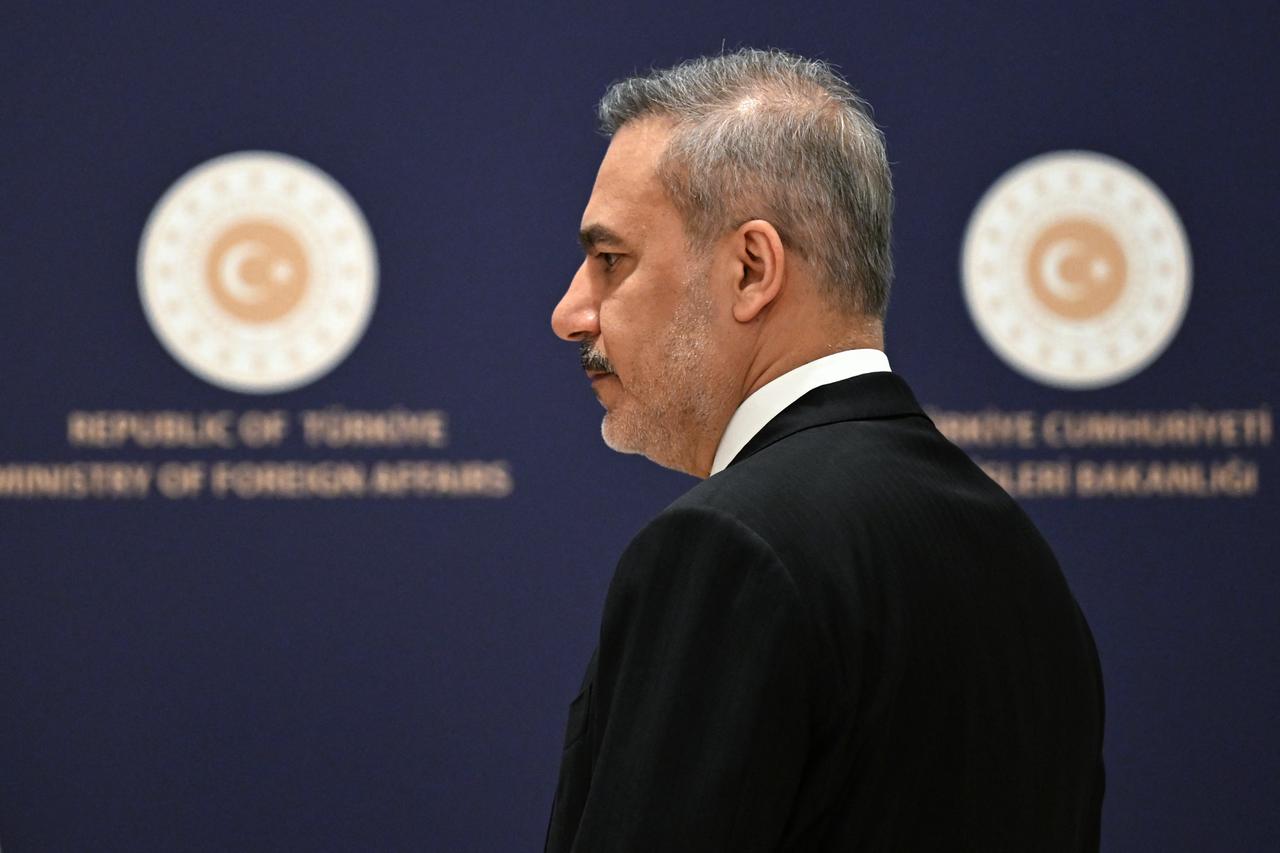
Foreign Minister Hakan Fidan held an unusually broad-based press conference in Istanbul on Jan. 15, inviting representatives from pro-government outlets, opposition media and the international press alike. This was the second time Fidan had hosted such a year-in-review format, complete with extended Q&A. Last year, Fidan's speech was longer, and there was a short Q&A session with far fewer journalists. This time, there was a significant difference.
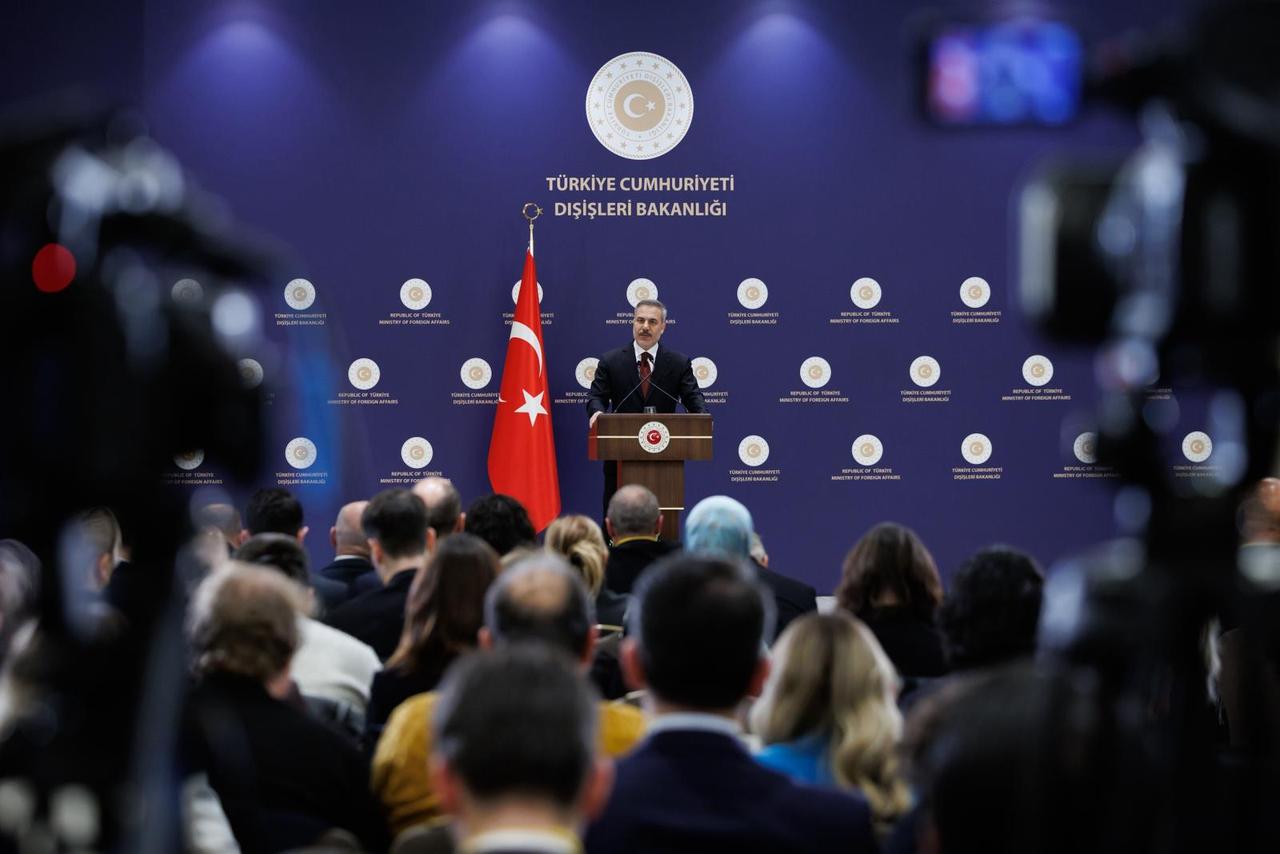

Notably, the guest list for the press conference went beyond journalists to include select foreign policy analysts and commentators. A reporter from a staunchly anti-government outlet, Cumhuriyet, was able to ask a question. That alone was praised as a sign of openness and transparency by many colleagues, even if it remains an uncommon practice rather than a new format.
Critical foreign policy debates, after all, have always been the few arenas where Türkiye’s deep domestic polarization softens. I would not read this as the beginning of a broader shift in the government’s communications strategy.
The format itself felt less like a press briefing and more like a PhD seminar. Fidan walked through major regional files with methodical depth, outlining historical trajectories, structural constraints and second-order effects rather than resorting to declaratory soundbites. It was very useful to journalists. Just a note about Fidan’s academic career: In his master’s thesis at Bilkent University, Fidan argued that Turkish intelligence has been a domestic security apparatus like the FBI and MI5, calling for a reform in Türkiye’s intelligence apparatus to make it more efficient and proactive in foreign operations. That is precisely what he went on to do as Türkiye's top spy. Let’s move back to the press conference.
Iran dominated the substance of the discussion. It was the very first issue raised and returned repeatedly throughout the session, despite the Foreign Ministry spokesperson’s request before the press conference that journalists avoid asking the same question in different formulations. That persistence itself was revealing. Iran’s trajectory has become the central strategic uncertainty for Ankara, and Fidan made little effort to downplay it. His message was clear and unusually direct: Türkiye opposes any military intervention against Iran. This stance is clearly not driven by affinity toward Tehran or ideological alignment, but by an assessment of risk accumulation.
From Ankara’s perspective, Iran is not a distant problem set. It is a neighboring system whose internal collapse would have immediate and multidirectional consequences. We saw how Türkiye suffered extensively from adventurous and unclear objectives in Syria for more than a decade.
The concern is not limited to regime change as an abstract concept, but to the manner and speed of potential transformation. A sudden collapse, particularly one facilitated by external actors, would almost certainly create power vacuums far beyond Iran’s borders. Militant networks, long suppressed or contained within Iran’s complex security architecture, would swiftly emerge.
It is not surprising that Türkiye informed Iran of PKK militants crossing the Iranian border in recent weeks. In this sense, Ankara views interventionist enthusiasm elsewhere as strategically shallow. A breakdown in Iran could activate dormant terrorist ecosystems across an exceptionally wide geography, producing ripple effects from the Caucasus to the Levant.
Another analysis by Deniz Karakullukcu framed the issue as a structural dilemma: both extremes, Iran’s full normalization into Western systems and Iran’s deep instability, carry risks for Türkiye. Normalization could intensify geopolitical competition and alter regional balances, while collapse would generate unmanaged security spillovers. The implication is that Ankara is not choosing between opposing camps, but attempting to prevent outcomes over which it would have little control.
Türkiye does not seek to shield Iran from pressure, a potentially risky move, nor does it subscribe to the idea that an external intervention can engineer regional order. Stability, however imperfect, transactional, or uncomfortable, remains preferable to externally induced chaos.


 Set as preferred source
 Set as preferred source


 7 min read