Newsletters




This article was originally written for Türkiye Today’s weekly economy newsletter, Turkish Economy in Brief, in its Mar. 16 issue. Please make sure you are subscribed to the newsletter by clicking here.
Türkiye’s markets started the first two months of 2026 on a positive note, but the rise in geopolitical risks in March has brought a more cautious outlook.
The scale of the conflict that erupted in the Middle East was not initially expected to reach this level. However, it has since evolved into a protracted confrontation.
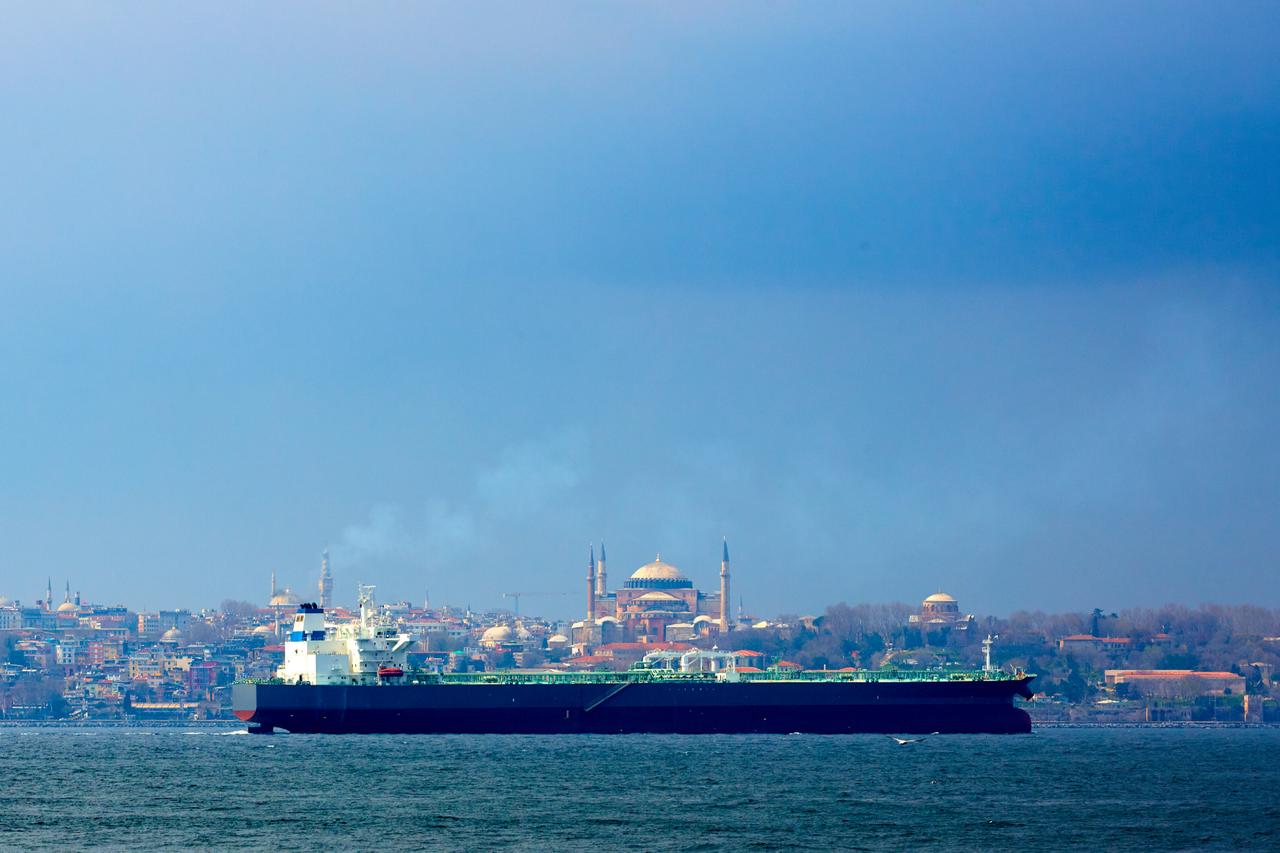
Traffic in the Strait of Hormuz has stopped, and ships trying to pass through are being targeted. As a result, there have been sharp price increases in key commodities that Türkiye imports, particularly oil, as well as gas and fertilizers.
The price of Brent crude ended last week at $103.80 per barrel, holding above the psychological $100 threshold. The International Energy Agency’s move to release 400 million barrels from strategic reserves has not been enough. The reason is clear: a strait through which 20 million barrels pass every day has effectively been blocked.
Moreover, after markets closed on Friday, the United States targeted Kharg Island, known as the main terminal handling about 90% of Iran’s oil exports. Uncertainty continues to loom as the new week begins.
Turning to Türkiye’s markets, the Central Bank of the Republic of Türkiye (CBRT) left interest rates unchanged at its meeting last week, in line with expectations. However, two key messages stood out in the decision statement.
Associate Professor Filiz Eryilmaz from Uludag University’s Faculty of Economics noted that the phrase “the magnitude of steps,” which previously left the door open to rate cuts, was removed from the statement.
According to her, this is a clear signal that the central bank is not currently leaning toward cutting interest rates.
She also recalled that earlier statements included wording suggesting tightening could occur if inflation moved away from the target. In the latest statement, however, the emphasis shifted to the possibility that monetary policy could be tightened if recent developments lead to a lasting deterioration in the inflation outlook.
According to Eryilmaz, the message to the market is essentially this: if geopolitical risks push inflation higher, the central bank may raise interest rates.
High oil and commodity prices have already started to influence expectations for inflation and policy rates in Türkiye.
JPMorgan raised its end-2026 inflation forecast from 25% to 26.4%, and its policy rate forecast from 31% to 32%. The bank also said it does not expect a rate cut from the central bank at its April 22 meeting and predicted that Türkiye’s current account deficit could reach $42 billion in 2026.
Treasury and Finance Minister Mehmet Simsek also acknowledged that rising energy prices driven by geopolitical tensions could push the 2026 current account deficit above program projections, but said the situation remains manageable.
At this stage, it appears that economic calculations for 2026 are being reassessed, with new balances likely to form accordingly.
After overnight interest rates (annualized) climbed to 40%, returns on Turkish lira deposits and money market funds have increased somewhat. Meanwhile, the stock market seems likely to remain in a wait-and-see mode within a certain range.
Technical signals from the BIST 100 index suggest a consolidation phase between 12,200 and 14,500 in the short term.
For Türkiye, the main focus now is the course of the war in the Middle East and oil prices. Inflation data to be released in March and April has also become more critical.


 Set as preferred source
 Set as preferred source



 4 min read