Newsletters


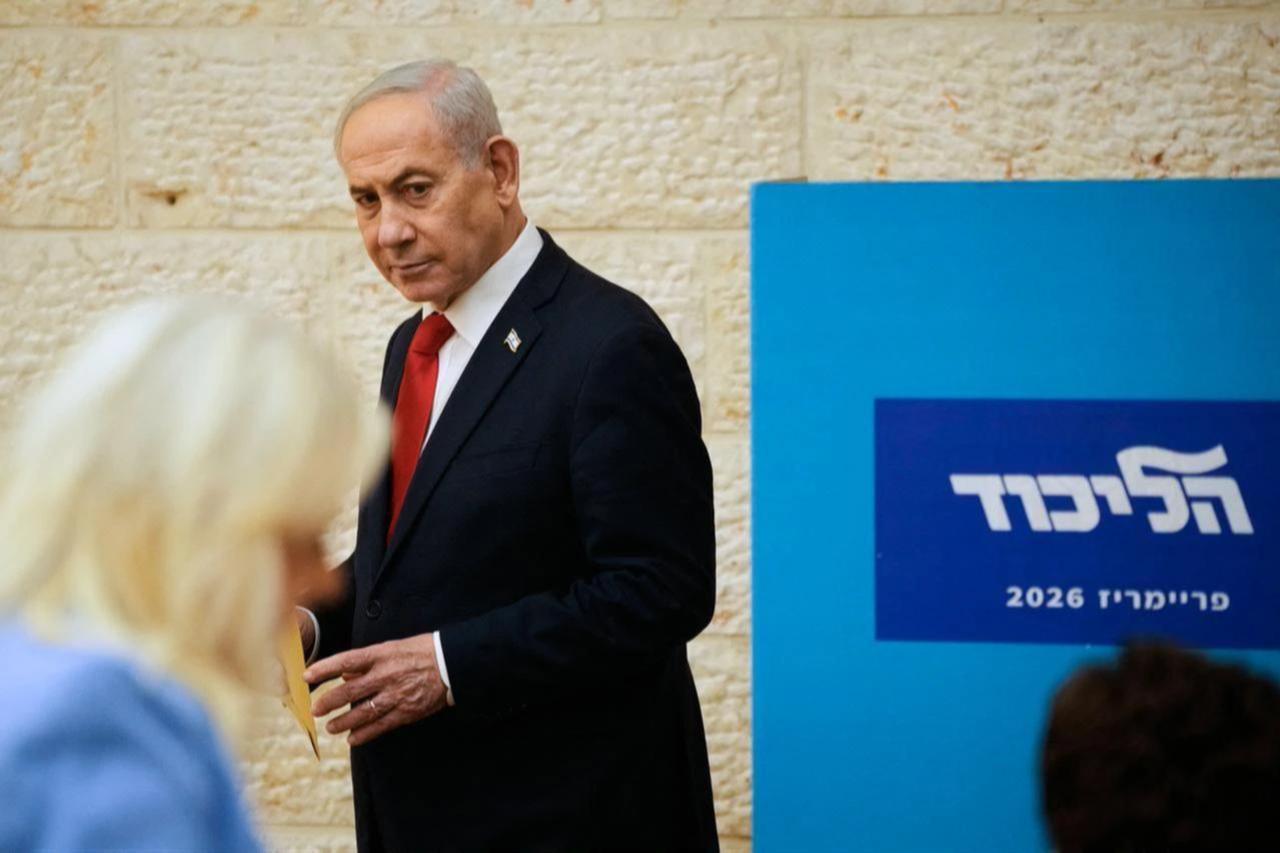


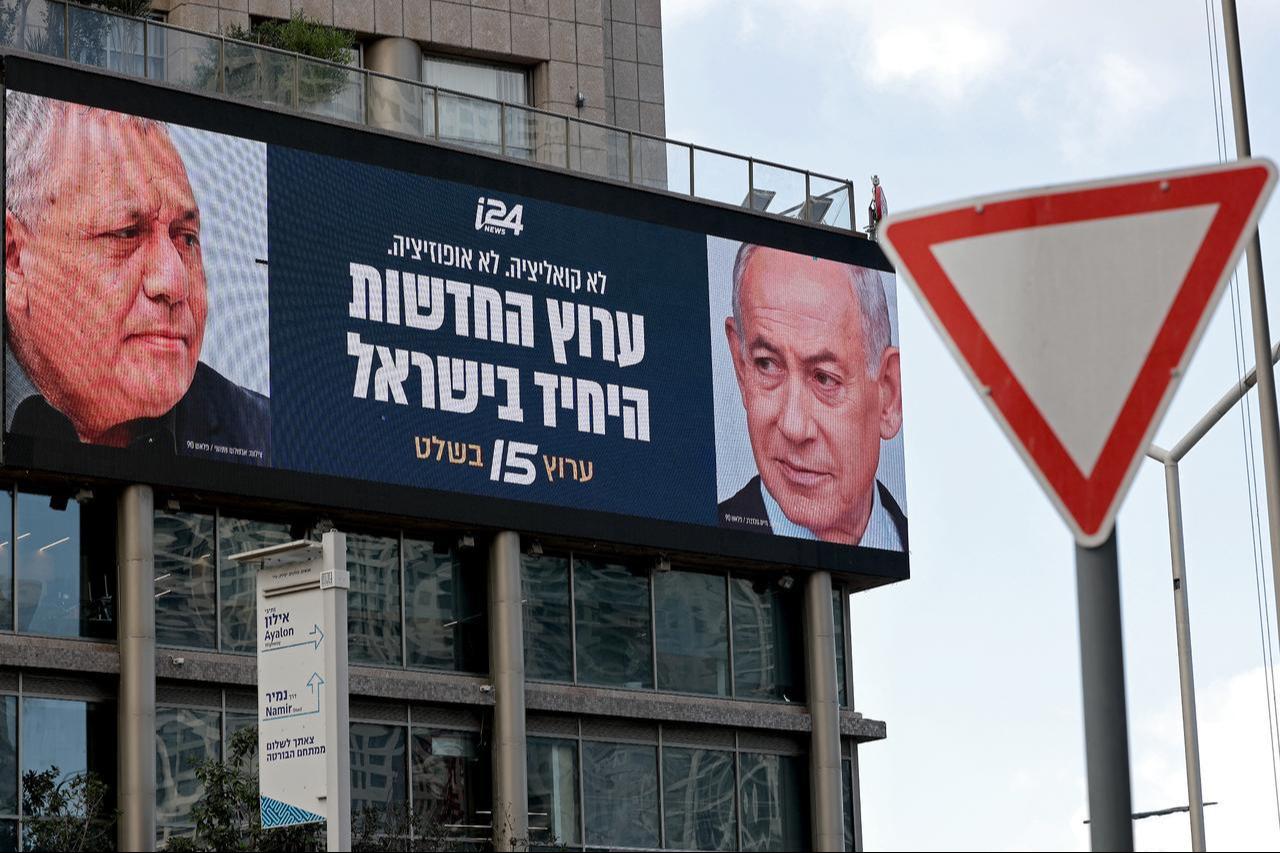
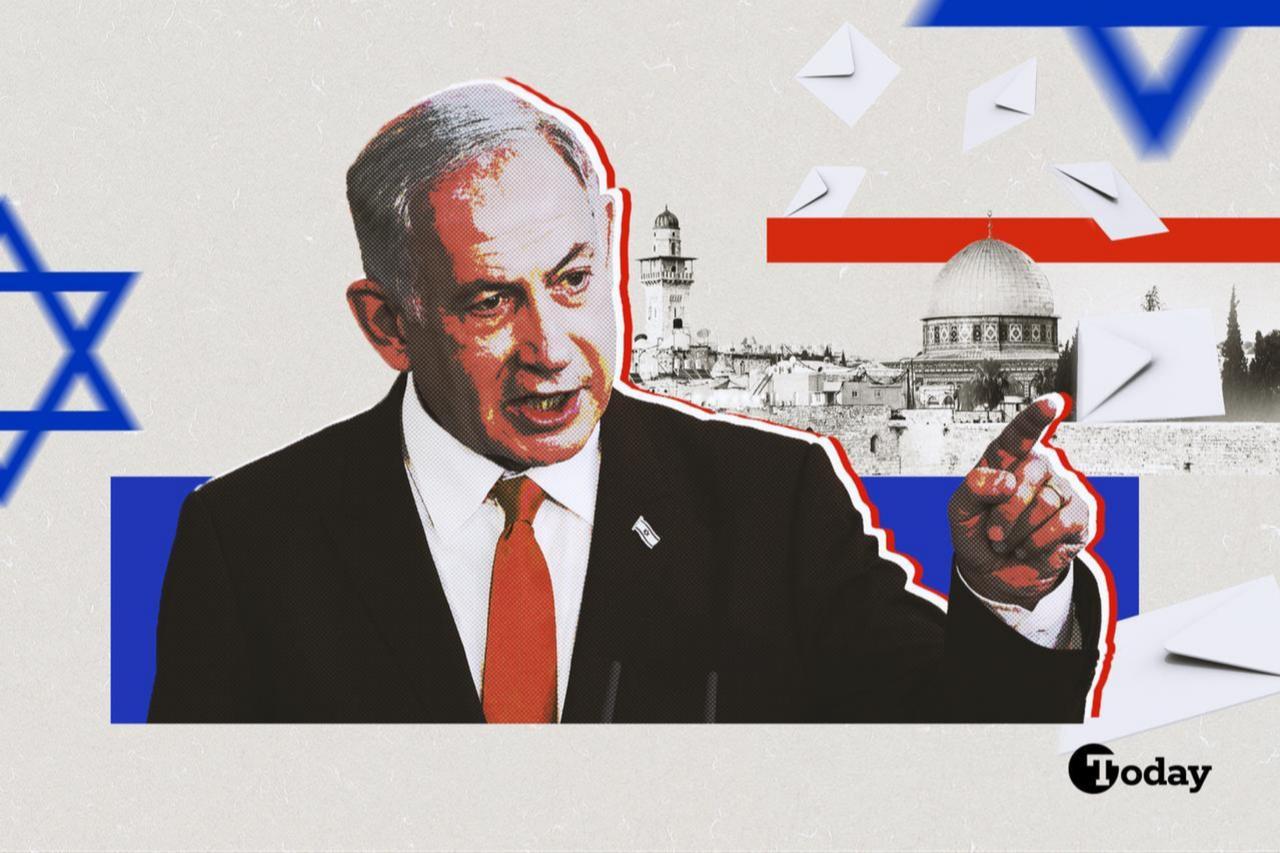
Israel heads to the polls on Oct. 27, and everyone’s already calling it a Benjamin Netanyahu vs Gadi Eisenkot showdown. Fine. But the real fight starts after the votes are counted, when the coalition math begins, and the country finds out who actually gets to govern.
The political process that unfolded in 2021 seems to repeat itself. Following the March 2021 elections, the eight-party coalition government formed under the leadership of Naftali Bennett and Yair Lapid managed to survive for approximately a year and a half, yet it went down in history as the most liberal government Israel had ever seen.
The primary objective of bringing together eight parties ranging from the far right to the far left was to prevent Netanyahu from remaining in power.
One of the most significant features of this government was that, for the first time in Israeli history, an Arab party joined the governing coalition.
Despite its religious-conservative orientation, which distinguished it from other Arab parties with nationalist or left-wing orientations, the Ra’am Party, led by Mansour Abbas, became one of the key actors in the historic effort to remove Netanyahu from power.
According to current opinion polls, Mansour Abbas and his Ra’am Party are once again expected to play a critical role in the formation of an anti-Netanyahu government.
Established in the aftermath of the Oct. 7 war and led by former Chief of General Staff Gadi Eisenkot, the Yashar Party has emerged as Likud’s strongest challenger.
Eisenkot also served as a military adviser to Ehud Barak between 1999 and 2001.
In terms of its Zionist outlook, Eisenkot does not fundamentally differ from Netanyahu.
However, he opposes Netanyahu’s cooperation with ultra-Orthodox parties and their policy of exempting ultra-Orthodox men from military service.
His political platform calls for both ultra-Orthodox men and Arab citizens to be required to perform military service. His slogan emphasizes changing not only the government but also the country’s political trajectory.
He has identified four core principles as non-negotiable elements of a government under his leadership: establishing a state commission of inquiry into the events of Oct. 7, introducing compulsory military service for everyone, including ultra-Orthodox men and Arab citizens, limiting the prime minister’s tenure to two terms, and ensuring genuine judicial independence.
The only Arab party that appears to meet Eisenkot’s conditions is the Ra’am, led by Mansour Abbas. According to Eisenkot’s plan, his potential coalition partners would include Beyachad, the political alliance associated with Naftali Bennett and Yair Lapid; the Democrats, a movement formed by Yair Golan through the unification of the Labor Party and Meretz; and Yisrael Beiteinu, led by Avigdor Lieberman and supported largely by Russian-speaking Jews.
However, forming a government with these partners would be difficult without the support of Arab parties. Among the Arab political parties, Hadash, Balad, and Ta’al stand out as left-oriented formations.
They contest elections under the banner of the “Joint Arab List” and are less willing than Ra’am to cooperate with the Israeli state. Ra’am, by contrast, runs under the banner of the “United Arab List” and is the only Arab political formation willing to accept Eisenkot’s conditions.
According to Mansour Abbas, Arab citizens can benefit more concretely from state resources by participating in government, particularly in areas such as housing, infrastructure and healthcare.
Although other Arab parties regard Abbas’s approach as opportunistic, Ra’am appears to have opened up a new political path for Arab society by giving it experience in coalition politics.

None of the parties with Zionist or ultra-Orthodox orientations support the establishment of an independent Palestinian state.
The Oslo peace process is effectively dead. In a sense, its demise is also connected to the decline of the Israeli Left, whose political existence had become closely tied to the Oslo process.
The Democrats, currently led by Yair Golan, represent the successor to the Labor Party, which helped establish the state and governed Israel for many years. According to opinion polls, the party has the potential to win ten or eleven seats in the Knesset.
The Democrats can be described as the only political formation that opposes settlement expansion and supports the establishment of a Palestinian state.
Nevertheless, it can be argued that Mansour Abbas’s role within Arab society may become more consequential in the years ahead than that of the left-wing Zionist movement, which has traditionally supported normalization and the peace process.
Until 1977, political power in Israel was largely in the hands of Ashkenazi Jews. The Labor Party, which dominated the country during this period, pursued discriminatory policies toward the growing Mizrahi and Sephardic populations that had arrived through successive waves of immigration.
This situation changed in 1977 when Likud, whose leadership was also predominantly Ashkenazi, allied with these marginalized communities. The result was the downfall of approximately thirty years of Labor dominance.
Although Israeli politics during the 1990s was largely characterized by the rivalry between Likud and Labor, the far right now appears to be the clear political winner.
This shift can also be interpreted in demographic terms, as Ashkenazi Jews have lost relative demographic weight in comparison with the growing Mizrahi and Sephardic populations that arrived in Israel in later waves of immigration.
Meanwhile, ultra-Orthodox communities and Jewish immigrants from the former Soviet Union have also positioned themselves largely against the Left. These developments have given rise to a fundamentally different Israel, whose political transformation is still underway.
At the same time, the Arab population, currently estimated at 2.2 million, is expected to grow further in the coming years.
If this growing population succeeds in organizing itself around a common political platform and a coherent political strategy, Arab citizens could potentially follow a trajectory comparable to that of the Mizrahi population, which helped shift the balance of political power away from the Ashkenazi-dominated establishment.
By allying with the more liberal elements of the Israeli Left, Arab political forces might help prevent Israel from moving further toward a political precipice. In this regard, the political strategy pursued by Mansour Abbas and Ra’am will be of considerable importance.
It should also be noted that Western support for Israel is gradually eroding. The United Kingdom, along with many European countries, as well as Canada and Australia, have adopted increasingly critical positions toward Israel.
Meanwhile, the politically turbulent United States no longer has influential strategic figures of the stature of Henry Kissinger and Zbigniew Brzezinski, both of whom were Jewish intellectuals of Eastern European origin. An era has come to an end.
The figures who once helped shape Israel’s policies over a thirty- to forty-year horizon by aligning them with American strategic thinking are no longer present.
In this context, the Israeli Left, which played a foundational role in the establishment of the state, needs to develop new political strategies and explore more realistic and attainable ways of rescuing the country from the far right and religious fascism.
Arab political forces, which have increasingly entered coalition politics and established themselves as pivotal actors, are among the most promising potential partners in this effort.
The political leaders shaping Israel today largely belong to the political generation of the 1990s. Yet they have reached a point where they seem unable to define themselves beyond being either anti-Netanyahu or pro-Netanyahu.
Israeli politics has become mired in narrow disputes over issues such as ultra-Orthodox exemptions from military service, their limited participation in the workforce, and Netanyahu’s ongoing legal proceedings. Netanyahu has proved particularly adept at exploiting this political deadlock.
By presenting the prospect of war against Hamas, Hezbollah, and Iran as an ostensibly necessary solution, he sustains his hold on power by perpetuating a climate of crisis.
The forced continuation of the makeshift right-wing religious coalition under Netanyahu, sustained by what can be described as a politics of manufactured crises, is accelerating Israel’s decline.
Greater Arab participation in Israeli governance could also help the Left recover some of its lost strength by providing it with new political partners.
Reviving the Madrid and Oslo peace processes, enabling Palestine to achieve independence, and reducing tensions between secular and ultra-Orthodox communities within Israel all require entirely new political alliances, formations, ideas, and even ideologies within Israeli politics.
The composition of the anti-Netanyahu coalition that may emerge after the upcoming elections, the prospects for a second experiment in Arab participation as a coalition partner, and the way Jewish political forces respond to this potential arrangement will all play a decisive role in determining Israel’s future.


 Set as preferred source
 Set as preferred source


 3 min read
 1 min read