Newsletters


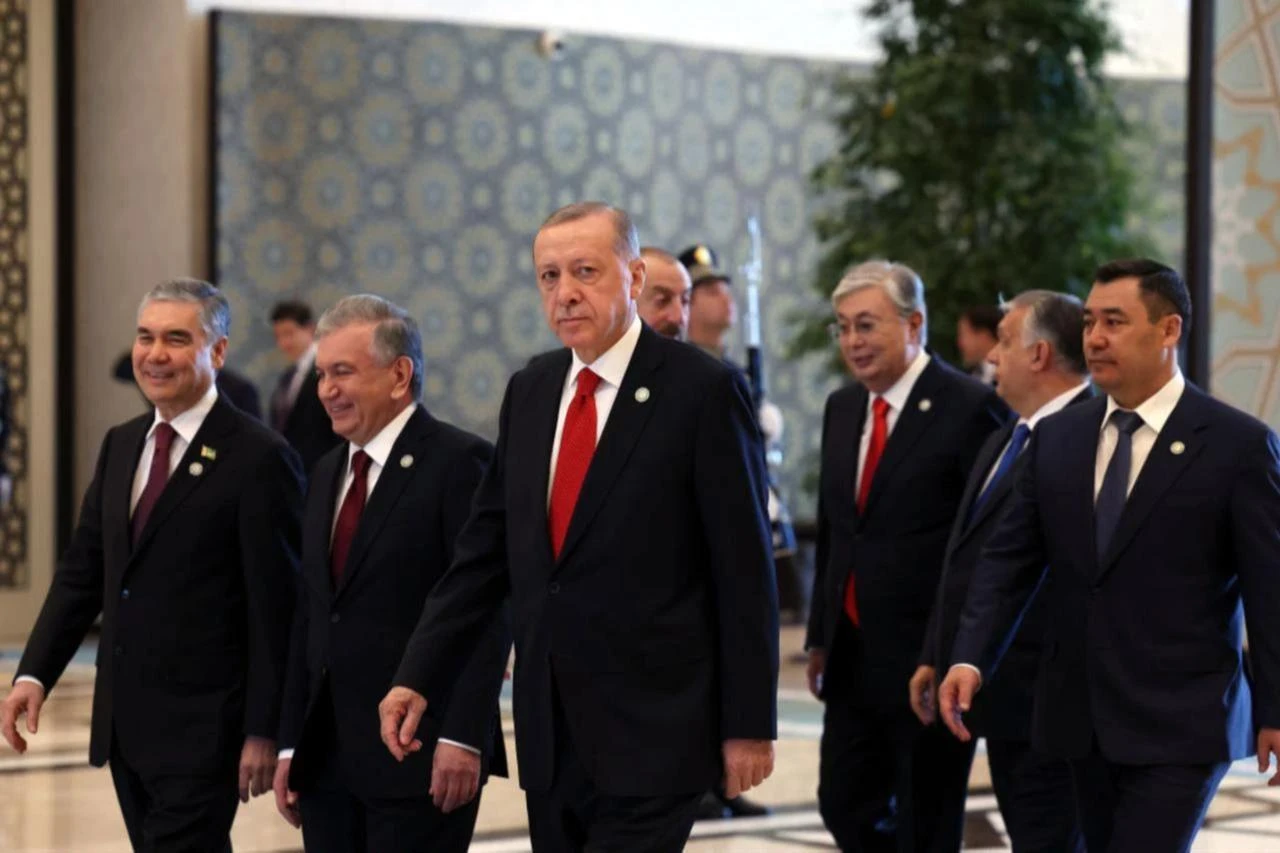


In Baku this July, intelligence chiefs from six Turkic states signed a memorandum you probably haven't heard of. Nothing about it was designed to be loud.
It's a small, quiet sign of something larger. The Organization of Turkic States (OTS) is moving from talk to tactical action, building a unified intelligence network to shield regional transport hubs and protect members' strategic autonomy from rising power rivalries.
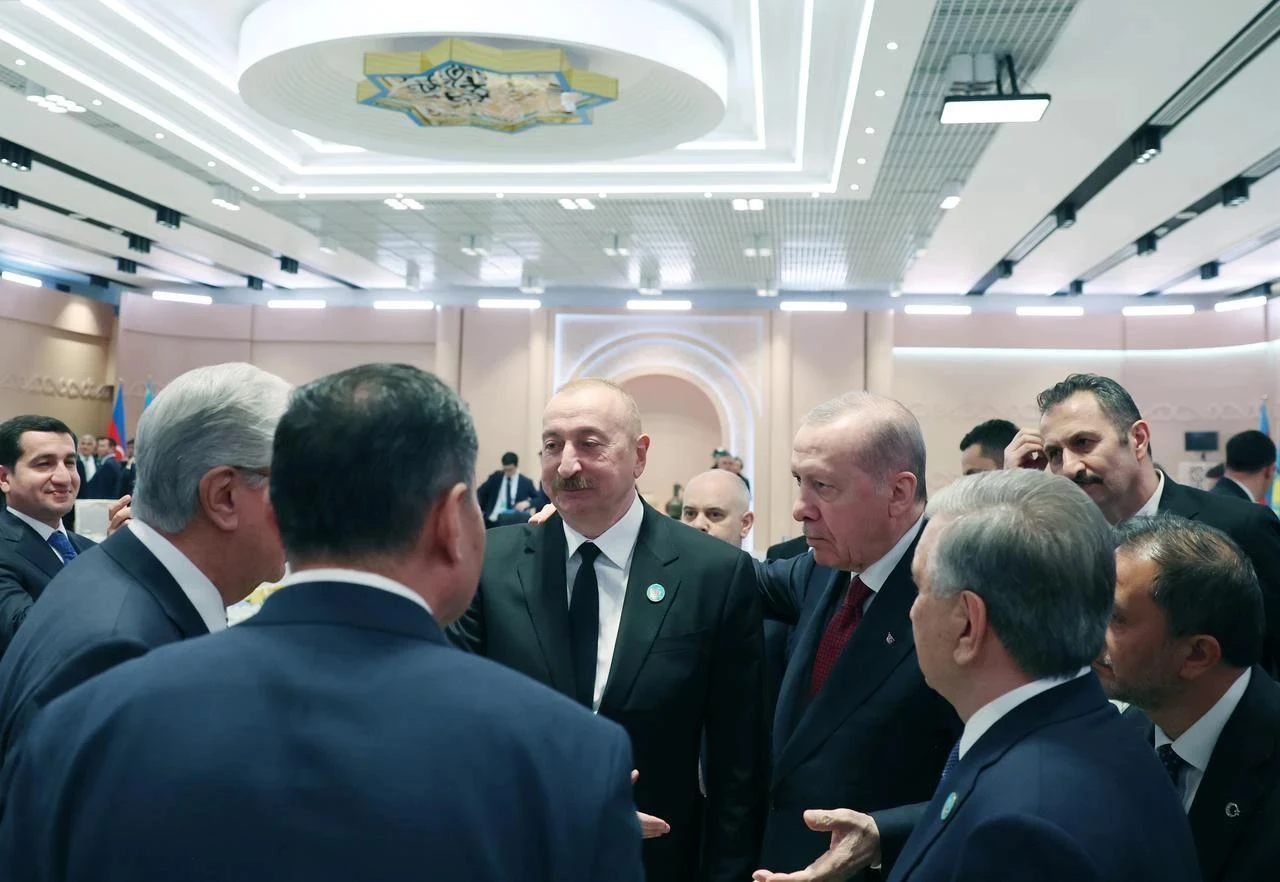
Recent high-level institutional engagements within the OTS framework demonstrate that intelligence and security cooperation among member nations is transitioning from consultative dialogues to concrete operational mechanisms.
A notable testament to this momentum was the 27th General Assembly of the Conference of Turkic States' Special Services, held in Khankendi, Azerbaijan, in November 2025, which focused on the vital theme of securing international transport routes.
Building upon this operational trajectory, the 2nd Meeting of the Heads of OTS Financial Intelligence Units (FIUs) in Baku on July 10, 2026, resulted in a landmark Memorandum of Understanding establishing the OTS FIU Cooperation Platform.
These institutional milestones reflect a broader, imperative trend. In today’s global order, shaped by the realignment of global power competition, the Eurasian Heartland retains its character as one of the primary gravity centers of strategic equilibrium. Regional powers' expanding influence threatens to constrain Central Asian states' multi-vector foreign policies and strategic autonomy.
This dynamic directly impacts the political balance and connectivity architecture in the depths of Eurasia. In this geopolitical context, an intelligence architecture built on Türkiye’s historical ties and growing defense capabilities can serve as a primary guarantor of regional stability.
As global competition reshapes Eurasia, regional security remains caught between competing international norms and expanding spheres of influence. Under this pressure, Central Asian states face an urgent imperative to consolidate their sovereignty and preserve strategic equilibrium.
As a key strategic pivot bound by a shared identity and history with the Turkic world, Türkiye can offer these fraternal nations a framework for constructive balancing through intelligence cooperation—enhancing their sovereign resilience without creating strategic risks or forcing direct confrontation with major powers.
Consequently, Ankara is building a national, effective, and constructive balancing function that serves regional peace and stability across the Eurasian Heartland.
Ankara's defense deals—including tech transfers and joint production with Kazakhstan, Kyrgyzstan, and Turkmenistan—are pulling these ties closer than ever. It's a shift away from old dependencies on regional powers, and toward a Turkic bloc that can build its own capacity, defend its own borders, and fight terrorism on its own terms.
That's why building lasting intelligence ties matters so much for stability across Eurasia. Unlike rigid defense or security pacts, which can provoke pushback from bigger powers, flexible intelligence networks give countries real-time warnings and security, without tying their hands or forcing them to pick sides.
By its very nature, intelligence cooperation is a strategic partnership built on deep mutual trust, as it touches the single most sensitive domain of national sovereignty.
The phenomenon of intelligence cooperation is driven primarily by three key factors: shared transnational security crises that compel agencies to align, external pressures stemming from global power competition, and the institutional trust built through sustained, long-term engagements.
Sustaining such cooperation relies on strict operational, technical, and institutional protocols. Sanitization procedures protect sources and methods, while the Third-Party Rule prevents unauthorized dissemination. Technically, fusing SIGINT, HUMINT, and IMINT against defined warning problems provides a robust early-warning shield.
Ultimately, standardizing terminology and building a shared intelligence culture enhances interoperability, creating an effective defense against asymmetric threats.
Owing to their intrinsic flexibility, agile intelligence cooperation mechanisms yield far greater strategic utility than bulky security or defense alliances.
Unlike formal security pacts, which bring heavy bureaucracy and risk of provoking regional powers, intelligence cooperation operates discreetly through flexible networks based on the need-to-know principle. This enables regional states to establish a collective early-warning mechanism against asymmetric threats, radicalization, and hybrid warfare tactics without compromising their sovereign sensibilities.
Ultimately, this architecture constructs a highly cost-effective, dynamic, and sustainable security layer through real-time information flows and preventative capacity, all without escalating regional tensions.

 1 min read
For Türkiye, this engagement provides vital strategic leverage, reinforcing its role as an essential power both globally and regionally. Intelligence fusion networks established between the National Intelligence Organization (MIT) and regional services might allow asymmetric risks—such as Daesh-Khorasan (Daesh-K) activities originating from Afghanistan and foreign terrorist fighter mobility—to be neutralized at their source before reaching the borders of Türkiye. In effect, the perimeter of Turkish national security becomes anchored in a multi-layered defense line extending into the Eurasian Heartland.
In the regional equation, this mechanism might offer strategic diversification for Central Asian states navigating external pressures. Deepening cooperation built on shared historical and cultural trust expands Central Asian states' maneuverability, helping eliminate single-source security dependencies.
Functioning as a geopolitical bridge between the Transatlantic alliance and the Eurasian continent, Türkiye stands as a strategic pivot state capable of influencing global balances.
In a demanding conjuncture where the NATO 2022 Strategic Concept highlights challenges originating from Russia and China, and international frameworks like the US Strategy for Central Asia (2019–2025) aim to bolster regional strategic autonomy, border security, and independence, a structured intelligence cooperation mechanism can dismantle legacy military-industrial monopolies.
Furthermore, it opens a significant venue for interoperability aligned with the Alliance’s Defense and Related Security Capacity Building (DCB) Initiative and international security standards.
Ankara’s intelligence-driven engagement might also empower Turkic capitals to strengthen sovereign resilience, pursue hedging, and soft-balance without provoking Moscow or Beijing. Consequently, Türkiye might safeguard regional autonomy while serving as a constructive lever for broader Transatlantic stability across Eurasia.
An independent intelligence architecture that Türkiye could establish with Central Asian states would represent a vital strategic gain capable of addressing Eurasian geopolitical vacuums.
To realize this potential, Ankara should deepen intelligence-focused bilateral integrations and integration within the OTS, align prospective intelligence fusion on terrorism and organized crime with core national security priorities, and extend physical and cyber defenses to Middle Corridor transit networks.


 Set as preferred source
 Set as preferred source


 1 min read