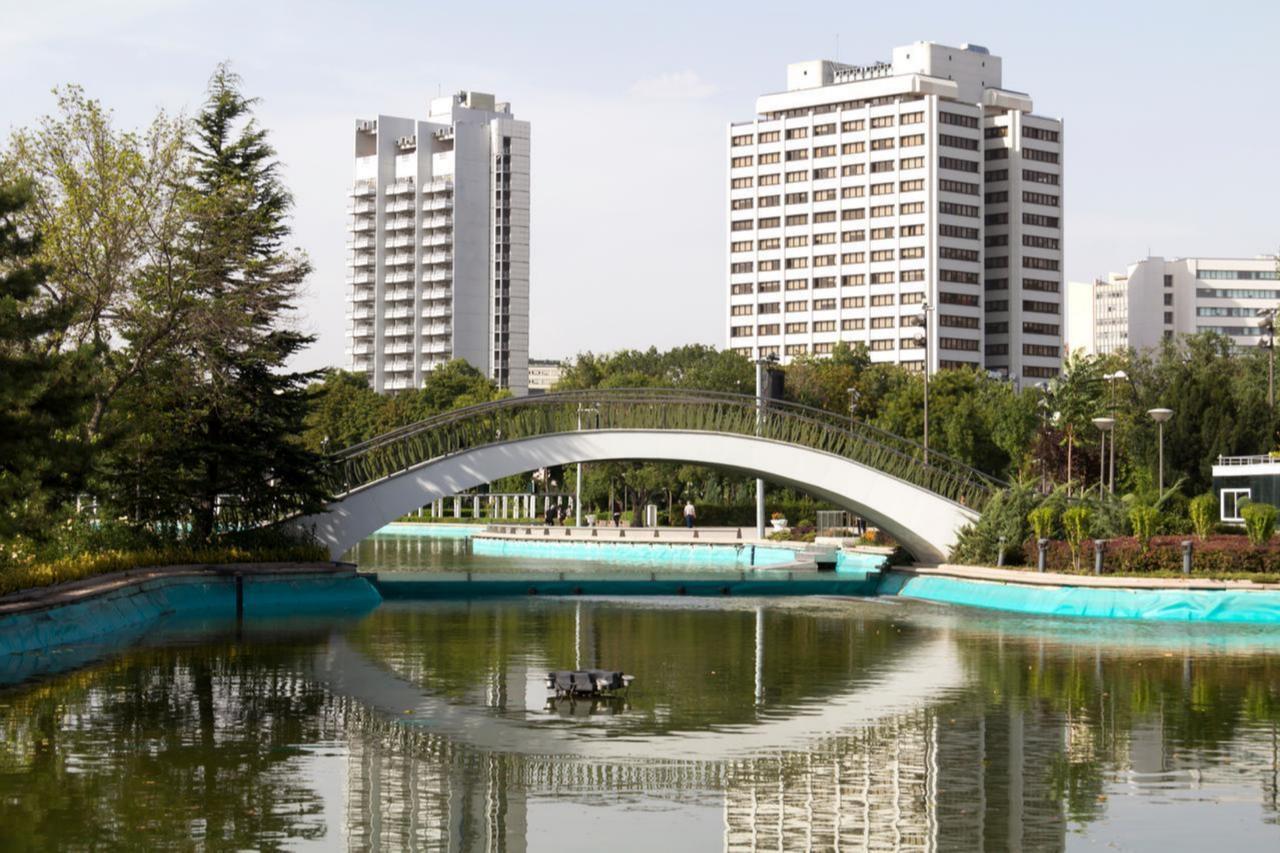
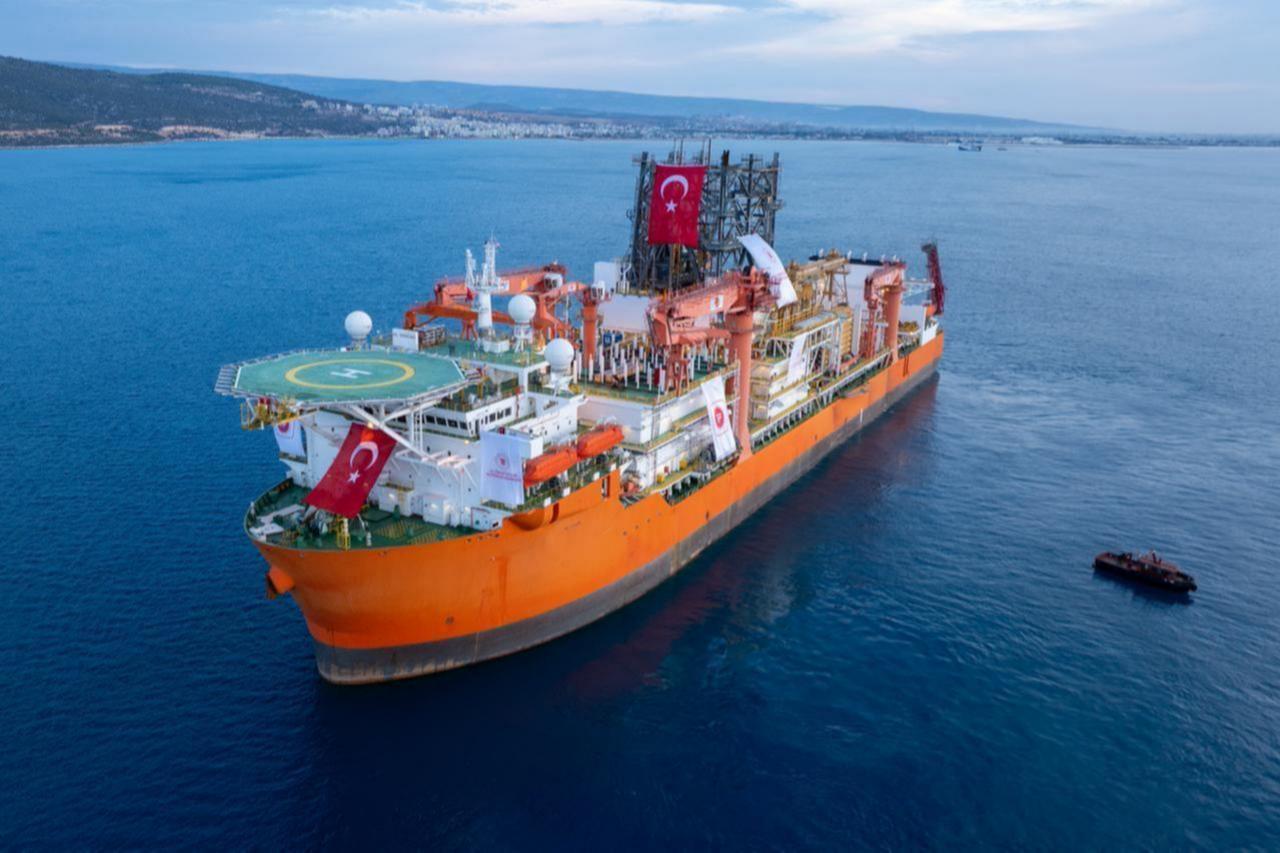
The Erdogan administration delivered a standout NATO summit in Ankara last week.
For me, that was always going to be the case, as Türkiye excels at hosting conferences, a reflection of Turks' great hospitality; it's in their DNA.
But beyond the logistics, President Recep Tayyip Erdogan appears to enjoy a great personal rapport with President Donald Trump—who was always going to be the loose cannon at this summit, as at any NATO summit. Managing to rein in that cannon, even temporarily, may have been Erdogan's single biggest achievement of the week.
Much of this can be put down to the personal chemistry Erdogan has with Trump—or perhaps the respect Trump has for him.
Partly, I think, this is because Trump likes winners, and Erdogan has an incredible track record of winning elections and holding power in Türkiye.
Indeed, Erdogan, like Trump, faces a two-term presidential limit looming in 2028, but no one believes that Erdogan will be constrained by that. Trump likely—undoubtedly, in my mind—craves a third term himself, if it can be engineered.
Trump also likes the fact that Erdogan is transactional and can compartmentalize relations with friends and potential foes. A prime example is his ability to maintain good relations with NATO allies while also working closely with President Vladimir Putin in Russia. Trump has great relations with Putin, ironically, now less so with NATO allies.
Importantly, though, for Trump, Erdogan brings him solutions, whether that is in Syria, supporting Trump's Gaza peace plan, helping negotiate a ceasefire deal with Iran, or over Ukraine.
He then gifted Trump the icing on the cake with the Armenia-Azerbaijan peace deal and the Trump Route for International Peace and Prosperity (TRIPP). Much of the hard slog for the latter deal had already been done by the prior Biden administration and the Europeans, but the Erdogan genius was in playing to Trump's sociopathic side and then gifting the eponymous transport route and acclaim for the peace.
Trump also, I think, respects Türkiye's hard-power military and tech industrial capabilities—its battle-hardened military and its tech lead in such areas as drones.
The contrast for Trump with the limp, woke Europeans, and the doing and delivering Turks is striking.
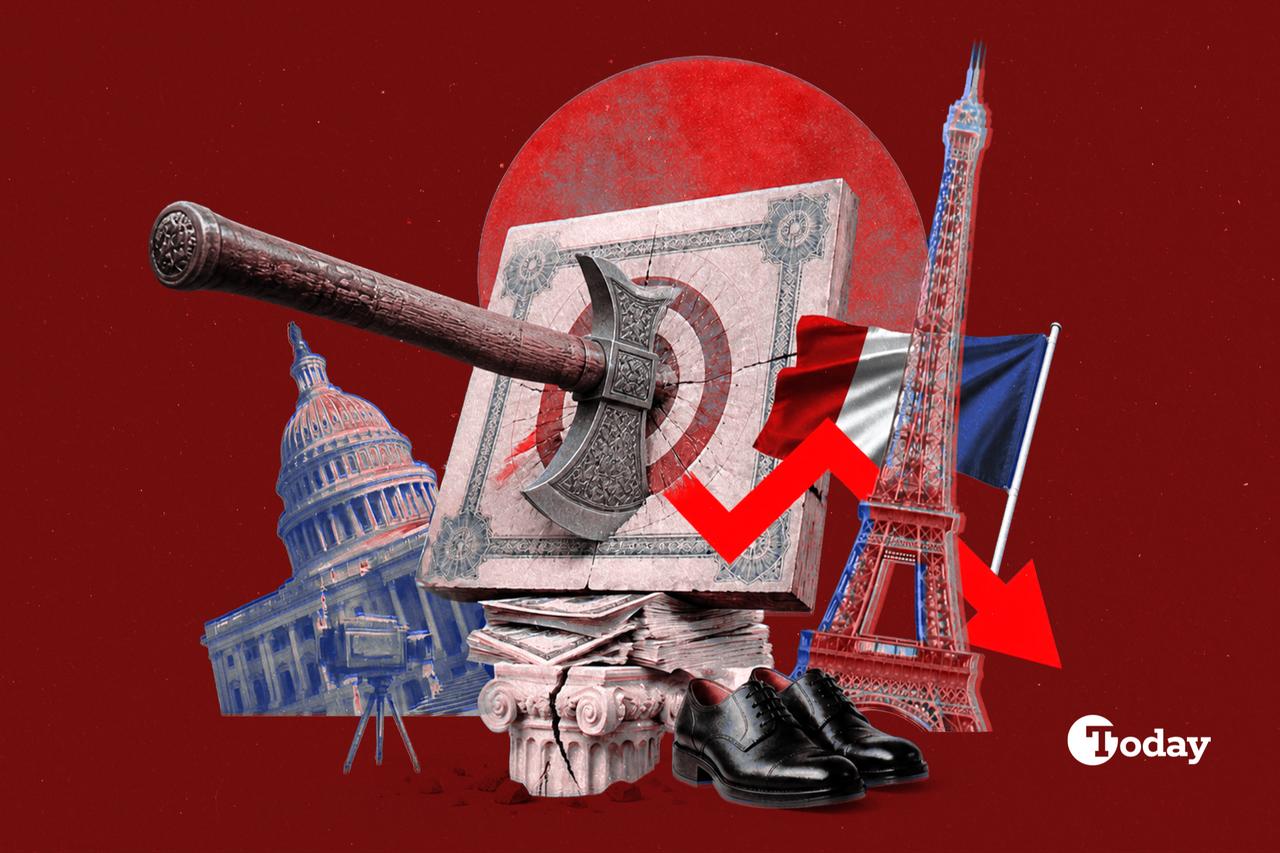
The big win for Erdogan at the NATO summit was the clear statement from Trump that Türkiye will be welcomed back into the F-35 program and that CAATSA sanctions will be lifted.
A deal seems to have been done to allow Türkiye to sell the S-400 air defense systems, which originally triggered the CAATSA sanctions, to the UAE.
Ending CAATSA sanctions will likely move the lights for other NATO members to fast-track defense industrial cooperation with Türkiye from amber to green, from the prior red under the Biden presidency.
The irony of the deal struck this week in Ankara is that it lays bare that CAATSA sanctions were not really about the security risks of operating the S-400s alongside F-35s, or other NATO fighter-jet platforms, but were instead political.
The UAE operates U.S. fighter jets, so you would think the same technical and security risks would weigh in, triggering CAATSA sanctions—but no, they seem to be given a pass.
The U.S., though, seemingly has given the green light to the sale of S-400s by Türkiye to the UAE—all this dependent on Russia also agreeing (let's see on this final point).
So we are left to conclude that Türkiye faced CAATSA sanctions because:
a) The U.S. wanted to send a message to all NATO allies not to buy Russian kit, and to buy American
b) The U.S. did not like the direction of travel of politics in Türkiye under Erdogan, or its geopolitical reorientation—a move to a more multivector policy, but particularly its warm relationship with Russia.
The latter was perhaps seen as disloyal to the Transatlantic Alliance given developments in Ukraine and the annexation of Crimea in 2014.
Perhaps as an extension of that second point, Israel has also been lobbying hard to keep Türkiye out of the F-35 program. On this latter point, let's see if that latter lobbying still stymies Türkiye's hopes on both the CAATSA and F-35 issues.
The combination of Moscow and Tel Aviv might still get in the way of Turkish ambitions here.
But going back to the NATO summit, Erdogan was able to use his special relationship with Trump to keep the U.S. president on his best behavior—well, almost.
The Trump cannon was kept relatively well secured, at least while it was in Ankara.
Trump seemed relaxed and a noncombatant in the closed NATO leaders' meetings—perhaps subdued by the joint efforts of the Trump Whisperer, NATO Secretary-General Mark Rutte, and the ultimate host, Erdogan.
Trump was gifted the wins over increased European defense spending, announcements on major purchases of U.S. arms by European states—and jobs—and loved the big shiny revolver that Erdogan gifted all NATO leaders.
Let's not be unrealistic here. This NATO summit did not secure the future of the transatlantic alliance.
But critically for Europe, the Ankara summit did not bust the alliance, and it managed to keep the U.S. within NATO for a while longer.
And that's all Europe wanted. They wanted this summit to buy more time to rearm and develop their own autonomous defense capability, autonomous as far as possible from the U.S.
Because whatever warm words European leaders might say to Trump and U.S. counterparts about the strength of NATO, and its rebirth as NATO 3.0, the Trump presidency has collapsed their faith in the U.S. commitment to Article V.
They no longer think the U.S. will come to their defense if attacked.
Worse than that, I think most European leaders now fear that Europe no longer shares the same interests or values as a MAGA America. And they are not counting on MAGA being merely a flight of fancy for American voters.
Why not interests?
Well first, for Europe, the number one existential security threat is Russia. On Russia, Trump seems to have been playing both sides.
Second, in launching the Iran war without consultation with European allies, Trump was hurting the economies of NATO partners that are major energy importers.
Why not values?
Well, the hard-right, socially illiberal MAGA agenda seems to be a stab in the heart of the liberal, inclusive, mostly multicultural DNA of the EU, and Europe more generally.
Maybe that is changing with Reform in the UK, the AfD in Germany, and the FN in France, but they are still minority movements.
I would argue that the MAGA billionaire-bro crowd, through their social platforms and support for political extremes in Europe, presents both a clash of values and interests with the European mainstream, and a risk to national security, peace, and stability in Europe, almost on a par with Russia.
We forget here that Europe is a continent with huge historical territorial and ethnic tensions—the basis of two brutal world wars —and NATO and EU enlargement played a huge part in keeping these mostly in check throughout the post-World War II period.
MAGA is playing with fire if it wants to use the current migrant issue to divide Europe back into a continent of nation-state sovereignty. The prior history there was disastrous, and it is as if the MAGA crew has zero knowledge of that same European history.
Indeed, arguably the legacy of that old European mentality is now playing out in the war in Ukraine, with millions of casualties.
The other big win engineered, or helped along, by Turkish diplomacy at the Ankara summit was the near-360-degree turn by Trump on Ukraine.
After fawning over Putin and largely berating and bullying Ukrainian President Volodymyr Zelenskyy in the period leading up to the Ankara summit, Trump appeared all sweetness and light toward Zelenskyy and Ukraine.
So much so that Trump appears to have been persuaded to agree to Ukraine purchasing critical Patriot missiles. Later, we heard that the Trump administration would work to secure passage of a major Russia sanctions bill in Congress.
All this will help heap pressure on Putin, hopefully forcing him back to the negotiating table.
On Ukraine, Türkiye can perhaps claim only part of the credit, as Ukraine itself, through its development of drone capabilities, created a whole new pack of cards to play with Trump.
Drone technology and defense are the future, as revealed by both the wars in Ukraine and Iran, and Ukraine has the critical edge in that technology.
Trump wants it. But Trump likes winners—and increasingly, Zelenskyy is being cast as the winner, Putin as the loser. That shift, more than anything else, explains Trump's change of heart. Türkiye, though, certainly helped build that narrative.
Europeans are hugely appreciative now of Türkiye's efforts in Ankara—helping to keep Trump subdued and delivering on Ukraine.
The Iran and Ukraine wars, plus the U.S. pull-back from Europe, have also elevated the status of Türkiye as a strong regional power, and a mainstay of Europe's defence.
With its sheer weight of military power, battle experience, plus its military-industrial complex and defence tech, Türkiye offers Europe multiple defence solutions.
And this was the other takeaway from this NATO summit, as another green light for Europe to deepen defense ties with Türkiye—also helped along now by hopes of CAATSA being lifted.
Notable also then for Erdogan was Europe's silence on the values issues—trends on democracy, rule of law, and human rights.
The counter would be where are Europe's values when it comes to developments in Gaza, the West Bank, or Lebanon for that matter?
Double standards are now the standard—the Global South is quick to criticize Israel for Gaza, but not Russia for Ukraine. And the West is the same but the reverse, criticizing Russia on Ukraine, but pulling punches on Israel over Gaza.
Net-net, though, this summit should bring a wave of new defense-related deals for Türkiye with Europe, and the U.S., and that will deliver jobs for Erdogan ahead of the looming elections.