Newsletters




This article was originally written for Türkiye Today’s weekly newsletter, Saturday's Wrap-up, in its March 14, 2025, issue. Please make sure you subscribe to the newsletter by clicking here.
When Suleiman the Magnificent entered Tabriz, a Turkish-majority city in northern Iran, in 1554, he expected to confront the Shah of Iran, Tahmasp I, who had long troubled the empire’s eastern frontier by fueling sectarian tensions and rebellions. Aware of the power of Ottoman artillery, Tahmasp avoided entering a war he would likely lose. Instead, he retreated into the mountains.
The Ottomans, finding no one to confront or negotiate with, were left in a strategic stalemate. It became something of a game of hide-and-seek, and the Ottomans themselves were not eager to permanently occupy Safavid lands. They eventually withdrew as well, signing a peace treaty a year later once they finally had interlocutors—Tahmasp’s representatives.
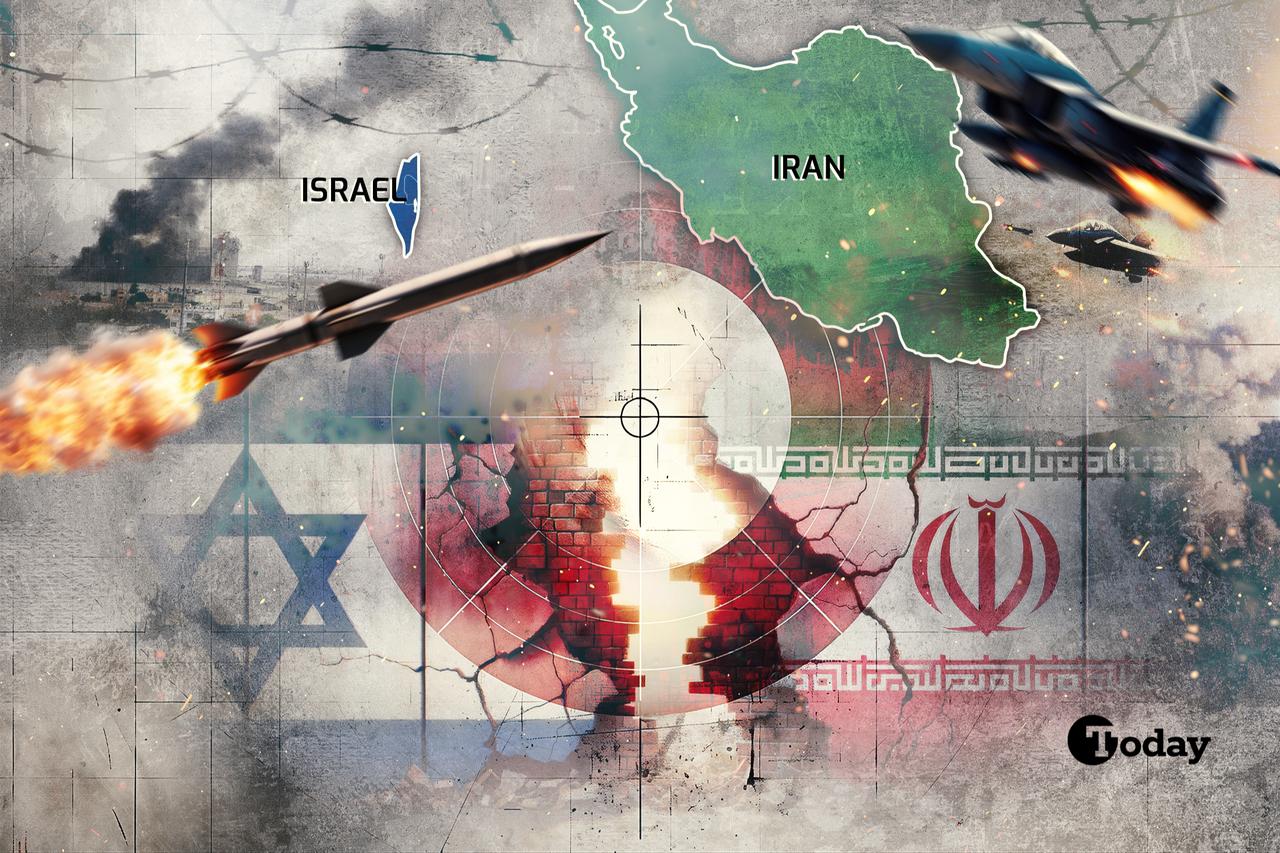
Today’s situation bears a partial resemblance, particularly regarding the question of who exactly to speak with in Iran regarding the missile attacks. In Türkiye’s eyes, the Iranian government is legitimate and friendly. Yet recent days have brought a bigger issue to the fore.
Who is actually responsible for the missile attacks that have violated Turkish airspace? And who should be held accountable? Who to talk to?
Ballistic missiles entering Turkish airspace are increasingly difficult to explain. For a military that shot down a Sukhoi Su-24 for violating Turkish airspace for only 17 seconds in 2015, Türkiye’s threshold for protecting its sovereignty and airspace is far from low.
Yet the frequency and impact of the recent incidents have not reached a level that would turn the Turkish public decisively against Iran or compel the Turkish administration to respond militarily. That scenario could change if such attacks become more frequent or begin causing casualties or significant material damage.
A couple of hours after the incident, the state-owned Anadolu Agency reporter interviewed Iran’s FM Abbas Araghchi in Tehran on how he feels during the Quds Day protests without posing questions on missiles. That same evening, Araghchi tweeted in Turkish, thanking the Turkish public for their prayers for Iran. A friendly gesture, but he did not address the issue either.
Turkish security sources note that Iran has been warned to detect and take action against those responsible for these incidents. This may suggest that Turkish officials consider it possible that such attacks are carried out by factions within the Islamic Revolutionary Guard Corps operating under Iran’s so-called “mosaic defense” architecture. Under this doctrine, Iran disperses military capabilities across numerous semi-autonomous units designed to operate independently in wartime. The system allows smaller armed groups significant operational autonomy, enabling them to act quickly and asymmetrically even without direct centralized command.
According to the same security sources, three aspects of the incidents have drawn particular attention so far.
First, the frequency of missile incidents affecting Türkiye is very low compared with the number of strikes Iran has carried out against other countries. Second, no casualties have been reported in Türkiye. Third, all missiles detected so far have been intercepted.
Nevertheless, Türkiye has conveyed a clear message to Iran: exercising caution to avoid being drawn into a wider conflict does not mean that Türkiye’s patience is limitless.
So what might be the objectives behind such attacks—assuming they were indeed planned and launched by Iranian actors, which remains the scenario Turkish officials currently consider most likely?
Several possibilities are being discussed by Turkish defense analysts. First, the launches may be intended to test engagement ranges and reaction times of NATO air defense systems. Second, under Iran’s current mosaic military doctrine, small autonomous units within the Revolutionary Guards may carry out operations without requiring a centralized decision-making process. Third, some Revolutionary Guard commanders may believe that the U.S. uses Incirlik Air Base in Türkiye for logistical support in operations against Iran. This option is clearly against Türkiye's interests. Remember that Türkiye did not allow the U.S. to use its territory for a land invasion of Iraq in 2003, which resulted in then-President Bush changing his invasion plans to Basra.
Iran, however, continues to deny responsibility for missile launches toward Türkiye, Azerbaijan and Greek Cyprus.
In a written statement, the Iranian Embassy in Ankara said: “No munitions have been launched from Iran toward Türkiye. In light of the recent conversation between Iran and Türkiye, as well as the contacts between the foreign ministers of the two countries, the Islamic Republic of Iran has expressed its readiness to establish a joint technical team to examine the matter in detail in order to remove any ambiguity.”
The issue remains confusing. Further missile attacks could prompt harsher rhetoric from Ankara without necessarily pulling the country into a conflict.


 Set as preferred source
 Set as preferred source



 4 min read