Newsletters


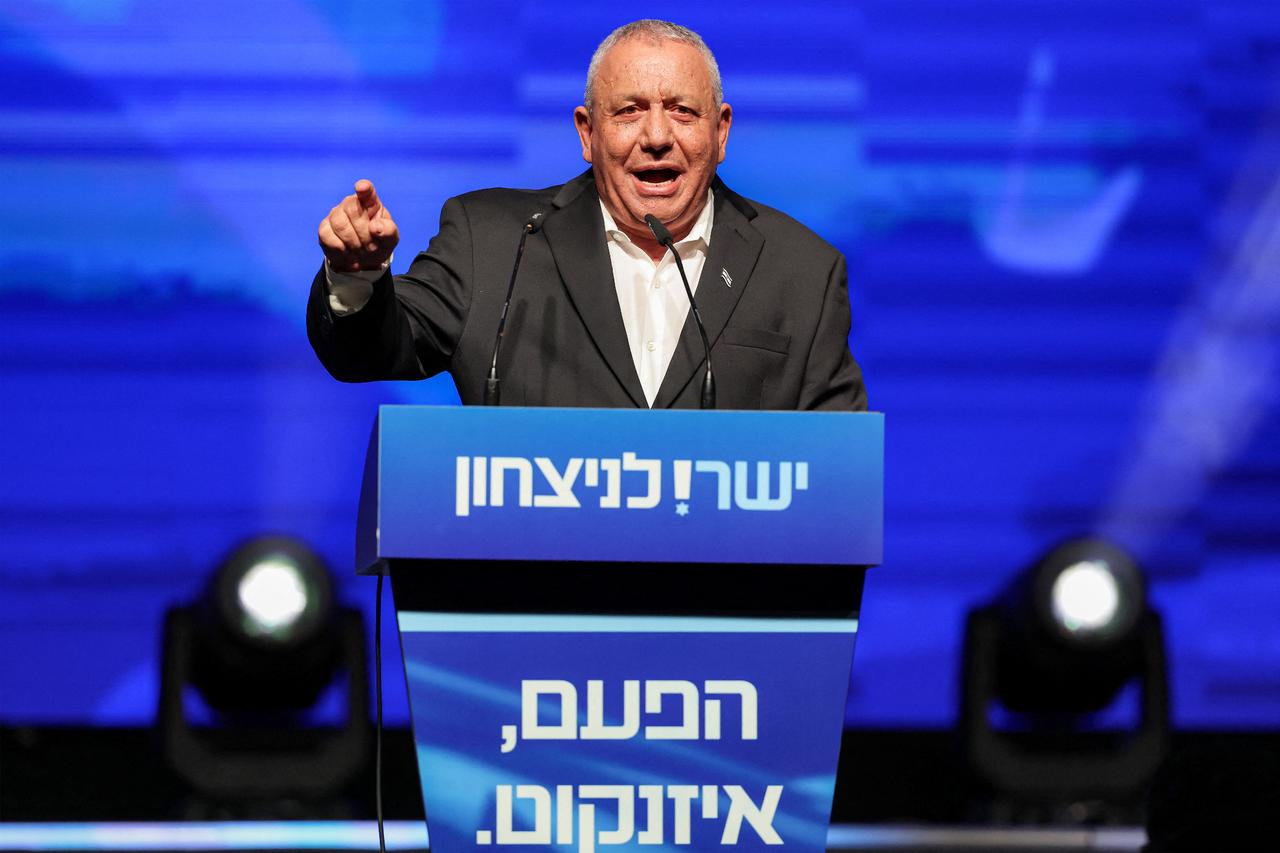


Former Israel Defense Forces (IDF) chief of staff Gadi Eisenkot’s centrist Yashar party leads the latest polls ahead of Tuesday election, although the opposition has yet to secure a governing majority.
A possible coalition would include Naftali Bennett and Yair Lapid’s right-centre alliance, Avigdor Liberman’s secular nationalist Yisrael Beytenu, historically supported by Russian-speaking Israelis, and Yair Golan’s center-left Democrats.
Bennett and Liberman previously served under Netanyahu, while Bennett and Lapid later led the government that restored ambassadorial relations with Türkiye in 2022. Their common security concerns would limit changes in policy, although their different approaches to diplomacy could still matter.
Eisenkot has taken one of the opposition’s most demanding positions. Earlier this month, he conditioned a stronger Israeli-Syrian security arrangement on the withdrawal of all Turkish and Russian forces, while leaving Israel’s withdrawal from strategic positions open to negotiation. Ankara has little incentive to accept such conditions on its military relationship with Damascus.
At Bennett and Lapid’s party gathering in August, Lapid defended an Israeli strike on a Syrian airfield over suspected Turkish deployment plans, while calling for mechanisms to prevent confrontation.
Golan, a former deputy military chief, opposed the strike because of its risks for relations with Ankara and Washington.
Although Eisenkot seeks a far-reaching reduction in Türkiye’s military presence, Lapid envisages negotiated restraints and Golan questions the risks of military intervention, reflecting differences over methods among politicians who share significant Israeli security concerns.
Israel and Türkiye already began military deconfliction talks under Netanyahu. A different government could strengthen these channels while continuing to object to certain Turkish military capabilities. Its coalition partners would have to determine whether such arrangements could satisfy Israel’s security demands without requiring the wholesale Turkish withdrawal advocated by Eisenkot.

Israel’s established defense relationship with Greece and Greek Cyprus would likely survive any change of government. The latest €3 billion ($3.36 billion) air-defense contract adds long-term industrial commitments.
Opposition figures have also supported those partnerships in office. Bennett endorsed closer military cooperation in a 2021 trilateral declaration, while Lapid assured Greece’s prime minister the following year that rapprochement with Türkiye would not come at Greece’s expense.
Liberman has taken a more conditional approach. During a 2016 Knesset debate, he argued that any reconciliation with Türkiye had to be assessed against its effects on Israel’s relations with Egypt, Greece and Greek Cyprus. While Lapid demonstrated a willingness to pursue these relationships simultaneously, Liberman regarded the interests of Israel’s existing partners as an important constraint on rapprochement with Ankara.
Last week’s approval of the Turkish-Libyan maritime agreement by eastern Libya’s parliament brings these differences into focus. Israel’s Foreign Ministry joined Greece and Egypt in opposing the decision, although Israel has no direct maritime boundary at stake. The dispute primarily concerns Greek and Egyptian maritime claims, giving a successor government room to calibrate its response while preserving its existing partnerships.
Commercial interests also cross diplomatic divisions. Chevron, the operator of Israel’s Leviathan field, signed an exploration cooperation memorandum with Türkiye’s TPAO and separately secured a Libyan exploration-block award.
Such overlapping interests give governments practical reasons to avoid treating every maritime dispute as a test of political alignment.
Gaza offers the clearest consensus. Bennett has promised to exclude Türkiye and Qatar from postwar security arrangements and bring Egypt in instead. Eisenkot has criticized their inclusion and favors an Egyptian-trained multinational stabilisation force.
His senior ally, former Shin Bet chief Yoram Cohen, prefers the Palestinian Authority to Ankara or Doha. Liberman rejects a Turkish presence, while Golan has also opposed a Turkish-Qatari role in Gaza, advocating greater involvement by Saudi Arabia and the UAE. Turkish military participation would face broad opposition, although mediation and civilian reconstruction could be treated differently.
Differences over Palestinian governance are deeper. Liberman wants the Palestinian Authority dismantled, whereas Golan favours political arrangements and opposes annexation. Eisenkot rejects Palestinian statehood under present conditions but criticises settler violence.
Such divisions would constrain any common offer to Ankara on the issue most responsible for the deterioration in bilateral relations.
Netanyahu’s approach also reflects his dependence on far-right coalition partners Bezalel Smotrich and Itamar Ben-Gvir, whose opposition to ceasefires has narrowed his political room for compromise. A coalition excluding them could find restraint easier, although security priorities would endure. Bennett and Liberman themselves opposed Netanyahu’s 2016 reconciliation agreement with Türkiye.
A June 2026 Mitvim poll found that 54% of Israelis favored improving relations with Türkiye through diplomacy, with most preferring security understandings to broader normalization. Pew polling found 60% of Americans viewed Israel unfavorably, while Chicago Council research showed a majority favored reducing or ending U.S. military assistance. These trends could increase the diplomatic costs of repeated confrontations for a country dependent on American support.
The Iran war has introduced regional constraints of its own. Iranian attacks reached all six Gulf Cooperation Council states, exposing economic infrastructure to the costs of escalation. Saudi Arabia continues to condition normalisation with Israel on progress toward Palestinian statehood, while its defence agreement with Türkiye and Pakistan reflects a search for additional security partnerships. The resulting relationships complicate attempts to divide the region into competing blocs.
A renewed U.S.-Iran escalation could make caution toward Türkiye more valuable. Trump has ruled out attacks before the Nov. 3 midterms, while leaving heavier strikes afterward possible. An Israeli government anticipating another confrontation with Iran would have good reason to avoid creating additional military disputes with a regional power.
Israel’s policies also respond to geopolitical changes that extend beyond Netanyahu and his coalition. The new balance of power in Syria, Türkiye’s increased influence in Damascus and Washington’s reduced military role in Iraq are reshaping Israeli security calculations across party lines.
A different government might nevertheless seek to reverse some of Israel’s diplomatic isolation by pursuing more workable arrangements with Ankara. That would require reconciling the coalition’s shared security demands with the costs of enforcing them, particularly if another war with Iran becomes the immediate priority.


 Set as preferred source
 Set as preferred source


 2 min read

 1 min read