Sign in
 Newsletters


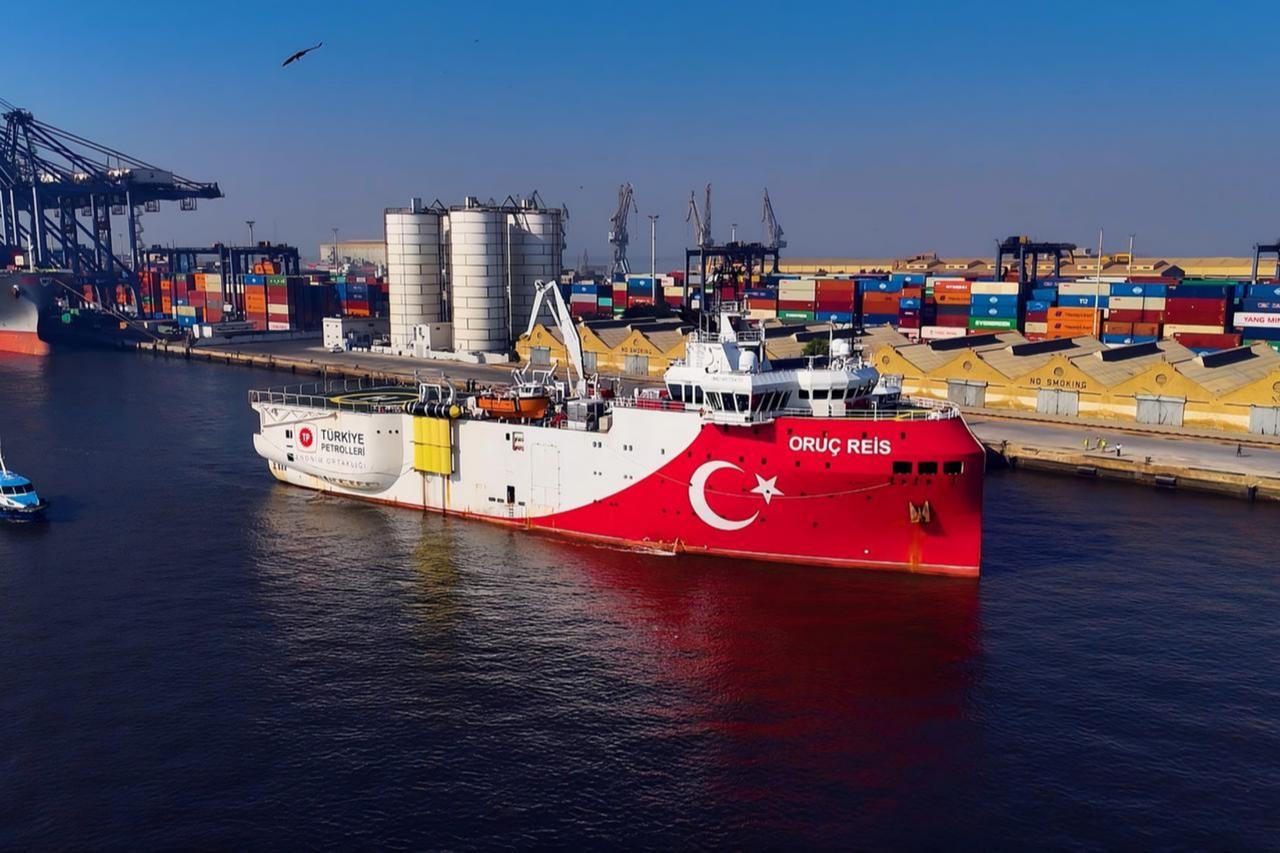


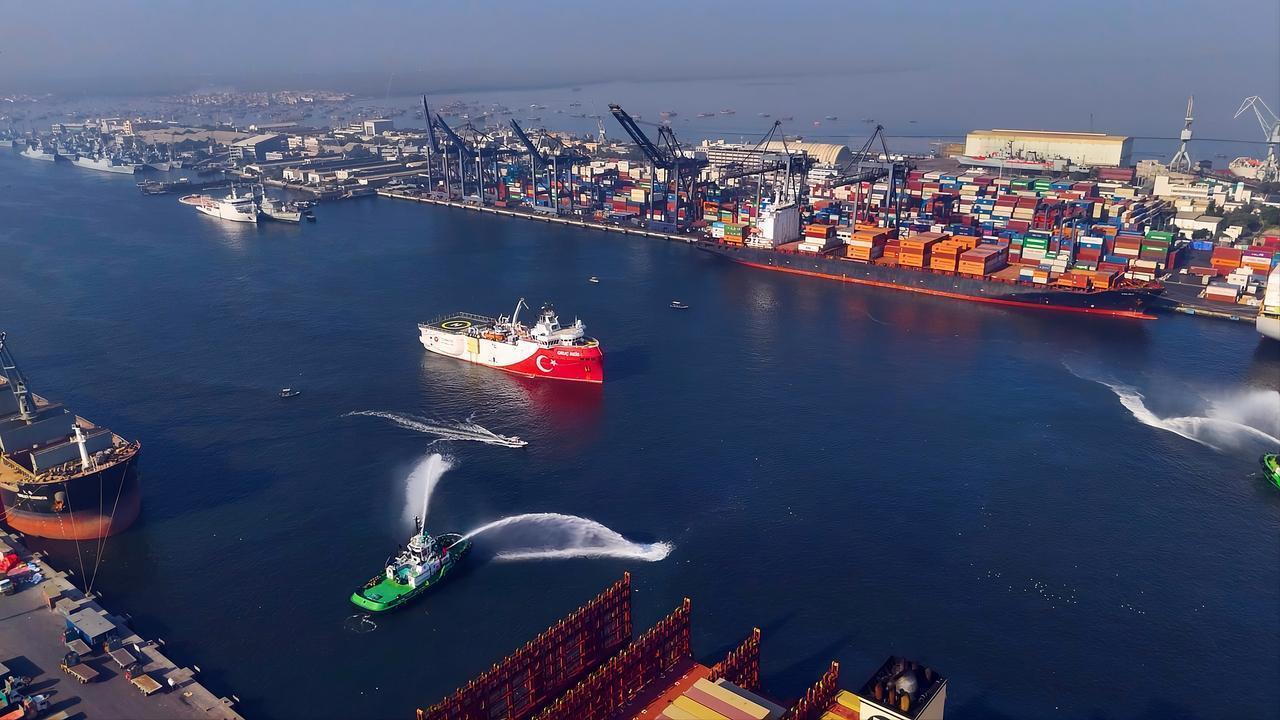
Marking a new phase in energy cooperation between Ankara and Islamabad, the Turkish seismic research vessel Oruc Reis reached Karachi last week to initiate offshore oil and gas exploration surveys in Pakistani waters.
Receiving an official welcome at Karachi port, the ship is on its second overseas intercontinental mission after completing an assignment off the coast of Somalia.
Speaking at the ceremony, Turkish Energy Minister Alparslan Bayraktar said that the “onshore and offshore” Pak-Turk collaboration in Pakistan would directly strengthen the security of energy supply in both countries.
He added that the Oruc Reis would collect 2D and 3D seismic data in two areas in the first phase, and that Türkiye wanted to replicate in Pakistan the success it had achieved in discovering and bringing hydrocarbons into production in its own waters.
Developed using Turkish engineering and domestic resources, the 87-meter-long (285.43 feet) vessel gathers data to prepare for the next step of deep-water drilling, and a lot depends on the data assessment that identifies drilling sites.
The Pakistani assignment follows Oruc Reis's first intercontinental mission in Somali waters, where the vessel operated for 234 days, beginning in October 2024. It surveyed three offshore blocks, collecting 3D seismic data across 4,464 square kilometres (1,723.56 square miles) before completing its assignment in June 2025.
The Somali deployment was particularly significant for Ankara as it laid the groundwork for Türkiye's first deepwater drilling operation outside its own maritime jurisdiction. The data collected by Oruc Reis helped identify locations for subsequent drilling by Türkiye's Cagri Bey deepwater drilling vessel.
This experience can be a useful precedent for understanding Ankara's ambitions in Pakistan. Increasingly, Türkiye is turning its domestic offshore exploration capabilities into overseas partnerships, combining technical expertise, state-backed energy companies and diplomatic engagement.
As Bayraktar emphasized, Türkiye possesses the world's fourth-largest deep-water drilling fleet, and its experience in offshore exploration can be used to develop mutually beneficial partnerships.
The Pakistani operation offers Ankara another opportunity to demonstrate its technical capabilities while expanding the international reach of its national energy companies.

For Pakistan, the mission comes at a time when reducing dependence on imported energy has become increasingly important due to extended wars in the Middle East, especially the blockage of oil shipping channels like the Strait of Hormuz and Bab-el-Mandeb.
The country's exposure to international oil and gas price fluctuations has placed considerable pressure on its foreign-exchange reserves and balance of payments.
Therefore, the financial stake is considerable.
Developing domestic hydrocarbon resources could, if commercially viable discoveries are made, help diversify its energy supply and reduce import dependence. However, offshore exploration is an expensive and technically challenging undertaking.
Even promising seismic data does not guarantee commercially viable discoveries, and the time between initial exploration and actual production can extend over several years.
Moreover, as per Reuters, the Pakistani offshore operation has been delayed by approximately six months already because of the war in Iran, illustrating how regional instability can disrupt even commercially oriented energy projects.
Abdul Qayoom Abro, an author and analyst from Karachi, told Türkiye Today that if sizeable reserves are uncovered, it would help cut Pakistan’s massive energy import bill. Also that the joint exploration has a strategic aspect, as it “further deepens Pakistan-Türkiye ties” in one more sector.
Pointing out that Pakistan is paying billions of dollars every year on energy imports and energy prices, he said that this has become “one of the key concerns of our people; we have learnt a lot from the recent security situation in the Middle East which has highlighted the importance of self-reliance in the energy sector.”
Zeeshan Shah, a Washington-based financial analyst, told Türkiye Today that although Turkish-Pakistani ties are historically very close, they have focused mainly on security rather than economics. Both countries have tried to change that since 2003, he said, but the economic relationship has yet to reach its full potential.
Recalling that Pakistan had in the past cooperated with Exxon Mobil for oil exploration, Shah said that these multinational companies “pulled out of Pakistan due to inconsistent economic incentives and policies and the nationalization of assets.” The Sui gas fields were initially discovered and developed by Exxon Mobil’s predecessor company before being taken over by state-owned companies.
Noting that the dynamic changed in 2024 with “unconfirmed reports” of Pakistan potentially having large oil and gas reserves in its offshore economic zone, he said that the arrival of a geological survey ship from Turkish Petroleum this past week is quite significant.
If successful, he said that, “Türkiye would gain a secure supply of oil and natural gas from one of its closest allies in addition to a share of the profits in any potential finds, while Pakistan will obviously benefit from any potential deposits which are found.”
Suggesting the enactment of a consistent regulatory framework for oil and gas exploration, Shah advised that, “Pakistan needs to codify policies which will incentivize oil and gas exploration and development, and guarantee profitability incentives to ensure companies like Turkish Petroleum and others stay in Pakistan.”
Despite repeated attempts to attract international investment and develop domestic exploration capabilities, Pakistan’s offshore hydrocarbon potential has remained largely underexplored.
With the Turkish seismic research vessel’s arrival, Pakistan can revive its long-neglected offshore hydrocarbon sector, as in 2019, a major offshore drilling attempt had failed.
Five Pakistani companies have clinched hydrocarbon deals with Turkish state-owned concerns in three offshore and two onshore fields across Pakistan.
Having a 25% stake and operatorship in one of the blocks just off the Karachi coast, the state-owned Turkish Petroleum Corporation (TPOC) would now be kicking off its first joint oil and gas survey along with Pakistan Petroleum Limited (PPL), Mari Energies and the Oil and Gas Development Company (OGDCL).
After spending 50 days collecting seismic data across a 670-kilometer area for the Marjan 3D project in the Indus-C Block off Karachi, the ship will move to the Makran coast for a separate 25-day 2D survey covering 2,353 kilometers.
Apparently, the distinction between the two techniques is important. Three-dimensional seismic imaging provides a more detailed picture of underground geological formations by collecting data across an area, allowing exploration companies to identify structures that could potentially contain hydrocarbons.
Two-dimensional surveys, meanwhile, generate geological profiles along designated lines, helping researchers assess the broader subsurface structure.
However, neither technique confirms the presence of commercially recoverable oil or gas. Rather, the resulting data will help companies identify promising drilling locations and reduce some of the geological uncertainty and financial risk associated with offshore exploration.
Junaid Javeed, a risk and security management expert in Islamabad, told Türkiye Today that Pakistan formally reopened its offshore frontier in May 2026 after nearly two decades, finalising 23 block awards from its 2025 bid round.
He added that past exploration has been “sparse and unsuccessful: a February 2020 parliamentary reply recorded just 18 offshore wells drilled up to that point, including Kekra-1 in 2019, which hit a water-bearing reservoir due to the absence of source rock.”
In Javeed's opinion, finding gas does not guarantee a profitable project as, “A field may hold too little recoverable gas, or wells may flow too slowly to cover steep development costs.” However, as per Javeed, the joint interpretation of seismic data and well planning could give Pakistani geoscientists and engineers more offshore experience.
Noting that the fourth quarter of 2027 is being targeted for initial drilling, Javeed said that the timing will depend on the survey results, rig availability and agreement on how to fund the first well and share any cost overruns.
He said that even if the first well finds gas, "bringing production online will take years." But Pakistan can study pipeline routes and processing options now, he said, while holding off on major capital investment until appraisal confirms what the field can produce and domestic buyers can commit to paying reliably.


 Set as preferred source
 Set as preferred source


 2 min read


 1 min read