Newsletters


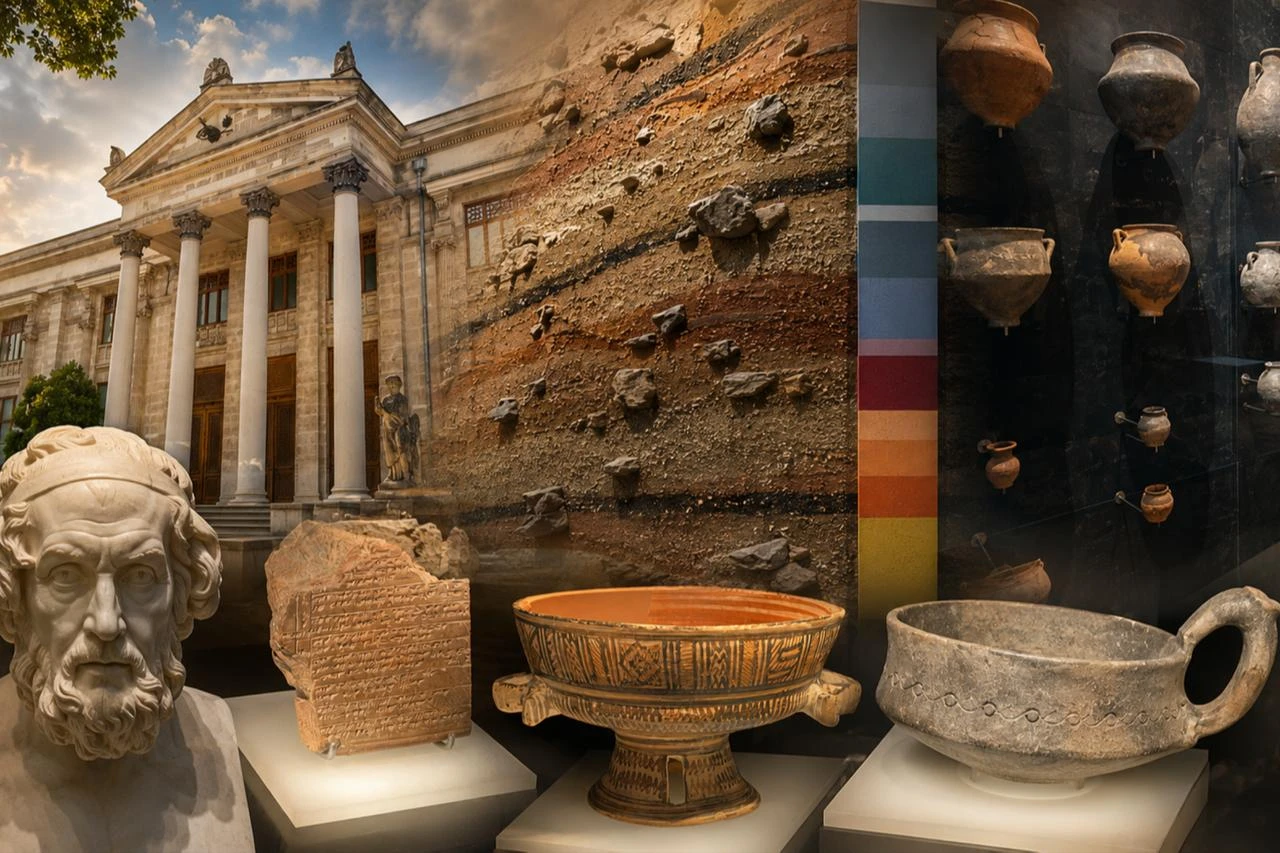


Renewed interest in Christopher Nolan’s "The Odyssey" has drawn attention back to the ancient city where Odysseus’ long journey home begins. But travelers do not have to go to Canakkale to start exploring the world behind Homer’s epic.
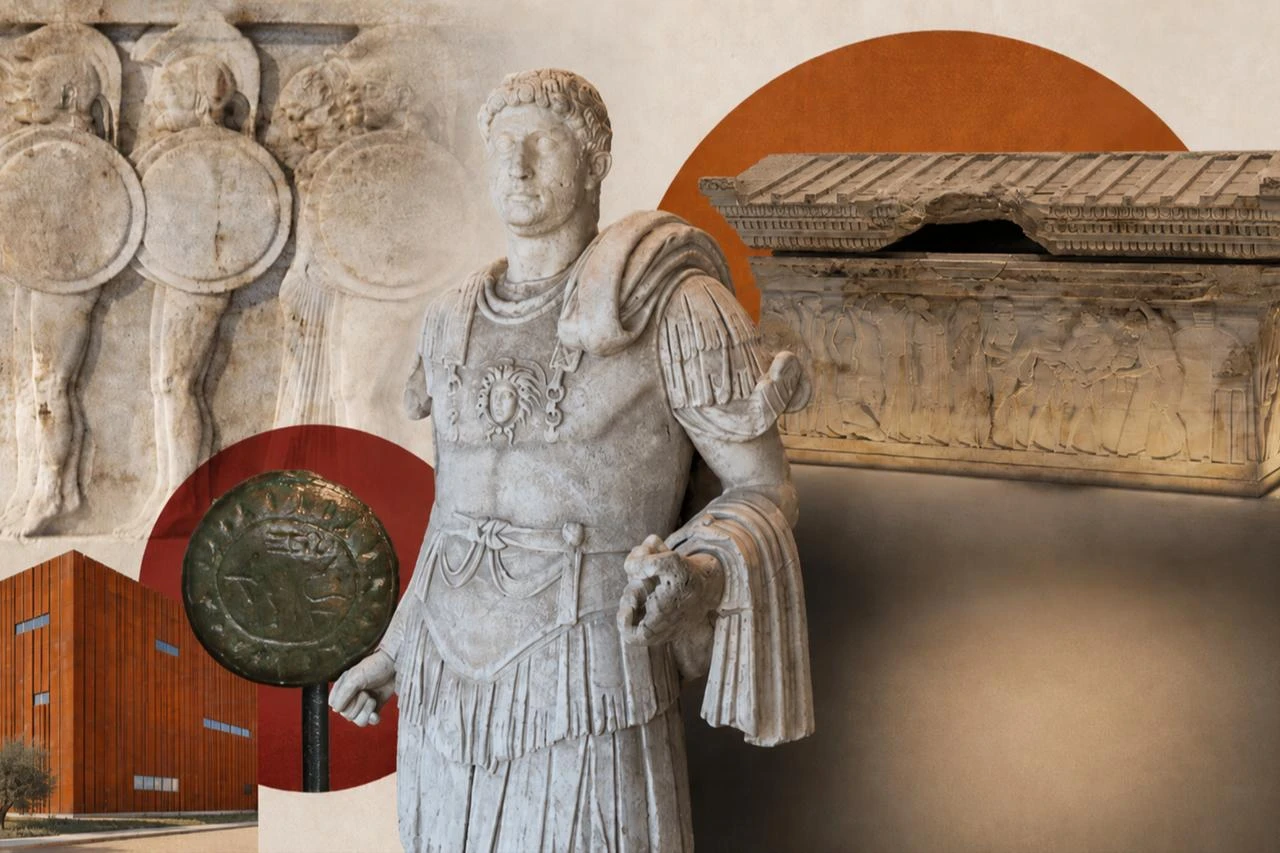
For visitors staying in Istanbul, the Troy halls at the Istanbul Archaeological Museums bring together mythology, archaeological finds and the history of more than a century of excavation. The galleries lead visitors from Paris and Helen to the fall of Troy before showing how the legendary city was gradually turned into a field of modern scientific research.
The display does not replace the experience of visiting Troy and the Troy Museum in northwestern Türkiye. Instead, it offers a detailed introduction to the city’s stories, historical layers and international legacy within one of Istanbul’s most important museum complexes.
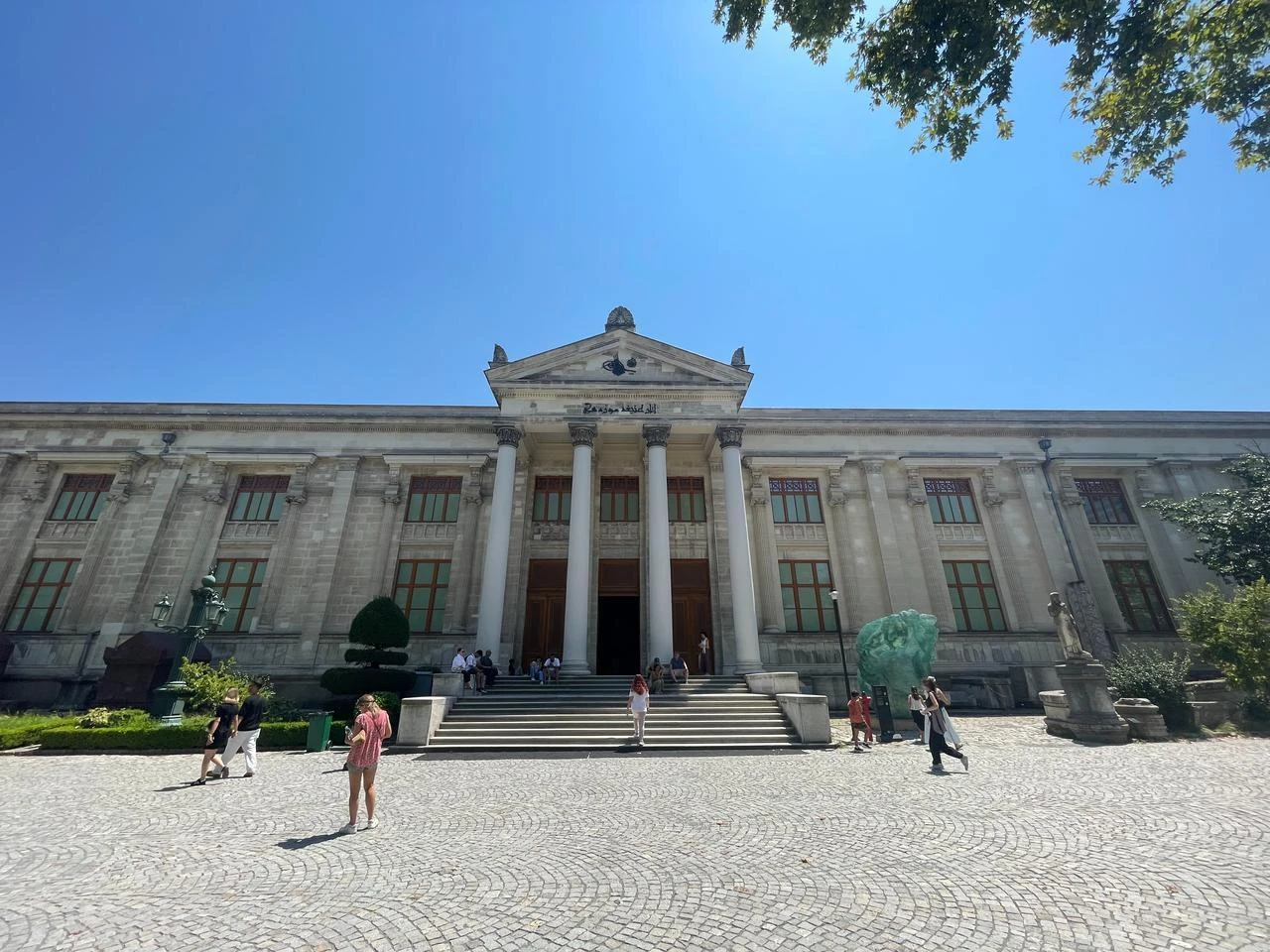

Despite often being called the Istanbul Archaeological Museum, the institution’s official name is plural because it brings together three museums: the Archaeological Museum, the Museum of the Ancient Orient and the Tiled Kiosk Museum.
The main museum building opened in 1891 through the efforts of Osman Hamdi Bey, an archaeologist, painter and director of the Ottoman Imperial Museum. Its collections were built up from archaeological sites across the former Ottoman territories, giving the institution the character of an imperial collection.
Within this wider setting, the Troy halls stand out by following one ancient city across mythology, literature, politics and archaeology.
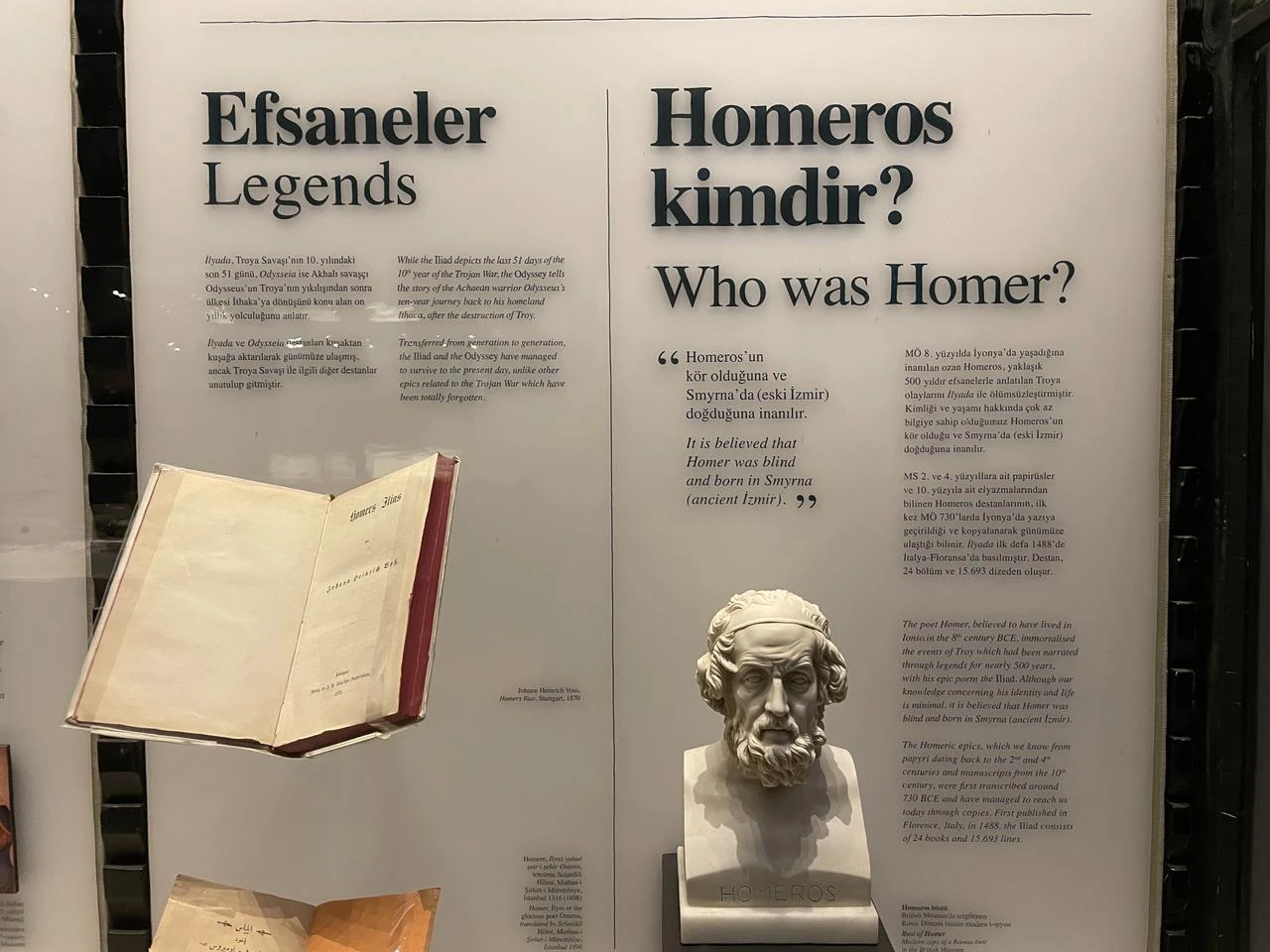
Although "The Odyssey" follows Odysseus after the Trojan War, the Istanbul galleries first lay out the events that brought the war about.
The story begins with the legend of Paris, the Trojan prince asked to decide which of the three goddesses was the most beautiful. After choosing Aphrodite, who had promised him the world’s most beautiful woman, Paris became involved with Helen, the wife of the Spartan king Menelaus.
Her departure for Troy led the Achaean kings to gather under the command of Agamemnon and launch the campaign that forms the background of Homer’s Iliad.
From there, the exhibition moves through the defining episodes of the war, including the anger of Achilles, the death of Patroclus and the final combat between Achilles and the Trojan prince Hector.
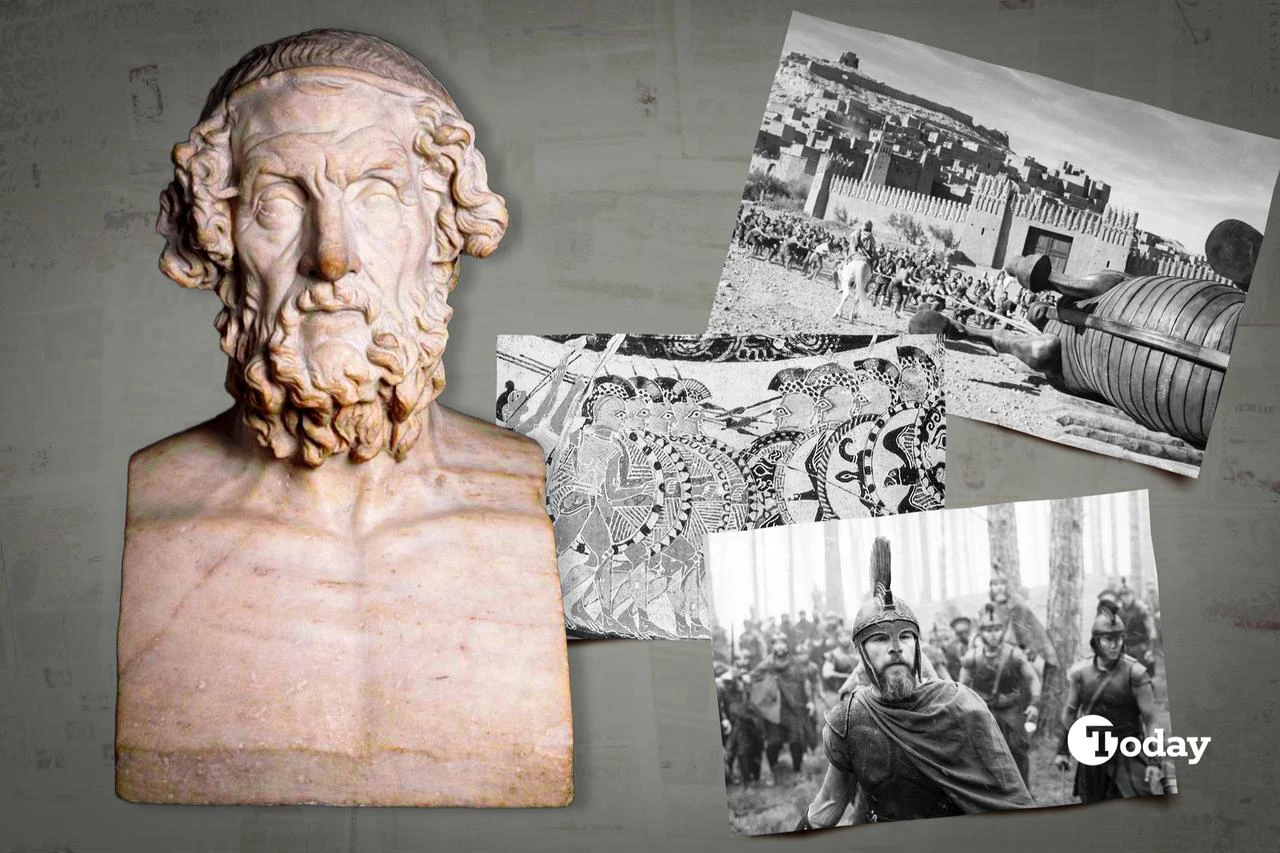
Panels supported by images of ancient pottery, sculpture and later works of art explain how Achilles killed Hector and refused to return his body. The story then reaches one of the Iliad’s most emotional moments, when the elderly King Priam entered the enemy camp and persuaded Achilles to release his son for burial.
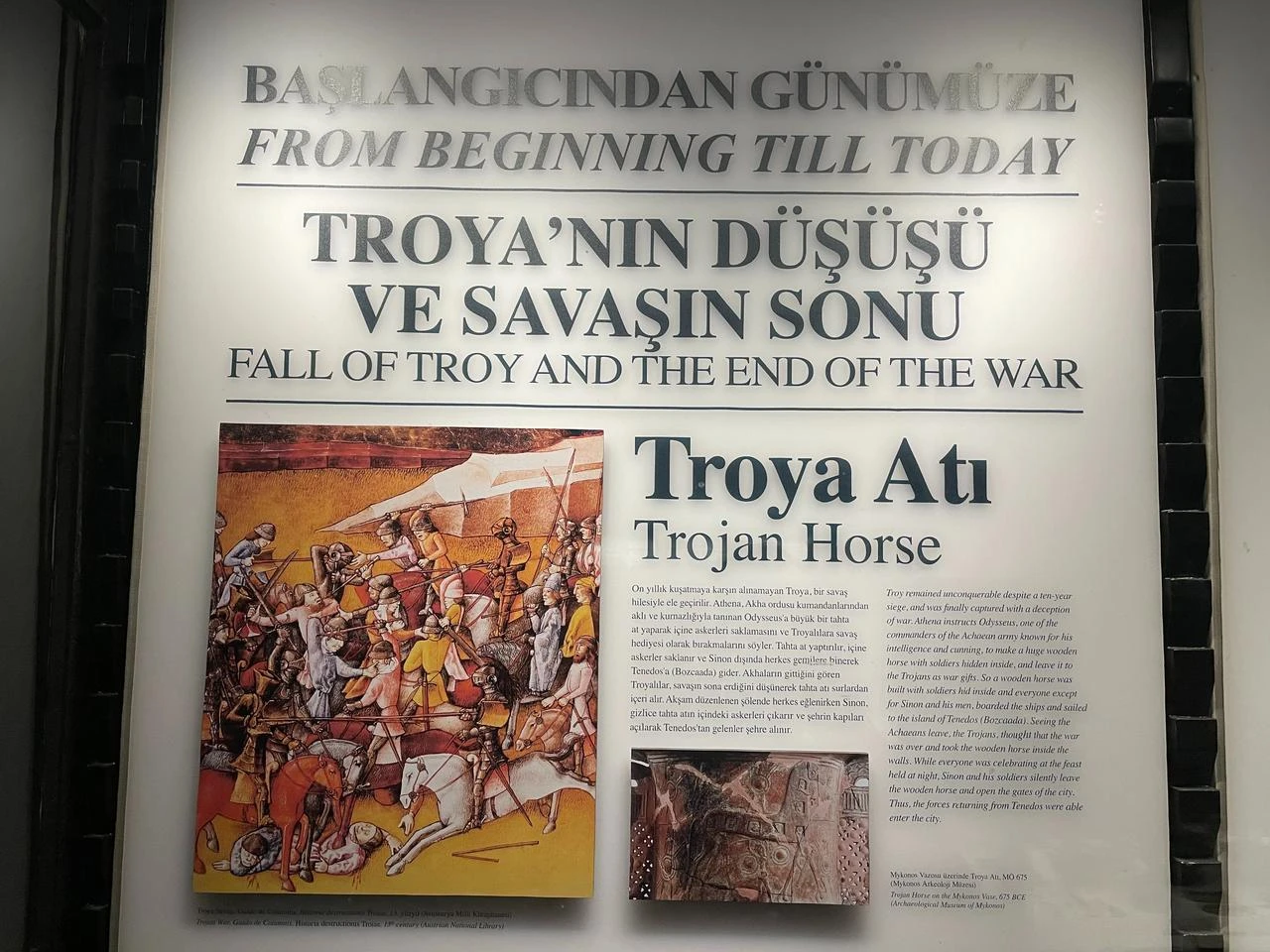
The galleries continue beyond the events of the Iliad to the Trojan Horse and the destruction of the city.
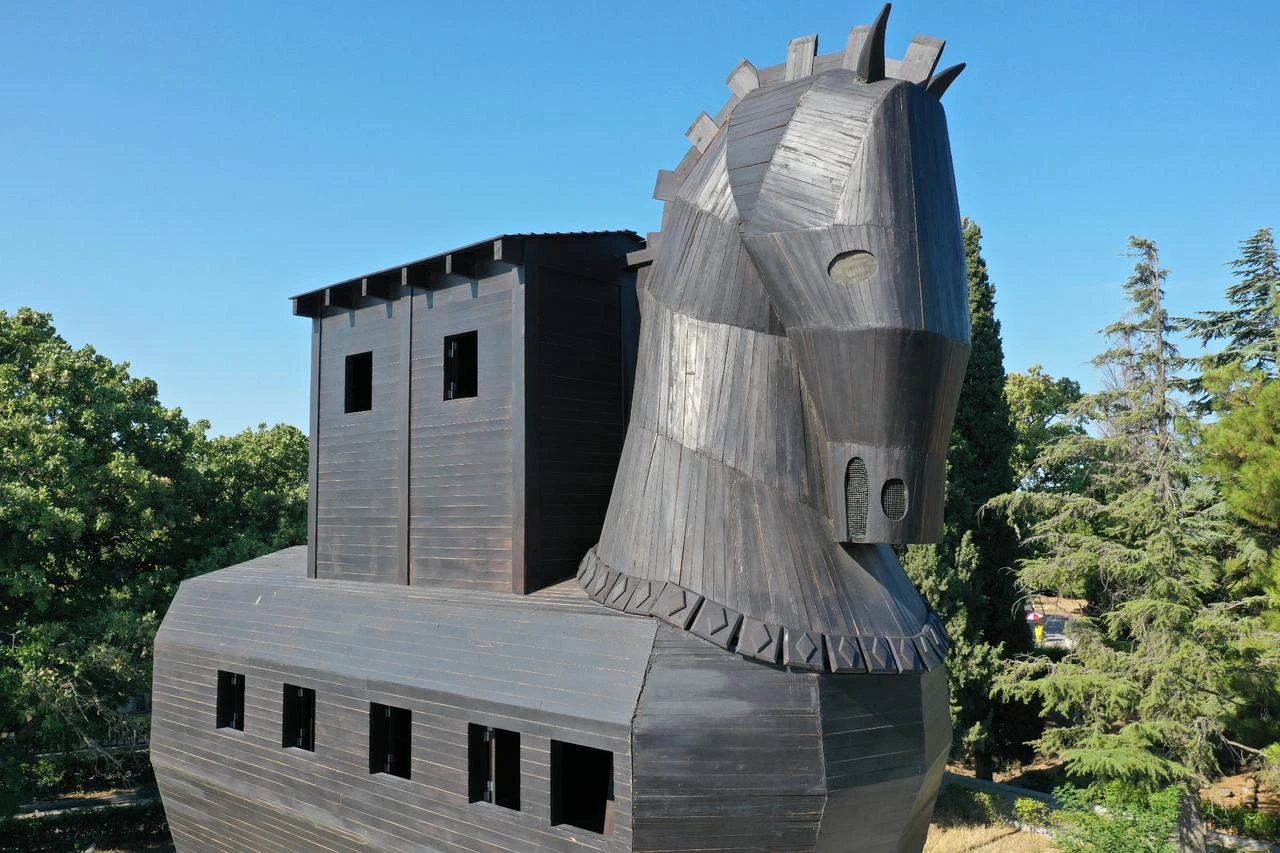
According to the account presented in the exhibition, Troy resisted a decade-long siege before the Achaeans turned to deception. Odysseus proposed building a giant wooden horse, hiding soldiers inside and leaving it behind as an apparent offering.
After the Trojans brought the horse within the walls, the concealed soldiers emerged at night and opened the city gates to the returning army. The sequence leads directly into the world of "The Odyssey," which begins after Troy’s fall as surviving Greek commanders attempt to return home.
By setting out the war’s conclusion, the Istanbul display provides the background needed to understand why Odysseus’ voyage begins and why his return to Ithaca becomes such a prolonged struggle.
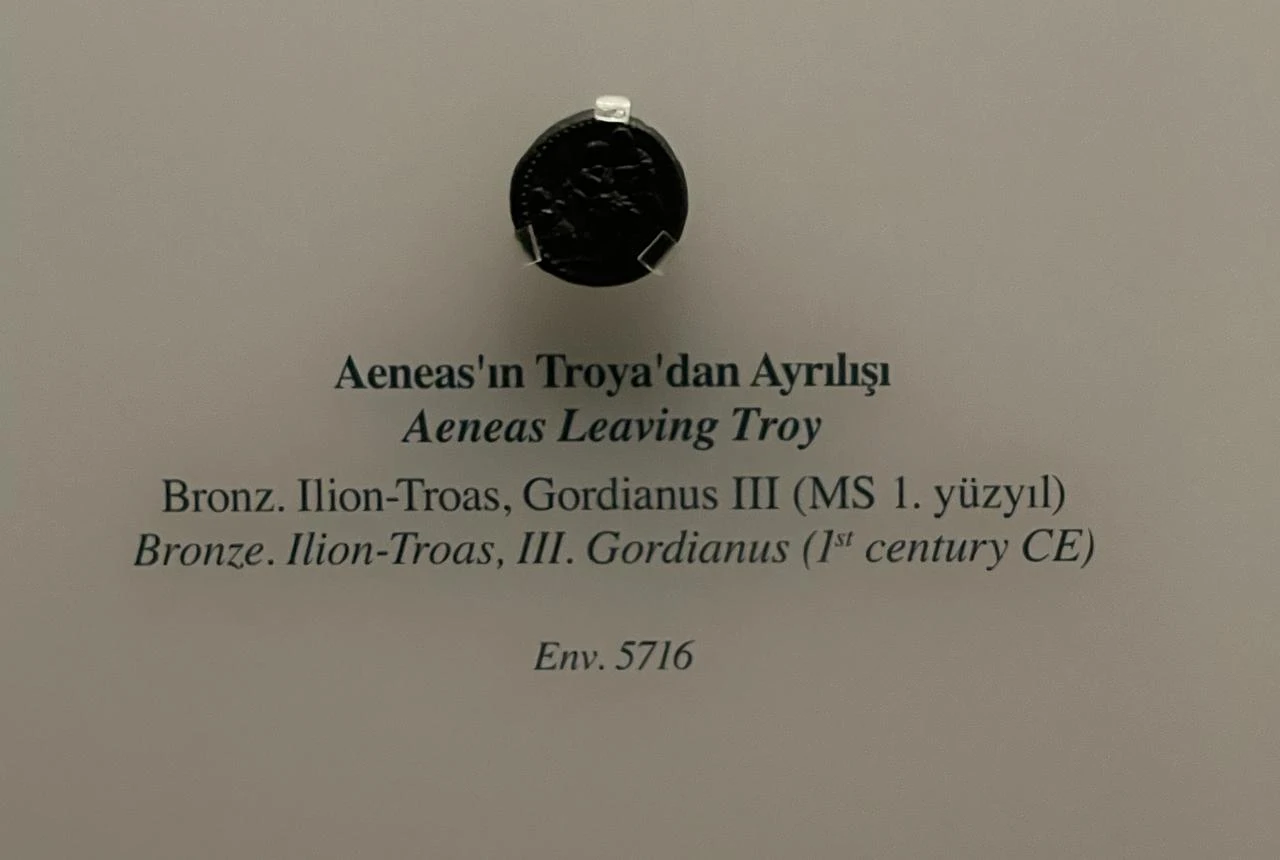
Troy’s story does not end with the city’s destruction. Another part of the exhibition follows Aeneas, a member of the Trojan royal line who escaped with his father Anchises and his son.
His journey later became the subject of Virgil’s "Aeneid," the Roman epic that linked the survivors of Troy with the legendary origins of Rome. A bronze coin displayed in the galleries depicts Aeneas leaving the fallen city.
This Roman connection helped keep Troy politically important long after the period described by Homer. The halls explain how later rulers visited the site or associated themselves with its heroes.
Persian King Xerxes reportedly stopped at Troy before crossing the Dardanelles in 480 B.C., while Alexander the Great visited the tomb of Achilles during his eastern campaign. Julius Caesar also traveled to Ilion, the Greek and Roman city that grew up at Troy, and connected the city with Aeneas and Roman ancestry.
The display further notes that Constantine the Great initially considered Troy as a possible imperial center before choosing the city that became Constantinople. Centuries later, Ottoman Sultan Mehmed II visited Troy in 1462, with the historian Kritovoulos recording that the ruler linked his conquest of Istanbul with the memory of the Trojans.
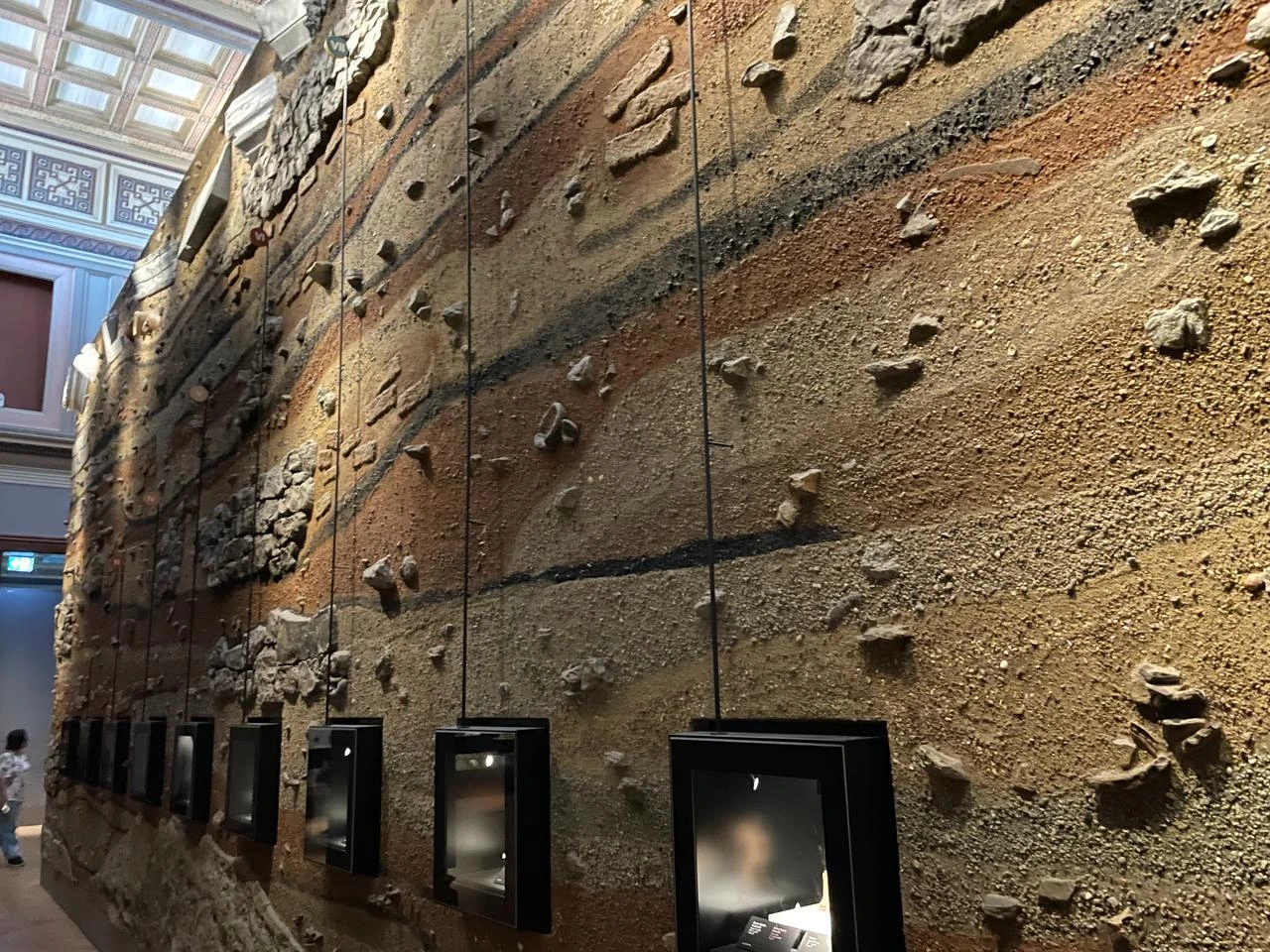
The halls also move beyond the ancient narratives to examine how the "Iliad," "Odyssey" and Trojan War shaped education, belief and art.
Scenes featuring Achilles, Hector, Helen, Paris and other figures began turning up on ancient pottery and continued to inspire mosaics, sculpture, painting and literature. Roman writers, particularly Virgil, passed the legend on to medieval Europe, where Troy remained part of political and cultural identity.
The exhibition presents the Trojan War not merely as an ancient conflict, but as a story repeatedly taken up by rulers, artists and societies seeking to explain their own origins.
This long cultural afterlife eventually fed into a new question: whether Troy was only a literary setting or a real city that could be uncovered.
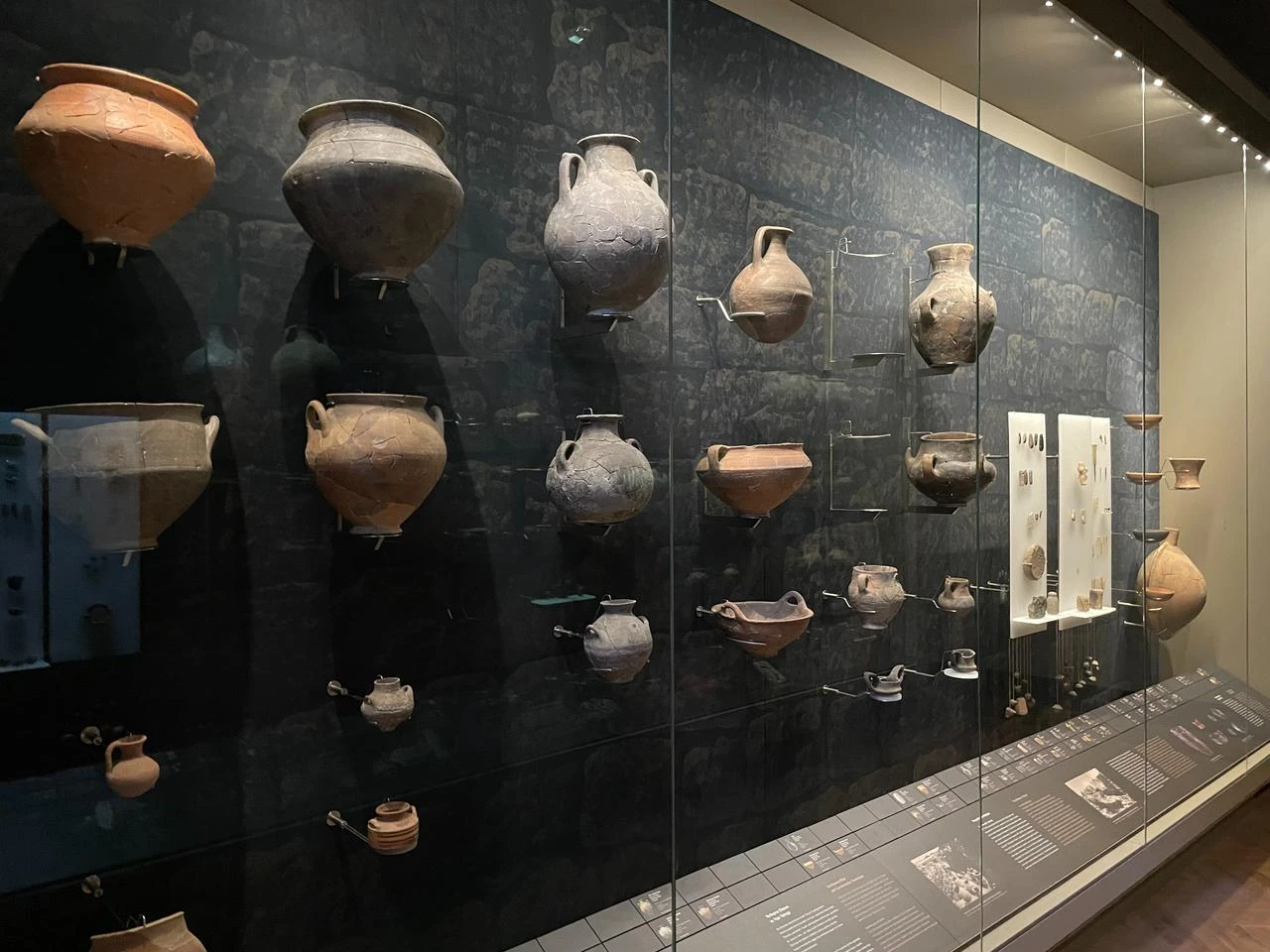
The exhibition does not present the rediscovery of Troy as an uncomplicated archaeological success.
It first places the excavations within the wider birth of archaeology, when European interest in ancient objects, national origins and sites mentioned in classical and religious texts drove investigations across the Mediterranean and the Ottoman Empire.
The Ottoman state began introducing regulations for antiquities in the 19th century as the removal and trafficking of artifacts increased. The first legislation appeared in 1869, followed by a broader protection law prepared under Osman Hamdi Bey in 1884.
Against this background, Heinrich Schliemann began digging at Hisarlik, the mound identified with Troy, in the 1870s. Seeking what he believed to be the city of King Priam, he cut through parts of the mound and damaged important settlement layers.
The displays state that Schliemann later acknowledged the scale of the destruction and began bringing specialists into subsequent work. However, they also highlight his removal of objects without authorization.
The collection he called “Priam’s Treasure,” made up largely of gold and silver objects, was taken abroad and dispersed between collections. Many pieces moved to Berlin and were later taken to Russia during World War II, eventually going on display at the Pushkin Museum.
Later researchers transformed Troy from the object of a treasure hunt into a stratified archaeological site.
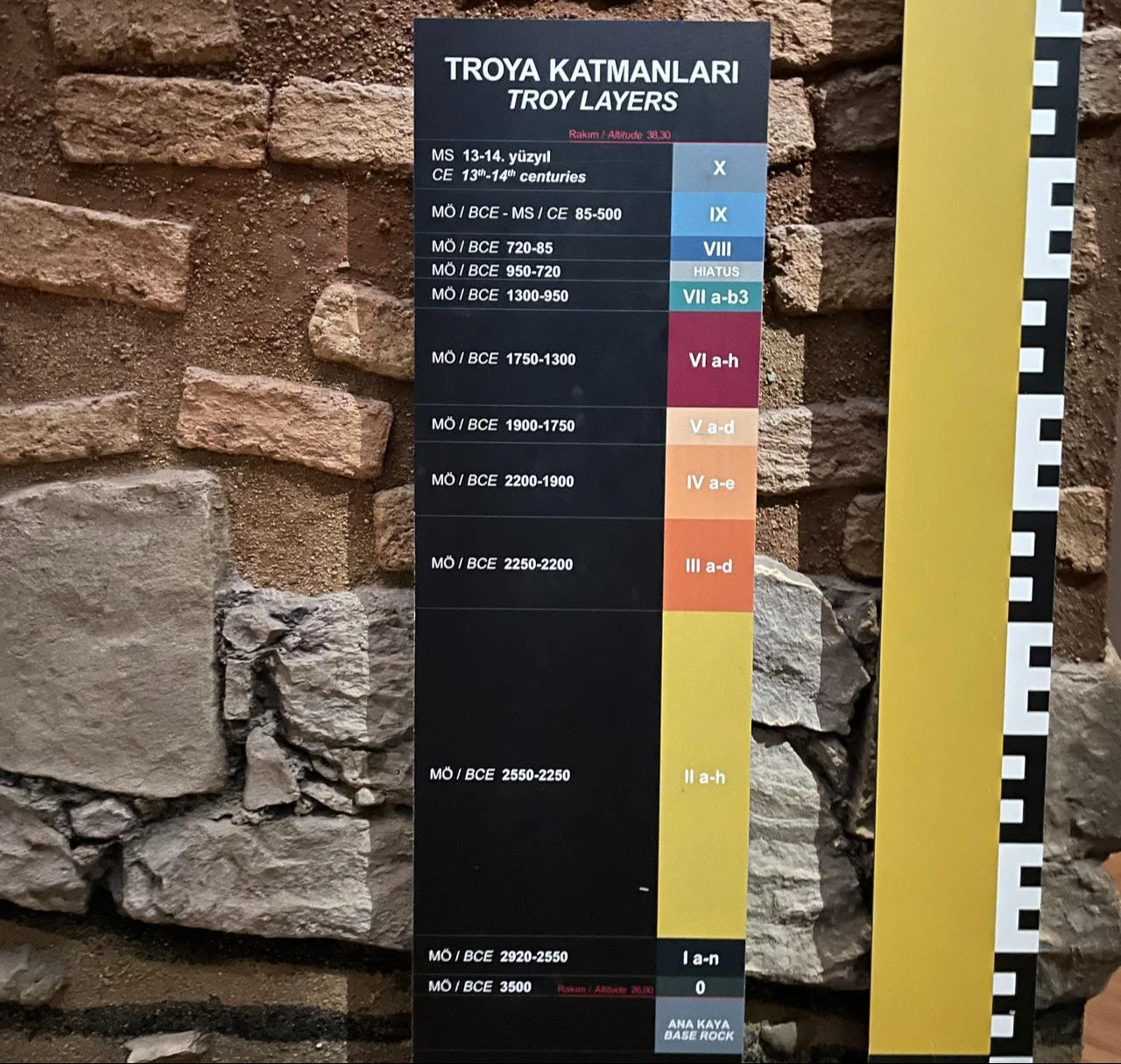
Wilhelm Dorpfeld used architecture, pottery, plans and maps to classify the settlement layers more systematically. His work identified a sequence of cities built one over another and helped distinguish Greek and Roman Ilion from the earlier Bronze Age settlements.
Carl Blegen’s excavations later clarified that the nine main settlements contained 47 separate building phases. His team also widened the research to include the natural environment and drew on specialists from different scientific fields.
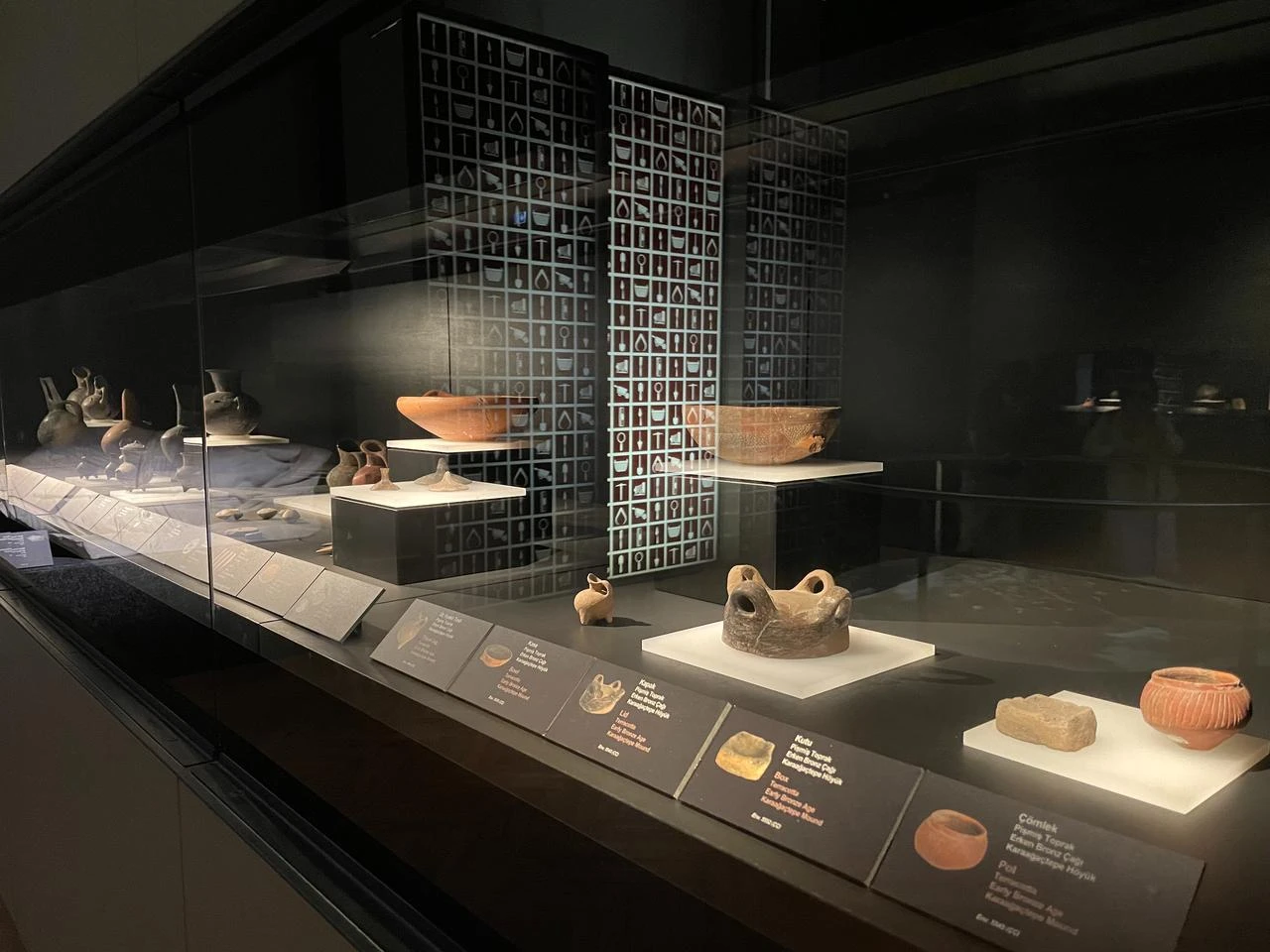
A small group of artifacts and archival photographs in the Istanbul display brings this history together. Among them is a terracotta lid with a human face from Troy III, alongside vessels, excavation records and images showing finds being removed from the site.
Rather than presenting Troy as a single city destroyed in a single event, the halls reveal a settlement that repeatedly grew, suffered damage and was rebuilt over thousands of years.
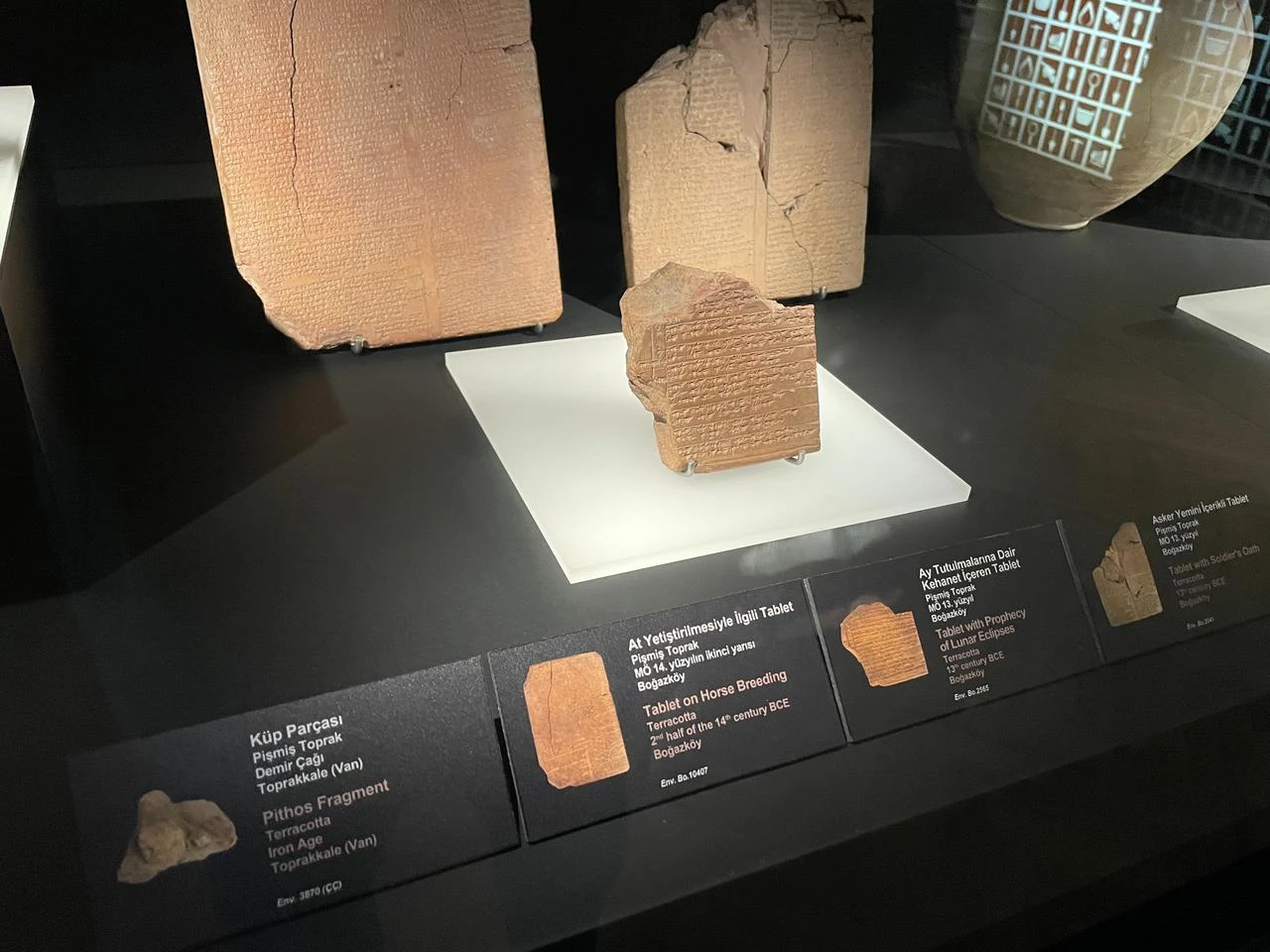
The final part of the route follows the international excavations that began under Professor Manfred Osman Korfmann in 1988.
Researchers examined Troy’s cultural and commercial position between Asia and Europe while also revisiting earlier excavation areas and protecting exposed remains. Scientific work expanded into geomorphology, paleogeography, geochemistry, geophysics, archaeometallurgy, Hittite studies, Mycenaean studies and Homeric philology.
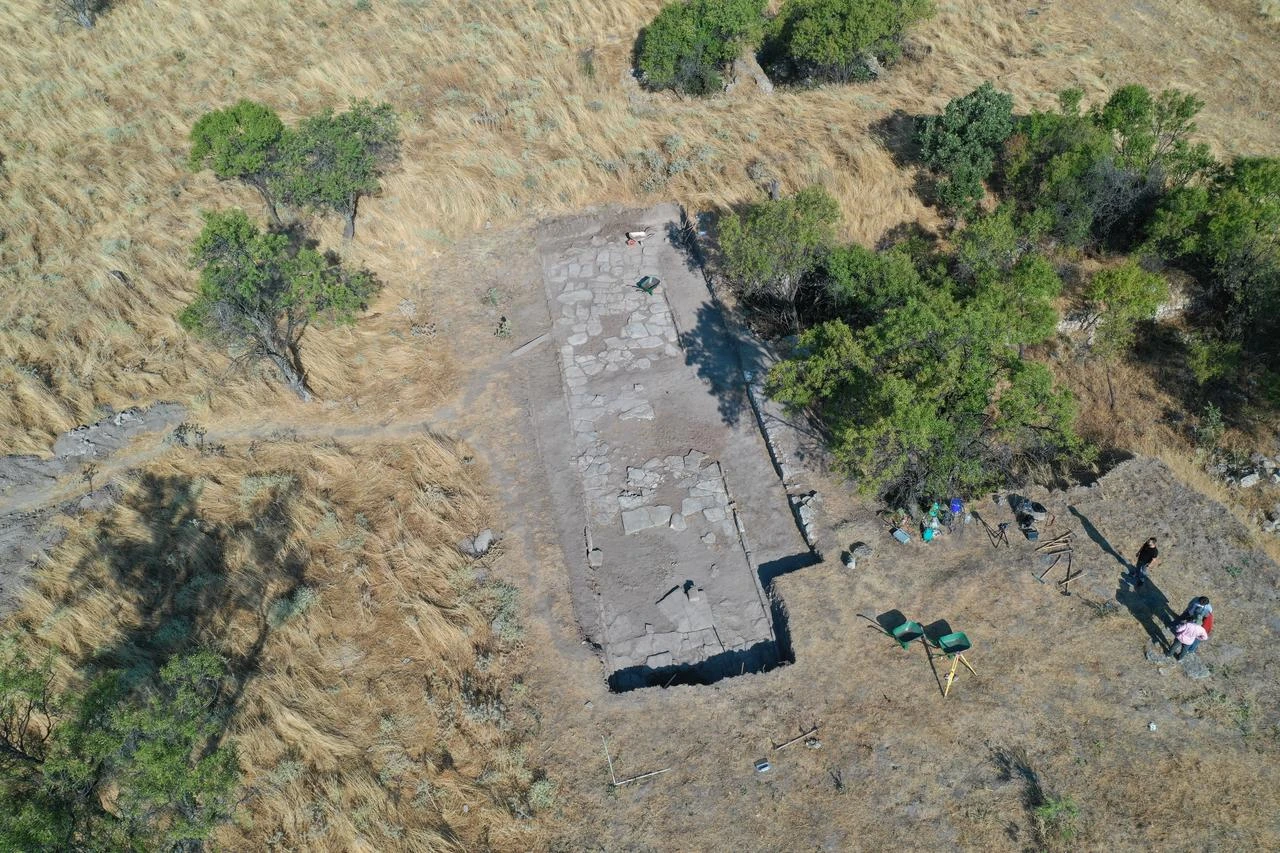
Research into the ancient landscape showed that Troy once stood much closer to the sea, with the coastline lying roughly 1 to 3 kilometers from the settlement in prehistoric times.
The site was declared part of a historical national park in 1996 and entered the UNESCO World Heritage List in 1998. Excavations have continued under a Turkish team led by Professor Rustem Aslan since 2015, while the Troy Museum beside the ancient city opened in 2018.
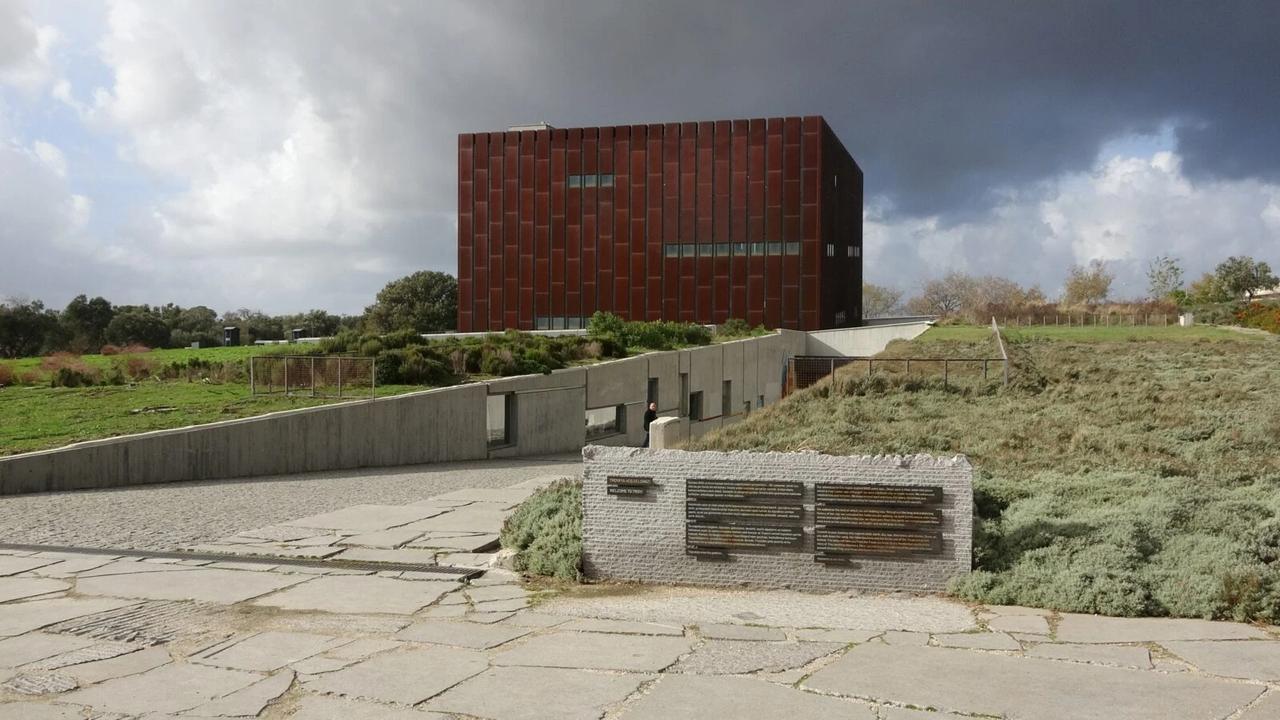
The Troy halls at the Istanbul Archaeological Museums bring together the material needed to understand why Troy has survived in global memory.
Mythological scenes explain the events that lead into "The Odyssey," archaeological documents reveal how the city was rediscovered, and small finds connect the epic tradition with the settlement’s physical remains.
For travelers unable to reach Canakkale, the galleries offer an accessible route into Troy’s world without leaving Istanbul. Those who later visit the archaeological site and the Troy Museum can then place the objects, stories and excavation history back into their original landscape.


 Set as preferred source
 Set as preferred source


 2 min read
 1 min read