Newsletters




This article was originally written for Türkiye Today’s weekly newsletter, Saturday's Wrap-up, in its August 15, 2026, issue. Please make sure you subscribe to the newsletter by clicking here.
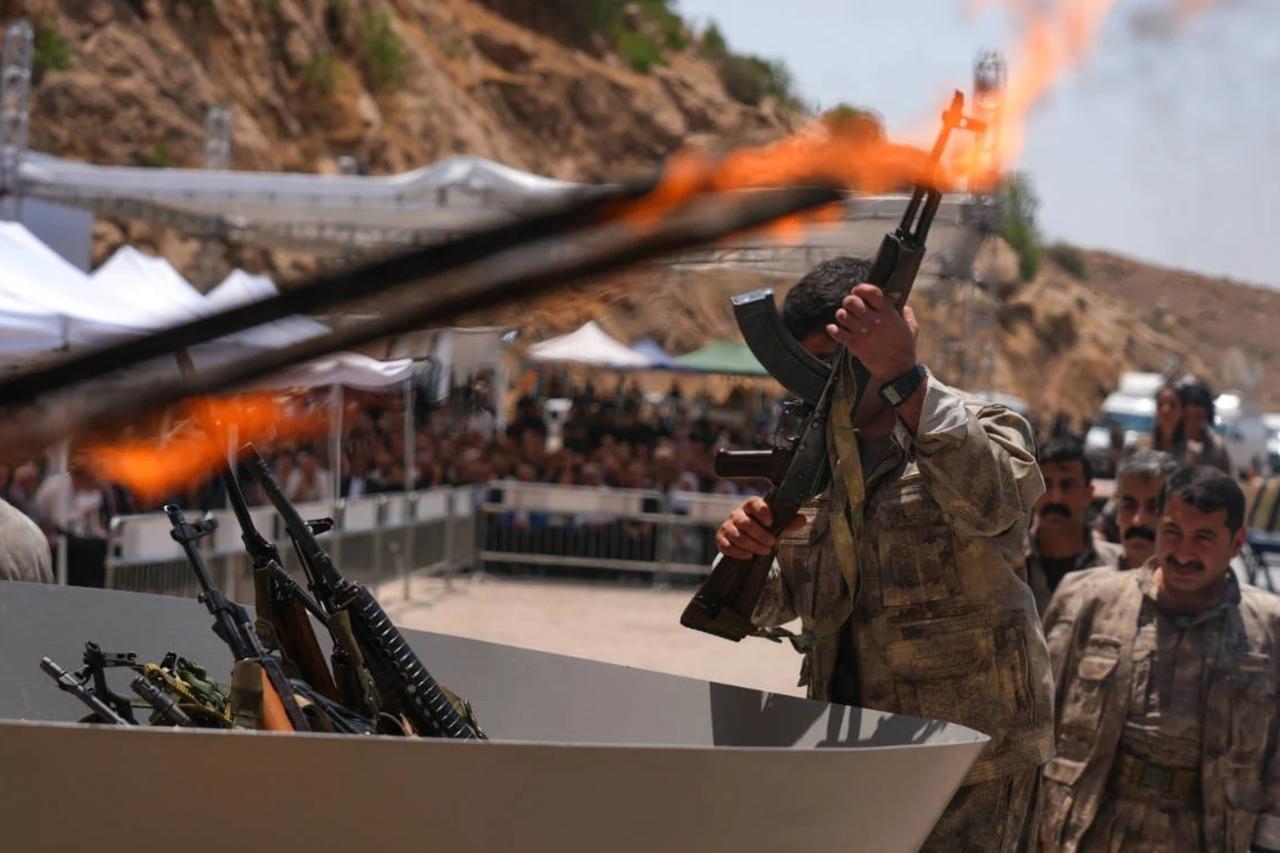
Türkiye has embarked on a new chapter in its domestic peace initiative aimed at permanently ending decades of terror, and for the first time in years, the path forward looks tangibly brighter. While the reasons for this optimism are concrete, they can easily be drowned out in a sprawling country accustomed to its own echo chambers and historical narratives. The Turkish public is rarely asked to digest the perspectives of others due to its own echo chambers and imperial narratives. But the ground is rapidly shifting beneath those old assumptions.
Contrary to the first peace process more than a decade ago, this time around, Kurdish political actors, and even PKK members, are publicly clear that chasing statehood is wrong, and make no mistake, this is a massive political rupture. A decade ago, you simply could not have imagined a prominent Kurdish politician standing up and saying that pursuing statehood or autonomy was a fundamental mistake. They are breaking their own historical barriers, a dynamic that was entirely missing during the initial peace efforts. Naturally, they face difficulties in explaining this paradigm shift to the "Kurdish street," which has lost and sacrificed much for what was clearly a distant dream.
And there is another crucial difference: this process was not initiated by liberal reformists. It was ignited by a man who has always been considered the ultimate "man of the state" in Turkish politics. He is the leader of Nationalist Movement Party, Devlet Bahceli. While a big chunk of the Turkish public was still overly skeptical about the process itself, Bahceli's call for a terrorless Türkiye made the citizenry to think about it. Strengthening the national front made sense to many, as Türkiye was surrounded by wars for more than a decade.
Bahceli has spent decades as the flagbearer of a strict, uncompromising "security-first" rhetoric. He was vehemently against the Erdogan-initiated peace process between 2013 and 2015, which ultimately collapsed over the Kurdish push for statehood, fueled by a strategic opening in Syria's so-called Rojava region. Yet, by stepping forward as the primary architect of this new initiative, Bahceli has provided the ultimate nationalist cover required for such a radical pivot. Consequently, for President Erdogan, the process carries far less political risk.
We watched this dynamic accelerate late last year. In November 2025, I asked a central question: Is Bahceli pushing Erdogan toward a faster peace process in Türkiye? He appeared to be doing exactly that. By demanding urgency and publicly floating the idea that PKK ringleader Abdullah Ocalan could address parliament, Bahceli intentionally raised the political cost of delay. He left President Recep Tayyip Erdogan, who traditionally avoids quick leaps on such sensitive files, with far less room to maneuver. Nevertheless, they appear to be in lockstep on the main idea: this process needs to get done.
Now, we are seeing the institutional culmination of that momentum. The Turkish Parliament’s recent approval of the new framework law with a staggering 467 votes is not just a legislative victory. It legally anchors the peace initiative, moving it out of the vulnerable realm of verbal political agreements and firmly into the bureaucratic machinery of the state.
As Deniz Karakullukcu aptly pointed out in his recent analysis, earlier attempts at peace were framed largely as democratization projects that ultimately crumbled under fierce public polarization. Today, however, "the process is being handled more clearly as a state-led security and intelligence file." Karakullukcu notes that the bill successfully "turns declarations of dissolution into an implementable legal procedure," transferring the heavy burden of trust from personal political assurances to legal continuity.
Furthermore, if we look at the technical guardrails of the legislation, Türkiye Today contributor Levent Kemal sees a highly pragmatic, state-minded structure. This is not a blanket amnesty. The law establishes a conditional mechanism where investigations, trials, and sentences can be suspended for five or ten years. But this is strictly contingent upon security institutions verifying that the PKK has surrendered its weapons and entirely dissolved its organizational existence. Crucially, intentional homicide is excluded, which safeguards the process against political backlash from veterans and victims' families. It is a carefully calibrated off-ramp designed for manageable reintegration, not unconditional impunity.
Perhaps the most immediate, and globally watched, political earthquake stemming from this law is the news regarding jailed former pro-Kurdish leader Selahattin Demirtas. Turkish pro-government media reported this week that Demirtas could soon be released from Edirne prison, pointing to the 467-vote parliamentary consensus as a total game-changer.
This wasn't just media speculation. MHP Deputy Chair Feti Yildiz, a key figure involved in drafting the framework law, confirmed publicly that "Selahattin Demirtas is covered by the law," which was recently passed by the Turkish parliament.
We are watching the tectonic plates of the Turkish state shift in real-time. The combination of a broad legal framework, the verified dissolution of armed groups, and the potential reintegration of key political figures marks a definitive, irreversible break from four decades of conflict.
There are still significant hurdles ahead, provocations to navigate, and public trust to manage. But with the parliament, the security bureaucracy, and the nationalist base fully aligned, the structural foundations for a terror-free Türkiye have never been this concrete.


 Set as preferred source
 Set as preferred source


 7 min read