Newsletters





This article was originally written for Türkiye Today’s weekly economy newsletter, Turkish Economy in Brief, in its Mar. 2 issue. Please make sure you are subscribed to the newsletter by clicking here.
The world has just lived through one of the hottest weekends in recent years. Following the U.S. and Israel’s military intervention in Iran, tensions that had been building in the Middle East have finally snapped. When Iran retaliated, unlike last June, explosions were reported in several countries across the region.
The initial consequences are serious. Iran’s Supreme Leader Ali Khamenei is reported to have been killed in the attacks. In response, Iran announced that it has closed the Strait of Hormuz, through which 20% of global oil shipments pass.
While it’s unclear how long the clashes will last or how far they will escalate, the world is now facing major geopolitical and economic uncertainty. In fact, this uncertainty has been building for weeks, with markets already pricing in risk, particularly in gold and oil.
Looking at oil prices, Brent crude ended 2025 at $60.90 per barrel. In the first two months of 2026, it climbed as high as $72.9. That marked a 20% increase driven by war concerns. As fighting officially began over the weekend, oil tested $82 levels in early trading at the start of the new week.
The effective closure of the Strait of Hormuz could create a daily supply shortfall of 20 million barrels in global markets—and it doesn’t look like that gap can easily be filled from other sources.
That’s why talk of $100 oil has started again.
Last June, amid rising concerns over the Strait of Hormuz, oil climbed above $80 per barrel.
Rising oil prices mean higher costs for all countries. But for energy-importing countries like Türkiye, the impact is even more critical.
According to estimates, every permanent $10 increase in oil prices could:
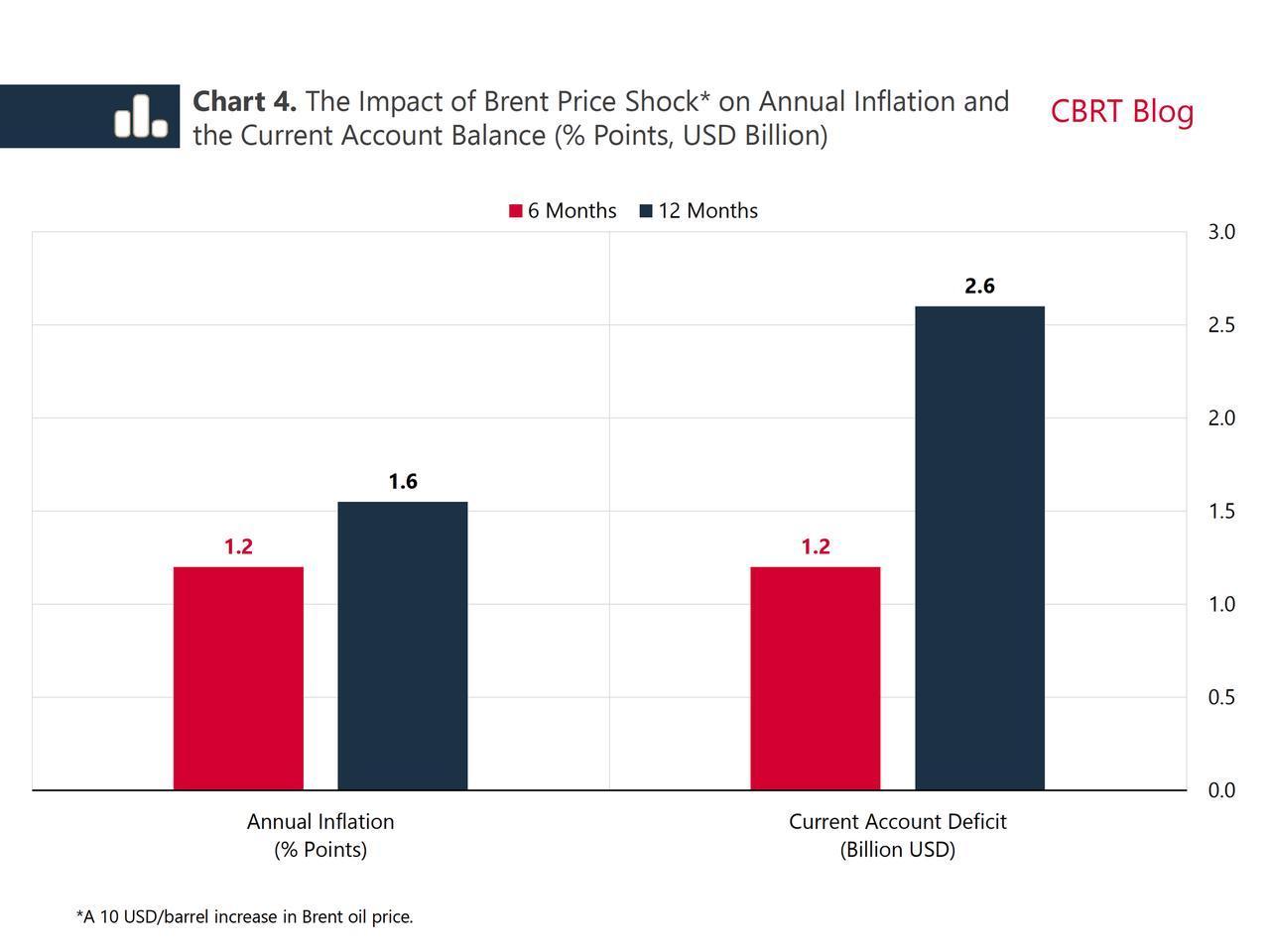

If all of this becomes the “main scenario,” these risks will need to be carefully managed in Türkiye as well. In that case, attention will turn to the Central Bank of the Republic of Türkiye (CBRT). What steps the bank takes to prevent damage to the ongoing disinflation process and to support the Turkish lira will be crucial.
Inflation data is also in focus. February CPI figures, set to be announced on Tuesday, Mar. 3, are expected to show a monthly increase of around 3%.
Before the latest developments in the Middle East, Central Bank Governor Fatih Karahan said during last month’s Inflation Report presentation: "Given the current inflation outlook, our targets, demand conditions and expectations, we assess that the threshold for increasing the step size in the short term is relatively high."
Now, war in the Middle East and rising oil prices have entered the equation.
The central bank last cut its policy rate by 100 basis points in January, bringing it down to 37%. The next Monetary Policy Committee meeting is scheduled for March 12—meaning the next rate decision isn’t far off.
In the market, one question is being asked more frequently: “Will the central bank hit the brakes at this meeting?”
If the current picture continues, we may see a broader shift among market players toward risk aversion and a wait-and-see stance.


 Set as preferred source
 Set as preferred source



 7 min read